
Thomas S. Kuhn (1922–1996)
Author of The Structure of Scientific Revolutions
About the Author
Thomas S. Kuhn's work is best described as a normative historiography of science. He was educated at Harvard University, where in 1949 he completed a doctorate in physics. As a student, he was impressed by the differences between scientific method, as conventionally taught, and the way science show more actually works. Before moving to the Massachusetts Institute of Technology in 1979, he taught at Harvard University, the University of California at Berkeley, and Princeton University. Kuhn's most celebrated contribution to the philosophy of science is his controversial idea of paradigms and paradigm shifts. A paradigm is understood as a widely shared theoretical framework within which scientific research is conducted. According to Kuhn, science normally develops more or less smoothly within such a paradigm until an accumulation of difficulties reduces its effectiveness. The paradigm finally breaks down in a crisis, which is followed by the formation of a radically new paradigm in a so-called scientific revolution. The new paradigm is accepted, even though it might neither resolve all of the accumulated difficulties nor explain the data better than the older paradigm that it replaces. We find examples of paradigm shifts in the work of Copernicus, Galileo, Isaac Newton, Charles Darwin, and others. Since its original publication in 1962, The Structure of Scientific Revolutions undoubtedly has been the single most influential book in the philosophy of science. (Bowker Author Biography) show less
Works by Thomas S. Kuhn
The Copernican Revolution: Planetary Astronomy in the Development of Western Thought (1957) 977 copies, 13 reviews
The Road since Structure: Philosophical Essays, 1970-1993, with an Autobiographical Interview (2000) 214 copies
Kuhn 2 copies
Logic of Discovery or Psychology of Research? / Logik oder Psychologie der Forschung?: Englisch/Deutsch. [Great Papers Philosophie] (2021) 2 copies
O percurso desde A Estrutura Ensaios filosóficos (1970-1993) e entrevista autobiográfica (2011) 2 copies
Peran paradigma dalam revolusi sains 2 copies
The Þroad since structure 2 copies
Thomas Kuhn 1 copy
Khun [Opere di] 1 copy
A revolução de Kuhn 1 copy
Associated Works
The Philosopher's Handbook: Essential Readings from Plato to Kant (2000) — Contributor — 236 copies, 1 review
Tagged
Common Knowledge
- Canonical name
- Kuhn, Thomas S.
- Legal name
- Kuhn, Thomas Samuel
- Birthdate
- 1922-07-18
- Date of death
- 1996-06-17
- Gender
- male
- Education
- Harvard University (BSc|1943|MSc|1946|Ph.D|1949 - Physics)
- Occupations
- professor
physicist
historian of science
philosopher of science - Organizations
- Massachusetts Institute of Technology
Princeton University
University of California, Berkeley
Harvard University
History of Science Society
Philosophy of Science Association - Awards and honors
- British Academy (Corresponding Fellow, 1990)
George Sarton Medal (1982)
John Desmond Bernal Prize (1983)
National Academy of Sciences (1979)
American Philosophical Society (1974)
American Academy of Arts & Sciences (1963) (show all 12)
Leopoldina Academy (1979)
Académie Internationale d'Histoire des Sciences
Académie européenne des sciences et des arts
Howard T. Behrman Award for Distinguished Achievement in the Humanities (1977)
New York Academy of Science (Honorary life member)
Guggenheim Fellowship (1954) - Relationships
- Kuhn, Roger (brother)
- Cause of death
- lung cancer
- Nationality
- USA
- Birthplace
- Cincinnati, Ohio, USA
- Places of residence
- Manhattan, New York, New York, USA
Cambridge, Massachusetts, USA - Place of death
- Cambridge, Massachusetts, USA
- Associated Place (for map)
- USA
Members
Reviews

A convincing and readable account of how science works in practice, challenging the previously dominant view of the gradual, consistent, stepwise accumulation of knowledge. Throughout Kuhn uses examples of famous scientific breakthroughs to illustrate and justify his main points – many of these quite interesting in their own right, and spanning between electricity, chemistry, atoms, light, gravity, genetics and more.
Not directly incompatible with either the earlier work of Popper, or the show more later work of Feyerabend, Kuhn proposes that Science alternates through two phases – the relatively stable “normal science” phase of problem solving and tying up loose ends within a paradigm (measuring stuff to validate theoretical predictions etc.), and the “crisis” phase where the paradigm (or worldview) has to be replaced due to an accumulating body of phenomena that don’t fit in with the predictions of the current theoretical framework. During the latter, competing schools obtain evidence to support alternative candidate worldviews (theories), with the one producing the best evidence, and most explanatory theory winning out after a period of chaos. Then a period of normal science ensues, then another revolution. Whether this goes on forever, or whether we eventually reach a fully satisfactory explanation of all observed phenomena is not discussed at length.
A revolution and paradigm shift in one field, for example understanding of electricity, might or might not particularly affect science in another field, with some minor revolutions being quite self-contained within a specialism, and others affecting many other adjacent disciplines. What sets out a revolution, or paradigm shift, from a development in normal science, is the entire change in underlying theoretical framework (or paradigm) relating to a set of phenomena. So, the transition from gravity being explained by Newtonian equations to Einsteinian equations (relativity) would count, whereas the application of Einstein’s equations to predict the existence of black holes, or that the universe began as a singularity (with or without any evidence to support these predictions), would not count as a paradigm shift, as these are entirely compatible with the existing framework of Relativity. Unfortunately the term “Paradigm shift” has entered common usage with little care for what it actually means.
Kuhn also discusses the consequences of revolutions and presents his ideas on incommensurability – how words and scientific concepts no longer mean the same things after a paradigm shift, how we see the world in a different way. How the meaning of the old terms cannot be directly translated into something that can be fully understood within the framework of the new worldview. This has certain consequences, especially during the time of transition when scientists operating within competing frameworks struggle to find a common language, and end up talking at cross purposes.
A classic deserving to be on the reading list for anyone interested in the philosophy or history of science, or science in general. show less
Not directly incompatible with either the earlier work of Popper, or the show more later work of Feyerabend, Kuhn proposes that Science alternates through two phases – the relatively stable “normal science” phase of problem solving and tying up loose ends within a paradigm (measuring stuff to validate theoretical predictions etc.), and the “crisis” phase where the paradigm (or worldview) has to be replaced due to an accumulating body of phenomena that don’t fit in with the predictions of the current theoretical framework. During the latter, competing schools obtain evidence to support alternative candidate worldviews (theories), with the one producing the best evidence, and most explanatory theory winning out after a period of chaos. Then a period of normal science ensues, then another revolution. Whether this goes on forever, or whether we eventually reach a fully satisfactory explanation of all observed phenomena is not discussed at length.
A revolution and paradigm shift in one field, for example understanding of electricity, might or might not particularly affect science in another field, with some minor revolutions being quite self-contained within a specialism, and others affecting many other adjacent disciplines. What sets out a revolution, or paradigm shift, from a development in normal science, is the entire change in underlying theoretical framework (or paradigm) relating to a set of phenomena. So, the transition from gravity being explained by Newtonian equations to Einsteinian equations (relativity) would count, whereas the application of Einstein’s equations to predict the existence of black holes, or that the universe began as a singularity (with or without any evidence to support these predictions), would not count as a paradigm shift, as these are entirely compatible with the existing framework of Relativity. Unfortunately the term “Paradigm shift” has entered common usage with little care for what it actually means.
Kuhn also discusses the consequences of revolutions and presents his ideas on incommensurability – how words and scientific concepts no longer mean the same things after a paradigm shift, how we see the world in a different way. How the meaning of the old terms cannot be directly translated into something that can be fully understood within the framework of the new worldview. This has certain consequences, especially during the time of transition when scientists operating within competing frameworks struggle to find a common language, and end up talking at cross purposes.
A classic deserving to be on the reading list for anyone interested in the philosophy or history of science, or science in general. show less
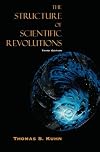
A true classic of twentieth century literature, this wonderful little book, which argues for the contingency of scientific knowledge, deserves space on the bookshelf next to The Wealth of Nations (identifying the contingency of economic wellbeing and value), Hume's A Treatise of Human Nature (causal scepticism), The Origin of Species (the contingency of biological development) and Contingency, Irony and Solidarity (the contingency of language) - along with those perennially confusing show more continental stalwarts Freddie Nietzsche and Ludwig Wittgenstein, as representing the fundamental underpinnings of modern Relativist thought.
Thanks to the Chomskies, Dawkinses and Sokals of this world, who have cunningly bound perfectly sensible Cognitive and Ethical Relativism to silly Post-Structuralism, proper Relativism has become a dirty word these days.
It may be unfashionable but it's also powerful, and if you want to understand it, and its power, The Structure of Scientific Revolutions - as short and beautifully written a classic of philosophy as you could possibly ask for - is as good a place as any to start.
Following publication of "Structure", Kuhn had a famous public debate with Karl Popper over what counts as science and the way in which science develops over time. Popper had, in The Logic of Scientific Discovery, made the invaluable observation that "verification" as a standard for science is too high, since as a matter of logic an argument based on induction ("since the sun has risen on every day in recorded history, therefore it will rise tomorrow") can never be proven true. The sun rising is a very good example: for all our folksy expectations, current cosmology predicts that there will be a point at some time in the distant future when the sun will explode, and therefore will not rise tomorrow.
In lieu of verification as the scientific gold standard, Popper asserted (seemingly plausibly) that valid scientific theory could be assessed by the lack of any falsifying evidence among the data. The requirement for scientific statements to be "falsifiable" is a useful contribution to the debate: To be of any use, a scientific theory must narrow down from the list of all possible outcomes a set of predicted ones, and rule the rest out. Statements which cannot be falsified by any conceivable evidence don't do that, so fail at science's fundamental task.
Thomas Kuhn's insight was to offer a historian's perspective, and to note that, while that might be theory, that's simply not what science does in practice. Scientific theories are absolutely never thrown out the moment contradictory evidence is observed: the dial is tapped, the experiment re-run, and "numerous articulations and ad hoc modifications of their theory" are devised to eliminate any apparent conflict. Indeed, when the data won't do what it's meant to, sometimes it is the question which is rejected as being irrelevant, and not the answer predicted by the theory.
All this activity takes place inside what Kuhn describes (somewhat inconsistently) as a "paradigm" - a "particular coherent tradition of scientific research". The paradigm governs not only the theory but the education, instrumentation, rules and standards of scientific practice, and is the basis on which the scientific community decides which kinds of questions are and are not relevant to the development of scientific research. A paradigm claims exclusivity over the adjudication of its own subject matter, and one only has authority to pronounce on a scientific problem once one has been fully inducted: evolutionary biologists will not take seriously the biological assertions of fundamentalist Christians, for example. Fundamentalist Christians who take biology exams will fail, and thereby will never be able to authoritatively comment on biological matters.
Paradigms are generally a useful thing for the jobbing scientist, since to her they provide a pre-agreed framework - what Dan Dennett would describe as a "crane" - on which additional scientific research can be undertaken without having, literally, to re-invent the wheel. Kuhn characterises this sort of "normal scientist" as being involved in "puzzle solving" in exactly the sense that one solves a crossword puzzle. You have a framework of rules for how to solve the puzzle; you have problems (the blank spaces on the puzzle) and you empirically obtained evidence (clues) which you manipulate using the rules to produce predictions (or answers), and each newly discovered answer then acts as an additional clue to solve the remaining problems.
Superficially, this all sounds fine, but there are brutal, jagged corals just below the water's surface: Once inside a paradigm it informs your view of the world so thoroughly it is not possible to conduct research outside it. To solve a crossword puzzle, there must first be *some* pre-determined rules of engagement (the same puzzle can be solved, differently, with different sets of rules: a "cryptic" crossword yields different answers for the same boxes, and perhaps even the same clues, to a "quick" crossword. But to solve it one needs to use one or the other). Unlike a crossword, Mother Nature doesn't come with a label saying "cryptic" or "quick". So how do we know which paradigm to use? Can the truth or falsity of the paradigm to be judged, other than in terms of the paradigm itself?
Kuhn says no. This is an immensely powerful idea. Not only does it undermine the certitude many people have about their own ways of life, it seems to opens the door to all the whacky alternatives, with no objective means of choosing between them. So can we really not choose between Radiotherapy and Healing Crystals?
That this might be the case terrifies a lot of people, especially scientists, and Kuhn gets a lot of the blame for this state of unease. Post-Modernism: It's all Kuhn's fault.
But this is surely to shoot the messenger: Kuhn's great contribution is not to say that healing crystals are in (he says nothing of the sort) but to say that the sacred and immutable link between science and truth is out, and we owe it to ourselves to keep an open mind about whatever we believe. After all, the history of science (which is what Kuhn started out writing about) is a long history of frequent revolution. Either all the theories scientists have ever believed up to the current day are baloney, always were, never really counted as science and we're just lucky to be around when the human race has finally got it right - which, to put it mildly, is wishful thinking - or the revolutionary history of science, which no-one disputes, tends to back up what Kuhn is saying.
Science does evolve, through the great algorithm of human discourse, and the dominating theories through time will tend to be the ones which most of us are persuaded work the best for us (whether we're right or not is really beside the point). What persuades in Tehran may differ from what persuades in Texas. All Thomas Kuhn cautions against is either side taking its own position as a given.
His enterprise is therefore fundamentally democratic - placing epistemological legitimacy in the hands of the entire community, as contingent and random as it may be from time to time, and not a self-selecting, self perpetuating elite.
One thing economic theory tells us is that concentrating economic control in a small part of the population (as in a monopoly) generally works out worse for everyone except the monopolist. There's no reason to suppose that concentrating intellectual authority should be any different.
In the Western Hemisphere - outside the Grateful Dead tour circuit, at any rate - intellectual authority mostly resides with established science, but it has to work - literally - to earn our respect.
The anti-Kuhn brigade like Richard Dawkins may not like that sort of accountability but, not being a scientist, I do. show less
Thanks to the Chomskies, Dawkinses and Sokals of this world, who have cunningly bound perfectly sensible Cognitive and Ethical Relativism to silly Post-Structuralism, proper Relativism has become a dirty word these days.
It may be unfashionable but it's also powerful, and if you want to understand it, and its power, The Structure of Scientific Revolutions - as short and beautifully written a classic of philosophy as you could possibly ask for - is as good a place as any to start.
Following publication of "Structure", Kuhn had a famous public debate with Karl Popper over what counts as science and the way in which science develops over time. Popper had, in The Logic of Scientific Discovery, made the invaluable observation that "verification" as a standard for science is too high, since as a matter of logic an argument based on induction ("since the sun has risen on every day in recorded history, therefore it will rise tomorrow") can never be proven true. The sun rising is a very good example: for all our folksy expectations, current cosmology predicts that there will be a point at some time in the distant future when the sun will explode, and therefore will not rise tomorrow.
In lieu of verification as the scientific gold standard, Popper asserted (seemingly plausibly) that valid scientific theory could be assessed by the lack of any falsifying evidence among the data. The requirement for scientific statements to be "falsifiable" is a useful contribution to the debate: To be of any use, a scientific theory must narrow down from the list of all possible outcomes a set of predicted ones, and rule the rest out. Statements which cannot be falsified by any conceivable evidence don't do that, so fail at science's fundamental task.
Thomas Kuhn's insight was to offer a historian's perspective, and to note that, while that might be theory, that's simply not what science does in practice. Scientific theories are absolutely never thrown out the moment contradictory evidence is observed: the dial is tapped, the experiment re-run, and "numerous articulations and ad hoc modifications of their theory" are devised to eliminate any apparent conflict. Indeed, when the data won't do what it's meant to, sometimes it is the question which is rejected as being irrelevant, and not the answer predicted by the theory.
All this activity takes place inside what Kuhn describes (somewhat inconsistently) as a "paradigm" - a "particular coherent tradition of scientific research". The paradigm governs not only the theory but the education, instrumentation, rules and standards of scientific practice, and is the basis on which the scientific community decides which kinds of questions are and are not relevant to the development of scientific research. A paradigm claims exclusivity over the adjudication of its own subject matter, and one only has authority to pronounce on a scientific problem once one has been fully inducted: evolutionary biologists will not take seriously the biological assertions of fundamentalist Christians, for example. Fundamentalist Christians who take biology exams will fail, and thereby will never be able to authoritatively comment on biological matters.
Paradigms are generally a useful thing for the jobbing scientist, since to her they provide a pre-agreed framework - what Dan Dennett would describe as a "crane" - on which additional scientific research can be undertaken without having, literally, to re-invent the wheel. Kuhn characterises this sort of "normal scientist" as being involved in "puzzle solving" in exactly the sense that one solves a crossword puzzle. You have a framework of rules for how to solve the puzzle; you have problems (the blank spaces on the puzzle) and you empirically obtained evidence (clues) which you manipulate using the rules to produce predictions (or answers), and each newly discovered answer then acts as an additional clue to solve the remaining problems.
Superficially, this all sounds fine, but there are brutal, jagged corals just below the water's surface: Once inside a paradigm it informs your view of the world so thoroughly it is not possible to conduct research outside it. To solve a crossword puzzle, there must first be *some* pre-determined rules of engagement (the same puzzle can be solved, differently, with different sets of rules: a "cryptic" crossword yields different answers for the same boxes, and perhaps even the same clues, to a "quick" crossword. But to solve it one needs to use one or the other). Unlike a crossword, Mother Nature doesn't come with a label saying "cryptic" or "quick". So how do we know which paradigm to use? Can the truth or falsity of the paradigm to be judged, other than in terms of the paradigm itself?
Kuhn says no. This is an immensely powerful idea. Not only does it undermine the certitude many people have about their own ways of life, it seems to opens the door to all the whacky alternatives, with no objective means of choosing between them. So can we really not choose between Radiotherapy and Healing Crystals?
That this might be the case terrifies a lot of people, especially scientists, and Kuhn gets a lot of the blame for this state of unease. Post-Modernism: It's all Kuhn's fault.
But this is surely to shoot the messenger: Kuhn's great contribution is not to say that healing crystals are in (he says nothing of the sort) but to say that the sacred and immutable link between science and truth is out, and we owe it to ourselves to keep an open mind about whatever we believe. After all, the history of science (which is what Kuhn started out writing about) is a long history of frequent revolution. Either all the theories scientists have ever believed up to the current day are baloney, always were, never really counted as science and we're just lucky to be around when the human race has finally got it right - which, to put it mildly, is wishful thinking - or the revolutionary history of science, which no-one disputes, tends to back up what Kuhn is saying.
Science does evolve, through the great algorithm of human discourse, and the dominating theories through time will tend to be the ones which most of us are persuaded work the best for us (whether we're right or not is really beside the point). What persuades in Tehran may differ from what persuades in Texas. All Thomas Kuhn cautions against is either side taking its own position as a given.
His enterprise is therefore fundamentally democratic - placing epistemological legitimacy in the hands of the entire community, as contingent and random as it may be from time to time, and not a self-selecting, self perpetuating elite.
One thing economic theory tells us is that concentrating economic control in a small part of the population (as in a monopoly) generally works out worse for everyone except the monopolist. There's no reason to suppose that concentrating intellectual authority should be any different.
In the Western Hemisphere - outside the Grateful Dead tour circuit, at any rate - intellectual authority mostly resides with established science, but it has to work - literally - to earn our respect.
The anti-Kuhn brigade like Richard Dawkins may not like that sort of accountability but, not being a scientist, I do. show less

I first heard the term "paradigm shift" and was detailed on the concept of the scientific revolution my freshman year of high school in "World Cultures" class. The idea has since lurked in my mind-- much as it has in culture, I think. But it took twelve years and a philosophy of science seminar to get around to reading it.
Kuhn's work is immediately incredible. Though it's probably not always right, it's not always right in the way that most big ideas are, because it's so big that there show more can't not be tons of little exceptions to what he says and how he says it. His model of science, as a series of paradigms that shift but don't necessarily become more truthful, just more useful, is immediately persuasive. I especially liked what he said about the action of "normal science," the science that happens between paradigms. Despite the fact that scientists know that major theories are overturned throughout history and will be overturned again, they all proceed as though science has been settled and do these small tiny experiments.
I also liked his concept of "paradigm vision" (I don't think he calls it this exactly, but I do), that scientists see the world through the lens of their paradigms, and indeed, often find it impossible to bridge the gap between paradigms because it affects the language they uses. I thought of the Pluto-is-a-planet thing when reading this section; some people cannot believe that Pluto is not a planet because they see the world in such a way that the word "planet" means something that includes Pluto. How could they possibly accept that it is not a planet?
Of course, Kuhn's ideas are more applicable to physics than other sciences, and rejecting the sciences they don't fit as "immature" is probably not the right solution, but that doesn't stop it from being interesting. I am kinda disgruntled that Kuhn added an afterword in 1969 to deal with criticisms that had been lobbed at it, instead of actually integrating the criticisms into the main text. But on the other hand, I'm glad that his response to that criticism can be safely contained in one chapter because the criticisms are all such nitpicky philosophy of science bullshit. show less
Kuhn's work is immediately incredible. Though it's probably not always right, it's not always right in the way that most big ideas are, because it's so big that there show more can't not be tons of little exceptions to what he says and how he says it. His model of science, as a series of paradigms that shift but don't necessarily become more truthful, just more useful, is immediately persuasive. I especially liked what he said about the action of "normal science," the science that happens between paradigms. Despite the fact that scientists know that major theories are overturned throughout history and will be overturned again, they all proceed as though science has been settled and do these small tiny experiments.
I also liked his concept of "paradigm vision" (I don't think he calls it this exactly, but I do), that scientists see the world through the lens of their paradigms, and indeed, often find it impossible to bridge the gap between paradigms because it affects the language they uses. I thought of the Pluto-is-a-planet thing when reading this section; some people cannot believe that Pluto is not a planet because they see the world in such a way that the word "planet" means something that includes Pluto. How could they possibly accept that it is not a planet?
Of course, Kuhn's ideas are more applicable to physics than other sciences, and rejecting the sciences they don't fit as "immature" is probably not the right solution, but that doesn't stop it from being interesting. I am kinda disgruntled that Kuhn added an afterword in 1969 to deal with criticisms that had been lobbed at it, instead of actually integrating the criticisms into the main text. But on the other hand, I'm glad that his response to that criticism can be safely contained in one chapter because the criticisms are all such nitpicky philosophy of science bullshit. show less
While I found ‘The Structure of Scientific Revolutions’ thoughtful and interesting, it wasn't as transformative as I expected. My mum recommended it to me as a mind-changing book, yet I felt similarly to the author in his 1969 postscript: ‘To the extent that the book portrays scientific development as a succession of tradition-bound periods punctuated by non-cumulative breaks, its theses are undoubtedly of wide applicability. But they should be, for they are borrowed from other fields. show more Historians of literature, of music, of the arts, of political development, and of many other human activities have long described their subjects in the same way’.
Thus I found Kuhn’s analysis of science’s non-linear progression to be a cogent application of familiar concepts to a new disciplinary context. The writing is very careful and precise, making it rather ponderous to read while also aiding understanding. For the non-scientist, I felt the most important point was that textbooks and popular science books elide and simplify the nature of scientific discovery. While this is by no means malicious, it gives a somewhat misleading impression of cumulative linear progress. Kuhn explores a number of ways and draws on many examples (including the question of when oxygen was discovered) to argue that this is not actually how things work. To wit, ‘The scientists of earlier ages are implicitly represented as having worked upon the same set of fixed problems and in accordance with the same set of fixed canons that the most recent revolution in scientific theory and method has made seem scientific’.
What particularly impressed me about the book was Kuhn’s use of the word ‘paradigm’ in a genuinely meaningful manner. Rarely has there been a more misused word, in the social science and policy worlds at least. I keep a tally of how many times it is used in meetings and documents, with more than three instances a definite indicator of that bullshit's afoot. Here, however, the term is discussed and defined clearly:
I found Kuhn’s thesis a convincing and helpful structure for understanding how science has happened over centuries. It brings up many thought-provoking questions, such as how language mediates observations:
Another fascinating question is how the revolutionary shift from one paradigm to another occurs:
A third and very fundamental question that Kuhn raises without dwelling on is whether science needs a final goal. This he links neatly with one of the most controversial aspects of Darwin’s theory of evolution: that it has no end in mind, no higher plan. As the book puts it, ‘The Origin of the Species recognised no goal set by God or nature.’ Progress, argues Kuhn, does not require such a goal to be articulated. The question is nonetheless a fascinating one, as it raises the issue of more specific goals in specific scientific fields and whether they add up to a consistent pattern. Writing in the 1960s, it’s a little surprising that Kuhn never mentions the prosaic military goals of science during the Cold War. Today, research across the disciplines has been infected with the need for outputs to be monetised somehow, or to have semi-plausible commercial potential. Although these goals may be imposed upon scientific institutions from outside, over the decades they must have been internalised to some extent. From a more idealistic perspective, some might state the goal of science as ‘to make the world a better place by increasing our understanding of it’. That is tantamount to inviting a bunch of social scientists (like me) into your lab to argue for hours about what is meant by better, for whom, when, how, etc, etc, etc.
The interdisciplinary nature of ‘The Structure of Scientific Revolutions’ has ensured that it remains relevant and thought-provoking fifty years after first publication. It certainly isn’t a fast read and I had to go over quite a few sentences twice to be clear about what Kuhn was saying. Nonetheless, there is a lot to consider packed into a small space. show less
Thus I found Kuhn’s analysis of science’s non-linear progression to be a cogent application of familiar concepts to a new disciplinary context. The writing is very careful and precise, making it rather ponderous to read while also aiding understanding. For the non-scientist, I felt the most important point was that textbooks and popular science books elide and simplify the nature of scientific discovery. While this is by no means malicious, it gives a somewhat misleading impression of cumulative linear progress. Kuhn explores a number of ways and draws on many examples (including the question of when oxygen was discovered) to argue that this is not actually how things work. To wit, ‘The scientists of earlier ages are implicitly represented as having worked upon the same set of fixed problems and in accordance with the same set of fixed canons that the most recent revolution in scientific theory and method has made seem scientific’.
What particularly impressed me about the book was Kuhn’s use of the word ‘paradigm’ in a genuinely meaningful manner. Rarely has there been a more misused word, in the social science and policy worlds at least. I keep a tally of how many times it is used in meetings and documents, with more than three instances a definite indicator of that bullshit's afoot. Here, however, the term is discussed and defined clearly:
Our most recent examples show that paradigms provide scientists not only with a map but also with some of the directions essential for map-making. In learning a paradigm the scientist acquires theory, methods, and standards together, usually in an inextricable mixture. Therefore, when paradigms change, there are usually significant shifts in the criteria determining the legitimacy both of problems and proposed solutions.
I found Kuhn’s thesis a convincing and helpful structure for understanding how science has happened over centuries. It brings up many thought-provoking questions, such as how language mediates observations:
No current attempt to achieve that end has yet come close to a generally applicable language of pure precepts. And those attempts that come closest share one characteristic that strongly reinforces several of this essay’s main theses. From the start they presuppose a paradigm, taken either from a current scientific theory or from some fraction of everyday discourse, and they then try to eliminate from it all non-logical and non-perceptual terms. […] But their result is a language that – like those employed in the sciences – embodies a host of expectations about nature and fails to function the moment these expectations are violated. […] No language thus restricted to reporting a world fully known in advance can produce mere neutral and objective reports on ‘the given’.
Another fascinating question is how the revolutionary shift from one paradigm to another occurs:
Max Planck, surveying his own career in his Scientific Autobiography, sadly remarked that ‘a new scientific truth does not triumph by convincing its opponents and making them see the light, but rather because its opponents eventually die, and a new generation grows up that is familiar with it’.
These facts and others like them are too commonly known to need further emphasis. But they do need re-evaluation. […] The transfer of allegiance from paradigm to paradigm is a conversion experience that cannot be forced. Lifelong resistance, particularly from those whose productive careers have committed them to an older tradition of normal science, is not a violation of scientific standards but an index to the nature of scientific research itself.
A third and very fundamental question that Kuhn raises without dwelling on is whether science needs a final goal. This he links neatly with one of the most controversial aspects of Darwin’s theory of evolution: that it has no end in mind, no higher plan. As the book puts it, ‘The Origin of the Species recognised no goal set by God or nature.’ Progress, argues Kuhn, does not require such a goal to be articulated. The question is nonetheless a fascinating one, as it raises the issue of more specific goals in specific scientific fields and whether they add up to a consistent pattern. Writing in the 1960s, it’s a little surprising that Kuhn never mentions the prosaic military goals of science during the Cold War. Today, research across the disciplines has been infected with the need for outputs to be monetised somehow, or to have semi-plausible commercial potential. Although these goals may be imposed upon scientific institutions from outside, over the decades they must have been internalised to some extent. From a more idealistic perspective, some might state the goal of science as ‘to make the world a better place by increasing our understanding of it’. That is tantamount to inviting a bunch of social scientists (like me) into your lab to argue for hours about what is meant by better, for whom, when, how, etc, etc, etc.
The interdisciplinary nature of ‘The Structure of Scientific Revolutions’ has ensured that it remains relevant and thought-provoking fifty years after first publication. It certainly isn’t a fast read and I had to go over quite a few sentences twice to be clear about what Kuhn was saying. Nonetheless, there is a lot to consider packed into a small space. show less
Lists
Awards


You May Also Like


Associated Authors
Statistics
- Works
- 36
- Also by
- 4
- Members
- 10,816
- Popularity
- #2,197
- Rating
- 4.0
- Reviews
- 112
- ISBNs
- 147
- Languages
- 22
- Favorited
- 23