
Stanley Rosen (1) (1929–2014)
Author of The Philosopher's Handbook: Essential Readings from Plato to Kant
For other authors named Stanley Rosen, see the disambiguation page.
About the Author
Stanley Rosen (1929-2014) was the Borden Parker Bowne Professor and University Professor Emeritus at Boston University. He is the author of many books, including Nihilism: A Philosophical Essay, The Limits of Analysis, and Plato's Republic: A Study, among others.
Image credit: via BU Alumni Magazine
Works by Stanley Rosen
The Philosopher's Handbook: Essential Readings from Plato to Kant (2000) — Editor — 234 copies, 1 review
The Examined Life: Readings from Western Philosophers from Plato to Kant (2000) 154 copies, 2 reviews
Associated Works
Poetry Magazine Vol. 86 No. 3, June 1955 — Contributor — 2 copies
Tagged
Common Knowledge
- Canonical name
- Rosen, Stanley
- Birthdate
- 1929-07-29
- Date of death
- 2014-05-05
- Gender
- male
- Education
- University of Chicago (BA|1949|Ph.D|1955)
- Occupations
- professor
philosopher - Organizations
- Boston University
Pennsylvania State University - Nationality
- USA
- Birthplace
- Waren, Ohio, USA
- Places of residence
- Boston, Massachusetts, USA
State College, Pennsylvania, USA - Place of death
- Philadelphia, Pennsylvania, USA
- Associated Place (for map)
- USA
Members
Reviews
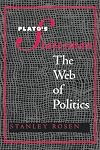
Theoria, Phronesis, Techne, Nomos and Circumstance, August 29, 2006
This is an extremely profound meditation on the failure of Theory and Practice to ever sync up; the Eleatic Stranger turns from celestial Theory to earthly practice; from the Ideas to techne (craft). Man is no longer the erotic lover of the Ideas, but rather the fabricated animal, or, the animal in need of fabrication to be complete--to be civilized. Humans, of course have a nature, as Rosen points out, "to be partially show more constructed is already to possess a nature." But we are not natural like deers or wolves. The rules of civilization are imposed. But there are no (certain) rules regarding the creation of civilization. Thus there is no foolproof technique, no adequate Theory, to construct a civilization given an unknown future. In other words, the people and their politicians, and perhaps even our philosophers, are faking it. In a world in which the rulers are guessing as much as the ruled, the question becomes who, in each instance, guesses best. So, who can be trusted with the fabrication of civilization?
Well, since each case will need to be judged on its own unique merits, each action, though grounded in tradition and/or Theory, will be based, at best, on an informed guess. There is no science of politics because there is no science of the future. "Because phronesis [right judgment] rules without laws but by making a judgement that is unique in each case, or at least determined in each case by the particular circumstances that cannot be known in advance, it is impossible for the Stranger or anyone else to give a logos, in other words, a detailed description or account, of phronesis or its decisions." Or, in plain English, political knowledge (as Science) is impossible, which is why the Stranger doesn't bother entertaining questions to which answers don't exist. But not anyone can rule. Plato, and his philosophical epigoni, will tell `Noble Lies', what we can perhaps refer to as myth and ideology, in order to care for the human herd.
Why? Because without someone defending the human herd from the elements (seasons and storms), beasts (wolves), and, as we all know, other human herds (barbarians), humanity itself may well cease to be civilized. But since there is no Science of the future why turn to philosophers ('True Kings')? Because the people, even the peoples' leaders, know less, and are worse, than philosophers. Just as ship captains or doctors know more about the sciences of navigation and health, so too philosophers know more about humanity than the average citizen, or, for that matter, the average king. So, perhaps philosophers know more than the people, but are they better? The Eleatic Stranger tells the story of an assembly that decides it "will no longer submit to this abusive conduct [of captains and doctors] but will ourselves legislate about medicine and navigation, whether or not we know anything about these matters." Of course, as Rosen points out, the story is a parody of democracy, but all parodies point to something real.
The reason that the people (i.e., non-philosophers) can't rule is not merely their lack of technical expertise--remember, the Stranger is not denying the utility of technical skill, only its all-encompassing efficacy--but their unruly souls. Even if the people were technically competent they would still be unfit for rule because of their lack of self-control, their slavery to passion. This is why philosophers are better. Rosen will note, "it is extremely odd that, precisely while showing the unruliness of the multitude, the Stranger talks as if it were due to a lack of technical knowledge. This is a thesis of the scientific Enlightenment." Rosen is right to draw our attention to the modernity of the Stranger, at times he speaks as if he had read Condorcet or Adam Smith, so strong is his certainty that the human situation is manipulable! Rosen's point, however, is that once you know that the people have unruly souls it becomes irrelevant how much skill the people have, or can learn. Knowledge doesn't make bad people better; it makes them dangerous. Thus the people's leaders, with their 'knowledge', may be the most dangerous of all.
Let us recapitulate, phronesis is unattainable, or, what in the long run amounts to the same thing, unpredictably attainable. We never know when we will be graced with a philosopher. Technos is within reach of a few, but, since it is not wisdom, it is merely an ersatz phronesis. Those that aren't truly wise rely on (a merely technical) theory. But even technos will never be within reach of the many. Now, that is why we have Nomos, or law, which is a cheapened form of a debased wisdom (technos). Rosen tells us that, "[the Stranger] begins by assuming that the laws should be changed whenever circumstances make it reasonable to do so." Since everything changes, laws that once were useful, and therefore good, become enormities. The greatest enormity being that once the people have been taught, perhaps we should say trained, in a certain way of life, it becomes almost impossible to change them, to turn them in another direction. Again, phronesis is the best, but since philosophers aren't always around when you need them, we resort to technos, but since merely technical theories and their rules are subject to continual revision, with said revisions not always either teachable or an improvement, nomos (law) becomes our last resort, but, as Rosen observes, "conservatism is at best only a tactic," a miserable war of attrition until a philosopher or a merely technical ideology appears with the knowledge or force necessary to cause change. It is interesting to note that Rosen here seems to understand philosophical conservativism as permanent revolution.
So, philosophers tell noble lies, myths and/or ideologies in order to make civilization possible, which, perhaps, is nothing more than putting off the day of ruin. As Rosen says, "A myth is a story, it is a fiction, something that is not true. And yet this untruth, which we hesitate to call a falsehood, is able to communicate deep truths." One is forced to wonder if myths do communicate deep truths, or simply cause deep truths to be embodied, or lived, by the people. The Stranger, when choosing metaphors, will compare the craft of the statesman to weavers, doctors and gymnasts, crafts that operate on the body and its behavior. As Rosen says, "Politics is oriented toward the body; but philosophy, or the genuine art of statesmanship, is oriented toward the soul." One is tempted to ask if philosophy cares for the citizens' bodies because they have no souls? This would go a long way in explaining why modern philosophy, with a clear conscience, turns humans into mere artifacts. Humans are things anyway. Or, as Nietzsche said, "We are entering the phase of the modesty of consciousness." It amazes us that to this day one can meet people who read those words as libratory! The coming practitioners of human husbandry will know how to evaluate those words far better than we do...
But this is the difference according to Rosen, between ancient philosophy and modern philosophy (i.e., ideology). Ancient phronesis defended the human body against nature, beasts and men in order to create a space in which philosophical care for the soul was possible, or at least available. Ancient philosophical interventions were defensive. Modern philosophy (i.e., ideology) has gone on the attack and wishes to change the nature of both man and world. Thus we can say that the 'right' of ancient philosophers to rule rests on their self-control. Phronesis rests on moderation, not Theory. While modern philosophy cum ideology rests on the 'philosophical' mania of Theory.
...But what, exactly, is the difference between an 'offensive' and 'defensive' philosophical construction, if as the Eleatic Stranger seems to maintain, there is no erotic vision of the Ideas vis-à-vis phronesis? If Theory is irrelevant to human action, as the Stranger seems to maintain, then the difference between offensive and defensive philosophical constructions is entirely circumstantial...
Perhaps there are some problems that do not have answers. The richness of Rosen's analysis can only be hinted at in a review like this. There is utterly no edification at all in this book. show less
This is an extremely profound meditation on the failure of Theory and Practice to ever sync up; the Eleatic Stranger turns from celestial Theory to earthly practice; from the Ideas to techne (craft). Man is no longer the erotic lover of the Ideas, but rather the fabricated animal, or, the animal in need of fabrication to be complete--to be civilized. Humans, of course have a nature, as Rosen points out, "to be partially show more constructed is already to possess a nature." But we are not natural like deers or wolves. The rules of civilization are imposed. But there are no (certain) rules regarding the creation of civilization. Thus there is no foolproof technique, no adequate Theory, to construct a civilization given an unknown future. In other words, the people and their politicians, and perhaps even our philosophers, are faking it. In a world in which the rulers are guessing as much as the ruled, the question becomes who, in each instance, guesses best. So, who can be trusted with the fabrication of civilization?
Well, since each case will need to be judged on its own unique merits, each action, though grounded in tradition and/or Theory, will be based, at best, on an informed guess. There is no science of politics because there is no science of the future. "Because phronesis [right judgment] rules without laws but by making a judgement that is unique in each case, or at least determined in each case by the particular circumstances that cannot be known in advance, it is impossible for the Stranger or anyone else to give a logos, in other words, a detailed description or account, of phronesis or its decisions." Or, in plain English, political knowledge (as Science) is impossible, which is why the Stranger doesn't bother entertaining questions to which answers don't exist. But not anyone can rule. Plato, and his philosophical epigoni, will tell `Noble Lies', what we can perhaps refer to as myth and ideology, in order to care for the human herd.
Why? Because without someone defending the human herd from the elements (seasons and storms), beasts (wolves), and, as we all know, other human herds (barbarians), humanity itself may well cease to be civilized. But since there is no Science of the future why turn to philosophers ('True Kings')? Because the people, even the peoples' leaders, know less, and are worse, than philosophers. Just as ship captains or doctors know more about the sciences of navigation and health, so too philosophers know more about humanity than the average citizen, or, for that matter, the average king. So, perhaps philosophers know more than the people, but are they better? The Eleatic Stranger tells the story of an assembly that decides it "will no longer submit to this abusive conduct [of captains and doctors] but will ourselves legislate about medicine and navigation, whether or not we know anything about these matters." Of course, as Rosen points out, the story is a parody of democracy, but all parodies point to something real.
The reason that the people (i.e., non-philosophers) can't rule is not merely their lack of technical expertise--remember, the Stranger is not denying the utility of technical skill, only its all-encompassing efficacy--but their unruly souls. Even if the people were technically competent they would still be unfit for rule because of their lack of self-control, their slavery to passion. This is why philosophers are better. Rosen will note, "it is extremely odd that, precisely while showing the unruliness of the multitude, the Stranger talks as if it were due to a lack of technical knowledge. This is a thesis of the scientific Enlightenment." Rosen is right to draw our attention to the modernity of the Stranger, at times he speaks as if he had read Condorcet or Adam Smith, so strong is his certainty that the human situation is manipulable! Rosen's point, however, is that once you know that the people have unruly souls it becomes irrelevant how much skill the people have, or can learn. Knowledge doesn't make bad people better; it makes them dangerous. Thus the people's leaders, with their 'knowledge', may be the most dangerous of all.
Let us recapitulate, phronesis is unattainable, or, what in the long run amounts to the same thing, unpredictably attainable. We never know when we will be graced with a philosopher. Technos is within reach of a few, but, since it is not wisdom, it is merely an ersatz phronesis. Those that aren't truly wise rely on (a merely technical) theory. But even technos will never be within reach of the many. Now, that is why we have Nomos, or law, which is a cheapened form of a debased wisdom (technos). Rosen tells us that, "[the Stranger] begins by assuming that the laws should be changed whenever circumstances make it reasonable to do so." Since everything changes, laws that once were useful, and therefore good, become enormities. The greatest enormity being that once the people have been taught, perhaps we should say trained, in a certain way of life, it becomes almost impossible to change them, to turn them in another direction. Again, phronesis is the best, but since philosophers aren't always around when you need them, we resort to technos, but since merely technical theories and their rules are subject to continual revision, with said revisions not always either teachable or an improvement, nomos (law) becomes our last resort, but, as Rosen observes, "conservatism is at best only a tactic," a miserable war of attrition until a philosopher or a merely technical ideology appears with the knowledge or force necessary to cause change. It is interesting to note that Rosen here seems to understand philosophical conservativism as permanent revolution.
So, philosophers tell noble lies, myths and/or ideologies in order to make civilization possible, which, perhaps, is nothing more than putting off the day of ruin. As Rosen says, "A myth is a story, it is a fiction, something that is not true. And yet this untruth, which we hesitate to call a falsehood, is able to communicate deep truths." One is forced to wonder if myths do communicate deep truths, or simply cause deep truths to be embodied, or lived, by the people. The Stranger, when choosing metaphors, will compare the craft of the statesman to weavers, doctors and gymnasts, crafts that operate on the body and its behavior. As Rosen says, "Politics is oriented toward the body; but philosophy, or the genuine art of statesmanship, is oriented toward the soul." One is tempted to ask if philosophy cares for the citizens' bodies because they have no souls? This would go a long way in explaining why modern philosophy, with a clear conscience, turns humans into mere artifacts. Humans are things anyway. Or, as Nietzsche said, "We are entering the phase of the modesty of consciousness." It amazes us that to this day one can meet people who read those words as libratory! The coming practitioners of human husbandry will know how to evaluate those words far better than we do...
But this is the difference according to Rosen, between ancient philosophy and modern philosophy (i.e., ideology). Ancient phronesis defended the human body against nature, beasts and men in order to create a space in which philosophical care for the soul was possible, or at least available. Ancient philosophical interventions were defensive. Modern philosophy (i.e., ideology) has gone on the attack and wishes to change the nature of both man and world. Thus we can say that the 'right' of ancient philosophers to rule rests on their self-control. Phronesis rests on moderation, not Theory. While modern philosophy cum ideology rests on the 'philosophical' mania of Theory.
...But what, exactly, is the difference between an 'offensive' and 'defensive' philosophical construction, if as the Eleatic Stranger seems to maintain, there is no erotic vision of the Ideas vis-à-vis phronesis? If Theory is irrelevant to human action, as the Stranger seems to maintain, then the difference between offensive and defensive philosophical constructions is entirely circumstantial...
Perhaps there are some problems that do not have answers. The richness of Rosen's analysis can only be hinted at in a review like this. There is utterly no edification at all in this book. show less
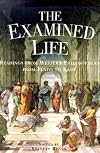
This volume is a very well curated overview of the history of Western Philosophy prior to the 20th century.
For those of us who have read and studied the (nearly) complete works of all of these philosophers, though, this book feels a bit hollow. Philosophy is full of nuance, the exploration of detail, and the evolution of ideas. You simply can't capture the ideas of a philosopher with only a few readings of their works. Many of these philosophers changed their ideas over time - or expounded show more on them at such length throughout their careers as to completely alter our understanding of them - and I'm left too aware of how much this book leaves out, and how the philosophies are pared down to such a degree as to almost misrepresent them.
But this is the challenge of all general histories of philosophy. This book does better than most. Any disappointments are mine for buying a general history when I didn't really need one. show less
For those of us who have read and studied the (nearly) complete works of all of these philosophers, though, this book feels a bit hollow. Philosophy is full of nuance, the exploration of detail, and the evolution of ideas. You simply can't capture the ideas of a philosopher with only a few readings of their works. Many of these philosophers changed their ideas over time - or expounded show more on them at such length throughout their careers as to completely alter our understanding of them - and I'm left too aware of how much this book leaves out, and how the philosophies are pared down to such a degree as to almost misrepresent them.
But this is the challenge of all general histories of philosophy. This book does better than most. Any disappointments are mine for buying a general history when I didn't really need one. show less
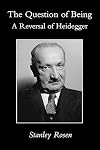
This book is an extended discussion and critique of Heidegger. While he acknowledges many of Heidegger's insights and is in agreement on a number of matters, Rosen contends that his central claims about the history of philosophy and metaphysics in general, and its birth and death in Plato and Nietzsche in particular, involve serious misinterpretations and confusions. Moreover, Rosen considers Heidegger's philosophy of Being to be essentially vacuous, having at best no effect on our grasp of show more beings and at worst promulgating a sort of "European Buddhism," as Nietzsche puts it, in which we end up involved in absurd theoretical posturing over the event of Being which is nothing: perversely, "The more we meditate on Being, the less we see of beings" (Rosen 314).
While it would be inaccurate to say that Rosen attempts to mount a defense of Platonism against the onslaught of Heidegger's critique of the metaphysics of presence, Rosen persuasively argues that Heidegger's Plato is distorted beyond recognition by the being read through Aristotle. Where Heidegger sees Aristotle as having deepened Plato's thought (though also taken us further astride from the grasp of Being articulated by the pre-Socratic philosophers), Rosen sees the two thinkers as quite different, and indeed holds that certain deep problems of Aristotle's ontology and theory of perception point (back) to Platonic solutions. In any case, if we are to buy into Heidegger's reading of the history of philosophy as that of the metaphysics of presence, Rosen suggests that this history is one of Aristotelianism, not Platonism. Rosen comes across for the most part as a sophisticate and nuanced interpreter of Plato, though even he seems too willing at some points to take Socrates at his word, and unproblematically treat him as Plato's mouthpiece.
Rosen similarly spends a good deal of time arguing against Heidegger's interpretation of Nietzsche. The crux of Rosen's point here, if I read him correctly, is that Nietzsche's two doctrines of the Will to Power and the Eternal Return must, *pace* Heidegger, be read as incompatible and (respectively) exoteric and esoteric claims---not of a metaphysical nature, but of a practico-productive nature, i.e., claims about how to live, and what is best for life. Contrary to Heidegger's attempt to read an inner law in Chaos, and hence to Heidegerreanize (and rationalize, says Rosen) Nietzsche, chaos has no inner law, no structure. Man as will to power is simply a random output of what is at heart chaos and unreason. This is clearly incompatible with Nietzsche's product of inaugurating a new type of human, and of ranking types and attitudes, insofar as these all rely on the reality of a will to power that can be heightened or lessened, this (ultimate) reality being precisely what is denied by the metaphysics of chaos. Heidegger's main error with regard to Nietzsche is in foisting a reconciliation onto these irreconcilable positions.
The Question of Being is engaging, stimulating, and often very persuasive. Yet Rosen's too-frequent derisions of Heidegger's "bad poetry" get a bit tiring, and he occasionally moves far too quickly through what should be slow, careful argumentation (e.g. when discussing the criteria for an adequate theory of perception. Though a largely generous commentator, he also sometimes gets lazy and dismissive, which is unfortunately when he tends to issue his most trenchant and interesting criticisms of Heidegger.
Without at least a basic familiarity with Plato, Aristotle, Nietzsche, and Husserl (obviously Heidegger as well), and ideally a more advanced understanding of at least some of these figures, you'll have a hard time getting much out of this book. show less
While it would be inaccurate to say that Rosen attempts to mount a defense of Platonism against the onslaught of Heidegger's critique of the metaphysics of presence, Rosen persuasively argues that Heidegger's Plato is distorted beyond recognition by the being read through Aristotle. Where Heidegger sees Aristotle as having deepened Plato's thought (though also taken us further astride from the grasp of Being articulated by the pre-Socratic philosophers), Rosen sees the two thinkers as quite different, and indeed holds that certain deep problems of Aristotle's ontology and theory of perception point (back) to Platonic solutions. In any case, if we are to buy into Heidegger's reading of the history of philosophy as that of the metaphysics of presence, Rosen suggests that this history is one of Aristotelianism, not Platonism. Rosen comes across for the most part as a sophisticate and nuanced interpreter of Plato, though even he seems too willing at some points to take Socrates at his word, and unproblematically treat him as Plato's mouthpiece.
Rosen similarly spends a good deal of time arguing against Heidegger's interpretation of Nietzsche. The crux of Rosen's point here, if I read him correctly, is that Nietzsche's two doctrines of the Will to Power and the Eternal Return must, *pace* Heidegger, be read as incompatible and (respectively) exoteric and esoteric claims---not of a metaphysical nature, but of a practico-productive nature, i.e., claims about how to live, and what is best for life. Contrary to Heidegger's attempt to read an inner law in Chaos, and hence to Heidegerreanize (and rationalize, says Rosen) Nietzsche, chaos has no inner law, no structure. Man as will to power is simply a random output of what is at heart chaos and unreason. This is clearly incompatible with Nietzsche's product of inaugurating a new type of human, and of ranking types and attitudes, insofar as these all rely on the reality of a will to power that can be heightened or lessened, this (ultimate) reality being precisely what is denied by the metaphysics of chaos. Heidegger's main error with regard to Nietzsche is in foisting a reconciliation onto these irreconcilable positions.
The Question of Being is engaging, stimulating, and often very persuasive. Yet Rosen's too-frequent derisions of Heidegger's "bad poetry" get a bit tiring, and he occasionally moves far too quickly through what should be slow, careful argumentation (e.g. when discussing the criteria for an adequate theory of perception. Though a largely generous commentator, he also sometimes gets lazy and dismissive, which is unfortunately when he tends to issue his most trenchant and interesting criticisms of Heidegger.
Without at least a basic familiarity with Plato, Aristotle, Nietzsche, and Husserl (obviously Heidegger as well), and ideally a more advanced understanding of at least some of these figures, you'll have a hard time getting much out of this book. show less
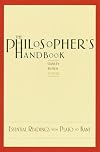
I am a busy man. I may not be the CEO of a corporation or someone whose schedule is always full, but I value my time. In that line of thinking they made The Philosopher’s Handbook, a collection of essays and excerpts from longer works.
The book is divided into six major sections that each focus on one aspect of philosophy. These sections are introduced by an expert in that field with an essay that talks about that focus. Following the essay is a number of short portions from different show more longer works. For example, the first section focuses on Social and Political Philosophy. It has an introductory essay from Paul Rahe and goes into pertinent sections of Symposium, Gorgias, and Republic by Plato; Politics by Aristotle; The Prince by Machiavelli; Leviathan by Hobbes; and the First and Second Discourses by Rousseau. The other five sections are Philosophy of Religion, Philosophy of Art and Culture, Metaphysics, Epistemology, and Philosophy of Science.
The book is good. I like how it focuses on a particular subject rather than having the entire work. The excerpt from Leviathan has that quote on how human life is, for example. I also like how the introductory essays focus your attention on the important parts of the work. As far as an introductory work, this book is well-suited to that task. show less
The book is divided into six major sections that each focus on one aspect of philosophy. These sections are introduced by an expert in that field with an essay that talks about that focus. Following the essay is a number of short portions from different show more longer works. For example, the first section focuses on Social and Political Philosophy. It has an introductory essay from Paul Rahe and goes into pertinent sections of Symposium, Gorgias, and Republic by Plato; Politics by Aristotle; The Prince by Machiavelli; Leviathan by Hobbes; and the First and Second Discourses by Rousseau. The other five sections are Philosophy of Religion, Philosophy of Art and Culture, Metaphysics, Epistemology, and Philosophy of Science.
The book is good. I like how it focuses on a particular subject rather than having the entire work. The excerpt from Leviathan has that quote on how human life is, for example. I also like how the introductory essays focus your attention on the important parts of the work. As far as an introductory work, this book is well-suited to that task. show less
You May Also Like


Associated Authors
Statistics
- Works
- 24
- Also by
- 4
- Members
- 1,146
- Popularity
- #22,409
- Rating
- 3.9
- Reviews
- 7
- ISBNs
- 69
- Languages
- 2
- Favorited
- 1