
Friedrich Nietzsche (1844–1900)
Author of Thus Spoke Zarathustra
About the Author
The son of a Lutheran pastor, Friedrich Wilhelm Nietzsche was born in 1844 in Roecken, Prussia, and studied classical philology at the Universities of Bonn and Leipzig. While at Leipzig he read the works of Schopenhauer, which greatly impressed him. He also became a disciple of the composer Richard show more Wagner. At the very early age of 25, Nietzsche was appointed professor at the University of Basel in Switzerland. In 1870, during the Franco-Prussian War, Nietzsche served in the medical corps of the Prussian army. While treating soldiers he contracted diphtheria and dysentery; he was never physically healthy afterward. Nietzsche's first book, The Birth of Tragedy Out of the Spirit of Music (1872), was a radical reinterpretation of Greek art and culture from a Schopenhaurian and Wagnerian standpoint. By 1874 Nietzsche had to retire from his university post for reasons of health. He was diagnosed at this time with a serious nervous disorder. He lived the next 15 years on his small university pension, dividing his time between Italy and Switzerland and writing constantly. He is best known for the works he produced after 1880, especially The Gay Science (1882), Thus Spake Zarathustra (1883-85), Beyond Good and Evil (1886), On the Genealogy of Morals (1887), The Antichrist (1888), and Twilight of the Idols (1888). In January 1889, Nietzsche suffered a sudden mental collapse; he lived the last 10 years of his life in a condition of insanity. After his death, his sister published many of his papers under the title The Will to Power. Nietzsche was a radical questioner who often wrote polemically with deliberate obscurity, intending to perplex, shock, and offend his readers. He attacked the entire metaphysical tradition in Western philosophy, especially Christianity and Christian morality, which he thought had reached its final and most decadent form in modern scientific humanism, with its ideals of liberalism and democracy. It has become increasingly clear that his writings are among the deepest and most prescient sources we have for acquiring a philosophical understanding of the roots of 20th-century culture. (Bowker Author Biography) show less
Image credit: Wikimedia Commons. Author's portrait from Nietzsche's Werke, Naumann, 1905.
Series
Works by Friedrich Nietzsche
Nietzsche: 'On the Genealogy of Morality' and Other Writings: Revised Student Edition (1994) 588 copies, 5 reviews
The Philosophy of Nietzsche: Thus Spake Zarathustra; Beyond Good and Evil; The Genealogy of Morals; Ecce Homo; The Birth of Tragedy (1927) 389 copies, 1 review
Philosophy and Truth: Selections from Nietzsche's Notebooks of the Early 1870s (Humanities Paperback Library) (1979) 89 copies
Sämtliche Werke. Bd 6, Der Fall Wagner ; Götzen-Dämmerung ; Der Antichrist ; Ecce homo ; Dionysos-Dithyramben ; Nietzsche contra Wagner (1988) — Author — 72 copies
Unpublished Writings from the period of Unfashionable Observations: Volume 11 (The Complete Works of Friedrich Nietzsche) (1999) 63 copies
Friedrich Nietzsche: Werke, 1: Menschliches, Allzumenschliches und andere Schriften (1988) 53 copies
Morgenröte / Idyllen aus Messina / Die fröhliche Wissenschaft. Herausgegeben von G. Colli und M. Montinari. (1988) 41 copies
Oeuvres, tome 1 : La Naissance de la tragédie - Considérations inactuelles (1972) 31 copies, 1 review
The Classic Friedrich Nietzsche Collection: 5-Volume box set edition (Arcturus Classic Collections, 10) (2022) 29 copies
Unpublished Fragments from the Period of Thus Spoke Zarathustra (Summer 1882–Winter 1883/84): Volume 14 (The Complete Works of Friedrich Nietzsche) (2019) 27 copies
Der Antichrist + Ecce Homo + Dionysos-dithyramben [mismatched title/ISBN] (1978) — Author — 24 copies
Unpublished Fragments (Spring 1885–Spring 1886): Volume 16 (The Complete Works of Friedrich Nietzsche) (2019) 23 copies
Ecce Homo / Why I Am So Clever 22 copies
Thus Spoke Zarathustra (Selections) / Also sprach Zarathustra (Auswahl): A Dual-Language Book (Dual-Language Books) (2004) 22 copies
La genealogía de la moral ; El crepúsculo de los ídolos ; El anticristo ; Primeros opúsculos (2015) 21 copies, 1 review
Die Geburt der Tragödie; Unzeitgemaeße Betrachtungen (mit Texten aus dem Nachlass) (1999) — Author — 20 copies
Samlade skrifter. Bd 1, Tragedins födelse ; Filosofin under grekernas tragiska tidsålder (2000) 19 copies
World Classics Library: Nietzsche: Thus Spake Zarathustra, Ecce Homo, Beyond Good and Evil (2020) 18 copies
Unpublished Fragments from the Period of Thus Spoke Zarathustra (Spring 1884–Winter 1884/85): Volume 15 (The Complete Works of Friedrich Nietzsche) (2022) 17 copies
Samlade skrifter. Bd 7, Bortom gott och ont : förspel till en framtidens filosofi ; Till moralens genealogi : en stridsskrift (2002) 16 copies
Nietzsche: Werke in 3 Banden (Menschliches Allzumenschliches / Also Sprach Zarathrustra / Jenseits von Gut und Bose) (German Edition) (1998) 16 copies
Unpublished Fragments from the Period of Human, All Too Human I (Winter 1874/75–Winter 1877/78): Volume 12 (The Complete Works of Friedrich Nietzsche) (2021) 14 copies
Unpublished Fragments from the Period of Dawn (Winter 1879/80–Spring 1881): Volume 13 (The Complete Works of Friedrich Nietzsche) (2023) 14 copies
Verita e menzogna: La nascita della tragedia: La filosofia nell'eta tragica dei Greci (1995) 13 copies
Il caso Wagner-Crepuscolo degli idoli-L'Anticristo-Scelta di frammenti postumi 1887-1888 (1974) 12 copies
Nachlass 1869-1874: Kritische Studienausgabe (Friedrich Nietzsche Samtliche Werke, Band 7) (1996) 11 copies
Samlade skrifter. Bd 2, Otidsenliga betraktelser I-IV ; Efterlämnade skrifter 1872-1875 (2005) 11 copies
Friedrich Nietzsche: Hauptwerke: Menschliches-Allzumenschliches, Also sprach Zarathustra, Jenseits von Gut und Böse (2013) 10 copies
Unpublished Fragments (Summer 1886–Fall 1887): Volume 17 (The Complete Works of Friedrich Nietzsche) (2025) 10 copies
Friedrich Nietzsche - Werke 1: Die Geburt der Tragödie. Unzeitgemäße Betrachtungen. Menschliches, Allzumenschliches. (1972) — Author — 9 copies
Nachlass 1885-1887: Kritische Studienausgabe (Friedrich Nietzsche Samtliche Werke, Band 12) (1996) 9 copies
Nachlass 1882-1884: Kritische Studienausgabe (Friedrich Nietzsche Samtliche Werke, Band 10) (1988) 8 copies
Nachlass 1887-1889: Kritische Studienausgabe (Friedrich Nietzsche Samtliche Werke, Band 13) (1988) 8 copies
Classic Philosophy: 7 books by Nietzsche, in English translation, in a single file, improved 1/18/2011 (2009) 8 copies
Estetica Y Teoria De Las Artes / Aesthetics and Art Theory (Filosofia) (Spanish Edition) (1999) 8 copies
Man muß seine Augen auch hinter dem Kopfe haben. 100 Ratschläge, das Leben zu bewältigen (2000) 8 copies
Friedrich Nietzsche on Wagner - The Case Of Wagner, Nietzsche Contra Wagner, Selected Aphorisms (2012) 7 copies
FRIEDRICH NIETZSCHE GENEALOGÍA DE LA MORAL / EL OCASO DE LOS ÍDOLOS / EL CAMINANTE Y SU SOMBRA (2022) 7 copies
O caso Wagner/ Um problema para músicos / Nietzsche contra Wagner / Dossiê de um psicólogo (1999) 7 copies
Werke V. Anhang: Zeit- und Lebenstafel; Philologischer Nachbericht; Nachwort; zu den Briefen u.a.) Nietzsche-Index, Bibliographie (1979) 7 copies
Verità e menzogna. La visione dionisiaca del mondo. La filosofia nell'epoca tragica dei greci su verità e menzogna in senso extramorale (2006) 6 copies
[(Aphorisms on Love and Hate)] [Author: Friedrich Wilhelm Nietzsche] published on (February, 2015) 6 copies
Nietzsches Briefe 6 copies
Fragmentos postumos / Posthumous Fragments: 1869-1874 (Filosofia Y Ensayo / Philosophy and Essay) (Spanish Edition) (2010) 6 copies
The Works Of Friedrich Nietzsche V11: The Case Of Wagner: The Twilight Of The Idols; Nietsche Contra Wagner (2007) 5 copies
Frammenti postumi. Volume Quatro. Estate-autunno 1873 - fine 1874. (=Piccola biblioteca adelphi ; 535). (2005) 5 copies
The Essential Philosophy Collection 5 copies
Nietzsche Werke : kritische Gesamtausgabe / Bd. 4, Nachbericht zum ersten Band der sechsten Abteilung : "Also sprach Zar (1989) 5 copies
El Espiritu Libre / The Free Spirit (Classicos De Bolsillo / Pocket Classics) (Spanish Edition) (2001) 5 copies
Sämtliche Werke, 15 Bde. 5 copies
World Classics Library: Friedrich Nietzsche: Thus Spake Zarathustra, Ecce Homo, Beyond Good and Evil (2025) 4 copies
The Great Philosophers Collection: Deluxe 7-Book Hardcover Boxed Set (Arcturus Collector's Classics) (2025) 4 copies
The Twilight of the Idols. The Anti-Christ. Notes to Zarathustra, and Eternal Recurrence — Author — 4 copies
Sobre veritat i mentida en sentit extramoral / Sobre Teognis de Mègara (QUADRÍVIUM) (Catalan Edition) (2011) 4 copies
Frammenti postumi. Volume Terzo. Estate 1872 - Autunno 1873 (=Piccola biblioteca adelphi ; 531). (2005) 4 copies
Werke in zwei Banden 4 copies
Friedrich Nietzsche Collection: The Will to Power, Beyond Good and Evil, Thus Spoke Zarathustra, and Genealogy of Morals (2021) 3 copies
Libro del filósofo, El 3 copies
Nietszche Ultimate Collection 3 copies
La cultura de los griegos 3 copies
Obras completas 1 3 copies
Frammenti postumi, 1882-1884 vol 1 3 copies
The complete works 3 copies
Oeuvres philosophiques complètes, III. Humain, trop humain I. Fragments posthumes (1876-1878) (1988) 3 copies
Introduction aux leçons sur l'Oedipe-Roi de Sophocle; Introduction aux études de philologie classique (1994) 3 copies
Friedrich Nietzsche 1844-1900 Seleccion = Friedrich Nietzsche 1844-1900 Selection (Autore Selectos) (Spanish Edition) (2010) 3 copies
ESCRITOS DESDE TURÍN. Cartas y notas de locura (Fragmentos póstumos, 1888) (Biblioteca Nietzsche) (2009) 3 copies
The History & Surveys - 19th Century 2-In-1 Special: Beyond Good and Evil / Thus Spake Zarathustra (2003) 3 copies
Obras incompletas 3 copies
Bibliothek deutscher Klassiker Band 60, Friedrich Nietzsche, Werke in drei Bänden, Dritter Band 3 copies
Vontade de Potência 1 3 copies
Asi hablo Zaratustra; Más allá del bien y del mal; La genealogía de la moral; El crepúsculo de los ídolos; El anticristo (2009) 3 copies
Beyond Good and Evil by Friedrich Nietzsche (Page Classics) – A Landmark Work of Modern Philosophy (2025) 3 copies
Umwertung aller Werte. Bd. 1 3 copies
Licht wird alles, was ich fasse. Lexikon der Nietzsche-Zitate: Friedrich Nietzsche. Lesen und Nachschlagen (1999) 3 copies
Intempestive 2 copies
Das Hauptwerk I 2 copies
Epistolario inédito. 2 copies
Yunanlıların trajik çağında felsefe 2 copies
Menschliches, Allzumenschliches | Morgenröte. Werke in sechs Bänden, Band II — Author — 2 copies
Friedrich Nietzsche & antikken 2 copies
Ultimate Collection 2 copies
Obras completas IV 2 copies
We Fearless Ones 2 copies
Friedrich Nietzsche 2 copies
Η Θεωρία του Σκοπού της Ζωής 2 copies
The Collected Works of Friedrich Wilhelm Nietzsche: The Complete Works PergamonMedia (Highlights of World Literature) (2015) 2 copies
Iloinen tiede La gaya scienza 2 copies
Aforisme. Scrisori 2 copies
Werke : in vier Bänden, Bd. 3 2 copies
Estudios sobre Grecia 2 copies
Werke : in vier Bänden, Bd. 2 2 copies
Werke : in vier Bänden, Bd. 1 2 copies
Nietzche Werke: Kritische Gesamtausgabe (Nachgelassene Aufzeichnungen : Anfang 1852-Sommer 1858) (1982) 2 copies
Das Hauptwerk II 2 copies
Richard Wagner in Bayreuth. Der Fall Wagner. Nietzsche contra Wagner: Nachw. v. Dieter Borchmeyer (Reclams Universal-Bibliothek) (2013) 2 copies
Da Retórica 2 copies
Werke : in vier Bänden, Bd. 4 2 copies
Andkristur 2 copies
Θεοσοφία και μυστικισμός — Author — 2 copies
Homer And Classical Philology And Other Short Works (Edited By: Oscar Levy; Trans. By: John McFarland Kennedy) (2008) 2 copies
Vontade de Potência 2 2 copies
Worte für werdende Menschen 2 copies
Nietzsche in seinen Briefen und Berichten der Zeitgenossen : die Lebensgeschichte in Dokumenten 2 copies
Tarih Üzerine 2 copies
Filosofía General (Xlll) 2 copies
Werke. Bd. 1 2 copies
Los filosofos preplatonicos 2 copies
Obras completas 2 2 copies
Obras completas 4 2 copies
Morgenröte (German Edition) 2 copies
La faute, al mauvaise conscience e qui leur ressemble, Deuxieme dissertation de la genealogie de la moral (2006) 2 copies
Alles Lebendige ist ein Gehorchendes. Worte von Friedrich Nietzsche zusammengefasst von Friedrich Würzbach (Münchner Lesebogen 3) (1941) 2 copies
Noi, filologii 2 copies
Η γέννηση της φιλοσοφίας 2 copies
هكذا تكلم زرادشت 2 copies
Obras completas 5 2 copies
Freundesbriefe 2 copies
Nihilism and Nietzsche 2 copies
Werke in zwei Bänden I 2 copies
Aphorisms on Love and Hate-5 2 copies
7.3: Frammenti postumi: 1884-1885 2 copies
Nietzsche as critic, philosopher, poet and prophet;: Choice selections from his works, (1901) 2 copies
Aforyzmy 1 copy
Basic Writings of Nietzshce 1 copy
Al di là di bene e male 1 copy
℗6.3: Il ℗caso Wagner: Crepuscolo degli idoli: L'anticristo: Ecce homo: Nietzsche contra Wagner 1 copy
Cosi parlo Zaratustra 1 copy
Radostná věda 1 copy
Opere complete. Il caso Wagner-Crepuscolo degli idoli-L'Anticristo-Ecce homo-Nietzsche contra Wagner (Vol. 6/3) (1970) 1 copy
Soumrak model 1 copy
The Gay Science Quotes 1 copy
Генеалогия морали 1 copy
إنسان مفرط في إنسانيته 1 copy
Storia E Vita 1 copy
Obras Completas de Nietzsche 1 copy
مولد التراجيديا 1 copy
Воля к власти 1 copy
Странник и его тень 1 copy
MIA VITA 1 copy
Падение кумиров 1 copy
Веселая наука 1 copy
26 Gedichte 1 copy
Crepuscle dels ídols 1 copy
Le CrŽpuscule des idoles 1 copy
Tratados filosóficos 1 copy
Más allá del bien y del mal 1 copy
Nietzsche The Use and Abuse of History 2nd Revised Edition by Nietzsche(January 11, 1957) Paperback 1 copy
Zo sprak Tsaratoestra 1 copy
Neden Bu Kadar Akilliyim? 1 copy
II إنسان مفرط في إنسانيته 1 copy
La Weltanschauung dionisiaca. Verità e menzogna in senso extramorale. Ediz. italiana e tedesca 1 copy
OntheGenealogyofMorals 1 copy
Obras inmortales. Tomo I 1 copy
Amurgul Zeilor 1 copy
Crepúsculo dos ídolos 1 copy
Nietzsche I – Saggio introduttivo – La nascita della tragedia – Il viandante e la sua ombra – La gaia scienza (2018) 1 copy
Sang Dionysus 1 copy
Asa grait-a Zarathustra 1 copy
Syahwat Keabadian 1 copy
Der Antichrist 1 copy
Poésies Complètes 1 copy
Songs (CD) 1 copy
Le gai savoir 1 copy
PAR-DELA BIEN ET MAL 1 copy
PERËNDIMI I IDHUJVE 1 copy
The Works of Nietzsche 1 copy
Ainsi Parlait Zarathoustra 1 copy
Opiniones y sentencias 1 copy
El origen de la tragedia 1 copy
Boyle buyurdu zerdust 1 copy
Nietzsche: Thus Spoke Zarathustra — Author — 1 copy
LE GAI SAVOIR 1 copy
La voluntad de dominio ensayo de una transmutación de todos los valores : Estudios y fragmentos 1 copy
Así hablaba Zaratrusta 1 copy
ツァラトゥストラ〈2〉 (中公クラシックス) 1 copy
Nietzsche's Werkes v 1-5 1 copy
of morals 1 copy
הרצון לעצמה, (שני כרכים) 1 copy
LA NAISSANCE DE LA TRAGEDIE 1 copy
GEDICHTE 1 copy
Obras completas I 1 copy
Obras completas II 1 copy
Obras completas III 1 copy
Nietzsche-Anthology 1 copy
Obras completas V 1 copy
Cosi parlo Zarathustra 1 copy
Μαθήματα για την παιδεία 1 copy
Obras completas. IV 1 copy
On The Genealogy of Moral 1 copy
Aprender a pensar: Nietzsche 1 copy
The Will to Power : Part 1 1 copy
Werke in drei Bänden Band II 1 copy
The Will to Power : Part 2 1 copy
Udødelige tanker 1 copy
The History & Surveys - 19th Century 2-In-1 Special: Beyond Good and Evil / A Vindication of the Rights of Woman (2003) 1 copy
Friedrich Nietzsche: A Series of Critical Essays and Correspondence (Living Time World Thought) (2008) 1 copy
The Penguin classics 1 copy
Dincolo de bine si de rau 1 copy
Calatorul si umbra sa 1 copy
Despre genealogia moralei 1 copy
BV451 - Ecce Homo 1 copy
BV453 - Além do bem e do mal 1 copy
KËSHTU FOLI ZARATHUSTRA 1 copy
Dossiê Nietzsche 1 copy
FRIEDICH NIETZSCHE II 1 copy
Nietzsche's Werke: Abth. Bd. I. Die Geburt Der Tragodie. Unzeitgemasse Betrachtungen, 1.-4. Stuck... (German Edition) (2012) 1 copy
Nietzsches Werke / 1 copy
Studienausgabe in 4 Bänden 1 copy
Rođenje tragedije 1 copy
Complete Works of Friedrich Nietzsche: The First Complete and Authorised English Translation V 18 (2021) 1 copy
Obras inmortales. Tomo III 1 copy
Le voyageur et son ombre 1 copy
Allzumenschliches: Einsichten und Erfahrungen des grossen Philosophen (Weisheit der Welt) (German Edition) (1991) 1 copy
Inventario 1 copy
La glénéalogie de la morale 1 copy
Werke in sechs Bänden 1 copy
Briefwechsel kritische Gesamtausgabe. Abt. 3, Bd. 7, Nachbericht zur dritten Abteilung (2004) 1 copy
Tratados Filosóficos, t. Xll 1 copy
Веселая наука. Злая мудрость 1 copy
Nietzsches samlede verker Bind 1 og 2 Menneskelig, altfor menneskelig : en bok for frie ånder (2012) 1 copy
Visdom 1 copy
Epigrammes 1 copy
Obras - Colección de Friedrich Nietzsche: Biblioteca de Grandes Escritores (Spanish Edition) (2015) 1 copy
Notas De Tautenburg Para Lou Von Salomé de Friedrich Nietzsche (1 jun 2013) Tapa blanda (1600) 1 copy
Le service divin des Grecs : Antiquités du culte religieux des Grecs, cours de trois heures hebdomadaires, hiver 1875-76 (1992) 1 copy
Oeuvres philosophiques complètes, IV: Aurore (Pensées sur les préjugés moraux), Fragments posthumes (1879-1881) (1970) 1 copy
Friedrich Nietzsche: De mi vida. Autobiografía de infancia (1844-1858). (Spanish Edition) (2012) 1 copy
Friedrich Nietzsche: Beyond Good and Evil and The Antichrist (Friedrich Nietzsche Classics) (2017) 1 copy
Oeuvres philosophiques complètes, III. Humain, trop humain II. Fragments posthumes (1878-1879). (1988) 1 copy
Nietzschiana 1 copy
Werke. Band 1: Die Geburt der Tragödie. Der griechische Staat. Unzeitgemäße Betrachtungen. (1930) 1 copy
Cosima [programme book] 1 copy
La voluntad de Dominio: Ensayo de una transmutación de todos los valores TOMO VIII — Author — 1 copy
Werke II / III 1 copy
Zum Problem der Wahrheit 1 copy
Der griechische Staat 1 copy
Die Unschuld Des Werdens — Author — 1 copy
Heraklit 1 copy
poesias 1871-1888 — Author — 1 copy
Nietzsche vol II 1 copy
Quatro poemas 1 copy
Das Hauptwerk III 1 copy
Das Hauptwerk IV 1 copy
“Excerpts” 1 copy
Werke. Bd. 2 1 copy
Nietzsche vol I 1 copy
Menschliches Allzumenschliches 1 - Vermischte Meinungen und Sprüche (Menschliches Allzumenschliches 2, 1.Abt.) — Author — 1 copy
Vergeblichkeit 1 copy
Vom Vornehmen Menschen 1 copy
Werke Band 1 1 copy
Werke Band 2 1 copy
Werke Band 3 1 copy
Umwertung aller Werte. Bd. 2 1 copy
Nietzsches Werke, Band 1 & 2 1 copy
Når mennesker møtes 1 copy
Ludzkie, arcyludzkie. Cz. 1 1 copy
Werke in drei Bänden. 2 1 copy
Scritti dal 1870 al 1873 1 copy
Pisma Salome 1 copy
Bespoštedne misli 1 copy
Nietzsche Friedrich 1 copy
Sammelsurium 1 copy
Nietzsche: Ausgewählte Werke: Die fröhliche Wissenschaft, Genealogie der Moral, Götzen-Dämmerung, Der Antichrist, Ecce homo (2014) 1 copy
Nietzsche [Opere di] 1 copy
Poemas 1 copy
Oltre il nichilismo 1 copy
Poemas - F. Nietzsche 1 copy
Fredrich Nietzche: Three Book Set: Beyond Good and Evil, the Birth of Tragedy and the Case of Wagner, and the Will to Power (1967) — Author — 1 copy
Werke in drei Bänden 1 copy
Werke: Sechster Band 1 copy
Der Bille zur Macht 1 copy
A minha irmã e eu 1 copy
Werke: Erster Band 1 copy
Werke: Zweiter Band 1 copy
Werke: Dritter Band 1 copy
Werke: Vierter Band 1 copy
Werke: Fünfter Band 1 copy
Werke: Siebenter Band 1 copy
Werke: Achter Band 1 copy
A origem da tragédia 1 copy
Considerações intempestivas 1 copy
Mengapa aku begitu pandai 1 copy
Umano, troppo umano 2 1 copy
Γνώμαι και Περικοπαί 1 copy
Εκλεκτές Σελίδες 1 copy
Götzen-Dämmerug 1 copy
Nietzsche's uddelige Tanker 1 copy
The Portable Nietzsche (Viking Portable Library) by Nietzsche, Friedrich, Kaufmann, Walter ( 1994 ) (1977) 1 copy
Η σκιά του Ζαρατούστρα 1 copy
Más allá del bien y el mal 1 copy
Par-dela le bien et le mal 1 copy
Unzeitgems̃se Betrachtungen 1 copy
Studienausgabe in 4 Bänden 1 copy
Neden Bu Kadar Akıllıyım 1 copy
Φιλοσοφία 1 copy
La Geneaologia de la Moral 1 copy
O Anticristo - eBook 1 copy
Poemas - eBook 1 copy
Aurora Livro 1 1 copy
Will to Power, The 1 copy
Obras Incompletas Vol. I 1 copy
Crepúsculo dos Ídolos. ou Como Se Filosofa com o Martelo - Coleção Vozes de Bolso (Em Portuguese do Brasil) (2020) 1 copy
Twilight of the Idols, On Truth and Lies in a Nonmoral Sense: How to Philosophise with a Hammer (2019) 1 copy
L'Anticristo 1 copy
Studienausgabe in 4 Bden 1 copy
INSAN COGUL VE TEK BASINA 1 copy
Die 10 Gebote des Freigeistes: 10 Bildtafeln und ein Rundgang durch Nietzsches Freigeisterei (2016) 1 copy
Llibre de sentències 1 copy
Friedrich Nietzsche Collection: Beyond Good and Evil, Thus Spoke Zarathustra, and The Antichrist (2020) 1 copy
50 Obras Maestras que debes leer antes de morir: Vol.6 (Bauer Classics) (Los Más Vendidos en Español) (Spanish Edition) (2020) 1 copy
50 Obras maestras que debes leer antes de morir (Los Más Vendidos en Español nº 7) (Spanish Edition) (2020) 1 copy
50 Obras maestras que debes leer antes de morir: Vol.5 (Bauer Classics) (Los Más Vendidos en Español) (Spanish Edition) (2020) 1 copy
O Erro da Humanidade 1 copy
la volonté de puissance, II 1 copy
La volonté de puissance, I 1 copy
Arguing about Art 1 copy
Epistolario 1865-1900 1 copy
Come si diventa ciò che si è 1 copy
Schopenhauer nhà giáo dục 1 copy
L'antéchrist 1 copy
Documentos de un encuentro: Selección, prólogo y notas de Ernst Pfeiffer (Spanish Edition) (2021) 1 copy
La genealogía del mal 1 copy
Pagine scelte 1 copy
Zum Problem der Wahrheit : Erste Versuche — Author — 1 copy
Genealogia della morte 1 copy
Frammenti postumi: 1888-1889 1 copy
Associated Works
World Poetry: An Anthology of Verse from Antiquity to Our Time (1998) — Contributor — 499 copies, 2 reviews
Philosophies of Art and Beauty: Selected Readings in Aesthetics from Plato to Heidegger (1976) — Contributor — 400 copies, 2 reviews
The Philosopher's Handbook: Essential Readings from Plato to Kant (2000) — Contributor — 236 copies, 1 review
The Graphic Canon, Vol. 2: From "Kubla Khan" to the Brontë Sisters to The Picture of Dorian Gray (2012) — Contributor — 213 copies, 2 reviews
The Moral Life: An Introductory Reader in Ethics and Literature (1999) — Contributor — 205 copies, 2 reviews
The Mark Twain Anthology: Great Writers on His Life and Work (2010) — Contributor — 160 copies, 1 review
Oogst Der Tijden. keur uit de werken van schrijvers en dichters aller volken en eeuwen (1940) — Contributor — 12 copies
Reading Aesthetics and Philosophy of Art: Selected Texts with Interactive Commentary (2005) — Contributor — 11 copies
Diepenbrock : Im großen Schweigen + Mahler : Symphony no.7 {sound recording} (1994) — Text [Diepenbrock] — 4 copies
The intellectual tradition of modern Germany : A collection of writings from the eighteenth to the twentieth century (1973) — Contributor — 3 copies
The intellectual tradition of modern Germany : A collection of writings from the eighteenth to the twentieth century : Volume 1 : Philosophy, religion and the arts (1973) — Contributor — 2 copies
Strauss : Thus spoke Zarathustra {sound recording} {1979 Ormandy/Philadelphia} (1979) — Inspired by — 1 copy
Natale raccontato da ... — Contributor — 1 copy
Carmen (Opera di Roma 25-VI-2014) — Contributor — 1 copy
Tagged
Common Knowledge
- Legal name
- Nietzsche, Friedrich Wilhelm
- Birthdate
- 1844-10-15
- Date of death
- 1900-08-25
- Gender
- male
- Education
- Rheinische Friedrich-Wilhelms-Universität, Bonn, Germany (Theology)
University of Leipzig (Philology) - Occupations
- philosopher
teacher
writer
classical scholar
critic
philologist (show all 7)
poet - Organizations
- University of Basel
- Relationships
- Forster, Elizabeth (sister)
Wagner, Richard (friend)
Andreas-Salomé, Lou (friend)
Deussen, Paul (friend)
Zimmern, Helen (friend)
Overbeck, Franz (friend) (show all 8)
Köselitz, Heinrich ("Gast, Peter", "Gasti, Pietro") (friend)
Rée, Paul (friend) - Short biography
- Friedrich Nietzsche (1844–1900) was a German philosopher, philologist and cultural critic who published intensively in the 1870s and 1880s. He is famous for uncompromising criticisms of traditional European morality and religion, as well as of conventional philosophical ideas and social and political pieties associated with modernity. Many of these criticisms rely on psychological diagnoses that expose false consciousness infecting people's received ideas; for that reason, he is often associated with a group of late modern thinkers (including Marx and Freud) who advanced a “hermeneutics of suspicion” against traditional values (see Foucault [1964] 1990, Ricoeur [1965] 1970, Leiter 2004). Nietzsche also used his psychological analyses to support original theories about the nature of the self and provocative proposals suggesting new values that he thought would promote cultural renewal and improve social and psychological life by comparison to life under the traditional values he criticized.
- Nationality
- Prussia (birth)
Germany - Birthplace
- Röcken, Saxony, Prussia
- Places of residence
- Basel, Switzerland
Weimar, Germany
Röcken, Saxony, Prussia
Turin, Italy
Sils-Maria, Switzerland - Place of death
- Weimar, Germany
- Burial location
- Röcken Churchyard, Röcken, Saxony-Anhalt, Germany
- Map Location
- Germany
Members
Discussions
Nietzsche in Non-Fiction Readers (April 2021)
Friedrich Nietzsche in Legacy Libraries (April 2019)
Reviews

Dionysos-Dithyramben is a set of nine poems revised, written, and collected by Nietzsche during and after the composition of Thus Spake Zarathustra, and they are thus one of the "Werke des Zusammenbruchs" from the close of his writing career. They were dismissed by Aaron Ridley from his edition of all the other "Werke des Zusammenbruchs" (i.e. The Anti-Christ, Ecce Homo, Twilight of the Idols, The Case of Wagner, and Nietzsche contra Wagner) as "a collection of poems whose absence is not to show more be regretted." It's just as well that snotty editor forced me to acquire the Dithyrambs in a separate volume, since the bilingual presentation here -- while at odds with the larger project of the Cambridge University Press series of Nietzsche's works in English translation, in which Ridley's edition stands -- is essential for full appreciation of the poetry.
In the role of translator, R.J. Hollingdale is impressively accurate, but he is more intent on the semantic content of the verse than its poetic form. For example, he sacrifices meter, line emphasis, and some end-rhyme in this penultimate stanza of "Die Wüste wächst: weh dem, der Wüsten birgt . . .":
Die Wüste wächst: weh dem, der Wüsten birgt!
Stein knirscht an Stein, die Wüste schlingt und würgt.
Der ungeheure Tod blickt glühend braun
und kaut --, sein Leben ist sein Kaun . . . (38)
It is rendered thus by Hollingdale:
"The desert grows: woe to him who harbours deserts!
Stone grates on stone, the desert swallows down.
And death that chews, whose life is chewing,
gazes upon it, monstrous, glowing brown . . ." (39)
Hollingdale was one of the great 20th-century anglophone champions of Nietzsche, and I take his notes to reflect a conservative, establishment strain in Nietzsche scholarship. The introduction is a helpful, if brief, overview of Nietzsche's work as a poet and its relationship to his philosophical output.
Hollingdale's remarks on the individual poems emphasize the autobiographical dimensions of the poems, somewhat to the exclusion (I thought) of their literary value to readers. On the biographical front, he insists (in 1984) that the syphilitic genesis of Nietzsche's madness is a fully established fact (87-8), although I have read persuasive arguments by Siegfried Mandel (1988) and Geoff Waite (1996) questioning that allegation, and in the case of the latter challenging its supporting narrative assumption of Nietzsche's heterosexuality.
The nine poems are really gorgeous. Although three of them, with slight alterations, also appear in Thus Spake Zarathustra, I found them more powerful here, and thus I was inclined to agree with Hollingdale that "they were inserted [in Thus Spake Zarathustra] capriciously and by force" (85). The significance of "Klage der Ariadne," for example is almost inverted in the context of the Dithyrambs, and it was so affecting for me, that it may serve as the touchstone of a new ceremony in my private canon of ritual. This slender volume is a treasure. show less
In the role of translator, R.J. Hollingdale is impressively accurate, but he is more intent on the semantic content of the verse than its poetic form. For example, he sacrifices meter, line emphasis, and some end-rhyme in this penultimate stanza of "Die Wüste wächst: weh dem, der Wüsten birgt . . .":
Die Wüste wächst: weh dem, der Wüsten birgt!
Stein knirscht an Stein, die Wüste schlingt und würgt.
Der ungeheure Tod blickt glühend braun
und kaut --, sein Leben ist sein Kaun . . . (38)
It is rendered thus by Hollingdale:
"The desert grows: woe to him who harbours deserts!
Stone grates on stone, the desert swallows down.
And death that chews, whose life is chewing,
gazes upon it, monstrous, glowing brown . . ." (39)
Hollingdale was one of the great 20th-century anglophone champions of Nietzsche, and I take his notes to reflect a conservative, establishment strain in Nietzsche scholarship. The introduction is a helpful, if brief, overview of Nietzsche's work as a poet and its relationship to his philosophical output.
Hollingdale's remarks on the individual poems emphasize the autobiographical dimensions of the poems, somewhat to the exclusion (I thought) of their literary value to readers. On the biographical front, he insists (in 1984) that the syphilitic genesis of Nietzsche's madness is a fully established fact (87-8), although I have read persuasive arguments by Siegfried Mandel (1988) and Geoff Waite (1996) questioning that allegation, and in the case of the latter challenging its supporting narrative assumption of Nietzsche's heterosexuality.
The nine poems are really gorgeous. Although three of them, with slight alterations, also appear in Thus Spake Zarathustra, I found them more powerful here, and thus I was inclined to agree with Hollingdale that "they were inserted [in Thus Spake Zarathustra] capriciously and by force" (85). The significance of "Klage der Ariadne," for example is almost inverted in the context of the Dithyrambs, and it was so affecting for me, that it may serve as the touchstone of a new ceremony in my private canon of ritual. This slender volume is a treasure. show less
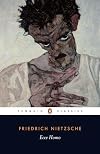
For whom am I writing this review? If Nietzsche were by my side I suspect he would want me to start with the following quote from Ecce Homo: "To you, the bold venturers and adventurers, and whoever has embarked with cunning sails upon dreadful seas, to you who are intoxicated with riddles, who take pleasure in twilight, whose soul is lured with flutes to every treacherous abyss." If you are, in fact, intoxicated with riddles, take pleasure in twilight, and your soul is lured with flutes to show more every treacherous abyss (note - Nietzsche says `every' treacherous abyss not `some' or `most'), then this book is for you.
We all know there is a time of transition hovering about age nineteen when the emotions of sensitive souls are heightened and experience is intensified, intensified to such a point that even thoughts and concepts have a highly-charged emotional tone; one's life deepens, exaggerates, strengthens, amplifies, ignites and one borders on becoming an inflamed madman, even if the madness is only known internally. This time of disequilibrium and hormonal topsy-turvy ordinarily settles down into the next phase of life: early adulthood, where the soul pursues a more specialized field of study and then earnestly begins a profession or career.
But for Nietzsche this transitional phase didn't stop; quite the contrary, rather than settling into any conventional groove, the gap of spiritual and artistic disequilibrium grew progressively wider over the years and was eons away from any semblance of `civilized' balance. Additionally, to add fuel to the emotional and philosophical fire, Nietzsche was not only sensitive but hyper-sensitive to music and the arts and had extraordinary linguistic and literary abilities. Thus, we are well to remember all of this when we read in Ecce Homo: "Philosophy as I have hitherto understood and lived it, is a voluntary living in ice and high mountains - a seeking after everything strange and questionable in existence, all that has hitherto been excommunicated by morality."
After an impassioned forward and two intoxicatingly stunning chapters, Why I Am So Wise' and Why I Am So Clever, (each line of these chapters deserve an underline and is worthy of committing to memory) we come to the chapter, Why I Write Such Good Books, and read: "Ultimately, no one can extract from things, books included, more than he already knows. What one has no access to through experience one has no ear for." So, how can one `understand' Nietzsche when living a conventional life, since living according to convention is itself a life of compromise, that is, not living with full, passion-soaked intensity but life as humdrum routine? This is a question any aspiring reader of Nietzsche must ask.
A self-portrait of Egon Schiele appears on the cover of this Penguin edition, which is most appropriate since this artist courageously and without compromise created a deeply personal expressive style of art causing much controversy in his brief life (he died at 28). Here are a few of the artist's quotes: "I am so rich I must give myself away." -- "To restrict the artist is a crime. It is to restrict germinating life." -- "Art is not modern. Art is primordially eternal."
By his commitment to living with intense zeal in his art and his life, Egon Schiele climbed the Nietzschean high mountains cleanly and fully. This is what it takes. What commitment are you making to live with passion and intensity in your life? If you have not been deeply moved by art and music and have not transformed yourself again and again, what chance do you think you stand in understanding Nietzsche? Perhaps it would be better for you to go on the academic head trip: read Kant and Quine and Rorty and then write papers with all the properly formatted footnotes.
Nietzsche devotes a short chapter to each of his books and then ends with a chapter entitled Why I Am A Destiny. Since this review is of Nietzsche's autobiography, Nietzsche gets the last word, but being Nietzsche, the last word is three quotes. Here they are::
--From the chapter The Birth of Tragedy: "`Rationality' at any price as dangerous, as a force undermining life!"
-- From the chapter Twilight of the Idols: "If you want to get a quick idea of how everything was upsidedown before me, make a start with this writing. That which is called idol on the titlepage is quite simply that which has hitherto been called truth."
--From the chapter Why I am a Destiny: "The concept `sin' invented together with the instrument of torture which goes with it, the concept of `free will', so as to confuse the instincts, so as to make mistrust of the instincts into second nature." show less

This is the third time I have read this anthology. That last time was around 1990. It is worth reading again. But now the cover is gone, and the first pages have drifted away. Over the years I have, of course, I have read other Nietzsche in other editions, but nothing has ever risen to the level of translator and editor Kaufmann’s insights, notes, and arrangement. Even this could be improved by me. I would like more help as I read and Nietzsche refers to contemporary events and personages show more like David Strauss, etc. Also, this particular collection is Thus Spoke Zarathustra with assorted other works. I think that 1883 could have been trimmed down in the excerpt and a few more letters and aphorisms thrown in and that would be better. Speaking of the “aphoristic” (learned that adjective from Kaufmann) over the years I have been moving away from the radical provocations of Thus Spoke Zarathustra and The Antichrist to these insightful, witty aphorisms that I see as a middle period. Those two works I see in the third act with the curtain opening on the Wagner love and the Greek scholar’s dichotomy of the Apollonian and Dionysian.
They are a bit more clearly aimed, while the latter works are not exactly Nostradamus in perplexing obscurity. All that hallucinogenic metaphor probably explains how Nazi theorists and other anti-Semite thinkers believe there is some basis for their worldview here. Kaufmann points out some spots that are quicksand for the deluded despite Nietzsche being overtly anti-anti-Semite (he actually respects Jews for Spinoza and more), anti-party, and anti-nationalistic as in this note:
Being nationalistic in the sense in which it is now demanded by public opinion would, it seems to me, be for us who are more spiritual not mere insipidity but dishonesty, a deliberate deadening of our better will and conscience.
Of course, if his sister had predeceased him, maybe none of that association would have come about:
Essentially, Nietzsche is furiously individual with warnings for all that fear the individual:
Or, put more succinctly:
Really eternal recurrence and even ressentiment I find more interesting than profound. The whole beyond good and evil idea I find more worth mulling on, as is alluded to here:
and
Then we go onto this meat to chew on:
And then this which intrigues me as Buddhism has since I was a teen:
The miscellany of Notes and Letters are intriguing insights into Nietzsche the individual. For one thing, while he did eventually go instance, he comes across “off stage” much more collected than his later zany published works. I would like more of this type of insight, as his reading habits:
In a lot of this, I couldn’t help but think of Nietzsche alive today as a cable news pundit and with a Twitter account (first three from Twilight of the Idols, 1888):
and
and
And, boy oh boy:
They are a bit more clearly aimed, while the latter works are not exactly Nostradamus in perplexing obscurity. All that hallucinogenic metaphor probably explains how Nazi theorists and other anti-Semite thinkers believe there is some basis for their worldview here. Kaufmann points out some spots that are quicksand for the deluded despite Nietzsche being overtly anti-anti-Semite (he actually respects Jews for Spinoza and more), anti-party, and anti-nationalistic as in this note:
Being nationalistic in the sense in which it is now demanded by public opinion would, it seems to me, be for us who are more spiritual not mere insipidity but dishonesty, a deliberate deadening of our better will and conscience.
Of course, if his sister had predeceased him, maybe none of that association would have come about:
LETTER TO HIS SISTER
Christmas 1887
…You have committed one of the greatest stupidities- for yourself and for me! Your association with an anti-Semitic chief expresses a foreignness to my whole way of life which fills me again and again with ire or melancholy… It is a matter of honor with me to be absolutely clean and unequivocal in relation to AntiSemitism, namely, opposed to it, as I am in my writings. I have recently been persecuted with letters and AntiSemitic Correspondence Sheets. My disgust with this party (which would like the benefit of my name only too well!) is as pronounced as possible…
I am unable to do anything against it, that the name of Zarathustra is used in every Anti-Semitic Correspondence Sheet, has almost made me sick several times…
Essentially, Nietzsche is furiously individual with warnings for all that fear the individual:
The eulogists of work. Behind the glorification of "work" and the tireless talk of the "blessings of work" I find the same thought as behind the praise of impersonal activity for the public benefit: the fear of everything individual. At bottom, one now feels when confronted with work-and what is invariably meant is relentless industry from early till late-that such work is the best police, that it keeps everybody in harness and powerfully obstructs the development of reason, of covetousness, of the desire for independence. For it uses up a tremendous amount of nervous energy and takes it away from reflection, brooding, dreaming, worry, love, and hatred; it always sets a small goal before one's eyes and permits easy and regular satisfactions. In that way a society in which the members continually work hard will have more security: and security is now adored as the supreme goddess. And now horrors! it is precisely the "worker" who has become dangerous. "Dangerous individuals are swarming all around. And behind them, the danger of dangers: the individual.
- The Dawn (1881)
Or, put more succinctly:
The surest way to corrupt a youth is to instruct him to hold in higher esteem those who think alike than those who think differently.
- The Dawn (1881)
Really eternal recurrence and even ressentiment I find more interesting than profound. The whole beyond good and evil idea I find more worth mulling on, as is alluded to here:
Of all evil I deem you capable: therefore I want the good from you. Verily, I have often laughed at the weaklings who thought themselves good because they had no claws.
- Thus Spoke Zarathustra (1883)
and
What is done out of love always occurs beyond good and evil.
- Beyond Good and Evil (1886)
Then we go onto this meat to chew on:
My demand upon the philosopher is known, that he take his stand beyond good and evil and leave the illusion of moral judgment beneath himself. This demand follows from an insight which I was the first to formulate: that there are altogether no moral facts. Moral judgments agree with religious ones in believing in realities which are no realities. Morality is merely an interpretation of certain phenomena-more precisely, a misinterpretation. Moral judgments, like religious ones, belong to a stage of ignorance at which the very concept of the real and the distinction between what is real and imaginary, are still lacking; thus "truth," at this stage, designates all sorts of things which we today call "imaginings." Moral judgments are therefore never to be taken literally: so understood, they always contain mere absurdity. Semeiotically, however, they remain invaluable: they reveal, at least for those who know, the most valuable realities of cultures and inwardnesses which did not know enough to "understand" themselves. Morality is mere sign language, mere symptomatology: one must know what it is all about to be able to profit from it.
- Twilight of the Idols (1888)
And then this which intrigues me as Buddhism has since I was a teen:
That the strong races of northern Europe did not reject the Christian God certainly does no credit to their religious genius-not to speak of their taste. There is no excuse whatever for their failure to dispose of such a sickly and senile product of decadence. But a curse lies upon them for this failure: they have absorbed sickness, old age, and contradiction into all their instincts and since then they have not created another god. Almost two thousand years-and not a single new god! But still, as if his existence were justified, as if he represented the ultimate and the maximum of the god-creating power, of the creator spiritus in man, this pitiful god of Christian monotono-theism! …
I hope that my condemnation of Christianity has not involved me in any injustice to a related religion with an even larger number of adherents: Buddhism. Both belong together as nihilistic religions-they are religions of decadence-but they differ most remarkably. For being in a position now to compare them, the critic of Christianity is profoundly grateful to the students of India.
Buddhism is a hundred times more realistic than Christianity: posing problems objectively and coolly is part of its inheritance, for Buddhism comes after a philosophic movement which spanned centuries. The concept of "God" had long been disposed of when it arrived. Buddhism is the only genuinely positivistic religion in history. This applies even to its theory of knowledge (a strict phenomenalism): it no longer says "struggle against sin" but, duly respectful of reality. "struggle against suffering." Buddhism is profoundly distinguished from Christianity by the fact that the self-deception of the moral concepts lies far behind it. In my terms, it stands beyond good and evil.
- The Antichrist (1888)
The miscellany of Notes and Letters are intriguing insights into Nietzsche the individual. For one thing, while he did eventually go instance, he comes across “off stage” much more collected than his later zany published works. I would like more of this type of insight, as his reading habits:
LETIER TO OVERBECK
Nizza, February 23, 1887
…I did not even know the name of Dostoevsky just a few weeks ago-uneducated person that I am, not reading any journals. An accidental reach of the arm in a bookstore brought to my attention L' esprit souterrain, a work just translated into French. (It was a similar accident with Schopenhauer in my 21st year and with Stendhal in my 35th.) The instinct of kinship (or how should I name it?) spoke up immediately; my joy was extraordinary…
In a lot of this, I couldn’t help but think of Nietzsche alive today as a cable news pundit and with a Twitter account (first three from Twilight of the Idols, 1888):
The sick man is a parasite of society. In a certain state it is indecent to live longer. To go on vegetating in cowardly dependence on physicians and machinations, after the meaning of life, the right to life, has been lost, that ought to prompt a profound contempt in society. The physicians, in turn, would have to be the mediators of this contempt-not prescriptions, but every day a new dose of nausea with their patients. To create a new responsibility, that of the physician, for all cases in which the highest interest of life, of ascending life, demands the most inconsiderate pushing down and aside of degenerating life-for example, for the right of procreation, for the right to be born, for the right to live. To die proudly when it is no longer possible to live proudly. Death freely chosen, death at the right time, brightly and cheerfully accomplished…
and
The value of a thing sometimes does not lie in that which one attains by it, but in what one pays for it-what it costs us. I shall give an example. Liberal institutions cease to be liberal as soon as they are attained: later on, there are no worse and no more thorough injurers of freedom than liberal institutions. Their effects are known well enough: they undermine the will to power; they level mountain and valley, and call that morality; they make men small, cowardly, and hedonistic-every time it is the herd animal that triumphs with them. Liberalism: in other words, herd-animalization.
and
Our institutions are no good any more: on that there is universal agreement. However, it is not their fault but ours. Once we have lost all the instincts out of which institutions grow, we lose institutions altogether because we are no longer good for them. Democracy has ever been the form of decline in organizing power…
And, boy oh boy:
One need only read any Christian agitator, St. Augustine, for example, to comprehend, to smell, what an unclean lot had thus come to the top. One would deceive oneself utterly if one presupposed any lack of intelligence among the leaders of the Christian movement: oh, they are clever, clever to the point of holiness, these good church fathers! What they lack is something quite different. Nature has neglected them-she forgot to give them a modest dowry of respectable, of decent, of clean instincts. Among ourselves, they are not even men. Islam is a thousand times right in despising Christianity: Islam presupposes men.show less
Christianity has cheated us out of the harvest of ancient culture; later it cheated us again, out of the harvest of the culture of Islam. The wonderful world of the Moorish culture of Spain, really more closely related to us, more congenial to our senses and tastes than Rome and Greece, was trampled down (I do not say by what kind of feet). Why? Because it owed its origin to noble, to male instincts, because it said Yes to life even with the rare and refined luxuries of Moorish life.
- The Antichrist (1888)
Twilight of the Idols with The Antichrist and Ecce Homo (Wordsworth Classics of World Literature) by Friedrich Nietzsche
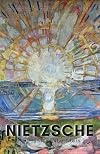
The first interesting thing I discovered about Nietzsche is something I suspected when I read Beyond Good and Evil: Nietzsche "learnt much from La Rochefoucauld" (p. viii). And to start off with first principles, Nietzsche makes an interesting observation: morality is "a misrepresentation of certain phenomena, for there are no moral facts whatever (p. xi). I have now come to terms with the idea of Dionysian "chaos" versus the Apollonian "order". Interestingly, this struck me last night at show more the Canberra Symphony Orchestra's performances of Prokofiev's Piano Concerto No. 2 in G minor, op. 16 (with acclaimed Australian pianist Tamara-Anna Cislowska as the soloist), and Shostakovich's Symphony No. 9 in E flat major, op. 70. My friend and colleague, a sociologist, who invited us to the concert, has often spoken of these two opposing approaches. But until now, I have been ignorant to the depth of meaning that is so readily missed when one's antennae are not properly directed. And so, Nietzsche sees art as "Dionysian. It is amoral". "Christian art" is an oxymoron, yet Islam is "a virile religion, a religion for men". Nietzsche sees Christianity and alcohol as "the two great means of corruption" (p. 160). A central message (one of too many!) is that, "where the will to power is lacking, degeneration sets in" (p. 97). Nietzsche blames Saint Paul for destroying Rome, and Luther for destroying the Renaissance. Well I never! Kant perpetuated some of the decay, but Goethe, the antipodes of Kant, "disciplined himself into a harmonious whole, he created himself" (p. 81). Further, and while Nietzsche may well have predicted the World Wars, he may also have predicted the decay of our current institutions. Nietzsche argued that we have forgotten the purpose of our institutions (something that would seem apparent in my understanding of theories of institutional change), in effect, institutions require:
...a sort of will, instinct, imperative, which cannot be otherwise than antiliberal to the point of wickedness: the will to tradition, to authority, to responsibility for centuries to come, to solidarity in long family lines forwards and backwards in infinitum. If this will is present, something is founded which resembles the imperium Romanum: or Russia, the only great nation today that has some lasting grit in her.In speaking of first principles, Nietzsche appears as a Neo-Con Flâneur (p. 72); yet he does not mince words:
First principle: a man must need to be strong, otherwise he will never attain it. - those great forcing-houses of the strong, of the strongest kind of men that have ever existed on earth, the aristocratic communities like those of Rome and Venice, understood freedom precisely as I understand the word: as something that one has and one has not, as something that one will have and that one seizes by force.I can't pretend to know everything about Nietzsche, and I doubt I can commit to further study beyond a once-reading of the majority of his work. But something has changed in me as a result. I will blog about Ecce Homo in a subsequent post, as I am reading it in a separate book with an easier-to-read type-font, but from Nietzsche's autobiography, he arose from illness (and, paradoxically, to return to it soon after) to suffer no longer from "'ill-luck' nor 'guilt'". He "is strong enough to make everything turn to his own advantage" (p. 176). In this way, Nietzsche is much like Marcus Aurelius: Amor Fati. And no longer can my response be "merely" academic: I feel a weight of centuries lifting, I see why our institutions are crumbling, I fear the solution will not be forthcoming until the next major crisis disrupts human society yet again; I know that this will all be forgotten by future generations. And so time will march on. But Nietzsche does not leave me pessimistic, nor does he leave me disturbed as Viktor Frankl does. He leaves me free. Is this too dramatic? Read what I have read and tell me. I am all ears. show less
Lists
German Literature (14)
Favourite Books (1)
. (1)
19th Century (1)
. (1)
philosophy (1)
Pants on fire (1)
To read (1)
Philosophy (1)
el (7)
Reading LIst (2)
Junky Paperbacks (2)
My List (4)
Existentialism (2)
Art of Reading (4)
Tom's Bookstore (2)
Books to Read (1)
Unread books (2)
Awards


You May Also Like


Associated Authors
Statistics
- Works
- 1,395
- Also by
- 36
- Members
- 78,439
- Popularity
- #158
- Rating
- 3.9
- Reviews
- 567
- ISBNs
- 4,098
- Languages
- 45
- Favorited
- 303


