
Paul Feyerabend (1924–1994)
Author of Against Method
About the Author
A controversial and influential voice in the philosophy of science, Paul K. Feyerabend was born and educated in Vienna. After military service during World War II and further study at the University of London, he returned to Vienna as a lecturer at the university. In 1959, having taught for several show more years at Bristol University in England, he came to the United States to join the faculty of the University of California at Berkeley, from which, after numerous visiting appointments elsewhere, he retired in 1990. Since the 1970s, Feyerabend has devoted much of his career to arguing that science as practiced cannot be described, let alone regulated, by any coherent methodology, whether understood historically, as in Thomas Kuhn's use of paradigms, or epistemologically, as in classical positivism and its offspring. He illustrates this stance on the dust jacket of one of his books, Against Method (1975), by publishing his horoscope in the place usually reserved for a biographical sketch of the author. In his entry in the Supplement to Who's Who in America, he is quoted as saying, "Leading intellectuals with their zeal for objectivity are criminals, not the liberators of mankind." (Bowker Author Biography) show less
Image credit: Photo credit: Grazzia Borrini-Feyerabend
Series
Works by Paul Feyerabend
For and Against Method: Including Lakatos's Lectures on Scientific Method and the Lakatos-Feyerabend Correspondence (1995) — Author — 133 copies, 2 reviews
Mind, Matter, and Method: Essays in Philosophy and Science in Honor of Herbert Feigl (1966) — Editor — 18 copies
SULL'ANARCHISMO EPISTEMOLOGICO 2 copies
Knowledge without foundations; two lectures delivered on the Nellie Heldt Lecture Fund (1961) 2 copies
Feyerabend 1 copy
Feyerabend [Opere di] 1 copy
Putnam on incommensurability 1 copy
Patterns of discovery 1 copy
¿Por qué no Platón? 1 copy
Popper's Objective Knowledge 1 copy
Ciencia y Anarquía 1 copy
Associated Works
The Philosopher's Handbook: Essential Readings from Plato to Kant (2000) — Contributor — 236 copies, 1 review
The Critical Approach to Science and Philosophy : In Honor of Karl R. Popper (1964) — Contributor — 19 copies
Tagged
Common Knowledge
- Canonical name
- Feyerabend, Paul
- Birthdate
- 1924-01-23
- Date of death
- 1994-02-11
- Gender
- male
- Education
- University of Vienna (Ph.D|Philosophy|1951)
- Occupations
- philosopher of science
professor - Organizations
- London School of Economics
University of Bristol
University of California, Berkeley (1958-1989)
Wehrmacht (WWII) - Awards and honors
- Iron Cross
- Short biography
- He was taught by and influenced by Karl Popper & also went to lectures by Wittgenstein intending to study under him until his death. Turned down the offer of working with Bertolt Brecht (c.1949)
- Cause of death
- brain tumor
- Nationality
- Austria (birth)
USA (1958) - Birthplace
- Vienna, Austria
- Places of residence
- England, UK
Auckland, New Zealand
Italy
Germany
Switzerland
USA - Place of death
- Genolier, Vaud, Switzerland
Members
Reviews
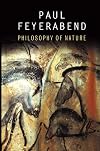
This was the beginning of a very ambitious project by Feyerabend — an historical account of how we have thought about and experienced reality, from Stone Age times to modern quantum theory. This was to be the first of (at least) three volumes. Unfortunately all we have is this one volume, still in draft form, although I think we are fortunate to have it at all.
The Introduction by Heit and Oberheim is indispensable for understanding the context of the book. Usually, I’m not a fan of show more introductions, but this is well-written and well-needed. Feyerabend began the project in the 1970s, in the years leading up to the publication of his Against Method, still his major work. The aftermath of Against Method’s publication, responding to critics and refining his arguments, would consume him for years and may have kept him from getting back to and completing this project.
This volume begins with the Stone Age, progresses through Homeric Greece, the Pre-Socratics, Plato, Aristotle, and on up in mostly outline form through to modern and contemporary science.
What exactly Feyerabend is tracing the development of is critical to understanding his thinking. In an early passage, he distinguishes what he calls “refined” epistemology from “naive” epistemology. A naive epistemology is one in which knowledge of reality is relatively unproblematic — the facts about the world are simply presented to human consciousness. Concepts arise from facts and allow us to describe those facts. Thus, reality itself determines our experience of it, and our conceptual knowledge of it. The relation between the two, knowledge and reality, is a simple, untroubled one.
A refined epistemology is one in which reality does not determine our experience of it but is instead itself influenced by a host of factors, including language, social structures, religion, . . . This is the kind of epistemology we associate with Whorfian theories of language, constructivism, and overall a more contemporary, post-Kantian understanding of reality as something co-produced by human consciousness, social reality, and reality itself (however we can still talk about a “reality itself”).
Feyerabend doesn’t so much argue for the “refined” epistemology as place himself within it. Actually, the book is short on traditional philosophical argument, even for Feyerabend. This may be partly a matter of its being an unfinished work, as well as his general disdain for traditional philosophical argument.
In keeping with a refined epistemology, what Feyerabend is tracing the development of is not just how we think about nature in our theories, but how we experience it in everyday life, as informed as that experience is by language, social structures, and other factors. So, in a strong sense, it is “nature” itself that develops and changes over the course of history.
Feyerabend distinguishes three stages — the Homeric, the philosophical, and the modern scientific. Homeric nature is experienced as “aggregate” — without essences or substances defining the nature of things, but rather a melange of experiences, actions, effects, all interfacing with one another without strict requirements of laws of nature or even large-scale logical structure.
That experience is difficult to describe, since it isn’t our own. Feyerabend does his best to crawl inside Homeric poetry and Greek myth, to discover a different kind of sense that the world made to the pre-philosopical Greeks. He is adamant that this sense is every bit as legitimate (and complex) as our own, that within the poetry and the mythology there are ways of understanding and dealing with such things as seasons, chemical nature, etc. that may escape our current attention because we are simply not attuned to them.
Likewise the Homeric age’s experience of self is quite different. In the Homeric world, the human mind was much more transparent than we think of it now. Events passed through any border between mind and world such that thoughts were not entirely autonomous. The will could be determined by events, ideas could arise by events outside the mind. Mind was within nature.
But now, in the philosophical world, human consciousness is autonomous — it “interacts” with a world. “The separation liberated humans, it transformed them from a component of nature and society, directly subjected to the impact of both, into their observer and transformer. No longer was the world simply there; rather, it became something alien that had to be conquered anew, both conceptually and practically.”
Feyerabend singles out Xenophanes and Parmenides as critical to the turn toward the philosophical. Xenophanes for the development of a notion of “experience” that depends upon this separation of human consciousness from the world, whereby the world is experienced by a human consciousness (with the help of interpretive principles and concepts that make it more than just a chaotic confusion). And Parmenides for the development of the notion of Being — the nonchangeable aspects of reality that later become the basis, in modern science, for the laws, elements, etc. that do not change and by which we can understand everything that does change.
And Feyerabend stresses that the transition from the Homeric to the philosophical is not the result of an argument. It is historical change, in the full context of all that happens in historical change — political change, technological change, religious change, changes in social structures.
He is a little short on detail here, but he does refer to a transition between local, immanent gods of Homeric times, and more abstract gods and principles. As civilizations expanded and conquests were made, what had been a local religion or god had to encompass a broader scope, retreating into more abstract terms as it did so.
Feyerabend here is an historical thinker at the same time as he is an epistemologist, seeing the two as inseperable in a way reminiscent of Hegel. In fact, he recruits Hegel as a natural ally. Hegel’s Phenomenology in particular traces the history of knowing, whereby “reality” itself, what we experience, changes and develops. Feyerabend is doing something very similar here, and he is right to recruit Hegel as an ally.
But for Feyerabend, unlike for Hegel, there is no progress. In fact, he seems to mourn the loss of Homeric experience. This philosophical separation of consciousness from world comes at a cost, inviting us to think of critiques of modern technology (e.g., Heidegger’s) as well as Feyerabend’s own critiques of a kind of scientific imperialism, in which all other “non-scientific” ways of experiencing and understanding the world are repressed, deemed suspect or outright illegitimate.
Against Method and The Conquest of Abundance stand out as places to go to read more on this campaign for diversity in experience and understanding.
It’s certainly a shame that Feyerabend was unable to finish this project. I know that his portrayal of the Homeric experience has taken its share of criticism. Fair enough, but that doesn’t invalidate his over-riding point that the philosophical and scientific experiences of the world are historical in nature, not simply the emergence of the victors against the dangers of superstition and irrationality. And that there may be much lost in our treating them as rightful victors. show less
The Introduction by Heit and Oberheim is indispensable for understanding the context of the book. Usually, I’m not a fan of show more introductions, but this is well-written and well-needed. Feyerabend began the project in the 1970s, in the years leading up to the publication of his Against Method, still his major work. The aftermath of Against Method’s publication, responding to critics and refining his arguments, would consume him for years and may have kept him from getting back to and completing this project.
This volume begins with the Stone Age, progresses through Homeric Greece, the Pre-Socratics, Plato, Aristotle, and on up in mostly outline form through to modern and contemporary science.
What exactly Feyerabend is tracing the development of is critical to understanding his thinking. In an early passage, he distinguishes what he calls “refined” epistemology from “naive” epistemology. A naive epistemology is one in which knowledge of reality is relatively unproblematic — the facts about the world are simply presented to human consciousness. Concepts arise from facts and allow us to describe those facts. Thus, reality itself determines our experience of it, and our conceptual knowledge of it. The relation between the two, knowledge and reality, is a simple, untroubled one.
A refined epistemology is one in which reality does not determine our experience of it but is instead itself influenced by a host of factors, including language, social structures, religion, . . . This is the kind of epistemology we associate with Whorfian theories of language, constructivism, and overall a more contemporary, post-Kantian understanding of reality as something co-produced by human consciousness, social reality, and reality itself (however we can still talk about a “reality itself”).
Feyerabend doesn’t so much argue for the “refined” epistemology as place himself within it. Actually, the book is short on traditional philosophical argument, even for Feyerabend. This may be partly a matter of its being an unfinished work, as well as his general disdain for traditional philosophical argument.
In keeping with a refined epistemology, what Feyerabend is tracing the development of is not just how we think about nature in our theories, but how we experience it in everyday life, as informed as that experience is by language, social structures, and other factors. So, in a strong sense, it is “nature” itself that develops and changes over the course of history.
Feyerabend distinguishes three stages — the Homeric, the philosophical, and the modern scientific. Homeric nature is experienced as “aggregate” — without essences or substances defining the nature of things, but rather a melange of experiences, actions, effects, all interfacing with one another without strict requirements of laws of nature or even large-scale logical structure.
That experience is difficult to describe, since it isn’t our own. Feyerabend does his best to crawl inside Homeric poetry and Greek myth, to discover a different kind of sense that the world made to the pre-philosopical Greeks. He is adamant that this sense is every bit as legitimate (and complex) as our own, that within the poetry and the mythology there are ways of understanding and dealing with such things as seasons, chemical nature, etc. that may escape our current attention because we are simply not attuned to them.
Likewise the Homeric age’s experience of self is quite different. In the Homeric world, the human mind was much more transparent than we think of it now. Events passed through any border between mind and world such that thoughts were not entirely autonomous. The will could be determined by events, ideas could arise by events outside the mind. Mind was within nature.
But now, in the philosophical world, human consciousness is autonomous — it “interacts” with a world. “The separation liberated humans, it transformed them from a component of nature and society, directly subjected to the impact of both, into their observer and transformer. No longer was the world simply there; rather, it became something alien that had to be conquered anew, both conceptually and practically.”
Feyerabend singles out Xenophanes and Parmenides as critical to the turn toward the philosophical. Xenophanes for the development of a notion of “experience” that depends upon this separation of human consciousness from the world, whereby the world is experienced by a human consciousness (with the help of interpretive principles and concepts that make it more than just a chaotic confusion). And Parmenides for the development of the notion of Being — the nonchangeable aspects of reality that later become the basis, in modern science, for the laws, elements, etc. that do not change and by which we can understand everything that does change.
And Feyerabend stresses that the transition from the Homeric to the philosophical is not the result of an argument. It is historical change, in the full context of all that happens in historical change — political change, technological change, religious change, changes in social structures.
He is a little short on detail here, but he does refer to a transition between local, immanent gods of Homeric times, and more abstract gods and principles. As civilizations expanded and conquests were made, what had been a local religion or god had to encompass a broader scope, retreating into more abstract terms as it did so.
Feyerabend here is an historical thinker at the same time as he is an epistemologist, seeing the two as inseperable in a way reminiscent of Hegel. In fact, he recruits Hegel as a natural ally. Hegel’s Phenomenology in particular traces the history of knowing, whereby “reality” itself, what we experience, changes and develops. Feyerabend is doing something very similar here, and he is right to recruit Hegel as an ally.
But for Feyerabend, unlike for Hegel, there is no progress. In fact, he seems to mourn the loss of Homeric experience. This philosophical separation of consciousness from world comes at a cost, inviting us to think of critiques of modern technology (e.g., Heidegger’s) as well as Feyerabend’s own critiques of a kind of scientific imperialism, in which all other “non-scientific” ways of experiencing and understanding the world are repressed, deemed suspect or outright illegitimate.
Against Method and The Conquest of Abundance stand out as places to go to read more on this campaign for diversity in experience and understanding.
It’s certainly a shame that Feyerabend was unable to finish this project. I know that his portrayal of the Homeric experience has taken its share of criticism. Fair enough, but that doesn’t invalidate his over-riding point that the philosophical and scientific experiences of the world are historical in nature, not simply the emergence of the victors against the dangers of superstition and irrationality. And that there may be much lost in our treating them as rightful victors. show less
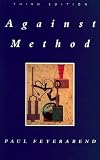
I like Paul Feyeraband. I like his ideas. I want to agree with him. Wait, I do agree with him, but not because he presented a solid argument for his case. I agree with him because I like his ideas, and I want to believe them.
So I give the ideas in this book 5 stars. 5 selfish, unabashed stars.
The book itself, however, I give 3. Damn. What could have been a great, clear, exposition of his ideas, with wonderfully clear and lively examples to back them up, is not present here. I thought this show more book would give a lot of the history of philosophy, and easy to understand explanations of other philosophy of science ideas. I could have imagined him describing a time in science, and talking about the main characters and what their ideas were and what was at stake, etc. and for him to show that these great people during whatever period in time discovered something incredible in science, yet went totally against any 'scientific method'. BUT that doesn't happen here. Instead Feyeraband talks a lot about Galileo. A LOT. But Galileo is neat, and it helps to support some of Paul's ideas. But... there is way too much Galileo. I would have LOVED to hear more examples of when scientists throughout time discovered 'facts' and 'truths' through completely unscientific means.
Even his treatment of Galileo isn't that great. He skims over some details that I would have found really interesting, and which I require in order to follow his arguments. UGH, and so many asides. I stopped reading those eventually.
I love you Paul, but damnit I wish you had written a better book. show less
So I give the ideas in this book 5 stars. 5 selfish, unabashed stars.
The book itself, however, I give 3. Damn. What could have been a great, clear, exposition of his ideas, with wonderfully clear and lively examples to back them up, is not present here. I thought this show more book would give a lot of the history of philosophy, and easy to understand explanations of other philosophy of science ideas. I could have imagined him describing a time in science, and talking about the main characters and what their ideas were and what was at stake, etc. and for him to show that these great people during whatever period in time discovered something incredible in science, yet went totally against any 'scientific method'. BUT that doesn't happen here. Instead Feyeraband talks a lot about Galileo. A LOT. But Galileo is neat, and it helps to support some of Paul's ideas. But... there is way too much Galileo. I would have LOVED to hear more examples of when scientists throughout time discovered 'facts' and 'truths' through completely unscientific means.
Even his treatment of Galileo isn't that great. He skims over some details that I would have found really interesting, and which I require in order to follow his arguments. UGH, and so many asides. I stopped reading those eventually.
I love you Paul, but damnit I wish you had written a better book. show less

Contains a lot of totally excellent ideas. Validity of arguments aside, Against Method is sorely needed criticism of method and scientism. Using Galileo as an example Feyerabend talks about the arationality of scientific progress, and incommensurability of theory. I felt like I understood mmmaybe 50% of the book, but I know that what I got from it will be in the forefront of my mind. Anyway, I'm sure i'll come back and read it later after tackling Kuhn, Bhaskar, Lakatos, etc.

This is a collection of transcripts from a series of lectures that Feyerabend gave in the early 90s. Consequently there is no systematic philosophical account, but given the anti-method "anarchist" views of the author, the conversational style fits thematically (as well as making this an easy read).
Best known for his work Against Method, Feyerabend is best described not as a skeptic, which would imply a disbelief in science as the word is typically used, but an anarchistic critic of show more scientific methodologies. This is a compelling alternative to the widely-held view of an infallible, Truth-wielding science as the one and only means of establishing knowledge.
Note here that I'm using "science" in the most abstract, mainstream, golden-ideal sense of the term -- the definition you'd receive when asking someone who has spent little or no time wrestling with the underpinnings. The fact that not all types of science are created equally is one point of contention.
Feyerabend is clearly in what we might call the empiricist camp, though he is far from starstruck by what he sees as an emphasis on abstraction and theory to the exclusion of practical forms of knowing. The "anarchism" comes from Feyerabend's "anything goes" quote, meant not to throw out scientific methodologies but rather to step away from the Platonism -- the need to quantify and categorize -- and adopt an approach that is less method-driven and more pragmatic. The question should be "does it work?" rather than "is this what the book says?" In this he finds institutionalized "science", as often as not, to be more problematic than the process itself.
Feyerabend's philosophy is not above criticism, to be sure, but given the growing dominance of scientific (and scientistic) thought in our society, it's more important than ever to realize the limits of knowledge produced by the sciences -- and most important of all, what we do with that knowledge. With that goal in mind, this is a good introduction to sorely needed criticism. show less
Best known for his work Against Method, Feyerabend is best described not as a skeptic, which would imply a disbelief in science as the word is typically used, but an anarchistic critic of show more scientific methodologies. This is a compelling alternative to the widely-held view of an infallible, Truth-wielding science as the one and only means of establishing knowledge.
Note here that I'm using "science" in the most abstract, mainstream, golden-ideal sense of the term -- the definition you'd receive when asking someone who has spent little or no time wrestling with the underpinnings. The fact that not all types of science are created equally is one point of contention.
Feyerabend is clearly in what we might call the empiricist camp, though he is far from starstruck by what he sees as an emphasis on abstraction and theory to the exclusion of practical forms of knowing. The "anarchism" comes from Feyerabend's "anything goes" quote, meant not to throw out scientific methodologies but rather to step away from the Platonism -- the need to quantify and categorize -- and adopt an approach that is less method-driven and more pragmatic. The question should be "does it work?" rather than "is this what the book says?" In this he finds institutionalized "science", as often as not, to be more problematic than the process itself.
Feyerabend's philosophy is not above criticism, to be sure, but given the growing dominance of scientific (and scientistic) thought in our society, it's more important than ever to realize the limits of knowledge produced by the sciences -- and most important of all, what we do with that knowledge. With that goal in mind, this is a good introduction to sorely needed criticism. show less
Lists
Awards

You May Also Like


Associated Authors
Statistics
- Works
- 64
- Also by
- 5
- Members
- 3,310
- Popularity
- #7,730
- Rating
- 3.9
- Reviews
- 37
- ISBNs
- 185
- Languages
- 13
- Favorited
- 12