
Anna Lowenhaupt Tsing
Author of The Mushroom at the End of the World: On the Possibility of Life in Capitalist Ruins
About the Author
Works by Anna Lowenhaupt Tsing
The Mushroom at the End of the World: On the Possibility of Life in Capitalist Ruins (2015) 965 copies, 23 reviews
Arts of Living on a Damaged Planet: Ghosts and Monsters of the Anthropocene (2017) — Editor — 172 copies, 2 reviews
In the Realm of the Diamond Queen: Marginality in an Out-of-the-Way Place (1993) 116 copies, 1 review
Associated Works
What a Mushroom Lives For: Matsutake and the Worlds They Make (2022) — Foreword, some editions — 55 copies, 1 review
The Anthropology of Politics: A Reader in Ethnography, Theory, and Critique (2002) — Contributor — 38 copies
Tagged
Common Knowledge
- Birthdate
- 1952-10-20
- Gender
- female
- Education
- Stanford University (MA, PhD - Anthropology)
Yale University (BA) - Occupations
- anthropologist
professor - Organizations
- University of California, Santa Cruz
- Awards and honors
- Guggenheim Fellowship (2010)
- Nationality
- USA
- Map Location
- USA
Members
Reviews
The Mushroom at the End of the World: On the Possibility of Life in Capitalist Ruins by Anna Lowenhaupt Tsing
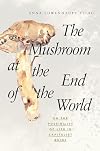
I bought this book because of my enduring fascination with mushrooms: I eat them, I cook them, I hunt for them, and I think and read about them. I'm also repeatedly rewarded by their weirdness, so the title, subtitle, and cover art for this beautiful book had me hooked from the start. The Mushroom at the End of the World: On the Possibility of Life in Capitalist Ruins by Anna Lowenhaupt Tsing is not really a book about mushrooms. It's not even a book about foraging for mushrooms. It's about show more both of those things, of course, but it's about so much more.
Professor Tsing is an anthropologist by trade and this is a scholalry work--as such it's part of an expert conversation that I won't ever join, a specialist discourse that aims to expand a sphere of knowledge that lies way beyond my ken. Tsing writes of precarity, assemblages, entanglements, patches, commons, machines, and translation. Don't let any of that scare you off--the writing is superb, and as your guide, Dr. Tsing brings you along on her forray. She shows you what to look for and how to read this foreign landscape. I knew I was in an immense forrest, but I was never lost.
Matsutake thrive in forrests that have been "ruined" by industrialization, administrative regulation, globalization, and capitalist profit motives. Where matsutake grow, pickers go, and ways of selling them into markets that carry them across oceans emerge. Tsing follows these flushes of mushrooms and the activities around them across continents describing how they work and the lives they support. It is, as the subtitle promises, a documentation of life beside, beyond, and in some ways in spite of globalized markets and the way we think they work.
This book is so rich--even for a non-expert like me--that it's hard to describe. Tsing uses matsutake and the ecosystem and trade network around it as a lens to focus thought about life (human and non-human) in our time. The result is a tumultuous re-thinking that points to alternatives that most of us haven't considered. It's pretty great. show less
Professor Tsing is an anthropologist by trade and this is a scholalry work--as such it's part of an expert conversation that I won't ever join, a specialist discourse that aims to expand a sphere of knowledge that lies way beyond my ken. Tsing writes of precarity, assemblages, entanglements, patches, commons, machines, and translation. Don't let any of that scare you off--the writing is superb, and as your guide, Dr. Tsing brings you along on her forray. She shows you what to look for and how to read this foreign landscape. I knew I was in an immense forrest, but I was never lost.
Matsutake thrive in forrests that have been "ruined" by industrialization, administrative regulation, globalization, and capitalist profit motives. Where matsutake grow, pickers go, and ways of selling them into markets that carry them across oceans emerge. Tsing follows these flushes of mushrooms and the activities around them across continents describing how they work and the lives they support. It is, as the subtitle promises, a documentation of life beside, beyond, and in some ways in spite of globalized markets and the way we think they work.
This book is so rich--even for a non-expert like me--that it's hard to describe. Tsing uses matsutake and the ecosystem and trade network around it as a lens to focus thought about life (human and non-human) in our time. The result is a tumultuous re-thinking that points to alternatives that most of us haven't considered. It's pretty great. show less
The Mushroom at the End of the World: On the Possibility of Life in Capitalist Ruins by Anna Lowenhaupt Tsing
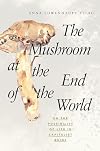
This is a fascinating examination of how capitalism and common capitalist ways of thinking about labor, production, and value don't always hold up.
Matsutake mushrooms do not fit well in a capitalist system. Under capitalism, when a commodity has value, the logical response is to systematize the production of that commodity so you can make more of it so you can sell lots of it so you can make money. Matsutake mushrooms are valued in Japanese culture, not only because they are tasty, but show more because they symbolize prosperity. They are traditionally offered as gifts, and the gift of matsutake mushrooms has more value than the mushrooms would normally have themselves. The problem from a capitalist point of view is that you can't intentionally grow matsutakes. Scientists have tried to get them to grow on farms, but they haven't figured out how to do it. They only grow where pine trees grow. Pine trees grow best in forests that have been recently disturbed or damaged - after a forest fire, pine trees are one of the first things to grow back, but as soon as slower-growing broadleaf trees come in, they crowd out the pine trees and the pines die. So matsutake mushrooms will only grow in forests that are recovering from some disturbance - creating the right conditions for them on purpose is very difficult, so it's very hard to scale matsutake production the way a capitalist system would like to.
Matsutake can be found in the forests of the Pacific Northwest, so a lot of people make money by hunting for matsutake. However, these people generally don't fit into a capitalist system either - they are immigrants, veterans, and various drifters who don't want to have traditional jobs, but want to be free to live their lives however they please.
Tsing examines the entire supply chain of matsutake mushrooms, the life stories and cultures of the people who collect them, and how they don't fit into the capitalist system. She is constantly looking for the outliers, the exceptions to the rules, and the phenomena that capitalism would like to ignore. This gives her opportunities to critique capitalism, by examining the people, products, and processes that it excludes and demonstrating the damage it has done, but also to offer some hints of what the world might look like if capitalism weren't dominant. Tsing also shows that the reality of our world is a lot messier than we would like it to be - scientists, economists, and anthropologists all want to fit everything in the world into tidy taxonomies, but the real world doesn't work that way, and the things that don't fit into those categories often get ignored, but we can learn a lot about the world by paying attention to them.
Because the book resists capitalism, it also resists traditional modes of academic writing. It is interdisciplinary, and also not organized around a traditional thesis, but instead offers a variety of related ideas and perspectives. As someone who is used to reading traditional academic writing and who wants to be able to think about how every chapter supports the thesis, I found this a little unsettling, but that's exactly Tsing's goal. My discomfort with the book's organization is part of her larger project of showing that there are alternative ways of doing everything.
This is a fascinating book that covers a lot of literal and metaphorical ground. There's a lot to unpack and think about. show less
Matsutake mushrooms do not fit well in a capitalist system. Under capitalism, when a commodity has value, the logical response is to systematize the production of that commodity so you can make more of it so you can sell lots of it so you can make money. Matsutake mushrooms are valued in Japanese culture, not only because they are tasty, but show more because they symbolize prosperity. They are traditionally offered as gifts, and the gift of matsutake mushrooms has more value than the mushrooms would normally have themselves. The problem from a capitalist point of view is that you can't intentionally grow matsutakes. Scientists have tried to get them to grow on farms, but they haven't figured out how to do it. They only grow where pine trees grow. Pine trees grow best in forests that have been recently disturbed or damaged - after a forest fire, pine trees are one of the first things to grow back, but as soon as slower-growing broadleaf trees come in, they crowd out the pine trees and the pines die. So matsutake mushrooms will only grow in forests that are recovering from some disturbance - creating the right conditions for them on purpose is very difficult, so it's very hard to scale matsutake production the way a capitalist system would like to.
Matsutake can be found in the forests of the Pacific Northwest, so a lot of people make money by hunting for matsutake. However, these people generally don't fit into a capitalist system either - they are immigrants, veterans, and various drifters who don't want to have traditional jobs, but want to be free to live their lives however they please.
Tsing examines the entire supply chain of matsutake mushrooms, the life stories and cultures of the people who collect them, and how they don't fit into the capitalist system. She is constantly looking for the outliers, the exceptions to the rules, and the phenomena that capitalism would like to ignore. This gives her opportunities to critique capitalism, by examining the people, products, and processes that it excludes and demonstrating the damage it has done, but also to offer some hints of what the world might look like if capitalism weren't dominant. Tsing also shows that the reality of our world is a lot messier than we would like it to be - scientists, economists, and anthropologists all want to fit everything in the world into tidy taxonomies, but the real world doesn't work that way, and the things that don't fit into those categories often get ignored, but we can learn a lot about the world by paying attention to them.
Because the book resists capitalism, it also resists traditional modes of academic writing. It is interdisciplinary, and also not organized around a traditional thesis, but instead offers a variety of related ideas and perspectives. As someone who is used to reading traditional academic writing and who wants to be able to think about how every chapter supports the thesis, I found this a little unsettling, but that's exactly Tsing's goal. My discomfort with the book's organization is part of her larger project of showing that there are alternative ways of doing everything.
This is a fascinating book that covers a lot of literal and metaphorical ground. There's a lot to unpack and think about. show less
The Mushroom at the End of the World: On the Possibility of Life in Capitalist Ruins by Anna Lowenhaupt Tsing
Intriguing and baffling, informative about the matsutake mushroom, it place in not so natural nature and human culture, and deeply revolutionary, this is a book that doesn't aim to satisfy but to politely incite. And she ends with my favorite anti-capitalist, Ursula K. LeGuin
The Mushroom at the End of the World: On the Possibility of Life in Capitalist Ruins by Anna Lowenhaupt Tsing
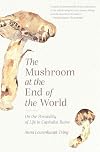
Tsing's The Mushroom at the End of the World is far-reaching and fascinating, bringing together incredibly different disciplines in order to bridge thought, politics, and everyday livelihoods with ecology, science, and the networks of fungi stretching beneath our earth's forests.
The work is both awe-inspiring and complicated, but Tsing's attention to the wonders of nature and mushrooms in particular, and the people who live by and with them, is engrossing, as is her attention to detail. I show more learned a great deal reading this, and I have to think there's something here for nearly every nonfiction reader.
Absolutely recommended. show less
The work is both awe-inspiring and complicated, but Tsing's attention to the wonders of nature and mushrooms in particular, and the people who live by and with them, is engrossing, as is her attention to detail. I show more learned a great deal reading this, and I have to think there's something here for nearly every nonfiction reader.
Absolutely recommended. show less
Lists
Awards


You May Also Like


Associated Authors
Statistics
- Works
- 12
- Also by
- 2
- Members
- 1,528
- Popularity
- #16,835
- Rating
- 3.9
- Reviews
- 26
- ISBNs
- 41
- Languages
- 8
- Favorited
- 2