
Peter Dale Scott
Author of Cocaine Politics : Drugs, Armies, and the CIA in Central America
About the Author
Peter Dale Scott, a former Canadian diplomat and professor emeritus at the University of California, Berkeley, is a leading political analyst and poet.
Series
Works by Peter Dale Scott
Drugs, Oil, and War: The United States in Afghanistan, Colombia, and Indochina (War and Peace Library) (2003) 90 copies, 1 review
American War Machine: Deep Politics, the CIA Global Drug Connection, and the Road to Afghanistan (War and Peace Library) (2010) 66 copies
The American Deep State: Wall Street, Big Oil, and the Attack on U.S. Democracy (2014) — Author — 47 copies
Dallas '63: The First Deep State Revolt Against the White House (Forbidden Bookshelf) (2015) 39 copies
Associated Works
Literary Responses to Mass Violence — Contributor — 4 copies
Tagged
Common Knowledge
- Canonical name
- Scott, Peter Dale
- Other names
- SCOTT, Peter Dale
- Birthdate
- 1929-01-11
- Gender
- male
- Education
- McGill University (BA|First Class Honors, Philosophy; Second Class Honors, Political Science
McGill University (Ph.D.|Political Science) - Occupations
- poet
academic
diplomat - Organizations
- Canadian Department of External Affairs ( [1957])
University of California, Berkeley (Professor Emeritus of English) - Awards and honors
- Lannan Literary Award (2002)
- Nationality
- Canada (birth)
- Birthplace
- Montreal, Quebec, Canada
- Places of residence
- Berkeley, California, USA
- Associated Place (for map)
- Canada
Members
Reviews
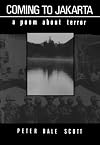
"Not since Robert Duncan's Ground Work and before that William Carlos Williams' Paterson has New Directions published a long poem as important as Coming to Jakarta!" ―James Laughlin
A devastating revelation of violence, exploitation, and corrupt politics, Coming to Jakarta derives its title from the role played by the CIA, banks, and oil companies in the 1965 slaughter of more than half a million Indonesians. A former Canadian diplomat and now a scholar at the University of California, show more Peter Dale Scott has said that the poem "is triggered by what we know of the bloody Indonesian massacre… However it is not so much a narrative of exotic foreign murder as one person’s account of what it is like to live in the 20th century, possessing enough access to information and power to feel guilty about global human oppression, but not enough to deal with it. The usual result is a kind of daily schizophrenia by which we desensitize ourselves to our own responses to what we read in the newspapers. The psychic self-alienation which ensues makes integrative poetry difficult but necessary." With a brilliant use of collage, placing the political against the personal––childhood acquaintances are among the darkly powerful figures––Scott works in the tradition of Pound’s Cantos, but his substance is completely his own show less
A devastating revelation of violence, exploitation, and corrupt politics, Coming to Jakarta derives its title from the role played by the CIA, banks, and oil companies in the 1965 slaughter of more than half a million Indonesians. A former Canadian diplomat and now a scholar at the University of California, show more Peter Dale Scott has said that the poem "is triggered by what we know of the bloody Indonesian massacre… However it is not so much a narrative of exotic foreign murder as one person’s account of what it is like to live in the 20th century, possessing enough access to information and power to feel guilty about global human oppression, but not enough to deal with it. The usual result is a kind of daily schizophrenia by which we desensitize ourselves to our own responses to what we read in the newspapers. The psychic self-alienation which ensues makes integrative poetry difficult but necessary." With a brilliant use of collage, placing the political against the personal––childhood acquaintances are among the darkly powerful figures––Scott works in the tradition of Pound’s Cantos, but his substance is completely his own show less
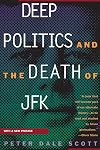
Imagine a skyscraper with thick black smoke billowing out of every window. That means there must be a fire raging inside, right? That's exactly what is presented here, so much circumstantial evidence of pre- and post-assassination shenanigans going on at the very highest levels that the very idea that Lee Harvey Oswald and Jack Ruby were loners acting on their own initiative is ludicrous. Unfortunately, the waters were so muddied by both the FBI's and CIA's innumerable ploys and show more counter-ploys that we'll never be able to single out which anti-Kennedy faction was really responsible and who actually was pulling the trigger. If this was Game of Thrones Hoover would be both Varys and Littlefinger.
I do like the author's approach to "Deep Politics", the idea that you have to consider not only the actions of Local Politicians and Local Law-enforcement but also Organized Crime when attempting to figure out what's going on. No one will ever admit it, but that seems to be a perfectly logical explanation for just how the big bad world actually works. show less
I do like the author's approach to "Deep Politics", the idea that you have to consider not only the actions of Local Politicians and Local Law-enforcement but also Organized Crime when attempting to figure out what's going on. No one will ever admit it, but that seems to be a perfectly logical explanation for just how the big bad world actually works. show less
I don't know about poetry or Indonesia. I don't know much about the dirty deeds departments of governments around the world. But all of these are important enough and this book helped expand my mind a bit in these various dimensions.
Another unexpected dimension was just a bit of Quebec geography. Scott apparently spend a lot of time growing up around Sherbrooke, which is not a place I can even remember having heard of before at all. But now I am thinking it might be grand to try riding my show more bike there. That is my usual reaction to hearing about a new place. It's a new destination for a bike tour!
Scott was also apparently a member of the elite class. I have rubbed elbows occasionally with this set. Scott's poem gives a good feel for the relationships among these types, where uncles are ambassadors etc.
This is not a long poem or a difficult poem to read, even for someone like myself with quite limited experience in the poetry world. Sure, sometimes I had to try a few times to parse a complex sentence. But I never got the feeling that Scott was trying to dazzle me with his poetic prowess. Why write a poem about terror? Maybe it helps to create a little space, a sort of dreamy haze, where we can see the object in a more subdued way, a way that isn't as nauseating and mind-numbing as a cold confrontation would be. Maybe that bit of space is just the room we need to think how can we behave differently, to think about that without getting overwhelmed by shock and horror which tend to promote a desperate grasping at some other way, any other way. We need to learn to think carefully about these difficult subjects. Maybe Scott is showing us a way that can work.
Yeah we hear repeatedly in this poem from the Iliad and the Gita, classical poetic handling of similarly violent subjects. Here we are again, or really we never left this brutal world, our brutal nature. We probably can't smack ourselves out of it. Maybe we can charm ourselves out of it. show less
Another unexpected dimension was just a bit of Quebec geography. Scott apparently spend a lot of time growing up around Sherbrooke, which is not a place I can even remember having heard of before at all. But now I am thinking it might be grand to try riding my show more bike there. That is my usual reaction to hearing about a new place. It's a new destination for a bike tour!
Scott was also apparently a member of the elite class. I have rubbed elbows occasionally with this set. Scott's poem gives a good feel for the relationships among these types, where uncles are ambassadors etc.
This is not a long poem or a difficult poem to read, even for someone like myself with quite limited experience in the poetry world. Sure, sometimes I had to try a few times to parse a complex sentence. But I never got the feeling that Scott was trying to dazzle me with his poetic prowess. Why write a poem about terror? Maybe it helps to create a little space, a sort of dreamy haze, where we can see the object in a more subdued way, a way that isn't as nauseating and mind-numbing as a cold confrontation would be. Maybe that bit of space is just the room we need to think how can we behave differently, to think about that without getting overwhelmed by shock and horror which tend to promote a desperate grasping at some other way, any other way. We need to learn to think carefully about these difficult subjects. Maybe Scott is showing us a way that can work.
Yeah we hear repeatedly in this poem from the Iliad and the Gita, classical poetic handling of similarly violent subjects. Here we are again, or really we never left this brutal world, our brutal nature. We probably can't smack ourselves out of it. Maybe we can charm ourselves out of it. show less
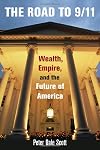
This book covers a period from immediately after WWII to the presidency of Bush the younger. It traces various efforts, and the connections between them, to steer the course of events and to maintain power in the hands of groups that still rule today. The main battle seems to have been against the Communists, in particular against the Soviet Union. The flames of radical political Islam were fanned, to serve as an agent destabilizing the Soviet Union. Of course as those flames spread so do show more the cover-ups and then further cover-ups.
I don't read a lot of this sort of literature but I am aware that a lot of it exists. The general category of "conspiracy theory" is filled with the wildest speculation and irresponsible use of evidence. Scott, I fear, is no exemplar of this general trend. He surely speculates, but generally keeps his trail well in view. The sad truth is that much of what he presents likely captures the general flavor of business in the back halls of Washington.
Quite disconcerting to have the Boston Marathon bombing occur as I am reading this book. So the older brother was interviewed by the FBI a couple years ago at the request of the Russians but was released after being determined not to be a threat? I was not following the news much in the mid 1990's and perhaps that is why I did not see the connection between al Qaeda and Bosnia. The Chechan connection is a bit clearer, and then Kirghizstan etc.
Fear and violence break down civil society and move their power to the purveyors of fear and violence. This cycle has led again and again to brutality and the collapse of societies. Scott suggests some approaches that might defuse such explosive possibilities, but I fear the years since the publication of this book have not led in any such a positive direction. The book has lots none of its relevance and urgency, I regret to report. show less
I don't read a lot of this sort of literature but I am aware that a lot of it exists. The general category of "conspiracy theory" is filled with the wildest speculation and irresponsible use of evidence. Scott, I fear, is no exemplar of this general trend. He surely speculates, but generally keeps his trail well in view. The sad truth is that much of what he presents likely captures the general flavor of business in the back halls of Washington.
Quite disconcerting to have the Boston Marathon bombing occur as I am reading this book. So the older brother was interviewed by the FBI a couple years ago at the request of the Russians but was released after being determined not to be a threat? I was not following the news much in the mid 1990's and perhaps that is why I did not see the connection between al Qaeda and Bosnia. The Chechan connection is a bit clearer, and then Kirghizstan etc.
Fear and violence break down civil society and move their power to the purveyors of fear and violence. This cycle has led again and again to brutality and the collapse of societies. Scott suggests some approaches that might defuse such explosive possibilities, but I fear the years since the publication of this book have not led in any such a positive direction. The book has lots none of its relevance and urgency, I regret to report. show less
Lists
Lost History (1)
Awards
You May Also Like


Associated Authors
Statistics
- Works
- 31
- Also by
- 3
- Members
- 1,045
- Popularity
- #24,650
- Rating
- 4.3
- Reviews
- 13
- ISBNs
- 76
- Languages
- 2
- Favorited
- 5