
Orrin Grey
Author of Fungi
About the Author
Image credit: Reyna Sparby
Works by Orrin Grey
Black Hill 1 copy
Tales from a Talking Board 1 copy
Labyrinth Of Sleep 1 copy
The Seventh Picture 1 copy
Nature Vs Nurture 1 copy
Associated Works
The Children of Old Leech: A Tribute to the Carnivorous Cosmos of Laird Barron (2014) — Contributor — 86 copies, 1 review
L. Ron Hubbard Presents Writers of the Future, Volume 27 (2011) — Contributor — 58 copies, 9 reviews
The Children of Gla'aki: A Tribute to Ramsey Campbell's Great Old One (2016) — Contributor — 42 copies, 2 reviews
Pluto In Furs: Tales Of Diseased Desires And Seductive Horrors (2019) — Contributor — 5 copies, 1 review
Tagged
Common Knowledge
- Gender
- male
Members
Reviews
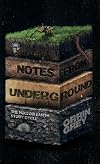
I hesitate to call this Grey's finest collection, as some others have. What I would call this recent, themed, anthology containing some reprints and some original work collectively forming Grey's Hollow Earth Cycle is his most thoughtful collection. While I personally enjoy some of his other stories and collections more, they are at most loosely themed collections of his work which contain the possibility of some unintended over-arching themes an narratives. Notes from the Underground is, as show more far as I know, his first 'cycle' style collection.
Do not be thrown off by the Hollow Earth moniker. As Grey himself tells us, this is not the hollow earth of Burroughs or Verne, Halley, Hutton, or Symmes. This is a much darker, weirder, and more Lovecraftian take on the genre. Those expecting monsters from the skeletal master of monsters will still receive some shadowed or shining examples, but those will take a secondary role to the Dreamland like horror of slippery, transitional spaces and lost memories.
In a way, though dark, I would shy away from categorizing these as horror. While unexplained, and certainly disturbing to our human notions, the ultimate fate of many characters is something the seek, long for, and dream of. While not happy in their endings, one might call them fulfilled. Or as Barker once (sort of) said, when we dream, we dream of being monsters. show less
Do not be thrown off by the Hollow Earth moniker. As Grey himself tells us, this is not the hollow earth of Burroughs or Verne, Halley, Hutton, or Symmes. This is a much darker, weirder, and more Lovecraftian take on the genre. Those expecting monsters from the skeletal master of monsters will still receive some shadowed or shining examples, but those will take a secondary role to the Dreamland like horror of slippery, transitional spaces and lost memories.
In a way, though dark, I would shy away from categorizing these as horror. While unexplained, and certainly disturbing to our human notions, the ultimate fate of many characters is something the seek, long for, and dream of. While not happy in their endings, one might call them fulfilled. Or as Barker once (sort of) said, when we dream, we dream of being monsters. show less
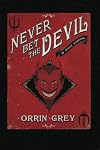
Orrin is another of the great writers delivering excellent work from the heart of the Great Plains. Skeletons, presumably, don't mind the less than ideal climate in these parts. "Black Hill" is even set in these often bleak, flat plains, and has some echoes of Bierce's "The Damned Thing". I would also place him alongside Kenneth Hite in terms of how broadly and deeply knowledgable he is on a wide array of subjects, so whether its this collection or another, if you come across what appears to show more be an allusion or obscure reference, its certainly not accidental. "Count Brass" is a good example, with the title being a callout to one of the still living greats of romanticism influenced epic fantasy, and plenty of references throughout to be appreciated by jazz/blues fans. I believe my exact words about him when I had the opportunity to share his work with Patton Oswalt were, 'He's one of the most erudite people working in horror that I've had the pleasure to talk to.' Oh yeah, and he loves his monsters. "A Night for Mothing" and "Goblins" are some great examples in this collection of his unique, sometimes sympathetic, takes on 'monsters'.
I love a good deal with the devil story, and you will definitely find those here, though the devils in question may be varying degrees of literal. This is one the first of Orrin's collections, and you're going to get a pretty wide range here. Whether its the titular fragment, "Never Bet the Devil", or the near novella length mashup of Mike Mignola comics, universal studios horror, and jewish folklore, "The Mysterious Flame" the pacing in tone and length are not what one might expect but rather the ideal rollercoaster of ups and downs to keep the reader moving along without ever knowing what to expect.
As I haven't yet mentioned it, those looking for evidence of broader representation in modern horror will not want for it here. 'Protagonists' are not the authorial clones of the Lovecraft era. Ethnicity, religious belief, gender, and sexual orientation range widely, and are communicated deftly in a way that informs and enriches the work without making itself a dominant theme. The Barker influenced "Devil in the Box" gives us one such protagonist while reminding us of all those creepy jack in the boxes that those in their 40s-60s might remember from childhood. And "The Barghest", well, you decide what the narrator is.
"Nature vs. Nurture" gives us an interesting, and in some ways sympathetic, take on ghouls. I would love to see juxtaposed with some of McNaughton's ghoul stories in a themed collection someday. The atmosphere, as well as the different (though both masterful) ways in which action is depicted would make good side by side.
"The Seventh Picture" lets Orrin play in the world of what I suspect is his greatest love, cinema. I say cinema rather than a particular genre or era of film for two reasons. One, the love and attention paid to the process of film making itself is evident. Two, this brings together cinematic & literary influences as wide ranging as the gothic and found footage films.
"The Reading Room" is an interesting inversion of the relationship between books and the supernatural. It also should hold some appeal for all of us...after all, who loves to read and *doesn't* dream of having an entire floor of their house as dedicated library/reading space? As someone who loves to read, this has the same nightmare feel for someone like me as "Time Enough At Last" from The Twilight Zone.
"Nearly Human" gives us Wuthering Heights (and really, if you haven't, make time to read such a classic ghost story) meets Matheson's "Hell House" (like Orrin, its also one of my favorite haunted house stories). If you love spooky old houses, secret passages, and the forgotten dead, you'll feel right at home here.
I would be remiss if I didn't mention the amazing artwork of M.S. Corley that accompanies each story, at least in the Strix Publishing edition (I'm assuming the original Worde Horde edition as well). Creepy with an edge of humor at times, just like Orrin's writing. show less
I love a good deal with the devil story, and you will definitely find those here, though the devils in question may be varying degrees of literal. This is one the first of Orrin's collections, and you're going to get a pretty wide range here. Whether its the titular fragment, "Never Bet the Devil", or the near novella length mashup of Mike Mignola comics, universal studios horror, and jewish folklore, "The Mysterious Flame" the pacing in tone and length are not what one might expect but rather the ideal rollercoaster of ups and downs to keep the reader moving along without ever knowing what to expect.
As I haven't yet mentioned it, those looking for evidence of broader representation in modern horror will not want for it here. 'Protagonists' are not the authorial clones of the Lovecraft era. Ethnicity, religious belief, gender, and sexual orientation range widely, and are communicated deftly in a way that informs and enriches the work without making itself a dominant theme. The Barker influenced "Devil in the Box" gives us one such protagonist while reminding us of all those creepy jack in the boxes that those in their 40s-60s might remember from childhood. And "The Barghest", well, you decide what the narrator is.
"Nature vs. Nurture" gives us an interesting, and in some ways sympathetic, take on ghouls. I would love to see juxtaposed with some of McNaughton's ghoul stories in a themed collection someday. The atmosphere, as well as the different (though both masterful) ways in which action is depicted would make good side by side.
"The Seventh Picture" lets Orrin play in the world of what I suspect is his greatest love, cinema. I say cinema rather than a particular genre or era of film for two reasons. One, the love and attention paid to the process of film making itself is evident. Two, this brings together cinematic & literary influences as wide ranging as the gothic and found footage films.
"The Reading Room" is an interesting inversion of the relationship between books and the supernatural. It also should hold some appeal for all of us...after all, who loves to read and *doesn't* dream of having an entire floor of their house as dedicated library/reading space? As someone who loves to read, this has the same nightmare feel for someone like me as "Time Enough At Last" from The Twilight Zone.
"Nearly Human" gives us Wuthering Heights (and really, if you haven't, make time to read such a classic ghost story) meets Matheson's "Hell House" (like Orrin, its also one of my favorite haunted house stories). If you love spooky old houses, secret passages, and the forgotten dead, you'll feel right at home here.
I would be remiss if I didn't mention the amazing artwork of M.S. Corley that accompanies each story, at least in the Strix Publishing edition (I'm assuming the original Worde Horde edition as well). Creepy with an edge of humor at times, just like Orrin's writing. show less
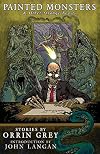
Painted monsters is Orrin Grey's second, though by no means sophomoric, short story collection from Word Horde. Monsters are one of Orrin's favorite things, and that sense of wonder and fun comes through in the writing here, making this a great entry point if you aren't familiar with his writing. As is pretty typical of these collections, there are Author's notes accompanying each of the thirteen pieces here, providing context, interesting anecdotes, and/or information on where they have show more previously appeared.
I will admit, the first story is a bit of a bumpy start with the written dialogue preserving the protagonists' rather heavy accent. 'The Worm That Gnaws' originally appeared in audio format on Pseudopod, and regardless of how one feels about that podcast overall I'd suggest giving it a listen. I think the format works better for this story in particular.
The next two stories give us different, original, takes on vampires. I don't know whether the title of 'The White Prince' is a nod to 'The Lair of the White Worm' or not, but I am now sure I never want to know about the vampiric origins of the Hypnotoad. And while Orrin says for him the keynote in 'Night's Foul Bird' is Murnau's Devil, for me the titular Robert Blair quote perfectly encapsulates the outsized dread and menace he builds in this relatively brief story. Which incidentally unites my love of silent horror films and my partner's love of birding (though I doubt they would approve of the fate of some of these birds). As a comedic exercise on a second reading, picture Harvey Birdman in the role of Mr. Birdman.
'The Murders on Morgue Street,' as you might guess, are related to 'The Murders in the Rue Morgue.' Which, if memory serves is third or fourth Poe story I ever read, and like all of them left some pretty vivid visual impressions on me. We get a worthy interpretation of it through a series of other inspirational hoops Orrin outlines for the reader. One of which, another personal childhood touchstone for me, are the orange Crestwoood House Monster books. Definitely worth a nostalgia perusal should you come across them.
Like the Giallo inspired 'The Red Church,' 'Ripperology' is one of the few stories set in his home city and be even more timely now than when it was written given the surging popularity of true(-ish) crime. Don't balk at the fact that this is yet another bit of Ripper fiction, non-fiction, or speculation atop the mountain that already exists. This is as refreshing and original as 'From Hell' was in its own time or as my personal favourite, JMS' use of the ripper in Babylon 5.
Amidst the broken memories and hallucinatory imagery, 'Walpurgisnacht' is thickly packed with allusions to the literary canon, cinema, and folklore. You should not only read this, but really unpack as many of those as you can. This is certainly no Fantasia 'Night on Bald Mountain' (though that may have been my favourite sequence as a kid).
'Remains' picks up the tempo a bit as both a short piece and one with a bit of direct man-on-spirit action to go along with fun supernatural investigation, maybe with shades of Matheson's Hell House?
The next pair of stories are both some degree Lovecraft inspired. While Orrin may have thought he ended up closer to Hodgeson's 'House on the Borderlands' than Lovecraft's Dreamlands stories with 'The Labyrinth of Sleep,' I don't know that I agree, or that it matters. The dreamlands stories have actually always been among my favourite of Lovecraft's, and I think they've been sadly passed over as inspiration for a lot modern "Lovecraftian" authors. 'Borderlands' (and to an extent, 'Nightlands') has always felt like it was part of the same milieu to me, so 'Labyrinth' was a nice callback to that particular sub-genre. With 'Lovecrafting' we get a structurally unique tale, mixing film treatment and fragments of stories by a fictional writer. This also kicks off a bit of a mini-thematic arc of stories connected to the creation of films.
The narrator of 'Persistence of Vision' walks us through what the movie version of the ghost apocolypse might look like as he relates it to us. Besides the overt J-horror references here, the image of the mummified medium at the heart of the machine brings to mind Tetsuo the Iron Man and (again for me) the horror of the slaved living beings at the heart of JMS' Shadow-tech. And sticking with southeast asian cinema, those familiar with the crazier than fiction story of Pulgasari are going to recognize a number of elements in 'Strange Beast.'
This arc culminates in the final story in the collection, 'Painted Monsters', telling a tale packed so full of cinema references you'll still be finding easter eggs in November. Its the longest piece here, and clearly one that Orrin had a lot of fun with. Don't worry about not being well-versed enough to appreciate or even notice all the references, this story of a multi-generational family of film makers is still going to be a lot of fun. I'm not nearly as knowledgable about horror cinema as Orrin, and I certainly loved it. show less
I will admit, the first story is a bit of a bumpy start with the written dialogue preserving the protagonists' rather heavy accent. 'The Worm That Gnaws' originally appeared in audio format on Pseudopod, and regardless of how one feels about that podcast overall I'd suggest giving it a listen. I think the format works better for this story in particular.
The next two stories give us different, original, takes on vampires. I don't know whether the title of 'The White Prince' is a nod to 'The Lair of the White Worm' or not, but I am now sure I never want to know about the vampiric origins of the Hypnotoad. And while Orrin says for him the keynote in 'Night's Foul Bird' is Murnau's Devil, for me the titular Robert Blair quote perfectly encapsulates the outsized dread and menace he builds in this relatively brief story. Which incidentally unites my love of silent horror films and my partner's love of birding (though I doubt they would approve of the fate of some of these birds). As a comedic exercise on a second reading, picture Harvey Birdman in the role of Mr. Birdman.
'The Murders on Morgue Street,' as you might guess, are related to 'The Murders in the Rue Morgue.' Which, if memory serves is third or fourth Poe story I ever read, and like all of them left some pretty vivid visual impressions on me. We get a worthy interpretation of it through a series of other inspirational hoops Orrin outlines for the reader. One of which, another personal childhood touchstone for me, are the orange Crestwoood House Monster books. Definitely worth a nostalgia perusal should you come across them.
Like the Giallo inspired 'The Red Church,' 'Ripperology' is one of the few stories set in his home city and be even more timely now than when it was written given the surging popularity of true(-ish) crime. Don't balk at the fact that this is yet another bit of Ripper fiction, non-fiction, or speculation atop the mountain that already exists. This is as refreshing and original as 'From Hell' was in its own time or as my personal favourite, JMS' use of the ripper in Babylon 5.
Amidst the broken memories and hallucinatory imagery, 'Walpurgisnacht' is thickly packed with allusions to the literary canon, cinema, and folklore. You should not only read this, but really unpack as many of those as you can. This is certainly no Fantasia 'Night on Bald Mountain' (though that may have been my favourite sequence as a kid).
'Remains' picks up the tempo a bit as both a short piece and one with a bit of direct man-on-spirit action to go along with fun supernatural investigation, maybe with shades of Matheson's Hell House?
The next pair of stories are both some degree Lovecraft inspired. While Orrin may have thought he ended up closer to Hodgeson's 'House on the Borderlands' than Lovecraft's Dreamlands stories with 'The Labyrinth of Sleep,' I don't know that I agree, or that it matters. The dreamlands stories have actually always been among my favourite of Lovecraft's, and I think they've been sadly passed over as inspiration for a lot modern "Lovecraftian" authors. 'Borderlands' (and to an extent, 'Nightlands') has always felt like it was part of the same milieu to me, so 'Labyrinth' was a nice callback to that particular sub-genre. With 'Lovecrafting' we get a structurally unique tale, mixing film treatment and fragments of stories by a fictional writer. This also kicks off a bit of a mini-thematic arc of stories connected to the creation of films.
The narrator of 'Persistence of Vision' walks us through what the movie version of the ghost apocolypse might look like as he relates it to us. Besides the overt J-horror references here, the image of the mummified medium at the heart of the machine brings to mind Tetsuo the Iron Man and (again for me) the horror of the slaved living beings at the heart of JMS' Shadow-tech. And sticking with southeast asian cinema, those familiar with the crazier than fiction story of Pulgasari are going to recognize a number of elements in 'Strange Beast.'
This arc culminates in the final story in the collection, 'Painted Monsters', telling a tale packed so full of cinema references you'll still be finding easter eggs in November. Its the longest piece here, and clearly one that Orrin had a lot of fun with. Don't worry about not being well-versed enough to appreciate or even notice all the references, this story of a multi-generational family of film makers is still going to be a lot of fun. I'm not nearly as knowledgable about horror cinema as Orrin, and I certainly loved it. show less

4.5 stars!
This is one fantastic short story collection! Dedicated to M.R. James, these stories do have a James-ian feel to them that I loved.
As in James' collection "Ghost Stories of an Antiquary" , these stories have a connecting thread. Instead of finding lost manuscripts and that type of thing, in this book the connecting thread is one Geoff Ashden, a combat veteran and an antique dealer. He is sometimes featured in the tales and sometimes just relating them.
I found Mr. Westall's writing show more skills to be accessible while still beautiful. I also loved his observations throughout, which all rang true for me. For instance this quote:
"In madness, there are no rules; or you might say the mad make up their rules as they go along and they never bear any resemblance to your rules."
Or this little tidbit which rings true for this cat owner:
"Mirabelle is my cat, or rather the cat that drifted in and took me over."
And lastly from the final story as Mr. Ashden ages, this bittersweet line:
"But odd things still happen to people, even though they no longer seem to happen to Geoff Ashden."
This collection of 7 stories was excellent. Without being pretentious, this collection packs in the scares and goosebumps along with literary, but simple, language. The stories are diverse and one is not really even a supernatural story, but that didn't matter to me, because I enjoyed all of the tales SO much. I think my favorite story had to be The Doll. Who doesn't love horror stories that feature dolls?
This edition has a wonderful introduction by Orrin Grey, which relates some background information about Robert Westall. I found the intro to be an interesting enhancement to this outstanding collection.
My highest recommendation to short story fans, and most especially to fans of M.R. James!
*I received this copy free from Valancourt Books in exchange for an honest review. This is it!* show less
This is one fantastic short story collection! Dedicated to M.R. James, these stories do have a James-ian feel to them that I loved.
As in James' collection "Ghost Stories of an Antiquary" , these stories have a connecting thread. Instead of finding lost manuscripts and that type of thing, in this book the connecting thread is one Geoff Ashden, a combat veteran and an antique dealer. He is sometimes featured in the tales and sometimes just relating them.
I found Mr. Westall's writing show more skills to be accessible while still beautiful. I also loved his observations throughout, which all rang true for me. For instance this quote:
"In madness, there are no rules; or you might say the mad make up their rules as they go along and they never bear any resemblance to your rules."
Or this little tidbit which rings true for this cat owner:
"Mirabelle is my cat, or rather the cat that drifted in and took me over."
And lastly from the final story as Mr. Ashden ages, this bittersweet line:
"But odd things still happen to people, even though they no longer seem to happen to Geoff Ashden."
This collection of 7 stories was excellent. Without being pretentious, this collection packs in the scares and goosebumps along with literary, but simple, language. The stories are diverse and one is not really even a supernatural story, but that didn't matter to me, because I enjoyed all of the tales SO much. I think my favorite story had to be The Doll. Who doesn't love horror stories that feature dolls?
This edition has a wonderful introduction by Orrin Grey, which relates some background information about Robert Westall. I found the intro to be an interesting enhancement to this outstanding collection.
My highest recommendation to short story fans, and most especially to fans of M.R. James!
*I received this copy free from Valancourt Books in exchange for an honest review. This is it!* show less
Lists
You May Also Like


Associated Authors
Statistics
- Works
- 30
- Also by
- 37
- Members
- 262
- Popularity
- #87,813
- Rating
- 3.8
- Reviews
- 16
- ISBNs
- 19
- Languages
- 1
- Favorited
- 1
