
Nicole Cushing
Author of A Sick Gray Laugh
Works by Nicole Cushing
Associated Works
Tagged
Common Knowledge
- Birthdate
- 1973-06-27
- Gender
- female
- Birthplace
- Havre de Grace, Maryland, USA
- Associated Place (for map)
- Maryland, USA
Members
Reviews

Gregory Bryce is a typical college student in the 1980s, dealing with school, his roommate, and his impending apotheosis. Wait, what? That's right. Gregory has been receiving correspondence from someone known as the Hierophant claiming knowledge that Gregory's destiny is to become the new God, rising up to usurp the old and weakened Christian God and take control of creation. You know: Typical college hijinks.
In Nicole Cushing's I Am the New God this is exactly what we get. Slowly, things show more are revealed about Gregory's background, such as his stint in a mental institution, that he's been on medication, and that he's recently stopped taking that medication. Gregory at first does not believe the Hierophant, but slowly begins to warm up to the idea as he begin to complete the seven tasks the Hierophant has laid out for him to complete his rise to become the new God. But the question becomes whether this is real or if this is all part of Gregory's (and the Hierophant's) madness.
That's what was so fascinating about it. The reader is genuinely left in the dark through most of the book about whether this is real or if we are simply reading the mind of a certifiable madman. From the violent mutilation of his roommate to his creation of a new life form named Hop Frog (clearly a tribute to [a:W.H. Pugmire|3064456|W.H. Pugmire|https://d.gr-assets.com/authors/1342560875p2/3064456.jpg]), we don't know what's real and what's not, especially given that it's written mostly from a shifting first person perspective. It becomes both fascinating and disturbing to see into the mind of the potentially insane.
The book is still a horror novel and there are many incidents of violence and gore, so reader be warned. Admittedly, the gory violence is not as much as it could have been, and Cushing seems to have exercised some restraint in order to put a greater focus on the story. In fact, I can't say that any of it is gratuitous. All the violence, while creepy and horrifying, actually serves a point and furthers the plot. Like a slaughtered buffalo, nothing is wasted. The text has a good flow and the story ramps up to the ending at a pretty smooth pace.
If I have a criticism, it would be the changing perspective. While it can be interesting switching first person narratives between Gregory and the Hierophant, as well as the third person perspective of police investigators, at the same time the effect is also jarring and can pull the reader out of the book with the sudden shift. I respect Cushing for this bold choice, but I don't think that it quite had the effect she was looking for.
A sublime piece of horror fiction, I Am the New God is definitely worth a read. With only minor quibbles, I can heartily recommend this book, especially for horror fans for a unique take that leaves the reader guessing until the end, even if they think they've figured it out.
I Am the New God by Nicole Cushing earns 4.5 completed tasks out of 5 (because, really, who's got the time for 7 tasks).
Note: This review is based on a review copy sent for free from the publisher through NetGalley. This did not affect the content of the review in any way. show less
In Nicole Cushing's I Am the New God this is exactly what we get. Slowly, things show more are revealed about Gregory's background, such as his stint in a mental institution, that he's been on medication, and that he's recently stopped taking that medication. Gregory at first does not believe the Hierophant, but slowly begins to warm up to the idea as he begin to complete the seven tasks the Hierophant has laid out for him to complete his rise to become the new God. But the question becomes whether this is real or if this is all part of Gregory's (and the Hierophant's) madness.
That's what was so fascinating about it. The reader is genuinely left in the dark through most of the book about whether this is real or if we are simply reading the mind of a certifiable madman. From the violent mutilation of his roommate to his creation of a new life form named Hop Frog (clearly a tribute to [a:W.H. Pugmire|3064456|W.H. Pugmire|https://d.gr-assets.com/authors/1342560875p2/3064456.jpg]), we don't know what's real and what's not, especially given that it's written mostly from a shifting first person perspective. It becomes both fascinating and disturbing to see into the mind of the potentially insane.
The book is still a horror novel and there are many incidents of violence and gore, so reader be warned. Admittedly, the gory violence is not as much as it could have been, and Cushing seems to have exercised some restraint in order to put a greater focus on the story. In fact, I can't say that any of it is gratuitous. All the violence, while creepy and horrifying, actually serves a point and furthers the plot. Like a slaughtered buffalo, nothing is wasted. The text has a good flow and the story ramps up to the ending at a pretty smooth pace.
If I have a criticism, it would be the changing perspective. While it can be interesting switching first person narratives between Gregory and the Hierophant, as well as the third person perspective of police investigators, at the same time the effect is also jarring and can pull the reader out of the book with the sudden shift. I respect Cushing for this bold choice, but I don't think that it quite had the effect she was looking for.
A sublime piece of horror fiction, I Am the New God is definitely worth a read. With only minor quibbles, I can heartily recommend this book, especially for horror fans for a unique take that leaves the reader guessing until the end, even if they think they've figured it out.
I Am the New God by Nicole Cushing earns 4.5 completed tasks out of 5 (because, really, who's got the time for 7 tasks).
Note: This review is based on a review copy sent for free from the publisher through NetGalley. This did not affect the content of the review in any way. show less
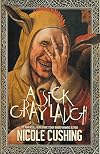
Wow, I've never read anything quite like this. It is part satire, part spiral-into-madness, part history, and part-philosophy, but all with a biting black humor. The first part of the book is a bit slow, because it relates a fictional history of this area of Indiana (and trust me, Indiana is boring to begin with). There's not really a hook to the story, such as it is either, because the "fictional" author, who has previously written fiction, has decided to delve into non-fiction, so this show more comes across like a history, or an epistolary book, with the author narrating to us readers her thoughts as they're coming to her. It's definitely weird, definitely literary, definitely insane, and it all somehow works, if you're able to get through the first part, that is. The author's voice really carries the first part, mostly because of the humor that she injects into it. But it did leave me wondering if I really was reading a non-fiction book at some points, because she made it all so believable. If you're into weird, dark, philosophical, nihilist writing, this book is for you. Even though this was written before Covid, there were some interesting parts, especially in regards to hiding faces, that were very thought-provoking to me. show less

Nicole Cushing has earned her first award nomination for Children of No One, a novella published by the exciting new (as of 2012) publisher, DarkFuse. It is one of the seven novellas nominated in a strong field for the Shirley Jackson Award, an award I consider most apt to give me good reading recommendations.
The theme of Children of No One I find especially fascinating: art can be abused to horrific effect. It has always been true that what one person thinks of is artful and outrageously show more original is another person’s garbage; “My kid could do that!” is a phrase that has been directed toward any number of modern pieces, such as, say, the splatter paintings of Jackson Pollock. But there have also been discussions about whether certain art is cruel and unworthy of a mentally healthy audience. Some of Francis Bacon’s paintings, for instance, can easily be classified as horror — look at Three Studies for a Crucifixion, for instance. But when an artist engages in performance art, and uses human beings as his raw materials, the horror immediately escalates to criminal heights.
Cushing’s novella opens with two teenage boys arguing in Nowhere, Indiana, about the possible existence of light. In their world, there is no such thing, but one of the boys believes that once there was. All these boys know is a completely dark world in which the oak walls move, making it difficult to find food delivered each day by “Angels” — employees of the artist of whom the boys know nothing. We quickly learn that the boys are two of dozens purchased by Thomas Krieg as small children and enclosed in his underground labyrinth as “art.” McPherson is a “patron of the arts,” as he calls himself, who pays an enormous amount of money to get a preview of this “masterpiece.” In a conversation with Kitterman, the security guard who greets him, McPherson shrugs off the security problems posed by the type of art that Krieg specializes in, though he acknowledges that an artist with a reputation as “Krieg the Torturer” and “Krieg the Sadist” has to be careful.
This setup is bad enough, but things go from bad to worse when the occult, aided by drugs, enters the picture. A man named only as “the Englishman” (he says he doesn’t have a name) claims to be a magician who wants to use Nowhere, Indiana, as a battery for a magical engine that will reveal the nothingness that lingers beneath our universe. He wants this Great Dark Mouth to enter the universe and gobble up “our tacky delusions of light, life and meaning.” McPherson has perhaps bitten off much more than he can chew. Krieg is willingly cooperating with the Englishman’s effort, but only because he thinks they’re harmless.
The twists are plentiful as the novella proceeds inexorably toward a perfect, and perfectly chilling, ending. Cushing deals expertly with all the plots and subplots she has set in motion. She tells her story with a distinctive voice, using description to good effect for a story full of light, darkness, color and the absence of color, appropriate to her artistic theme. I’m now eager to read Cushing’s first novel, I Am the New God, released by DarkFuse last month. This is a new voice in horror that promises some dark, scary reads.
Originally published at http://www.fantasyliterature.com/reviews/children-of-no-one/ show less
The theme of Children of No One I find especially fascinating: art can be abused to horrific effect. It has always been true that what one person thinks of is artful and outrageously show more original is another person’s garbage; “My kid could do that!” is a phrase that has been directed toward any number of modern pieces, such as, say, the splatter paintings of Jackson Pollock. But there have also been discussions about whether certain art is cruel and unworthy of a mentally healthy audience. Some of Francis Bacon’s paintings, for instance, can easily be classified as horror — look at Three Studies for a Crucifixion, for instance. But when an artist engages in performance art, and uses human beings as his raw materials, the horror immediately escalates to criminal heights.
Cushing’s novella opens with two teenage boys arguing in Nowhere, Indiana, about the possible existence of light. In their world, there is no such thing, but one of the boys believes that once there was. All these boys know is a completely dark world in which the oak walls move, making it difficult to find food delivered each day by “Angels” — employees of the artist of whom the boys know nothing. We quickly learn that the boys are two of dozens purchased by Thomas Krieg as small children and enclosed in his underground labyrinth as “art.” McPherson is a “patron of the arts,” as he calls himself, who pays an enormous amount of money to get a preview of this “masterpiece.” In a conversation with Kitterman, the security guard who greets him, McPherson shrugs off the security problems posed by the type of art that Krieg specializes in, though he acknowledges that an artist with a reputation as “Krieg the Torturer” and “Krieg the Sadist” has to be careful.
This setup is bad enough, but things go from bad to worse when the occult, aided by drugs, enters the picture. A man named only as “the Englishman” (he says he doesn’t have a name) claims to be a magician who wants to use Nowhere, Indiana, as a battery for a magical engine that will reveal the nothingness that lingers beneath our universe. He wants this Great Dark Mouth to enter the universe and gobble up “our tacky delusions of light, life and meaning.” McPherson has perhaps bitten off much more than he can chew. Krieg is willingly cooperating with the Englishman’s effort, but only because he thinks they’re harmless.
The twists are plentiful as the novella proceeds inexorably toward a perfect, and perfectly chilling, ending. Cushing deals expertly with all the plots and subplots she has set in motion. She tells her story with a distinctive voice, using description to good effect for a story full of light, darkness, color and the absence of color, appropriate to her artistic theme. I’m now eager to read Cushing’s first novel, I Am the New God, released by DarkFuse last month. This is a new voice in horror that promises some dark, scary reads.
Originally published at http://www.fantasyliterature.com/reviews/children-of-no-one/ show less
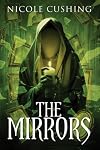
What an excellent collection!
Nicole Cushing contacted me a while back and offered me the chance to read her first collection of stories. I was honored and I accepted, so here we are.
Wildly imaginative and creative, I'm stunned by the quality of this volume. The tales are consistently good-whether they be totally out of the realm of possibility, (invisible babies? see Non Evidens), on the verge of possibility, (purchasing a newly tattooed or tanned skin? see The Peculiar Salesgirl), or too show more late to stop, (see The Cat in the Cage), each one brings its own intensity to the reader.
Most of these stories work on a few different levels-there's a lot of social commentary going on here, if the reader wants to analyze things. For instance, what are homeless shelters like in the future? (See White Flag). There were a number of things to reflect upon here-there are still homeless shelters in the future? Will they still be so crowded? Do they get there by flying buses? (Turns out they do.) On top of the entertainment value, many of these tales start your mind to thinking and I've always enjoyed that.
I rated each story as I read it-none of them was lower than 3 stars. However, I don't want to post a simple recitation of story titles, (even though these titles are AWESOME), and ratings. SO, these were my favorites:
The Suffering Clown -Just picture a sad clown sitting in a nearly empty parking lot-at night, asking you if he could perform for you. Creepy, right? This story worked SO well for me, I actually clapped with delight at the end. (I'm a geek, what can I say?)
Subcontractors-This story, to me, seemed to be- just making the best of a bad situation. Making lemonade from lemons, that whole thing. It was just so...weird and compelling. I don't know what else to say. You should read it.
I mentioned Non Evidens above, but it was just so out there I had to bring it up again. Just think about it-Invisible Babies. Babies that grow into adults, as lucky babies are wont to do. What's life as an invisible person like? Nicole explores that question as well as exploring the more generic, yet REAL questions of parenting and understanding. More claps at the end of this one.
I imagine that I see a lot of Ligotti here, maybe some Laird Barron and a pinch of Aickman. Maybe some Poe, too. Like I said, it's possible that's just my imagination. I like and respect all those guys, but Nicole has a voice of her very own and I'm digging it.
This collection is expected out on July 1st, from Cycatrix Press. I give it my HIGHEST recommendation!
*I received this e-ARC free, in exchange for an honest review.This is it.* show less
Nicole Cushing contacted me a while back and offered me the chance to read her first collection of stories. I was honored and I accepted, so here we are.
Wildly imaginative and creative, I'm stunned by the quality of this volume. The tales are consistently good-whether they be totally out of the realm of possibility, (invisible babies? see Non Evidens), on the verge of possibility, (purchasing a newly tattooed or tanned skin? see The Peculiar Salesgirl), or too show more late to stop, (see The Cat in the Cage), each one brings its own intensity to the reader.
Most of these stories work on a few different levels-there's a lot of social commentary going on here, if the reader wants to analyze things. For instance, what are homeless shelters like in the future? (See White Flag). There were a number of things to reflect upon here-there are still homeless shelters in the future? Will they still be so crowded? Do they get there by flying buses? (Turns out they do.) On top of the entertainment value, many of these tales start your mind to thinking and I've always enjoyed that.
I rated each story as I read it-none of them was lower than 3 stars. However, I don't want to post a simple recitation of story titles, (even though these titles are AWESOME), and ratings. SO, these were my favorites:
The Suffering Clown -Just picture a sad clown sitting in a nearly empty parking lot-at night, asking you if he could perform for you. Creepy, right? This story worked SO well for me, I actually clapped with delight at the end. (I'm a geek, what can I say?)
Subcontractors-This story, to me, seemed to be- just making the best of a bad situation. Making lemonade from lemons, that whole thing. It was just so...weird and compelling. I don't know what else to say. You should read it.
I mentioned Non Evidens above, but it was just so out there I had to bring it up again. Just think about it-Invisible Babies. Babies that grow into adults, as lucky babies are wont to do. What's life as an invisible person like? Nicole explores that question as well as exploring the more generic, yet REAL questions of parenting and understanding. More claps at the end of this one.
I imagine that I see a lot of Ligotti here, maybe some Laird Barron and a pinch of Aickman. Maybe some Poe, too. Like I said, it's possible that's just my imagination. I like and respect all those guys, but Nicole has a voice of her very own and I'm digging it.
This collection is expected out on July 1st, from Cycatrix Press. I give it my HIGHEST recommendation!
*I received this e-ARC free, in exchange for an honest review.This is it.* show less
Lists
Awards


You May Also Like
Associated Authors
Statistics
- Works
- 11
- Also by
- 10
- Members
- 207
- Popularity
- #106,919
- Rating
- 3.9
- Reviews
- 17
- ISBNs
- 16
- Favorited
- 1
