This book really came together for me in the last 25% but the ending itself was the best part. My main criticism is that the character's motivations at the beginning aren't addressed strongly enough. There's not a good idea reason for Naftaly to care about trying to get Toba back from the Mirror realm, and Asmel and Barsalay don't have enough of a reason to be sheltering Toba, someone they barely know. Solving these issues and creating a stronger hook at the beginning could have led to a much stronger book. But there are plenty of things I did like. I don't know much about Jewish folklore and mysticism, so learning about this bit of folklore was new and fun. The setting was also interesting, especially the world of the Maziks, who were also interesting creatures, but I would have liked it to have felt a little more grounded. Some of the descriptions were a little vague, and made it seem a bit unreal. For the most part, it had interesting characters, although Naftaly was about as interesting as a wooden plank. I liked the way Toba could and could not do magic and the consequences of her abilities. This was also an unexpectedly funny book, with some good quips thrown in there. And like I said at the beginning of the review, I really liked the way events came to a close in this book. The threads came together into a pleasing tapestry, even if the beginning was loose.
This is really good. An excellent example of a unique take on the uplift subgenre of SF, in which some unique species gain sentience, perhaps even a planet-wide fungal growth. The only detractor to me was how fragmented the story was in the first half, but I understand why it had to be written that way. It just made it a little harder to get into the characters, reminded me a bit of Foundation in that regard. But overall it's a very good book, and shows what needs to happen to solve humanity's problems, lol.
I did not enjoy re-reading this book. The characters did not endear themselves to me. The prose is clunky and clumsy. The storyline is basic, ripping off both Battle Royale and The Hunger Games. The themes are not subtle, and the writer does not think the reader will understand them if he's subtle about it, so he hits you over the head with them. But, I've heard the series improves after this, and I already have a copy of book 2, so I will read it and report back
This was an awesome book, and I'm using that in biblical terms. I was truly terrified during this book, so many scenes were horrifying and they just kept coming. The ending was deeply satisfying. Highly recommended.
There were parts of this that I really, really liked. Other parts dragged or slowed down the plot. One of the really interesting things about this book is how it subverts your expectations. It goes in very different directions than what you expect, but it can also be very slow moving at times. The last 20-30 pages were excellent and really brought the book together for me. I can't believe that this was a debut novel. There were some impressive things going on, but I still wanted more answers.
Strange Pictures: An Eerie Journey through disturbing drawings – the debut novel from a mystery horror YouTube sensation by Uketsu
This was a fun little mystery. Slightly different from what I expected. It's simply told, very easy to follow, and there's not a ton of character development. It almost reads like something on r/nosleep. Despite the subject matter, I would still consider this light entertainment.
I had a hard time getting through this one. It seemed like the momentum that was reached at the end of Authority petered out and the contemplative pace returned. I still felt like I was missing something crucial, but unlike the characters, I couldn't accept it. It feels like something that will be more rewarding on a reread, and maybe someday I will do that, but for right now, I don't feel rewarded with answers, so much as frustrated that I am missed something crucial.
Changing Planes: PEN/Malamud Award-Winning Literary Short Stories – Satirical Feminist SFF (Harper Perennial Olive Editions, 5) by Ursula K. Le Guin
This is a charming short story collection that is loosely tied together with a central premise of travelling between planes of existence. It worked well for me and it shows off the author's worldbuilding prowess although some of the different cultures were a little too similar in places. Overall, its a great book that doesn't overstay its welcome
I liked this as a character study. Despite all of John's faults, I still liked him and felt for him as a person. He was forced into an impossible situation and never really found his footing, despite the name he gives himself, he is never really in control. Things are definitely rotten in Denmark, but is that by design? We don't get many answers in this volume, but the few we do get are delicious. I find it very believable that there are few answers here. Area X is beyond human comprehension. The tools we have to evaluate it are insufficient to the task. When confronted with this sort of horror, we can try to theorize, try to run, or try to accept it without understanding it. We see some of all of these methods here, and I find that to be believable, even if its frustrating in our attempts to categorize and analogize.
This book is absolutely insane. I can't even begin to describe it without launching in a retelling of the whole first two books. What's crazy, if you examine the plot, not a very much happens, but because the world building is so detailed and different and the characters are strong, every single action seems monumental. Every betrayal or revelation feels earth-shattering. I've never read anything quite like this and Too Like the Lightning. If you like your books with a a healthy dose of philosophy and religion, some truly bizarre and sadistic characters, interesting takes on gender, romance, and societal structure, these books are for you.
There's a lot that I really liked about this book: the Imago system is fascinating, the murder mystery felt dangerous and seductive, the cultural displacement and eagerness to belong was rendered in believable and heart-breaking strokes. I enjoyed the characters, and when death and loss occur, they hit hard. But somehow, the book still felt a bit lacking, the characters just a touch flat, the plot explained more than shown, the political menace hidden a little too much behind a shining, corporate facade, and I wanted a bit more of the technological prowess of Teixcalaan shown in addition to the cultural side. But even with those qualms, it was still a great read, but not quite a 5-star read for me. I plan on reading the sequel because it does sound exciting.
This is a deceptive book. There are no easy answers, and depending on how hard you look, it may seem that there's not a lot that happens here. But one of the hallmarks of cosmic horror, or even ecological horror, is about coming up against something unexplainable, something monumental that doesn't make sense, and having to make peace with not understanding it. Not just not understanding it, but realizing that the tools we have to learn about things, understand them, communicate with them, are all completely inadequate and made irrelevant. That's something that this book does well. Much like the main character, we as readers have to make peace with the fact that not everything here is understandable. If you're able to do that, there is a lot to discover here. I read this for part of a book club, and we had a very robust conversation about this book, even though it is less than 200 pages and very atmospheric. The general atmosphere of this book is very tense and oppressive. The creatures and flora were very interesting and I wanted more of them! The characters on the surface may seem flat, but keep in mind that this is the biologist's journal and is a reflection of how she sees other people, which she admitted, she is not a people person. I can understand why others might not be down with that. But overall I really enjoyed this and look forward to continuing the series
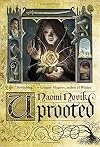
I can't believe it's been 10 years since I've last read this book! I remember really enjoying it, but many of the details didn't quite stick, especially towards the end, where the plot really starts to fly. I remember liking the way Agniezka learns magic and how it contrasted with Sarkan's, and how she was underestimated and disregarded. I enjoyed how she fought back against those who belittled here and judged her based on her wild appearance and her wild magic. I also enjoyed the beginning of the book so much, as she's learning about her abilities and how they work together with more rigid forms of magic. The latter half of the book is filled with so much plot, that I missed a bit of that discovery from the beginning, and that brings it down from a 5 star review for me. I actually wanted this to be a little longer! I wanted more significant achievements and discoveries for Agniezka that weren't necessitated by the plot. But I really loved the way she balanced the character development with the plot, how the magic system was revealed, and the way the story unfolded. Ms. Novik's prose is elegantly written and lushly evokes the forest and nature in ways that I haven't seen since Tolkien or Beagle. Even with the slight qualms about pacing, this is still an excellent book and I thoroughly enjoyed reading it.
There are some interesting ideas explored here, but the horror takes a step back so that a more scientific approach can come forward and attempt to explain what's going on. The horror elements are still there, just more existential and conceptual. Some things are very dated and it is a very slow moving story. But I was interested enough in the overall story to stick with it.
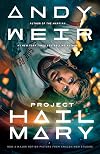
Yes, it's a little derivative of other works that have come before it, but isn't anything? This is a fun, epic ride that displays the author's passion for science. The story is told well and the incremental reveal of knowledge works well to not overload the reader with too much information. Ryland is a good character, but Rocky is the best. I do wish some things about the ending were different but I understand why those choices were made. Overall, I think it's worth the hype.
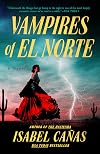
This book relied way too much on telling instead of showing. Instead of trusting the reader to understand the sexism or class dynamics these things were explicitly spelled out. I know this happens a lot for New Adult fiction but it felt very basic and boring. The romance plot was annoying as well because of all of the miscommunication and stubbornness. All of the secondary characters were one-dimensional except maybe Abuela. But even the main characters didn't have much beyond two character traits. This book was just not for me.

This was utterly fantastic. Most of the time, it was like I was in an ecdytoxic cloud and hallucinating events that seemingly tied together, I just couldn't see the thread yet. But as I either emerged from the cloud or fully bonded with it, I understood more of what was happening and I was astounded by it. The way this book is structured is genius. Normally I'm annoyed by the storytelling device used here, but this was done well and to the story's advantage. The characters are fascinating and I really enjoyed seeing their development throughout the book. But one of the main stars here is the fascinating city of Tilliard. I've never read anything quite like it before. It's such a unique setting that I want to see more stories set here. The other starring role is the prose. It is rich, dense, dripping with detail and beauty. It is toxic, it is transformative, and it is utterly captivating. This book will be so good on a re-read too. I think it will reward multiple readings. This is one of those books in weird fiction that is very much of this moment, but also feels timeless, like it has always existed, we just hadn't unearthed it yet.
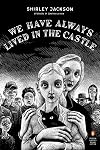
This is a near perfect book in the way it is written and constructed. No word is wasted. There is nothing out of place or extraneous. Shirley Jackson was a master and this could very well be considered her masterpiece. You could also consider this to be a very personal work, almost autobiographical, with Constance and Merrikat representing two sides of Jackson, or at least two sides of her personality. This is a dark book. I don't know if I'd necessarily consider it horror, but certainly gothic fiction. And while it is dark, one could say that it ends on a positive note for the protagonists. There are certainly many interpretations of this novella and I think re-reading this will be rewarding.

This is a hard book to review. It's Iain M. Banks' first novel in the Culture series, so it's got a few objectives to complete: 1. Introduce the Culture as a society, 2. Create interesting characters and an interesting story that works within the universe where this society exists and 3. Make readers want to revisit this universe for future books. I think he was successful with 1 of these, and while he didn't quite succeed on the first two, he didn't fail either. He was very ambitious in introducing the Culture through the eyes of a main character who is ethically opposed to them. As readers, we aren't getting the whole picture of what The Culture is actually like, but only a biased view of it. This is a bold opening gambit, and I'm not sure it was entirely successful in persuading the reader that The Culture is 100% bad. But it is interesting. The main character is interesting in that he can alter his physical appearance and is from a race of people called The Changers. There are few of them left, and many consider them to be abominations. But the main character, Horza, isn't exactly likeable, so sympathizing with his point of view can be difficult.
The story itself, a kind of heist/find the macguffin space opera story, runs the gamut from exhilarating to plodding and meandering and has structural problems. The prologue is written very well, if a little dry, and changes tone immediately in Chapter 1 where the main character is almost executed by drowning in excrement. He show more is barely rescued from this death by his semi-allies, the Idirans who are at war with the Culture. Horza has allied himself with the Idirans because while he may disagree with their religious zeal, they have an identity and are opposed to the Culture, so that is enough for him. Throughout the novel, Horza struggles with his identity and questions who he really is and what he really stands for. Identity is one of the main themes of the novel, as well as the atrocities of war, and moral relativism. I enjoyed the irony of having a main character who can change his appearance be morally opposed to the Culture because he felt like their reliance on AI and technology sacrificed their identity.
The high points of the book were in the middle for me, the latter part of the book suffered from a meandering story that completely stopped the action that was established during the Damage game and the escape from it. Overall, even though this is a mixed review, I think Mr. Banks has some truly amazing ideas and when he's good, I couldn't put the book down. Hopefully future installments in this series aren't as bizarrely paced as this one. show less
The story itself, a kind of heist/find the macguffin space opera story, runs the gamut from exhilarating to plodding and meandering and has structural problems. The prologue is written very well, if a little dry, and changes tone immediately in Chapter 1 where the main character is almost executed by drowning in excrement. He show more is barely rescued from this death by his semi-allies, the Idirans who are at war with the Culture. Horza has allied himself with the Idirans because while he may disagree with their religious zeal, they have an identity and are opposed to the Culture, so that is enough for him. Throughout the novel, Horza struggles with his identity and questions who he really is and what he really stands for. Identity is one of the main themes of the novel, as well as the atrocities of war, and moral relativism. I enjoyed the irony of having a main character who can change his appearance be morally opposed to the Culture because he felt like their reliance on AI and technology sacrificed their identity.
The high points of the book were in the middle for me, the latter part of the book suffered from a meandering story that completely stopped the action that was established during the Damage game and the escape from it. Overall, even though this is a mixed review, I think Mr. Banks has some truly amazing ideas and when he's good, I couldn't put the book down. Hopefully future installments in this series aren't as bizarrely paced as this one. show less
The Adventures of Amina al-Sirafi: A new fantasy series set a thousand years before The City of Brass (An Amina al-Sirafi Adventure, 1) by Shannon Chakraborty
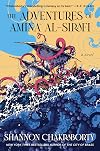
I enjoyed this book a lot, especially when it started to get really weird towards the end. Amina is a great character, but she needed a little more depth other than mothering her daughter and her crew and occasionally being horny, lol. I wanted to see a bit more piracy, or at least a few more naval battles, and I was expecting a few more consequences from her actions and risk-taking. But overall it was a good story, with a likeable cast of characters, strong villains, and a snappy plot. My complaints are minor in comparison to the positives.
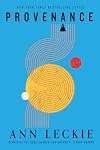
I liked this book quite a bit. Its different that the Radch books, which is nice, but events from those books still tie in, although it wouldn't be fair to call this one a sequel. Its really a standalone book in the same universe. I wish the main character, Ingray, was a bit more proactive though. She was a bit weak as a mc, which is okay, but I wanted to see her react less and plan more. The mix of genres was fun and kept me interested, and I'm glad we got to see more weird aliens and other human civilizations that aren't the Radchaai. The ending was a bit anticlimactic and I wanted a little more resolution about who was really pulling the strings behind Garal Ket's escape from Compassionate Removal. Overall, there were some interesting concepts, characters, and plot elements here, but some parts were stronger than others

This was a weird conclusion to the Lives of the Mayfair Witches. It wasn't nearly as scary as the other two, but it was definitely weird. There was also a decided lack of story, outside of Mona's arc and the Talamasca intrigue. Neither were compelling enough to keep up the momentum so enter Ashlar, who provides the rest of the exposition, in fact most of the novel, in a huge infodump of history. We learn the history of the Taltos, who they are, where they came from, and what happened to them. Michael and Rowan become mostly observers to all of this and exert relatively little control over events that occur. Overall, disappointing conclusion to the series.
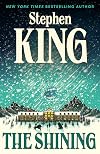
This is my second time reading it and this time around I'll be discussing it with the local Horror Book Club. The first time around I strongly felt the terror and the dread of being in the Overlook and was along for the physical ride with the characters, never knowing what was going to pop up next to horrify me (and them). This time around, I saw more of the psychic battles the characters were fighting, and the layers and the depth that was written in to the story. I caught more of the literary references and appreciated his nods to those works, especially The Haunting of Hill House and The Castle of Otranto. The first time around I could tell that this was a deeply personal story for Mr. King (as many of his works are, come on - how many of his books are about writers struggling with addiction?) - but I could really feel the struggle that Jack felt, balancing a career, a family, and personal goals while suffering from addiction. The novel is adept at conveying the thoughts of a 30 year old Stephen King as he is struggling with all of those things himself.
As far as the story itself, one of the thing's that King is great at, is putting characters into situations where they have to battle nearly unassailable foes, with the thinnest of hopes of success, and he does that here. How does a 5 year old child convince adults that moving to the Overlook is a bad idea? How does he keep them alive once they are there? It seems nearly hopeless, but there is a tiny, tiny string of show more hope that could lead them all out, if it doesn't break. That's what we do when we read King's best works; we follow that thread, we hold on tight, we don't like it break as we navigate through the terror and finally the horror of what we have to endure if we want to make it out alive. show less
As far as the story itself, one of the thing's that King is great at, is putting characters into situations where they have to battle nearly unassailable foes, with the thinnest of hopes of success, and he does that here. How does a 5 year old child convince adults that moving to the Overlook is a bad idea? How does he keep them alive once they are there? It seems nearly hopeless, but there is a tiny, tiny string of show more hope that could lead them all out, if it doesn't break. That's what we do when we read King's best works; we follow that thread, we hold on tight, we don't like it break as we navigate through the terror and finally the horror of what we have to endure if we want to make it out alive. show less
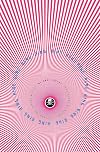
This is definitely a product of its time in regards to its attitude towards women and intersex people. But then again, it could just be a subtle dig at the characters because they aren't exactly good people. Asakawa claims that he loves his wife and child, but he constantly dismisses his wife and lusts after a college student who may or may not be sleeping with his best friend. Speaking of which, his best friend claims that he raped a girl while he was in high school and gives off major creep vibes to Asakawa's wife who asks that he not hang out with this friend anymore, or at least not bring him to the house, but Asakawa still maintains the relationship with his friend Ryuji anyway. So, these protagonists aren't exactly the best guys, especially with how they plan to resolve the situation by putting other peoples' lives in danger to save their own hides.
But that's not to say I didn't like the book. The plot was interesting and I liked the idea of a psychic virus that kills you unless you duplicate it. I do want to see where the story goes from here, too, I just hope we have different characters. It also felt more like SF or a thriller instead of horror, mostly because of the investigation and the form that the evil took in this book.
But that's not to say I didn't like the book. The plot was interesting and I liked the idea of a psychic virus that kills you unless you duplicate it. I do want to see where the story goes from here, too, I just hope we have different characters. It also felt more like SF or a thriller instead of horror, mostly because of the investigation and the form that the evil took in this book.
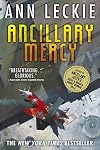
Ann Leckie is one of the smartest writers working right now. This book is deceptively cozy, but a lot of heavy subjects are covered here, including what it means to be a "significant" being. Breq doesn't overpower her enemies with force; instead she outmaneuvers them by relying on integrity, honor, and thinking in ways that her enemy considers to be beneath her. A fascinating book, that makes you care about tea sets.
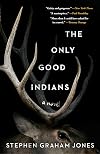
This was good. It didn't do enough to blow my mind, but I did enjoy it and didn't really struggle with anything (except perhaps for the basketball scene towards the end). I appreciated the craft of it and how we started with characters who were far from the reservation, and slowly came back to it as the novel progressed. I do wish that we were able to spend a little more time with each character, because it felt like I didn't have enough time to truly care about them. I was still entertained by them, but I didn't necessarily care about what was going to happen to them. And some of that might be because of how flawed they were too. Its something I still have to think about for awhile. But I liked the Elk Woman as a revenge entity and how it was an interesting twist on the Deer Woman myth. It felt more like a folk horror revenge story than a slasher horror to me, but I can see how it can go both ways. I'm glad I read this one though.
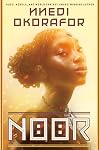
There's a lot to like about this book. The worldbuilding is fantastic. There are some unique settings and scenarios that grabbed my attention. The use of technology as a way of augmenting a human body was interesting. The way different cultures interacted with and incorporated technology into their lives was well done. But I wish it was longer so that I could see more depth in the characters. This was so focused on moving the story along at a breakneck pace that the characters felt surface level and the story lacked nuance and depth. I was told AO was in pain constantly, but I didn't feel her pain. The revelations about the evil corporation could have had more impact if we had seen more than one side of them, or seen how ubiquitous it was in everyone's lives. If this was longer, where we had more time to breath and feel, like what DNA does before he enters a place, maybe we too could have gotten more of a feel for the characters and their journeys.

I love this book. Peter S. Beagle is a masterful wordsmith who can write a sentence both witty and ironic. He makes it look effortless, which is most definitely was not, but that is the true mark of a master. The story is a tribute to fairy tales and old fantasy works, and to me is about the loss of innocence but could be interpreted many different ways. I loved the cast of characters and their personal journeys. This was my second time reading this and I enjoyed it even more
A classic that is definitely worth reading. The story itself may not be that scary in comparison to modern horror, but it laid the groundwork for pretty much every piece of vampire fiction since it came out. Yes, it is definitely sexist by modern standards, so be aware of that if you choose to read it. But there is also a lot of subtle anti-English sentiment here, as well as notes on classism. I alternated between reading and listening to the audiobook, which made it go a bit faster. Overall I like it and would probably re-read it further down the line.
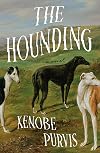
This book was just okay to me. The central tenet of the book, misogyny is harmful and dangerous, is not a groundbreaking idea, so the story would have to go somewhere new or exciting, and this does nothing new or exciting. The 5 sisters who are the subjects of this book don't get POV chapters, instead, we get POVS from numerous men and 1 woman from the town, and 1 from the grandfather of the girls, who is going blind. The novel does very little to make us like or care about any of these characters, and one is a downright despicable scoundrel so his chapters were unpleasant to read. The plot did not surprise me, and the novel was so short that I hardly felt grounded in the town or its goings-on. The writing itself was good, and the story was structured well, even if I found it predictable. Fans of The Virgin Suicides might find more to like here, but for me, this ended up being a bit boring and a bit predictable.