
Robin Bridges
Author of The Gathering Storm
Series
Works by Robin Bridges
Associated Works
Tagged
Common Knowledge
- Canonical name
- Bridges, Robin
- Gender
- female
Members
Reviews
3.5 stars
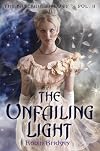
Russian history has, for whatever reason (ngl, probably because of the movie Anastasia), always been among my favorites to read about, in both fiction and nonfiction. As such, Robin Bridges' debut The Gathering Storm sprinted to the top of my to-read pile a little over a year ago. I liked it, but not unreservedly. The Unfailing Light is one of those rare cases where I feel precisely the same about the sequel as I did the first book. If you liked The Gathering Storm, good news; you show more will enjoy this one as well.
Oddly enough, the book that I am reminded most of in thinking of The Unfailing Light is Harry Potter. Of course, there are abundant magical creatures, but the real parallel is in the villain. Konstantin, lich (undead) tsar, seeks to return to power. Like Voldemort, he cannot be dispatched easily. At the end of the first book, they thought he was gone for good, but...not so much. The fact that he requires the aid of the main character, only to be foiled by her, brought that to mind as well.
To rejoin the living, Konstantin and his forces require the services of a necromancer, which our dear heroine just happens to be. Katerina dreams of becoming a doctor and has plans to attend medical school in Zurich. I love her determination to work in medicine, that she would voluntarily venture into a tough field where she will constantly endure sexist remarks though she has no need of a profession. She could live off her wealthy parents idly, or find a husband with ease. She, however, has bigger dreams. Unfortunately, Katerina's dreams, like many people's, get squashed.
Katerina, guess what! You know that evil dead tsar who tried to take over all of Russia again a little while back, who you though you killed with great difficulty? Well, he's not so much dead, or, at least, no more dead than he was before. Also, Katerina, this means that the tsar (the living one) who doesn't think women should be educated, your love, and your family will use this chance to protect you right back to The Smolny Institute for Young Noble Maidens. Even better, you'll get all this news from the guy you love.
George, Katerina's love interest, was probably my favorite character in the first book. He had this whole awesome broody, I-like-you-in-spite-of-myself, Darcy-ish thing going on, which I, of course, totally fell for. People who don't like Darcy often say that they doubt he and Elizabeth would work together long term, because he would continually try to boss her around. Well, I don't know about Darcy and Lizzie, but George sure is a bossy jerk in this one. Protecting the girl you love from harm is certainly a good thing, but not if you have to reduce her quality of life for all of the foreseeable future to do so. Plus, she should have a say-so. You don't just tell her what to do and threaten that the tsar will make her go. Ugh. Not to mention that protecting her means locking her into basically just that one (admittedly large) building for almost a year. She is NOT your crazy wife; don't lock her in the metaphorical attic, okay?
Of course, Katerina does not help matters by going along quietly. Me, I would have put up a fight. Katerina's intelligent and I know this and enjoy her narrative voice. She's also has guts like whoa. To protect others, she will stand up to anything, risking life, limb and reputation. I love this about her. When she's threatened mentally, though, she just does not exhibit her strength. She obeys orders that take away from her happiness (like going back to Smolny) and, because she fears embracing her necromancer powers, she does not research them like she should. If she embraced the practice of necromancy like she has medicine, she would be an unstoppable badass. You only have one more book, girl, so go read that Necromancer's Handbook and memorize the dang spells ASAP.
As far as the plot and world building go, I bounced back and forth, both in this book and the last, between having suspension of disbelief issues and thinking it's the best. Thinking about this, I believe it's because this is an alternate history version of Russia where magical creatures exist, but the tsars and everything are the same. I'm not sure what the jumping off point was, and, if it has always been this way, then why are the same personages in power? I suppose this is why so many historical fantasy books take place in culturally-inspired places, rather than the actual historical country. At the very least, despite that questioning, this alternate vision of historical Russia is engrossing and fascinating.
Yet again, I realize my review sounds way more critical than I necessarily intend it to (though I'm going to leave it that way because I did want to say those things). All of that nitpicky stuff aside, I blew through this book, eager to flip pages. The Unfailing Light kept me completely entertained, and, if I had the next book sitting with me when I finished, I would have happily started reading that one too.
This book has drama and romance and betrayal and a seriously creepy ghost and so much more. Also, I really loved the twist at the end that happened to one of the people in her family. It totally changed some dynamics in an awesome way. The Katerina Trilogy is just so much fun, and I will definitely be looking out for the final volume! show less
Russian history has, for whatever reason (ngl, probably because of the movie Anastasia), always been among my favorites to read about, in both fiction and nonfiction. As such, Robin Bridges' debut The Gathering Storm sprinted to the top of my to-read pile a little over a year ago. I liked it, but not unreservedly. The Unfailing Light is one of those rare cases where I feel precisely the same about the sequel as I did the first book. If you liked The Gathering Storm, good news; you show more will enjoy this one as well.
Oddly enough, the book that I am reminded most of in thinking of The Unfailing Light is Harry Potter. Of course, there are abundant magical creatures, but the real parallel is in the villain. Konstantin, lich (undead) tsar, seeks to return to power. Like Voldemort, he cannot be dispatched easily. At the end of the first book, they thought he was gone for good, but...not so much. The fact that he requires the aid of the main character, only to be foiled by her, brought that to mind as well.
To rejoin the living, Konstantin and his forces require the services of a necromancer, which our dear heroine just happens to be. Katerina dreams of becoming a doctor and has plans to attend medical school in Zurich. I love her determination to work in medicine, that she would voluntarily venture into a tough field where she will constantly endure sexist remarks though she has no need of a profession. She could live off her wealthy parents idly, or find a husband with ease. She, however, has bigger dreams. Unfortunately, Katerina's dreams, like many people's, get squashed.
Katerina, guess what! You know that evil dead tsar who tried to take over all of Russia again a little while back, who you though you killed with great difficulty? Well, he's not so much dead, or, at least, no more dead than he was before. Also, Katerina, this means that the tsar (the living one) who doesn't think women should be educated, your love, and your family will use this chance to protect you right back to The Smolny Institute for Young Noble Maidens. Even better, you'll get all this news from the guy you love.
George, Katerina's love interest, was probably my favorite character in the first book. He had this whole awesome broody, I-like-you-in-spite-of-myself, Darcy-ish thing going on, which I, of course, totally fell for. People who don't like Darcy often say that they doubt he and Elizabeth would work together long term, because he would continually try to boss her around. Well, I don't know about Darcy and Lizzie, but George sure is a bossy jerk in this one. Protecting the girl you love from harm is certainly a good thing, but not if you have to reduce her quality of life for all of the foreseeable future to do so. Plus, she should have a say-so. You don't just tell her what to do and threaten that the tsar will make her go. Ugh. Not to mention that protecting her means locking her into basically just that one (admittedly large) building for almost a year. She is NOT your crazy wife; don't lock her in the metaphorical attic, okay?
Of course, Katerina does not help matters by going along quietly. Me, I would have put up a fight. Katerina's intelligent and I know this and enjoy her narrative voice. She's also has guts like whoa. To protect others, she will stand up to anything, risking life, limb and reputation. I love this about her. When she's threatened mentally, though, she just does not exhibit her strength. She obeys orders that take away from her happiness (like going back to Smolny) and, because she fears embracing her necromancer powers, she does not research them like she should. If she embraced the practice of necromancy like she has medicine, she would be an unstoppable badass. You only have one more book, girl, so go read that Necromancer's Handbook and memorize the dang spells ASAP.
As far as the plot and world building go, I bounced back and forth, both in this book and the last, between having suspension of disbelief issues and thinking it's the best. Thinking about this, I believe it's because this is an alternate history version of Russia where magical creatures exist, but the tsars and everything are the same. I'm not sure what the jumping off point was, and, if it has always been this way, then why are the same personages in power? I suppose this is why so many historical fantasy books take place in culturally-inspired places, rather than the actual historical country. At the very least, despite that questioning, this alternate vision of historical Russia is engrossing and fascinating.
Yet again, I realize my review sounds way more critical than I necessarily intend it to (though I'm going to leave it that way because I did want to say those things). All of that nitpicky stuff aside, I blew through this book, eager to flip pages. The Unfailing Light kept me completely entertained, and, if I had the next book sitting with me when I finished, I would have happily started reading that one too.
This book has drama and romance and betrayal and a seriously creepy ghost and so much more. Also, I really loved the twist at the end that happened to one of the people in her family. It totally changed some dynamics in an awesome way. The Katerina Trilogy is just so much fun, and I will definitely be looking out for the final volume! show less
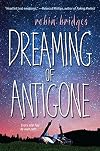
I bought this after reading her more recent book, The Form of Things Unknown and I'm grateful I did. This is one of those stories that grabs you the moment you start the first page and refuses to let you go until you finish the final one. Andria can't tell whether she feels guilty, angry, or grief-stricken following her twin sister Iris' death from heroin. That uncertainty and swirl of emotion is complicated by her epilepsy and detachment from school. Formerly an A student, she's close to show more failing at least one subject.
She's in love with astronomy and when her late sister's boyfriend, who ended up in drug rehab, knocks her and her telescope over in a dark dead end street, it's jarring enough so both have to begin reassessing their antagonism. What starts as a prickly rapprochement, turns to something deeper and completely unexpected when her family starts to unravel thanks to an arrest and her discovering the real reason her sister overdosed. It's a perfect blend of gritty and beautiful. I'm certainly going to read more by this author. show less
She's in love with astronomy and when her late sister's boyfriend, who ended up in drug rehab, knocks her and her telescope over in a dark dead end street, it's jarring enough so both have to begin reassessing their antagonism. What starts as a prickly rapprochement, turns to something deeper and completely unexpected when her family starts to unravel thanks to an arrest and her discovering the real reason her sister overdosed. It's a perfect blend of gritty and beautiful. I'm certainly going to read more by this author. show less
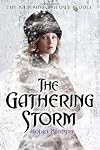
Robin Bridges brings a whole new life to 1880's Russia with her novel about a young, aristocratic, female necromancer. This is a novel that was another slow-starter for me. I was mildly interested and intrigued by Bridges' magically fantastical and dangerous world set in St. Petersburg, but I wasn't well and truly hooked until late in the game - when I was about 300 pages into the novel and less than a hundred from the end. With a disquieting introduction featuring and honing in on the young show more Katerina Alexandra Maria von Holstein-Gottorp, Duchess of Oldenburg, The Gathering Storm sets its dark, magical tone right from the very first paragraph. With revenants, ghosts, vampires and creatures of the night stalking through the cold nights of Mother Russia, only Katerina has the dark curse able to control them, and try to figure out where all the zombiefied soldiers are coming from - and why they are being created.
Actually beginning eight years after the introduction with Katiya learning her dark powers of reanimating the dead, The Gathering Storm is set during the reign of Tsar Alexander III, known to his people as "The Bear." In this version of historical Russia, both the Light and Dark Courts of Faerie are at play within the Imperial Court of Alexander Romanov. The Imperial Tsar's own wife Dagmar of Denmark (though renamed as Marie Feodorovna) is actually a Light Faerie and controls that aspect of power in Russia. Alexander's own brother Vladimir married, shockingly, into the Dark Court fae: his wife, the Grand Duchess Miechen, has a obvious rivalry with the Empress. Not at all surprisingly, caught between these two women, these two factions, the Russian Court seethes with intrigue, betrayal and. . . magic. I loved the new integration of the faerie within the folds of the historical Russian aristocracy; I just wished it had been more detailed and fleshed out what the roles of the faerie were for, besides fomenting drama. Added to the tensions of the distant/enemy fae courts constantly around her and her family, Katerina has to contend with a witchy classmate at her boarding school named Elena, a princess of the country of Montenegro. And as the reader learns and Elena demonstrates, the fae aren't the only supernatural creatures populating 19th century Russia or its nobility. The author created numerous species/sub-species of vampire to contend with the human population as well. From the moth-like veshtizas, to the upyri, wampyr and even the supreme form of them all: the Vladiki - blood-drinkers descended from Vlad Dracul of Wallachia himself - Bridges has her own, fresh interpretation of vampirism. It's a very dense and complicated mythology that the author has created for her world, but it works.
Katerina, nicknamed Katiya by those who know her and love her, grew on me as the novel progressed. My increased affinity for the book can be directly traced to my increasing affection for the main character. My thought process concerning her went pretty much like this: "Eh" to "I don't hate her" to "I kinda like her" to "Ok, she's cool with me. I want her to live." Her necromantic ability isn't the only "otherworldly" capabilities the young Duchess possesses: she can also see a "cold light that seemed to grow stronger as a person drew nearer to the end" - convenient gift but not one I minded overmuch. What starts out as a sarcastic, genial sixteen year old girl develops into a headstrong, stubborn, intelligent and capable necromancer. Katiya has ambitition, like all the girls her age at the Smolny Institute. Unlike those girls, Katiya is not ambitious for power, for money or for even a Queenship. What she wants most in the world is to be a doctor (this is a girl, who when embroidering, pretending to be working on her sutures) - something not allowed for women in Russia. I found her dream to be interesting: a girl cursed with a gift for the dead desires to use her other powers (brains, strength, audacity) to help others live. Katerina isn't perfect: she can be a bit naive and silly but on the whole, it's her brains that define her - not her ballgowns or boyfriends. She's already a strange girl with her powers, but what truly sets her a part from the mold are her desires for a completely non-traditional life and profession.
And speaking of ballgowns and boyfriends, those were two of my main issues with the bulk of the story in The Gathering Storm. When the novels centers around the hidden magic of St. Petersburg and Katerina's increasingly erratic powers within the city, it is a smooth, engrossing read. When the novel veers off into the endless balls and pageantry of the nobles, the plot gets lost and I got bored - quickly. I kept waiting for the action to start whenever a pleated skirt or a mazurka was part of the narrative. I understand it can't be all madcap-chasing-after-a zombie, or fighting a vampire in a hospital but I needed more meat to the story when the endless balls and banquets were involved. The other main issue: the inevitable and predictable love triangle. Torn between the Tsar's younger son, Georgi Alexandrovich, and a Crown Prince from a family of "blood drinkers" I hresented the triangle from the moment of its introduction. Katerina flits between the two of them, unsure of who she really wants. The only redeeming factor of the love-triangle is the unique spin Bridges' places on it in regards to Danilo. That was the only saving-grace for a young-adult trope I am increasingly weary of reading. The young grand duke, however, ha my full support from his first reticent appearance. The only person in the novel who actually sees Katerina for what she is, he earned major points for his level-headed actions. He does need some individual attention and development from the author, but I like what she has set up so far for the Duke.
Sadly, only Katerina herself and the Grand Duke pass my test of characters for the novel. All the rest, from Katiya's cousin Dariya to the evil antagonist Elena, were fairly one-dimensional and lacking development. There's hardly any distinguishing characteristics to set Elena apart from her coterie of evil siblings. Dariya serves little point but to be Katiya's voice of caution and suspicion, only around for emotional pull. Elena, the driven witch with her eyes on the Tsarevich, can be faintly cartoonish in her villianous ways. The author did manage to surprise me with the hemlock revelation and what that meant for Elena/Militiza/etc., but on the whole she was a villain without bite. They simply did not as much tension nor atmosphere for me to really feel the antagonism or fear their reprisals. It's also easier to dismiss the other girls of the novel, because unlike Katiya who is so forward-thinking she's practically a walking anachronism, they are completely caught up in the ideals and values of a male-dominated society. For these same reasons, it's also easy to disregard the ideas and opinions of even Katerina's mother. This was a woman so focused on power and moving up her own daughter's entanglement with a family of blood drinkers doesn't bother her in the slightest; in fact, only Katiya's Papa was an adult/parent worth his salt in the whole book.
By the time I reached the final page, I wanted more and I wanted it ASAP. Not only because of the cliffhanger/open-ended finale: I just wanted more time with Katiya, Georgi and with vibrant, dangerous world of supernaturalized Russia. Though the plot gets snarled in vampire mythology and mired down in ballgowns and banquets, when it finds its way out - it gets GOOD. Fast. In a Russia where evil isn't what you are but what you do, I have hopes that in the next volume Katerina won't have to hide her remarkable abilities, but use them openly in defense of her Tsar. I can't wait for book two - or even to find out the title. The Gathering Storm may lose a few reader before it gets to the good part, so my advice to stick to it and see it through. You won't be sorry. show less
Actually beginning eight years after the introduction with Katiya learning her dark powers of reanimating the dead, The Gathering Storm is set during the reign of Tsar Alexander III, known to his people as "The Bear." In this version of historical Russia, both the Light and Dark Courts of Faerie are at play within the Imperial Court of Alexander Romanov. The Imperial Tsar's own wife Dagmar of Denmark (though renamed as Marie Feodorovna) is actually a Light Faerie and controls that aspect of power in Russia. Alexander's own brother Vladimir married, shockingly, into the Dark Court fae: his wife, the Grand Duchess Miechen, has a obvious rivalry with the Empress. Not at all surprisingly, caught between these two women, these two factions, the Russian Court seethes with intrigue, betrayal and. . . magic. I loved the new integration of the faerie within the folds of the historical Russian aristocracy; I just wished it had been more detailed and fleshed out what the roles of the faerie were for, besides fomenting drama. Added to the tensions of the distant/enemy fae courts constantly around her and her family, Katerina has to contend with a witchy classmate at her boarding school named Elena, a princess of the country of Montenegro. And as the reader learns and Elena demonstrates, the fae aren't the only supernatural creatures populating 19th century Russia or its nobility. The author created numerous species/sub-species of vampire to contend with the human population as well. From the moth-like veshtizas, to the upyri, wampyr and even the supreme form of them all: the Vladiki - blood-drinkers descended from Vlad Dracul of Wallachia himself - Bridges has her own, fresh interpretation of vampirism. It's a very dense and complicated mythology that the author has created for her world, but it works.
Katerina, nicknamed Katiya by those who know her and love her, grew on me as the novel progressed. My increased affinity for the book can be directly traced to my increasing affection for the main character. My thought process concerning her went pretty much like this: "Eh" to "I don't hate her" to "I kinda like her" to "Ok, she's cool with me. I want her to live." Her necromantic ability isn't the only "otherworldly" capabilities the young Duchess possesses: she can also see a "cold light that seemed to grow stronger as a person drew nearer to the end" - convenient gift but not one I minded overmuch. What starts out as a sarcastic, genial sixteen year old girl develops into a headstrong, stubborn, intelligent and capable necromancer. Katiya has ambitition, like all the girls her age at the Smolny Institute. Unlike those girls, Katiya is not ambitious for power, for money or for even a Queenship. What she wants most in the world is to be a doctor (this is a girl, who when embroidering, pretending to be working on her sutures) - something not allowed for women in Russia. I found her dream to be interesting: a girl cursed with a gift for the dead desires to use her other powers (brains, strength, audacity) to help others live. Katerina isn't perfect: she can be a bit naive and silly but on the whole, it's her brains that define her - not her ballgowns or boyfriends. She's already a strange girl with her powers, but what truly sets her a part from the mold are her desires for a completely non-traditional life and profession.
And speaking of ballgowns and boyfriends, those were two of my main issues with the bulk of the story in The Gathering Storm. When the novels centers around the hidden magic of St. Petersburg and Katerina's increasingly erratic powers within the city, it is a smooth, engrossing read. When the novel veers off into the endless balls and pageantry of the nobles, the plot gets lost and I got bored - quickly. I kept waiting for the action to start whenever a pleated skirt or a mazurka was part of the narrative. I understand it can't be all madcap-chasing-after-a zombie, or fighting a vampire in a hospital but I needed more meat to the story when the endless balls and banquets were involved. The other main issue: the inevitable and predictable love triangle. Torn between the Tsar's younger son, Georgi Alexandrovich, and a Crown Prince from a family of "blood drinkers" I hresented the triangle from the moment of its introduction. Katerina flits between the two of them, unsure of who she really wants. The only redeeming factor of the love-triangle is the unique spin Bridges' places on it in regards to Danilo. That was the only saving-grace for a young-adult trope I am increasingly weary of reading. The young grand duke, however, ha my full support from his first reticent appearance. The only person in the novel who actually sees Katerina for what she is, he earned major points for his level-headed actions. He does need some individual attention and development from the author, but I like what she has set up so far for the Duke.
Sadly, only Katerina herself and the Grand Duke pass my test of characters for the novel. All the rest, from Katiya's cousin Dariya to the evil antagonist Elena, were fairly one-dimensional and lacking development. There's hardly any distinguishing characteristics to set Elena apart from her coterie of evil siblings. Dariya serves little point but to be Katiya's voice of caution and suspicion, only around for emotional pull. Elena, the driven witch with her eyes on the Tsarevich, can be faintly cartoonish in her villianous ways. The author did manage to surprise me with the hemlock revelation and what that meant for Elena/Militiza/etc., but on the whole she was a villain without bite. They simply did not as much tension nor atmosphere for me to really feel the antagonism or fear their reprisals. It's also easier to dismiss the other girls of the novel, because unlike Katiya who is so forward-thinking she's practically a walking anachronism, they are completely caught up in the ideals and values of a male-dominated society. For these same reasons, it's also easy to disregard the ideas and opinions of even Katerina's mother. This was a woman so focused on power and moving up her own daughter's entanglement with a family of blood drinkers doesn't bother her in the slightest; in fact, only Katiya's Papa was an adult/parent worth his salt in the whole book.
By the time I reached the final page, I wanted more and I wanted it ASAP. Not only because of the cliffhanger/open-ended finale: I just wanted more time with Katiya, Georgi and with vibrant, dangerous world of supernaturalized Russia. Though the plot gets snarled in vampire mythology and mired down in ballgowns and banquets, when it finds its way out - it gets GOOD. Fast. In a Russia where evil isn't what you are but what you do, I have hopes that in the next volume Katerina won't have to hide her remarkable abilities, but use them openly in defense of her Tsar. I can't wait for book two - or even to find out the title. The Gathering Storm may lose a few reader before it gets to the good part, so my advice to stick to it and see it through. You won't be sorry. show less
I love me some good historical fiction. Throw in some good paranormal elements and you've got me hooked. This book had both! WOO!
I was attracted initially by the premise of magic in Imperial Russia. History is my content area for my Elementary Ed certification, and Russia in particular. So I know the era. I know the legends and I know the superstitions. I love it when a book gets it right. This one got it right. It was a glittering whirlwind of social functions, romance, and imperial show more intrigue, just like Russia in the late 1800s. The Russians were very superstitious and believed in the occult and magic. I really liked that Bridges incorporated these things into her book.
I loved Katerina and Daryia and I loved that they were strong female characters. I loved that Katerina was determined to enter medical school no matter what. I loved that she didn't swoon over the hot guys (and in fact, had conflict with them) and kept her head in difficult situations (for the most part...one can only do so much against magic).
I really loved the story. I was so caught up in it that I read the book in 1 day and wished I had the time for another read-through. The book had to go to its next home after I finished, but no worries...I'm totally getting a copy for myself.
I loved the flow of the story. It didn't have any of the plot jumpiness that drives me insane. It was seamless, fast-paced, and awesome. The supernatural elements didn't feel forced-they just fit in nicely because the Imperial Russians really did believe in that stuff. It really felt like reading a really fantastically written history book. Weird, I know.
My only complaint?
I have to wait for the next book in the series. I don't want to wait. I want it NOW! And then the next one after that too.
I really, really liked this one...it gets a 'Pick Me' rating for awesomeness! show less
I was attracted initially by the premise of magic in Imperial Russia. History is my content area for my Elementary Ed certification, and Russia in particular. So I know the era. I know the legends and I know the superstitions. I love it when a book gets it right. This one got it right. It was a glittering whirlwind of social functions, romance, and imperial show more intrigue, just like Russia in the late 1800s. The Russians were very superstitious and believed in the occult and magic. I really liked that Bridges incorporated these things into her book.
I loved Katerina and Daryia and I loved that they were strong female characters. I loved that Katerina was determined to enter medical school no matter what. I loved that she didn't swoon over the hot guys (and in fact, had conflict with them) and kept her head in difficult situations (for the most part...one can only do so much against magic).
I really loved the story. I was so caught up in it that I read the book in 1 day and wished I had the time for another read-through. The book had to go to its next home after I finished, but no worries...I'm totally getting a copy for myself.
I loved the flow of the story. It didn't have any of the plot jumpiness that drives me insane. It was seamless, fast-paced, and awesome. The supernatural elements didn't feel forced-they just fit in nicely because the Imperial Russians really did believe in that stuff. It really felt like reading a really fantastically written history book. Weird, I know.
My only complaint?
I have to wait for the next book in the series. I don't want to wait. I want it NOW! And then the next one after that too.
I really, really liked this one...it gets a 'Pick Me' rating for awesomeness! show less
Lists
Awards

You May Also Like


Associated Authors
Statistics
- Works
- 5
- Also by
- 1
- Members
- 519
- Popularity
- #47,859
- Rating
- 3.5
- Reviews
- 56
- ISBNs
- 16
