
Daniel Innes
Author of Denison Avenue
Works by Daniel Innes
Tagged
Common Knowledge
There is no Common Knowledge data for this author yet. You can help.
Members
Reviews
Naheed Nenshi championed this book on Canada Reads 2024. He was so passionate about it that I decided to read it. Obviously, so did a lot of other people because it took me this long (4 months) for the hold at the library to come in. It was worth the wait.
The Wongs, See Hai and Cho Sum, are an elderly Chinese couple living in Chinatown in Toronto. One day See Hai goes out to the shops by himself and he is hit by a Porsche SUV that leaves the scene. See Hai hangs on to life for a while but show more the doctors tell Cho Sum that he will not recover so she agrees to him being disconnected from the machines that are preserving his life. The couple never had any children so Cho Sum is left alone in their house. Theirs was an arranged marriage. See Hai and Cho Sum exchanged pictures and then Cho Sum flew from China to Toronto. (Such courage that must have taken). Cho Sum never did become fluent in English but that hardly mattered living as they did in a neighbourhood where their dialect could be heard on every corner. Now, alone in a neighbourhood that is rapidly changing, Cho Sum must learn how to survive. An acquaintance convinces her to become one of the people that go out looking for bottles and cans that can be exchanged for money. It's hard work but Cho Sum becomes adept at wheeling her shopping cart along the streets and spotting the recyclables. She also sells her vegetables on a street corner to earn some more cash. And she is a wizard at finding a bargain in Honest Ed's and other shops. Soon, though, Honest Ed's is going to close and there are rumours a Walmart is coming into the neighbourhood. Other businesses are closing down and people are moving out of the neighbourhood. The book ends with these lines:
I know now that this city and its people have a way of forgetting about you.
But I keep holding on.
And I keep going,
because that is what I have learned to do.
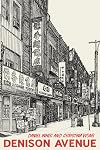
Complementing the wonderful story are pages of pen and ink drawings by Daniel Innes. Each page is split in two horizontally with the top of the page showing a street scene from the past and the bottom showing that same scene as Cho Sum experiences it. I looked at these illustrations a number of times while I read this book and then one final time after I finished reading. With each viewing I noticed different things in the drawings. I especially enjoyed looking for the figure of Cho Sum with her shopping cart in the bottom illustrations . show less
The Wongs, See Hai and Cho Sum, are an elderly Chinese couple living in Chinatown in Toronto. One day See Hai goes out to the shops by himself and he is hit by a Porsche SUV that leaves the scene. See Hai hangs on to life for a while but show more the doctors tell Cho Sum that he will not recover so she agrees to him being disconnected from the machines that are preserving his life. The couple never had any children so Cho Sum is left alone in their house. Theirs was an arranged marriage. See Hai and Cho Sum exchanged pictures and then Cho Sum flew from China to Toronto. (Such courage that must have taken). Cho Sum never did become fluent in English but that hardly mattered living as they did in a neighbourhood where their dialect could be heard on every corner. Now, alone in a neighbourhood that is rapidly changing, Cho Sum must learn how to survive. An acquaintance convinces her to become one of the people that go out looking for bottles and cans that can be exchanged for money. It's hard work but Cho Sum becomes adept at wheeling her shopping cart along the streets and spotting the recyclables. She also sells her vegetables on a street corner to earn some more cash. And she is a wizard at finding a bargain in Honest Ed's and other shops. Soon, though, Honest Ed's is going to close and there are rumours a Walmart is coming into the neighbourhood. Other businesses are closing down and people are moving out of the neighbourhood. The book ends with these lines:
I know now that this city and its people have a way of forgetting about you.
But I keep holding on.
And I keep going,
because that is what I have learned to do.
Complementing the wonderful story are pages of pen and ink drawings by Daniel Innes. Each page is split in two horizontally with the top of the page showing a street scene from the past and the bottom showing that same scene as Cho Sum experiences it. I looked at these illustrations a number of times while I read this book and then one final time after I finished reading. With each viewing I noticed different things in the drawings. I especially enjoyed looking for the figure of Cho Sum with her shopping cart in the bottom illustrations . show less
This book is amazing in so many ways, both the story told in text and the parallel story told in meticulously drafted images of Toronto.
Much of the dialogue is in Taishanese (Toisanese or Toisanwa to the Cantonese, called Hoisanva by its native speakers), each sentence translated into English. And much of the story is about the ravages of time. Old residents of Chinatown die off, Hoisanva is supplanted by Mandarin, former landmarks of the neighbourhood get new management or are razed and show more replaced by high-rise construction. Even Honest Ed's, a landmark of Toronto (when it was called the Borough of Toronto) has disappeared.
The illustrations are printed at the other opening of the book, when you turn it over and flip it upside down (technically called dos-a-dos). Each page has two horizontal drawings. They often reflect the theme of time and change: very many of the pages have a drawing of a street view as we remember it from the last quarter of the 20th century at the top of the page and a drawing of the same scene from much more recently at the bottom. They also give a glimpse into the events of the story. Just a glimpse, as careful perusal of the scenes may reveal Cho Sum on her bottle-and-can collecting rounds through Chinatown and its environs. Or not. She can be elusive.
I would recommend this book to anyone at all, but it will resonate especially with people who are familiar with Toronto and have heard Chinese spoken in Chinatown. show less
Much of the dialogue is in Taishanese (Toisanese or Toisanwa to the Cantonese, called Hoisanva by its native speakers), each sentence translated into English. And much of the story is about the ravages of time. Old residents of Chinatown die off, Hoisanva is supplanted by Mandarin, former landmarks of the neighbourhood get new management or are razed and show more replaced by high-rise construction. Even Honest Ed's, a landmark of Toronto (when it was called the Borough of Toronto) has disappeared.
The illustrations are printed at the other opening of the book, when you turn it over and flip it upside down (technically called dos-a-dos). Each page has two horizontal drawings. They often reflect the theme of time and change: very many of the pages have a drawing of a street view as we remember it from the last quarter of the 20th century at the top of the page and a drawing of the same scene from much more recently at the bottom. They also give a glimpse into the events of the story. Just a glimpse, as careful perusal of the scenes may reveal Cho Sum on her bottle-and-can collecting rounds through Chinatown and its environs. Or not. She can be elusive.
I would recommend this book to anyone at all, but it will resonate especially with people who are familiar with Toronto and have heard Chinese spoken in Chinatown. show less
Set in Toronto’s Chinatown, Denison Avenue by Christina Wong is a moving tale about loss and grief, loneliness, and of aging in a society that doesn’t respect elders as well as the negative effects of gentrification on culture and tradition. The story moves in a quiet almost gentle pace as we accompany the protagonist, Wong Cho Sum, an older Chinese woman as she tries to deal with her grief after the death of her beloved husband in a hit+and-run accident. She fills her days wandering the show more streets of Chinatown collecting bottles and cans partly for the money and partly to keep moving as a distraction from her loss and loneliness. And, as the years pass, she notices the changes in the neighbourhood and how the things that made it unique are replaced with the characterless but expensive trappings that accompany gentrification.
Wong’s prose is beautiful, often lyrical, softly and quietly meandering with Wong Cho Sum’s travels and thoughts. It should be noted that Denison Avenue is described as a graphic novel but, at least on the reading app I used, the story and amazing line drawings by Daniel Inness are separate, drawings appearing in the frontispiece and after the story. A truly unique reading experience, one that I will not easily forget.
Thanks to Netgalley and ECW Press for the opportunity to read this book in exchange for an honest review show less
Wong’s prose is beautiful, often lyrical, softly and quietly meandering with Wong Cho Sum’s travels and thoughts. It should be noted that Denison Avenue is described as a graphic novel but, at least on the reading app I used, the story and amazing line drawings by Daniel Inness are separate, drawings appearing in the frontispiece and after the story. A truly unique reading experience, one that I will not easily forget.
Thanks to Netgalley and ECW Press for the opportunity to read this book in exchange for an honest review show less
This is a lovely book. It tells about loss: the grief of losing a spouse, and the displacement experienced by people, especially seniors and other marginalized people, when communities are redeveloped and gentrified. Cho Sum has lived in the Chinatown/Kensington area of Toronto for many years but speaks little English. When her husband dies suddenly, she is grieving and lonely. She starts walking through the neighbourhood collecting cans and bottles, partly for the money; mostly for show more something to do. On her walks, she notices more and more businesses closing and new developments opening. Her way of life is disappearing. The writing is poetic and beautiful. I felt like I was seeing things through Cho Sum's eyes and frame of reference.
The book includes wonderful ink drawings by Daniel Innes. They show the community and how it is changing and add a lot to the text. I only wish they had been interspersed through the text rather than all appearing together at the end of the book. show less
The book includes wonderful ink drawings by Daniel Innes. They show the community and how it is changing and add a lot to the text. I only wish they had been interspersed through the text rather than all appearing together at the end of the book. show less
Lists
Awards


You May Also Like
Associated Authors
Statistics
- Works
- 1
- Members
- 93
- Popularity
- #200,858
- Rating
- 4.0
- Reviews
- 5
- ISBNs
- 3