
Peter Ling (1) (1926–2006)
Author of Doctor Who: The Mind Robber
For other authors named Peter Ling, see the disambiguation page.
Series
Works by Peter Ling
Associated Works
Tagged
Common Knowledge
- Legal name
- Ling, Peter George Derek
- Other names
- Leigh, Petra
- Birthdate
- 1926-05-27
- Date of death
- 2006-09-14
- Gender
- male
- Nationality
- United Kingdom
- Birthplace
- Thornton Heath, Croydon, Surrey, England, UK
- Place of death
- Hastings, East Sussex, England, UK
- Associated Place (for map)
- England, UK
Members
Reviews
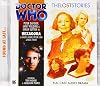
Given that Ling wrote the amazing Second Doctor story "The Mind Robber" back in 1968, and that Finch wrote Leviathan, the best of the series of Sixth Doctor lost stories produced by Big Finish a couple of years ago, my expectations were high. And I am glad to say that they were largely met; the Doctor, Tegan and Nyssa, finding that an old friend of Tegan's (played by Toby Hadoke) has been abducted by aliens, pursue him to a planet off Proxima Centauri which is ruled by a mysterious and show more slightly insectile queen, played by none other than Jacqueline "Servalan" Pearce. 'Orrible things are going on beneath the surface, and the plot largely successfully balances the politics of the queen's court with the insects' master plan, giving both Tegan and Nyssa some romantic tension along the way. I think for once it is a play that would be entirely accessible to listeners outside the core constituency. show less

What a wizard book. The story is absolutely enthralling -- I nearly missed my stop this morning because I was so absorbed in the plot. Basically, this is a novelization of a Second Doctor serial called "The Mind Robber", in which the Doctor, Jamie and Zoe find themselves outside of time and space in a land peopled with fictional characters. Riddles and puzzles abound, and it's almost like their arrival was expected. What will happen to them, and will they make it out alive?
As I said, this is show more a great story. The writing is fairly standard with a tendency to go overboard in the simile and metaphor department (and a bit in the adjective department as well), but it doesn't get in the way of the plot. If you don't know what the Second Doctor is about, give this book a try. It's a very pleasant diversion. show less
As I said, this is show more a great story. The writing is fairly standard with a tendency to go overboard in the simile and metaphor department (and a bit in the adjective department as well), but it doesn't get in the way of the plot. If you don't know what the Second Doctor is about, give this book a try. It's a very pleasant diversion. show less

Hexagora is the second of the Lost Stories to feature the fifth Doctor, Nyssa, and Tegan, following straight on from The Elite in a way that feels nicely authentic to the 1980s. The original outline for Hexagora was written by Peter Ling and Hazel Adair (Ling was the writer of The Mind Robber back in the 1960s), and it was adapted to audio by Paul Finch (who's penned a few Big Finish stories the past couple years, including a sixth Doctor Lost Story, Leviathan). Vacationing in Australia, show more Tegan alerts the Doctor to the fact that a guy she knew at school has gone missing... and of course the Doctor determines that he’s been abducted to another planet. But when the TARDIS arrives on Proxima Centauri, they find not an advanced civilization, but a recreation of Elizabethan London.
Hexagora starts off roughly, with a hoary scene where Mike Bretherton talks to his editor on the phone in a distracting accent when he sees a meteor, then a couple scenes where the Doctor, Tegan, and Nyssa work to track Mike down that are high on technogubbins and low on energy. But once the plot makes it to Luparis, it picks up in energy. At first, I was worried because Hexagora seemed to do that thing that bad Doctor Who stories do-- jam together a number of disparate elements in the hope that it creates something interesting-- with Elizabethan London, Proxima Centauri, alien insects, and court politics, but in fact as the story unfolds, we see that all of these elements go together quite nicely.
In the CD Extras, Janet Fielding and Sarah Sutton remark that Hexagora feels very of its time in a way that many Big Finish stories don't. And I think they're right; in its depiction of the characters and action, Hexagora actually feels a little bit more accurate to its time than The Elite did. But that's more due to a lack of energy, and slightly flat characterisation for Tegan and Nyssa; here, accuracy has not been a virtue. Hexagora isn't bad, but like some of the stories from the first season of Lost Stories (Paradise 5, Point of Entry), it verges a little bit too close to dull at times.
You can read a longer version of this review at Unreality SF. show less
Hexagora starts off roughly, with a hoary scene where Mike Bretherton talks to his editor on the phone in a distracting accent when he sees a meteor, then a couple scenes where the Doctor, Tegan, and Nyssa work to track Mike down that are high on technogubbins and low on energy. But once the plot makes it to Luparis, it picks up in energy. At first, I was worried because Hexagora seemed to do that thing that bad Doctor Who stories do-- jam together a number of disparate elements in the hope that it creates something interesting-- with Elizabethan London, Proxima Centauri, alien insects, and court politics, but in fact as the story unfolds, we see that all of these elements go together quite nicely.
In the CD Extras, Janet Fielding and Sarah Sutton remark that Hexagora feels very of its time in a way that many Big Finish stories don't. And I think they're right; in its depiction of the characters and action, Hexagora actually feels a little bit more accurate to its time than The Elite did. But that's more due to a lack of energy, and slightly flat characterisation for Tegan and Nyssa; here, accuracy has not been a virtue. Hexagora isn't bad, but like some of the stories from the first season of Lost Stories (Paradise 5, Point of Entry), it verges a little bit too close to dull at times.
You can read a longer version of this review at Unreality SF. show less

http://nwhyte.livejournal.com/1031032.html#cutid2
The original TV version was one of the most surreal stories ever; the novel takes some liberties with the script, but basically improves it further to make it one of the better Second Doctor novels. Even the Karkus somehow makes better sense here. One to look out for.
https://nwhyte.livejournal.com/3836799.html
One point to add is that even though Ling did not actually write the first of the five TV episodes, he gives it more page time (38 out show more of 144 - 26%) than any of the others in the novelisation. show less
The original TV version was one of the most surreal stories ever; the novel takes some liberties with the script, but basically improves it further to make it one of the better Second Doctor novels. Even the Karkus somehow makes better sense here. One to look out for.
https://nwhyte.livejournal.com/3836799.html
One point to add is that even though Ling did not actually write the first of the five TV episodes, he gives it more page time (38 out show more of 144 - 26%) than any of the others in the novelisation. show less
Lists
You May Also Like
Associated Authors
Statistics
- Works
- 15
- Also by
- 1
- Members
- 226
- Popularity
- #99,469
- Rating
- 3.3
- Reviews
- 4
- ISBNs
- 40
