
Max Beerbohm (1872–1956)
Author of Zuleika Dobson
About the Author
Henry Maximilian Beerbohm was born in England in 1872. In his twenties, Beerbohm became part of the literary circle of Oscar Wilde, and in 1898 he became the drama critic for the Saturday Review. His predecessor George Bernard Shaw recommended Beerbohm for this position supposedly because of show more Beerbohm's attacks on Plays Pleasant and Unpleasant, one of Shaw's own works. It was also Shaw who gave Beerbohm the nickname The Incomparable Max. Beerbohm was known primarily for his sharp wit, often expressed in parody and satire, His first book The Works of Max Beerbohm was a collection of essays in a mock-scholarly format. Other essay collections include Yet Again, And Even Now, Around Theatres, and Mainly on the Air, which was based on a series of radio broadcasts. His fiction includes one novel titled Zuleika Dobson: An Oxford Love Story and numerous short stories. Many of his short stories have been published in such collections as The Happy Hypocrite, Seven Men, and A Variety of Things. Beerbohm's flair for humor and parody was carried over into his art. He was a gifted caricaturist and was as well known for his drawings as for his writing. His drawings have been published in the collections Caricatures of Twenty-five Gentlemen, The Second Childhood of John Bull, A Book of Caricatures, Fifty Caricatures, Rosetti and His Circle, and Things Old and New. Beerbohm resigned from the Saturday Review in 1910 when he married Florence Kahn, an American actress, and they retired to Rapallo, Italy. The Beerbohms returned to England for several years during World War II, but in 1947 they returned to Rapallo where Beerbohm died in 1956. Beerbohm was knighted in 1939. (Bowker Author Biography) show less
Disambiguation Notice:
1. Max Beerbohm, poet and author.
2. Max Beerbohm, 'Bootstrap 4'
Image credit: Photo by Alvin Langdon Coburn, Jan. 15, 1908, London
Courtesy of the NYPL Digital Gallery
(image use requires permission from the New York Public Library)
Courtesy of the NYPL Digital Gallery
(image use requires permission from the New York Public Library)
Works by Max Beerbohm
The Prince of Minor Writers: The Selected Essays of Max Beerbohm (2015) — Author — 152 copies, 1 review
Max and Will: Max Beerbohm and William Rothenstein: Their Friendship and Letters, 1893-1945 (1975) 12 copies
Meditations of a refugee 2 copies
Ten Years Ago ... [short fiction] 2 copies
Around Theatres Vol. 1 2 copies
The poet and his books 1 copy
3 by Beerbohm 1 copy
'Savonarola' Brown 1 copy
La Reliqia (Racconto) 1 copy
Associated Works
Literature: An Introduction to Fiction, Poetry, and Drama (1995) — Contributor, some editions — 1,011 copies, 7 reviews
The World of the Short Story: A 20th Century Collection (1986) — Contributor — 509 copies, 4 reviews
The Stuffed Owl: An Anthology of Bad Verse (1930) — Illustrator, some editions — 275 copies, 9 reviews
Aesthetes and Decadents of the 1890s: An Anthology of British Poetry and Prose (1981) — Contributor — 192 copies, 2 reviews
The Golden Argosy: A Collection of the Most Celebrated Short Stories in the English Language (1947) — Contributor — 157 copies, 1 review
The Dedalus Book of English Decadence: Vile Emperors and Elegant Degenerates (2004) — Contributor — 60 copies
Fifty Years: Being a Retrospective Collection of Novels, Novellas, Tales, Drama, Poetry, and Reportage and Essays: All Drawn from Volumes Issued during the Last Half-Century by… (1965) — Contributor — 57 copies
Homefront Horrors: Frights Away from the Front Lines, 1914-1918 (2016) — Contributor — 16 copies, 1 review
The New Forget-Ne-Not : A Calendar — Contributor — 3 copies
About Time: The Forerunners of Time Travel and Temporal Anomalies in Science Fiction and Fantasy (2008) — Contributor — 2 copies
Six Stories 1 copy
The Uncertain Element: An Anthology of Fantastic Conceptions — Contributor — 1 copy
Tagged
Common Knowledge
- Canonical name
- Beerbohm, Max
- Legal name
- Beerbohm, Henry Maximilian
- Birthdate
- 1872-08-24
- Date of death
- 1956-05-20
- Gender
- male
- Education
- University of Oxford (Merton College)
Charterhouse School - Occupations
- parodist
caricaturist
novelist
essayist - Organizations
- Abinger Chronicle (editor)
- Awards and honors
- Knight Bachelor (1939)
American Academy of Arts and Letters (Foreign Honorary ∙ Literature ∙ 1943) - Relationships
- Tree, Herbert Beerbohm (half-brother)
Tree, Iris (niece)
Tree, Viola (niece)
Kahn, Florence (wife) - Nationality
- UK
- Birthplace
- London, Middlesex, England, UK
- Places of residence
- London, Middlesex, England, UK
Rapallo, Liguria, Italy
Oxford, Oxfordshire, England, UK - Place of death
- Rapallo, Liguria, Italy
- Burial location
- St. Paul's Cathedral, London, Middlesex, England, UK
- Map Location
- England, UK
- Disambiguation notice
- 1. Max Beerbohm, poet and author.
2. Max Beerbohm, 'Bootstrap 4'
Members
Reviews

This is an excellent short story, stretched to the size of a novel. I'm not certain how well that works. One of the main themes is about the grim inevitability of fate, comparing Grecian theology with Edwardian honour. This arc becomes obvious fairly soon into the story and all the rest can do is to narrate the inevitable. The narration is wonderful embroidery on a theme of Oxford life, but can that carry us when the course of the plot is simply forbidden from changing any further?
By halfway show more I was finding this a difficult read to push through and I was happy to finish it. I'm glad I've read it, it is a superb short story. But can even 'the incomparable Max' sustain us for the full length?
The Orange Penguin cover is just perfect. show less
By halfway show more I was finding this a difficult read to push through and I was happy to finish it. I'm glad I've read it, it is a superb short story. But can even 'the incomparable Max' sustain us for the full length?
The Orange Penguin cover is just perfect. show less

I’ve read other short stories and essays by this guy and found them to be interesting and amusing, but admit to being confounded as to the reputation of his novel Zuleka Dobson. There are funny things in that novel, but it’s way past the sale date. This collection on the other hand, is something different. It’s a collection of short stories, created in the format of character vignettes -often concerning fictional writers. There is an odd blending of supernatural elements into the show more stories. They often feel Pythonesque in their absurdity, but feature lucidly observed social and cultural situations. This collection is well written, without drifting into any turn of the century tweeness, which has shown up in other things I've read by the author.
The story “Enoch Soames” which features a pact with the devil, time travel and a self referential punchline, is the one most frequently cited from this collection, but the literary rivalry “Hilary Maltby and Stephen Braxton:” which culminates in guilt driven ghostly apparitions, I found as surprising and compelling. Most of the stories have their own, off beat unusual charms. Worth a read. show less
The story “Enoch Soames” which features a pact with the devil, time travel and a self referential punchline, is the one most frequently cited from this collection, but the literary rivalry “Hilary Maltby and Stephen Braxton:” which culminates in guilt driven ghostly apparitions, I found as surprising and compelling. Most of the stories have their own, off beat unusual charms. Worth a read. show less
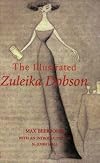
I am giving Zuleika Dobson four stars as it proved a suitable distraction from the ongoing Brexit fiasco. It reminded me of a black-dyed meringue - sweet, light, fluffy, and very dark. The story is essentially all about death, suicide in fact, while also being a light-hearted magical realist Oxford farce. An interesting and ununusual combination. Although I read the illustrated edition, I must say the pictures didn't do much for me. They were charming enough, but chopped up the text is a show more rather provoking fashion. I was much more fond of the words, especially grandiose words like peripety, aseity, and orgulous, none of which I'd come across before. Beerbohm has a knack for turn of phrase, rather like a less sunny Wodehouse:
The main character is ostensibly the titular Zuleika, a mysterious and bewitching woman who has the whole student body of Oxford killing themselves out of love for her. Another aside from the narrator, of which he allows himself many, comments acerbically on this phenomenon:
The treatment of Zuleika is intriguingly ambivalent. She shows a remarkable lack of remorse for the carnage she apparently caused, yet the students themselves are clearly acting very foolishly and the college fellows seem wilfully ignorant of what's happening. Given the book's original date of publication, 1911, I was tempted to read into it a macabre and prescient satire on patriotic fervour at the start of the First World War. Oxford undergraduates of three years later would after all be effectively committing suicide by trench warfare. Zuleika is perhaps a spectre representative of 'dulce et decorum est pro patria mori'. The author cannot have known that a world war would occur, of course, so this is all very retrospective. In any event, 'Zuleika Dobson' is an enjoyably weird novel, in which the best-developed character is the omniscient narrator and supernatural happenings go largely unremarked. Moreover, Zuleika really is a wonderful name for a literal femme fatale. As a dark mockery of Oxford, the aristocracy, and male pomposity in general, the book can be very funny. I did love this sort of dialogue:
It should be noted while reading the above that the Duke is also an undergraduate! show less
Aye, by all minerals we are mocked. Vegetables, yearly deciduous, are far more sympathetic. The lilac and laburnum, making lovely now the railed pathway to Christ Church meadow, were all a-swaying and a-nodding to the Duke as he passed by. "Adieu, adieu, your Grace," they were whispering. "We are very sorry for you - very sorry indeed. We never dared suppose you would predecease us. We think your death a very great tragedy. Adieu! Perhaps we shall meet in another world - that is, if members of the animal kingdom have immortal souls, as we have."
The main character is ostensibly the titular Zuleika, a mysterious and bewitching woman who has the whole student body of Oxford killing themselves out of love for her. Another aside from the narrator, of which he allows himself many, comments acerbically on this phenomenon:
You cannot make a man by standing a sheep on its hind-legs. But by standing a flock of sheep in that position you can make a crowd of men. If man were not a gregarious animal, the world might have achieved, by this time, some real progress towards civilisation. Segregate him, and he is no fool. But let him loose among his fellows and he is lost - he becomes just a unit in unreason. If any one of the undergraduates had met Miss Dobson in the desert of Sahara, he would have fallen in love with her; but not one in a thousand would have wished to die because she did not love him.
The treatment of Zuleika is intriguingly ambivalent. She shows a remarkable lack of remorse for the carnage she apparently caused, yet the students themselves are clearly acting very foolishly and the college fellows seem wilfully ignorant of what's happening. Given the book's original date of publication, 1911, I was tempted to read into it a macabre and prescient satire on patriotic fervour at the start of the First World War. Oxford undergraduates of three years later would after all be effectively committing suicide by trench warfare. Zuleika is perhaps a spectre representative of 'dulce et decorum est pro patria mori'. The author cannot have known that a world war would occur, of course, so this is all very retrospective. In any event, 'Zuleika Dobson' is an enjoyably weird novel, in which the best-developed character is the omniscient narrator and supernatural happenings go largely unremarked. Moreover, Zuleika really is a wonderful name for a literal femme fatale. As a dark mockery of Oxford, the aristocracy, and male pomposity in general, the book can be very funny. I did love this sort of dialogue:
Down the flight of steps from Queen's came lounging an average undergraduate.
"Mr. Smith," said the Duke, "a word with you."
"But my name is not Smith," said the young man.
"Generically it is," replied the Duke. "You are Smith to all intents and purposes. That, indeed, is why I address you. In making your acquaitance, I make a thousand acquaintances. You are a short cut to knowledge. Tell me, do you seriously think of drowning yourself this afternoon?"
"Rather," said the undergraduate.
"A meiosis in common use, equivalent to 'Yes, assuredly,'" murmured the Duke, "And why," he then asked, "do you mean to do this?"
"Why? How can you ask? Why are you going to do it?"
"The Socratic manner is not a game that two can play. Please answer my question to the best of your ability."
It should be noted while reading the above that the Duke is also an undergraduate! show less
Beerbohm's [b:Zuleika Dobson|778463|Zuleika Dobson|Max Beerbohm|https://d.gr-assets.com/books/1369859636s/778463.jpg|942377] is a humorous satire, more in the vein of Oscar Wilde than Jonathan Swift. As the book proceeds from one ludicrous scenario to another, I felt less involved with the characters than with the pitiful realities that they are meant to deride. Beerbohm jabs at everything he touches, particularly the dandy and Oxford institutions, but he does it with a light and almost show more affectionate style.
I fail to see how anyone could find the character of Zuleika charming, but I am told that I if I do not admit her to be so I am wholly unable to understand the imports of satire. I find that, in itself, a bit ironic, since one does not create such characters as Zuleika unless one holds her living model in disdain. Does one satirize people and institutions that one finds charming and pure?
Not being able to find a single admirable character in the book does not prevent the marvelous enjoyment of it, however. I was able to find the equivalent of almost each of these people in modern society: the girl who is famous for being famous (think Paris Hilton) and who stirs extreme devotion in her peers without any salient cause evident; the imperious dandy who is, in his own mind, superlative to everyone around him; the lemming-like followers (were we not all cautioned by our mothers not to "jump off a cliff just because others are doing it?"); the clueless dons who are supposed to be leading the young and are in fact totally oblivious to what is going on in their minds or lives; and the man who allows social conventions and outside opinions to determine what he will or will not do with his life.
While the reading is slow in some parts, the book overall has a pleasing flow that carries you along like a river to its disturbing (albeit humorous) end. That Zuleika has profited nothing from her experience is not surprising...that Cambridge may be in danger undoubtable. show less
I fail to see how anyone could find the character of Zuleika charming, but I am told that I if I do not admit her to be so I am wholly unable to understand the imports of satire. I find that, in itself, a bit ironic, since one does not create such characters as Zuleika unless one holds her living model in disdain. Does one satirize people and institutions that one finds charming and pure?
Not being able to find a single admirable character in the book does not prevent the marvelous enjoyment of it, however. I was able to find the equivalent of almost each of these people in modern society: the girl who is famous for being famous (think Paris Hilton) and who stirs extreme devotion in her peers without any salient cause evident; the imperious dandy who is, in his own mind, superlative to everyone around him; the lemming-like followers (were we not all cautioned by our mothers not to "jump off a cliff just because others are doing it?"); the clueless dons who are supposed to be leading the young and are in fact totally oblivious to what is going on in their minds or lives; and the man who allows social conventions and outside opinions to determine what he will or will not do with his life.
While the reading is slow in some parts, the book overall has a pleasing flow that carries you along like a river to its disturbing (albeit humorous) end. That Zuleika has profited nothing from her experience is not surprising...that Cambridge may be in danger undoubtable. show less
Lists
Awards


You May Also Like
Associated Authors
Statistics
- Works
- 84
- Also by
- 56
- Members
- 3,590
- Popularity
- #7,059
- Rating
- 4.1
- Reviews
- 68
- ISBNs
- 294
- Languages
- 6
- Favorited
- 22


