
Rob Larson
Author of Bit Tyrants: The Political Economy of Silicon Valley
About the Author
Rob Larson is professor of economics at Tacoma Community College and author of Capitalism vs. Freedom and Bleakonomics. He writes for a number of venues including Current Affairs, Dollars Sense, and Jacobin.
Works by Rob Larson
Mastering the Universe: The Obscene Wealth of the Ruling Class, What They Do with Their Money, and Why You Should Hate Them Even More (2024) 44 copies, 1 review
Tagged
Common Knowledge
- Gender
- male
Members
Reviews
Mastering the Universe: The Obscene Wealth of the Ruling Class, What They Do with Their Money, and Why You Should Hate Them Even More by Rob Larson
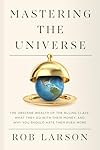
It is always entertaining to read Rob Larson. It doesn’t matter that the reader is not as economically Far Left as he is. His writing is alive, his adjectives punchy. His books are clearly organized, and his message is always consistent. In Mastering The Universe, Larson takes on the billionaire class, and eviscerates it.
He loves to decorate mentions of Elon Musk with spicy descriptors: Twitter-ruiner, useless tyrant, imbecile, tech-incompetent, and so on, depending on the context. show more Fortunately, Musk figures in a lot of billionaire abusiveness, so there is lots of such color.
Billionaires are a product of corruption. There is no way around that. Whether it’s the $15.9 billion in grants and low or no-interest loans that Elon Musk has pried out of government (as well as forcing out business partners), the slave labor policies of Andrew Carnegie, or the endless monopolies of the Silicon Valley gang, the money is tainted.
Larson starts off with the now usual facts about inequality: how the 1% own a third to a half of all the wealth in nearly every country. “It’s a fact today that eight rich men own as much wealth as the bottom 50% of the world’s population.” That’s eight men vs four billion other people. He says the top 10% own 84% of stock markets. Meanwhile, appeals for grocery money are now their own category on Go Fund Me, and the line for a food pantry in Boston stretches the length of two football fields, he says.
He is offended that billionaires’ useless yachts consume a hundred gallons of cancerous and polluting diesel fuel an hour, just standing still. The top 10% are responsible for fully half all the climate-changing emissions in the world. Getting rid of the rich, he says, is a matter of life or death.
It didn’t used to be this way. In the New Deal era of 90 years ago, business owners made more than workers, but not much more. This level-ish system kept going until the Reagan era, and by 2018 it had collapsed. Americans were making about $36,000 (the median) a year then. But had the system continued, they would be making $57,000. They were and are falling seriously behind, while bosses and owners, who should have been making a lovely $549,000 under the New Deal system, became super-rich instead, making seven, eight or nine figures a year.
One of the results is reduced class mobility for Americans, who continue to tell themselves the lie that uniquely in America, anyone can grow up to be whatever they want, and wealthy. The stats say otherwise. They say class mobility is higher in the “socialist” Scandinavian states, which invest in health, education and welfare, so the best and the brightest have the ability to succeed and improve society even more. In the USA, Larson says, “the many many people, especially kids, who die as a result of the status quo were effectively murdered.”
Capitalism is clearly not doing its public relations job well. Today he says, citing a Harvard-Duke survey, 92% of Americans prefer a Scandinavian model where the distribution of wealth is more even, and the super-rich only own 32% of the wealth. In the USA, the wealth of the average white family is $181,440. If the distribution were equalized, it would be $746,821. So while the top 10% own 38% of the $557 trillion in global wealth, the bottom half owns less than 5%.
Moving beyond this mandatory and well-worn recitation of inequality, Larson attacks the wealthy for their complete waste of it. Their self-indulgence is staggering, of course, and their contributions to others is insignificant overall. On average, they leave 75% of their estates to their children.
Government would operate programs much more fairly than non-profits do, but the wealthy don’t pay taxes much. Instead, they make donations to non-profits, making sure everyone knows about it. But mostly hide their assets overseas, in real estate that remains empty except for the occasional visit, and in bogus “trusts” set up in tax havens designed for that purpose. So most governments go wanting, while the super-rich entertain themselves with space shots. He shows that all of world hunger could be eliminated if the rich paid taxes. In the USA, social security could be self-funding forever if the cap on mandatory contributions were lifted. But the rich have other priorities. For Larson: ”There is no limit to the bottomless depravity and naked egomania of the highest-wealth households.”
Larson delights in the absurdity, pomposity, and insecurities of the super-rich. He gives the example of Melinda Gates: “And when Bill Gates’s ex-wife and billion-dollar charity co-kingpin, Melinda French, traveled to Manhattan to appear on NBC’s Today show, she was preceded by a ‘military operation’ – level security detail, on the scale of a visiting foreign dignitary. This personal army of security consultants did a sweep of the full studio prior to her arrival, with sources saying even Beyoncé and Michelle Obama didn’t have such expansive security apparatus. French was appearing to promote her new book imprint about authors striving for ‘radical inclusion.’ Unfortunately this required excluding everyone else from the area.” It seems the rich don’t have the word irony in their toolboxes.
It is in climate change that the rich lead the world, and in the worst possible way. Larson points out that “top 10 percent of world households emits almost half the greenhouse emissions of the entire world, and the richest 1 percent nearly 17 percent itself.” It’s not just their idling yachts. It’s their private jets that take them on neverending trips. Half their flights are less than 500km, which is the least efficient for fuel consumption per passenger (since the most fuel is burned during takeoff and landing), while whole countries like France are banning such short haul air passenger routes in favor fast trains. There is great irony on display every year in Davos, where the super-rich gather to save the planet, flying so many private jets (north of 1500) into little Davos, that the Swiss arrange to open the nearby air force base to park them all. If the rich stopped using private jets and yachts, half the climate change problem would go away, and 1.5° would be achievable. But no. The rich continue to emit 300 tons of CO2 per year, while the bottom half of humanity emits 10 and a middle-class American emits 22.
Larson gives this juicy example of excess: ”One day in 2022 when media kingpin Vincent Bollor(é) made three flights between France and Greece, releasing twenty-two tons of carbon dioxide, about ten years’ worth of car emissions for the average Frenchman.” The same goes for Musk, Bezos and Branson space tourism: “It therefore takes a few minutes of space travel to emit at least as much carbon as an individual from the bottom billion will emit in their entire lifetime.” If you want to understand why the whole planet is struggling under the weight of excess carbon dioxide, look no farther than your friendly local multimillionaires.
Larson of course, goes further: “People, and the planet deserve life. The ruling class deserves extinction.”
David Wineberg show less
He loves to decorate mentions of Elon Musk with spicy descriptors: Twitter-ruiner, useless tyrant, imbecile, tech-incompetent, and so on, depending on the context. show more Fortunately, Musk figures in a lot of billionaire abusiveness, so there is lots of such color.
Billionaires are a product of corruption. There is no way around that. Whether it’s the $15.9 billion in grants and low or no-interest loans that Elon Musk has pried out of government (as well as forcing out business partners), the slave labor policies of Andrew Carnegie, or the endless monopolies of the Silicon Valley gang, the money is tainted.
Larson starts off with the now usual facts about inequality: how the 1% own a third to a half of all the wealth in nearly every country. “It’s a fact today that eight rich men own as much wealth as the bottom 50% of the world’s population.” That’s eight men vs four billion other people. He says the top 10% own 84% of stock markets. Meanwhile, appeals for grocery money are now their own category on Go Fund Me, and the line for a food pantry in Boston stretches the length of two football fields, he says.
He is offended that billionaires’ useless yachts consume a hundred gallons of cancerous and polluting diesel fuel an hour, just standing still. The top 10% are responsible for fully half all the climate-changing emissions in the world. Getting rid of the rich, he says, is a matter of life or death.
It didn’t used to be this way. In the New Deal era of 90 years ago, business owners made more than workers, but not much more. This level-ish system kept going until the Reagan era, and by 2018 it had collapsed. Americans were making about $36,000 (the median) a year then. But had the system continued, they would be making $57,000. They were and are falling seriously behind, while bosses and owners, who should have been making a lovely $549,000 under the New Deal system, became super-rich instead, making seven, eight or nine figures a year.
One of the results is reduced class mobility for Americans, who continue to tell themselves the lie that uniquely in America, anyone can grow up to be whatever they want, and wealthy. The stats say otherwise. They say class mobility is higher in the “socialist” Scandinavian states, which invest in health, education and welfare, so the best and the brightest have the ability to succeed and improve society even more. In the USA, Larson says, “the many many people, especially kids, who die as a result of the status quo were effectively murdered.”
Capitalism is clearly not doing its public relations job well. Today he says, citing a Harvard-Duke survey, 92% of Americans prefer a Scandinavian model where the distribution of wealth is more even, and the super-rich only own 32% of the wealth. In the USA, the wealth of the average white family is $181,440. If the distribution were equalized, it would be $746,821. So while the top 10% own 38% of the $557 trillion in global wealth, the bottom half owns less than 5%.
Moving beyond this mandatory and well-worn recitation of inequality, Larson attacks the wealthy for their complete waste of it. Their self-indulgence is staggering, of course, and their contributions to others is insignificant overall. On average, they leave 75% of their estates to their children.
Government would operate programs much more fairly than non-profits do, but the wealthy don’t pay taxes much. Instead, they make donations to non-profits, making sure everyone knows about it. But mostly hide their assets overseas, in real estate that remains empty except for the occasional visit, and in bogus “trusts” set up in tax havens designed for that purpose. So most governments go wanting, while the super-rich entertain themselves with space shots. He shows that all of world hunger could be eliminated if the rich paid taxes. In the USA, social security could be self-funding forever if the cap on mandatory contributions were lifted. But the rich have other priorities. For Larson: ”There is no limit to the bottomless depravity and naked egomania of the highest-wealth households.”
Larson delights in the absurdity, pomposity, and insecurities of the super-rich. He gives the example of Melinda Gates: “And when Bill Gates’s ex-wife and billion-dollar charity co-kingpin, Melinda French, traveled to Manhattan to appear on NBC’s Today show, she was preceded by a ‘military operation’ – level security detail, on the scale of a visiting foreign dignitary. This personal army of security consultants did a sweep of the full studio prior to her arrival, with sources saying even Beyoncé and Michelle Obama didn’t have such expansive security apparatus. French was appearing to promote her new book imprint about authors striving for ‘radical inclusion.’ Unfortunately this required excluding everyone else from the area.” It seems the rich don’t have the word irony in their toolboxes.
It is in climate change that the rich lead the world, and in the worst possible way. Larson points out that “top 10 percent of world households emits almost half the greenhouse emissions of the entire world, and the richest 1 percent nearly 17 percent itself.” It’s not just their idling yachts. It’s their private jets that take them on neverending trips. Half their flights are less than 500km, which is the least efficient for fuel consumption per passenger (since the most fuel is burned during takeoff and landing), while whole countries like France are banning such short haul air passenger routes in favor fast trains. There is great irony on display every year in Davos, where the super-rich gather to save the planet, flying so many private jets (north of 1500) into little Davos, that the Swiss arrange to open the nearby air force base to park them all. If the rich stopped using private jets and yachts, half the climate change problem would go away, and 1.5° would be achievable. But no. The rich continue to emit 300 tons of CO2 per year, while the bottom half of humanity emits 10 and a middle-class American emits 22.
Larson gives this juicy example of excess: ”One day in 2022 when media kingpin Vincent Bollor(é) made three flights between France and Greece, releasing twenty-two tons of carbon dioxide, about ten years’ worth of car emissions for the average Frenchman.” The same goes for Musk, Bezos and Branson space tourism: “It therefore takes a few minutes of space travel to emit at least as much carbon as an individual from the bottom billion will emit in their entire lifetime.” If you want to understand why the whole planet is struggling under the weight of excess carbon dioxide, look no farther than your friendly local multimillionaires.
Larson of course, goes further: “People, and the planet deserve life. The ruling class deserves extinction.”
David Wineberg show less
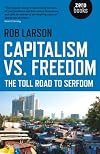
Freedom’s not just another word
Nobel Prize-winning economist Milton Friedman wrote a very influential book called Capitalism and Freedom. It implies that freedom is a product of capitalism. Capitalism vs Freedom refutes it and more in a blistering litany of well-documented counterattacks. It is a 240 page rebuttal.
Rob Larson quotes directly from Friedman, and the claims self-destruct before your eyes:
-Where Friedman saw freedom of choice for shoppers, Larson sees enormous concentration, show more limiting choice to (sometimes) one sole vendor or manufacturer, operating numerous brands it has taken over. For example, almost all beer is sold by two companies. Almost all eyewear comes from Luxottica. Throwing cable into deregulation resulted in megamergers, not consumer choice. Consumers are not offered repairable products they prefer or even sufficient legroom on flights. Forced arbitrations denies consumers even their day in court. Larson says we aren’t so much free to choose as free to imagine we are free to choose.
-Friedman saw freedom for workers to choose their employers. They could like their bosses and love their work, at will. Larson sees the labor market running on fear, not free choice. He sees offshoring and outsourcing at the slightest sign of wage savings or unionization, not to mention interminable internships, and 48% of US jobs paying minimum wage or less. Non-compete “agreements” enslave. Barring unions keeps wages below labor’s value. In the gig economy of capitalism, choice is a bitter laugh.
-Friedman argued bizarrely that inheritance of a fortune was no different than inheritance of talent. How can you criticize inherited wealth if you’re not against inherited talent?
-“Economic power can be widely dispersed. There is no law of conservation which forces the growth of new centers of economic strength to be at the expense of existing centers.”
-“The kind of economic organization that provides economic freedom directly, namely, competitive capitalism, also promotes political freedom, because it separates economic power from political power and in this way enables the one to offset the other.”
Looking at these statements today, Larson’s job is like shooting fish in a barrel. As he piles up the knockouts, he keeps repeating : ”Irony loves company!”
“Treating labor as an asset priced by supply and demand, like toasters or toothbrushes, is a gross insult to the human spirit, and is indeed responsible for some of the gravest crimes committed against humanity in our history,” Larson says. 42 He calls Friedman an intellectual opportunist, and shows repeatedly how the very opposite of what he said is what is true. “Today’s libertarians follow in a long line of defense of power.”
For good measure, Larson collars Friedman’s co-conspirators Ludwig Von Mises and Paul Collier. In a letter to Atlas Shrugged author Ayn Rand, Von Mises said: “You have the courage to tell the masses what no politician told them: you are inferior and all the improvements in your conditions which you simply take for granted you owe to the effort o men who are better than you.”
For Von Mises, who created the Austrian School that inspired Friedman’s Chicago School, the capitalist is a romantic hero and martyr to be exalted: “Creating for him is agony and torment, a ceaseless excruciating struggle against internal and external obstacles; it consumes and crushes him.”
Larson ranges far and wide. He criticizes capitalist colonialists for never giving the colonized infrastructure like sanitation or drinking water, while piling up trash on land, sea and in the air until it is unbearable for the locals. In contrast, libertarian Oxford economist Paul Collier, considered a “bold thinker” among neoliberals, said in his book The Plundered Planet: “We are not here to serve nature. Nature is here to serve us. “ 168 For Larson, these are neoliberals’ true colors showing through.
For all of these reasons, and many more, Larson thinks the concentration of capitalism is taking away our freedoms – both the negative freedom to live without fear and the positive freedom to do what we like.
His conclusion is that nothing has ever been achieved without a struggle. Labor is clearly not out to fight to for fewer benefits and more neoliberal libertarian “freedoms”. Sadly, it’s not out to fight anything. At some point, labor must awake to its pathetic situation and activists will bloom again.
David Wineberg show less
Nobel Prize-winning economist Milton Friedman wrote a very influential book called Capitalism and Freedom. It implies that freedom is a product of capitalism. Capitalism vs Freedom refutes it and more in a blistering litany of well-documented counterattacks. It is a 240 page rebuttal.
Rob Larson quotes directly from Friedman, and the claims self-destruct before your eyes:
-Where Friedman saw freedom of choice for shoppers, Larson sees enormous concentration, show more limiting choice to (sometimes) one sole vendor or manufacturer, operating numerous brands it has taken over. For example, almost all beer is sold by two companies. Almost all eyewear comes from Luxottica. Throwing cable into deregulation resulted in megamergers, not consumer choice. Consumers are not offered repairable products they prefer or even sufficient legroom on flights. Forced arbitrations denies consumers even their day in court. Larson says we aren’t so much free to choose as free to imagine we are free to choose.
-Friedman saw freedom for workers to choose their employers. They could like their bosses and love their work, at will. Larson sees the labor market running on fear, not free choice. He sees offshoring and outsourcing at the slightest sign of wage savings or unionization, not to mention interminable internships, and 48% of US jobs paying minimum wage or less. Non-compete “agreements” enslave. Barring unions keeps wages below labor’s value. In the gig economy of capitalism, choice is a bitter laugh.
-Friedman argued bizarrely that inheritance of a fortune was no different than inheritance of talent. How can you criticize inherited wealth if you’re not against inherited talent?
-“Economic power can be widely dispersed. There is no law of conservation which forces the growth of new centers of economic strength to be at the expense of existing centers.”
-“The kind of economic organization that provides economic freedom directly, namely, competitive capitalism, also promotes political freedom, because it separates economic power from political power and in this way enables the one to offset the other.”
Looking at these statements today, Larson’s job is like shooting fish in a barrel. As he piles up the knockouts, he keeps repeating : ”Irony loves company!”
“Treating labor as an asset priced by supply and demand, like toasters or toothbrushes, is a gross insult to the human spirit, and is indeed responsible for some of the gravest crimes committed against humanity in our history,” Larson says. 42 He calls Friedman an intellectual opportunist, and shows repeatedly how the very opposite of what he said is what is true. “Today’s libertarians follow in a long line of defense of power.”
For good measure, Larson collars Friedman’s co-conspirators Ludwig Von Mises and Paul Collier. In a letter to Atlas Shrugged author Ayn Rand, Von Mises said: “You have the courage to tell the masses what no politician told them: you are inferior and all the improvements in your conditions which you simply take for granted you owe to the effort o men who are better than you.”
For Von Mises, who created the Austrian School that inspired Friedman’s Chicago School, the capitalist is a romantic hero and martyr to be exalted: “Creating for him is agony and torment, a ceaseless excruciating struggle against internal and external obstacles; it consumes and crushes him.”
Larson ranges far and wide. He criticizes capitalist colonialists for never giving the colonized infrastructure like sanitation or drinking water, while piling up trash on land, sea and in the air until it is unbearable for the locals. In contrast, libertarian Oxford economist Paul Collier, considered a “bold thinker” among neoliberals, said in his book The Plundered Planet: “We are not here to serve nature. Nature is here to serve us. “ 168 For Larson, these are neoliberals’ true colors showing through.
For all of these reasons, and many more, Larson thinks the concentration of capitalism is taking away our freedoms – both the negative freedom to live without fear and the positive freedom to do what we like.
His conclusion is that nothing has ever been achieved without a struggle. Labor is clearly not out to fight to for fewer benefits and more neoliberal libertarian “freedoms”. Sadly, it’s not out to fight anything. At some point, labor must awake to its pathetic situation and activists will bloom again.
David Wineberg show less
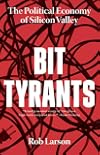
Tech takes a severe beating in Rob Larson’s Bit Tyrants. He wants to take readers “behind its playful, cutesy nerd façade.” First up, the big five companies, followed by major issues that affect them all. It’s a full frontal attack on pretty much everything there is to hate about Microsoft, Apple, Amazon, Facebook and Google, which each get their own chapter. And there’s lots to hate.
The common factor at the bottom of all those companies seems to be totally rotten founders. From show more Zuckerberg back to Gates, they are tyrants, verbally whiplashing underlings, paying poorly (Facebook “earns” nearly $700,000 of pure profit per employee) while expecting excruciatingly long hours (“death marches”) at no additional pay. They are arrogant, loud, abusive, selfish, greedy, ignorant, wrong and are constantly skating the edge of legality. They take on mainly part-timers to avoid paying benefits, and use contractors and slave labor overseas to produce their beautiful appliances. It is capitalism at its finest.
At the other end, they’ve all benefited from network effects. The more people use the services, the more important the services become. So it’s not so much their own brilliance as the leverage that the internet offered all of them. Also, government giving them unregulated total freedom, and the companies leveraging all the infrastructure and common goods of the USA gave them an incomparable boost. They expanded all over the world and avoided paying taxes. And they’ve never looked back.
Well, Jeff Bezos looked back. Incredibly, the world’s richest man has claimed to have built everything himself, without acknowledging the public services like roads for example, to deliver all those Amazon smiley boxes. Larson says he doesn’t pass the laugh test on that. Bezos is the kind of beneficent boss who cut off all Amazon affiliates rather than collect sales taxes for the states because affiliates gave it nexus all over the country. Now he is busy crippling product reviews, the very thing that gave Amazon the killer advantage over brick and mortar stores. Today, you have to have purchased a product at full price and spent at least $50 in the past 12 months in order to post a review that won’t be put last. If you haven’t spent enough, you can’t even vote. Your friend, Jeff.
As for network effects, Larson quotes W. Bryan Arthur: “Laissez-faire gives no guarantee that the ‘superior’ technology will be the one that survives.” To which Larson adds: “These are painful admissions from economists, who usually admit to few flaws in the marketplace.” Steve Jobs, for his part, claimed all the innovations developed by government grants at military research labs were Apple’s own invention. Things like touchscreens, lithium batteries, micro hard drives and the mouse. These guys bashed government all the way to the bank.
As comprehensive as Bit Tyrants seems to be, Larson missed a huge factor – planned obsolescence, in which companies like Apple and Microsoft make your purchases worthless and less functional, nudging you to purchase new. And it’s not just planned obsolescence but forced obsolescence, for those who think they can live with less than perfect systems, the Apples and Microsofts of the world can make them shut down completely.
Let there be no doubt, this is not fair reporting. Larson comes out swinging and keeps swinging throughout the book. It often seems like he has a personal chip on his shoulder. But Larson is a left-leaning economist, and one should expect some level of this kind of prejudice from him. It’s labor vs management, the public good vs shareholder rights, overseas hoarding vs infrastructure needs at home.
But he takes it way too far. He uses phrases like “bullying douchebag CEOs.” He drops in descriptors like sleazy and jerk-off (and worse, but we needn’t go there). I don’t know what Larson thinks he has accomplished with this dramatic name-calling. Perhaps it’s just the Trump effect, but it will not endear him or his book to researchers or teachers, let alone lawyers who might otherwise cite it in their work. He must believe there is some sort of audience that will glom onto his book because of his “colorful” descriptions.
The book concludes very positively with organizing tactics for the public to take back what amounts to ownership from these companies. For example, getting the rights to their own data, outlawing cookies that follow them all over the internet, and other privacy-invading techniques these companies profit from – at users’ expense. None of them are corporate rights.
He points out that Mark Zuckerburg bought and tore down four large houses around his own, just to ensure his own privacy. This is of course laughable when his whole company is based on leveraging other people’s personal activities, from where they’re standing to what they’ve looked at, who they’re meeting up with, and what they’re purchasing at every moment of their lives.
One interesting tactic that would work is a users strike. If everyone stayed off say Facebook for one month, none of the ads would be seen, causing terrific revenue loss to the company and mistrust from its real customers – the advertisers. Compare this to the paltry billion dollar fines it pays out of its tens of billions in profits – just the cost of doing business, which it goes right back to. A users strike is probably in Facebook’s future.
So Bit Tyrants has its value, but is lessened by its pointlessly abusive language.
David Wineberg show less
The common factor at the bottom of all those companies seems to be totally rotten founders. From show more Zuckerberg back to Gates, they are tyrants, verbally whiplashing underlings, paying poorly (Facebook “earns” nearly $700,000 of pure profit per employee) while expecting excruciatingly long hours (“death marches”) at no additional pay. They are arrogant, loud, abusive, selfish, greedy, ignorant, wrong and are constantly skating the edge of legality. They take on mainly part-timers to avoid paying benefits, and use contractors and slave labor overseas to produce their beautiful appliances. It is capitalism at its finest.
At the other end, they’ve all benefited from network effects. The more people use the services, the more important the services become. So it’s not so much their own brilliance as the leverage that the internet offered all of them. Also, government giving them unregulated total freedom, and the companies leveraging all the infrastructure and common goods of the USA gave them an incomparable boost. They expanded all over the world and avoided paying taxes. And they’ve never looked back.
Well, Jeff Bezos looked back. Incredibly, the world’s richest man has claimed to have built everything himself, without acknowledging the public services like roads for example, to deliver all those Amazon smiley boxes. Larson says he doesn’t pass the laugh test on that. Bezos is the kind of beneficent boss who cut off all Amazon affiliates rather than collect sales taxes for the states because affiliates gave it nexus all over the country. Now he is busy crippling product reviews, the very thing that gave Amazon the killer advantage over brick and mortar stores. Today, you have to have purchased a product at full price and spent at least $50 in the past 12 months in order to post a review that won’t be put last. If you haven’t spent enough, you can’t even vote. Your friend, Jeff.
As for network effects, Larson quotes W. Bryan Arthur: “Laissez-faire gives no guarantee that the ‘superior’ technology will be the one that survives.” To which Larson adds: “These are painful admissions from economists, who usually admit to few flaws in the marketplace.” Steve Jobs, for his part, claimed all the innovations developed by government grants at military research labs were Apple’s own invention. Things like touchscreens, lithium batteries, micro hard drives and the mouse. These guys bashed government all the way to the bank.
As comprehensive as Bit Tyrants seems to be, Larson missed a huge factor – planned obsolescence, in which companies like Apple and Microsoft make your purchases worthless and less functional, nudging you to purchase new. And it’s not just planned obsolescence but forced obsolescence, for those who think they can live with less than perfect systems, the Apples and Microsofts of the world can make them shut down completely.
Let there be no doubt, this is not fair reporting. Larson comes out swinging and keeps swinging throughout the book. It often seems like he has a personal chip on his shoulder. But Larson is a left-leaning economist, and one should expect some level of this kind of prejudice from him. It’s labor vs management, the public good vs shareholder rights, overseas hoarding vs infrastructure needs at home.
But he takes it way too far. He uses phrases like “bullying douchebag CEOs.” He drops in descriptors like sleazy and jerk-off (and worse, but we needn’t go there). I don’t know what Larson thinks he has accomplished with this dramatic name-calling. Perhaps it’s just the Trump effect, but it will not endear him or his book to researchers or teachers, let alone lawyers who might otherwise cite it in their work. He must believe there is some sort of audience that will glom onto his book because of his “colorful” descriptions.
The book concludes very positively with organizing tactics for the public to take back what amounts to ownership from these companies. For example, getting the rights to their own data, outlawing cookies that follow them all over the internet, and other privacy-invading techniques these companies profit from – at users’ expense. None of them are corporate rights.
He points out that Mark Zuckerburg bought and tore down four large houses around his own, just to ensure his own privacy. This is of course laughable when his whole company is based on leveraging other people’s personal activities, from where they’re standing to what they’ve looked at, who they’re meeting up with, and what they’re purchasing at every moment of their lives.
One interesting tactic that would work is a users strike. If everyone stayed off say Facebook for one month, none of the ads would be seen, causing terrific revenue loss to the company and mistrust from its real customers – the advertisers. Compare this to the paltry billion dollar fines it pays out of its tens of billions in profits – just the cost of doing business, which it goes right back to. A users strike is probably in Facebook’s future.
So Bit Tyrants has its value, but is lessened by its pointlessly abusive language.
David Wineberg show less
An enjoyable read, although I found some of the shifts to a more knockabout tone from time to time jarring. There's nothing particularly new here but it's well researched and Larson covers the histories and practices of the "Big 5" (Apple, Amazon, Facebook, Microsoft and Google) in considerable detail. I was only really vaguely aware of some of the actions of Gates-era Microsoft but it makes for shocking reading when laid out - almost pantomime levels of capitalist villainy. None of the show more other featured CEOs come out looking much better.
Definitely worth reading for anyone who uses any of the Big 5's products or services (i.e. everyone reading this) show less
Definitely worth reading for anyone who uses any of the Big 5's products or services (i.e. everyone reading this) show less
Statistics
- Works
- 6
- Members
- 226
- Popularity
- #99,469
- Rating
- 3.9
- Reviews
- 6
- ISBNs
- 15