
Sandy R. Williams
Author of People Person: How to Talk to Anyone, Improve Social Awkwardness, and Communicate With Ease and Confidence
Works by Sandy R. Williams
People Person: How to Talk to Anyone, Improve Social Awkwardness, and Communicate With Ease and Confidence (2023) 20 copies, 15 reviews
Overthinking Override: An Eight-Step Guide to Master Your Mind, Conquer Stress, and Break Free From Anxiety (2023) 8 copies, 6 reviews
Tagged
Common Knowledge
- Gender
- female
- Short biography
- Sandy R. Williams is a seasoned leader, a successful entrepreneur, and a passionate communicator. As a former nonprofit executive, her professional journey has spanned across the United States and Africa, where she led a myriad of initiatives and businesses to success, harnessing the power of interpersonal communication.
- Nationality
- USA
- Associated Place (for map)
- USA
Members
Reviews
Overthinking Override: An Eight-Step Guide to Master Your Mind, Stress, and Anxiety by Sandy R. Williams
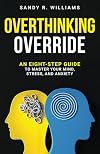
In Overthinking Override, Sandy R. Williams delivers a compassionate, clear-eyed guide to navigating one of the most common modern-day mental traps: overthinking. Blending psychological insight with practical tools, Williams offers readers more than just coping mechanisms—she provides a path to real mental freedom.
What sets this book apart is its accessibility. Williams writes with warmth and clarity, avoiding dense jargon while still grounding her advice in research-backed strategies. The show more chapters are thoughtfully structured, making it easy for readers to move from understanding the roots of overthinking to implementing tangible solutions in their daily lives.
Whether you’re caught in a cycle of “what-ifs,” overwhelmed by decision fatigue, or simply tired of your inner critic, Overthinking Override feels like a conversation with a wise, supportive friend who truly understands. The mindfulness techniques, reframing exercises, and stress-management practices are all highly actionable and empowering.
This is not just a book to read once and shelve—it’s one to revisit, highlight, and keep by your bedside. Perfect for anyone who feels stuck in their own head and is ready to take back control of their thoughts and emotional well-being. show less
What sets this book apart is its accessibility. Williams writes with warmth and clarity, avoiding dense jargon while still grounding her advice in research-backed strategies. The show more chapters are thoughtfully structured, making it easy for readers to move from understanding the roots of overthinking to implementing tangible solutions in their daily lives.
Whether you’re caught in a cycle of “what-ifs,” overwhelmed by decision fatigue, or simply tired of your inner critic, Overthinking Override feels like a conversation with a wise, supportive friend who truly understands. The mindfulness techniques, reframing exercises, and stress-management practices are all highly actionable and empowering.
This is not just a book to read once and shelve—it’s one to revisit, highlight, and keep by your bedside. Perfect for anyone who feels stuck in their own head and is ready to take back control of their thoughts and emotional well-being. show less
 This review was written for LibraryThing Early Reviewers.
People Person: How to Talk to Anyone, Improve Social Awkwardness, and Communicate With Ease and Confidence by Sandy R. Williams
This book was very well written and researched. I was thinking at first it might be a book on public speaking and improving presentations, but instead it is more focused on interpersonal skills and one-on-one communications. The first part of the book is taken up with identifying possible reasons people might struggle with communication, from social awkwardness to social anxiety to shyness or autism. There are ways to identify common traits that might cause us to be uneasy in social show more situations such as overly critical self-talk or a strong negativity bias that anticipates bad outcomes from other people or social situations. I liked some of the suggestions for overcoming these problems such as "adopting an alter ego" and "becoming your own cheerleader." Easier said than done, but there are plenty of ideas for helping you to come out of your shell and look toward positive, rather than possible negative, motives and outcomes. One section dealt with how to become a confident communicator, since confidence is identified as an important factor in how other see us (although how you can overcome not being the preferred "conventional beauty archetype" isn't explained). The book also includes advice on how to employ active listening, ask the right questions in a social situation, and handling difficult people. At the end, there are even lists of good and bad topic suggestions for small talk to help you prepare for any upcoming situations that might arise. Overall, I found the book to have lots of practical suggestions and clear examples of how to become better prepared, confident, and more at-ease in social situations.
I received a copy of this book from the LibraryThing Early Reviewers program. show less
This review was written for LibraryThing Early Reviewers.People Person: How to Talk to Anyone, Improve Social Awkwardness, and Communicate With Ease and Confidence by Sandy R. Williams
Well-intentioned, but ultimately too superficial to bridge the gap for people who lack the social skills described herein. At a high level, many of the techniques Williams describes for improving one's communication skills -- becoming a better listener, asking the right questions, paying attention to body language, etc. -- are sensible and helpful. The problem is that she doesn't provide the low-level, concrete instructions someone might need to practice in order to start implementing these show more techniques. Yes, the chapters include "Action Steps," but many of these require too much of an initial leap. (Examples: "Step 1: Try to be open and confident in social settings and new situations...." How does one do that? Or, in the section "Adopt an Alter Ego": "By creating an alter ego, you can tap into a different persona that embodies the qualities and traits you aspire to possess. ... So, why not give it a try? Channel your alter ego's confidence and watch as you conquer obstacles ...." Again, how? No details are given.)
At other times, I got the impression that the author was compiling and recounting information from other sources without having a deep understanding of it herself. This leads to some odd passages that beg for more explanation, e.g. "Language is made up of six parts: Clarity ... Economy ... Obscenity/Vulgarity ... Jargon ... Power ... Variety... ." That's the strangest assessment of language I've ever come across! And finally, there are sections where the advice becomes self-contradictory. For instance: when dealing with difficult people, "Don't try to change them" -- but, just two pages later, "Encourage the person to be more vulnerable..."
I did enjoy the first chapter, which focuses on the "why" of social awkwardness and people's communication problems; and the last chapter, on small talk, furnishes a number of small-talk topics that might be helpful for readers. show less
At other times, I got the impression that the author was compiling and recounting information from other sources without having a deep understanding of it herself. This leads to some odd passages that beg for more explanation, e.g. "Language is made up of six parts: Clarity ... Economy ... Obscenity/Vulgarity ... Jargon ... Power ... Variety... ." That's the strangest assessment of language I've ever come across! And finally, there are sections where the advice becomes self-contradictory. For instance: when dealing with difficult people, "Don't try to change them" -- but, just two pages later, "Encourage the person to be more vulnerable..."
I did enjoy the first chapter, which focuses on the "why" of social awkwardness and people's communication problems; and the last chapter, on small talk, furnishes a number of small-talk topics that might be helpful for readers. show less
This review was written for LibraryThing Early Reviewers.People Person: How to Talk to Anyone, Improve Social Awkwardness, and Communicate With Ease and Confidence by Sandy R. Williams
I decided I would not try to digest every piece of advice or tackle every suggestion Williams made in People Person. It was good enough to start small: smiling at everyone you meet, saying hello with enthusiasm and practice positive self-talk. I don't know what constitutes a power playlist or how to surround myself with confident people (they are who they are). One of the best reasons to read a self help book is to discover other self help books that might fit you better. In reading People show more Person I discovered Ty Tashiro.
Warning - the consequences of not being a people person sounds like the warning label on a prescription bottle: if you are anxious, side effects include misunderstandings and missed opportunities; loneliness and depression.
Confessional: I am wary of any book that uses the word transformation. Another disappointment was a plug for reviews at the end of chapter four. Williams could have at least waited until the end of the book for such a self-serving plug.
All in all, I enjoyed People Person. This is the first self help book I have read in a long that I consider more helpful than not. show less
Warning - the consequences of not being a people person sounds like the warning label on a prescription bottle: if you are anxious, side effects include misunderstandings and missed opportunities; loneliness and depression.
Confessional: I am wary of any book that uses the word transformation. Another disappointment was a plug for reviews at the end of chapter four. Williams could have at least waited until the end of the book for such a self-serving plug.
All in all, I enjoyed People Person. This is the first self help book I have read in a long that I consider more helpful than not. show less
This review was written for LibraryThing Early Reviewers.Statistics
- Works
- 3
- Members
- 29
- Popularity
- #460,289
- Rating
- 3.9
- Reviews
- 21
- ISBNs
- 4
