
Christina Björk (1) (1938–)
Author of Linnea in Monet's Garden
For other authors named Christina Björk, see the disambiguation page.
Works by Christina Björk
Tagged
Common Knowledge
- Birthdate
- 1938-07-27
- Gender
- female
- Nationality
- Sweden
- Birthplace
- Stockholm, Sverige
- Associated Place (for map)
- Sweden
Members
Reviews

I know five "biographies" of Alice Pleasance Liddell Hargreaves. I have yet to read a biography of her.
The sad fact is, this brilliant, beautiful, imperious, tragic woman needs to have her story told -- but everyone buries the story under the story of Alice in Wonderland. Sometimes in rather distressing ways; there is no evidence to think that Charles Dodgson/Lewis Carroll was involved with Alice, nor indeed much evidence that he was a paedophile (he dated adult women, and he was still show more trying to get back into Alice Liddell Hargreaves's good graces when she was in her thirties and married). Yet people still talk about that story (which probably originated as a spoof of Freudian psychology). But, because that myth is so pervasive, people who don't want to address it often end up telling very vapid tales. As here.
Leave out the Alice books and there is still much to tell about the life of Alice Hargreaves: The girl who captivated John Ruskin as well as Dodgson. The daughter of the reforming college president. The talented artist. The commoner who was loved by a prince. The marriage to the rich student. The two sons killed in World War I. It is not a happy story; Alice was probably deeply scarred for much of her long life. But it is a very moving story.
Sadly, this book tells very little of it. Like most books about Alice, it's really about "Alice" -- and tells mostly of her childhood life in Oxford. This part of it is done fairly well, if in a too-cutesy way. The photographs and illustrations are often more interesting than the text. But little girls -- even little girls who inspire great works of art -- grow up. And get married, and die. A story of Alice Liddell should tell that part, too. Even in a children't book. show less
The sad fact is, this brilliant, beautiful, imperious, tragic woman needs to have her story told -- but everyone buries the story under the story of Alice in Wonderland. Sometimes in rather distressing ways; there is no evidence to think that Charles Dodgson/Lewis Carroll was involved with Alice, nor indeed much evidence that he was a paedophile (he dated adult women, and he was still show more trying to get back into Alice Liddell Hargreaves's good graces when she was in her thirties and married). Yet people still talk about that story (which probably originated as a spoof of Freudian psychology). But, because that myth is so pervasive, people who don't want to address it often end up telling very vapid tales. As here.
Leave out the Alice books and there is still much to tell about the life of Alice Hargreaves: The girl who captivated John Ruskin as well as Dodgson. The daughter of the reforming college president. The talented artist. The commoner who was loved by a prince. The marriage to the rich student. The two sons killed in World War I. It is not a happy story; Alice was probably deeply scarred for much of her long life. But it is a very moving story.
Sadly, this book tells very little of it. Like most books about Alice, it's really about "Alice" -- and tells mostly of her childhood life in Oxford. This part of it is done fairly well, if in a too-cutesy way. The photographs and illustrations are often more interesting than the text. But little girls -- even little girls who inspire great works of art -- grow up. And get married, and die. A story of Alice Liddell should tell that part, too. Even in a children't book. show less
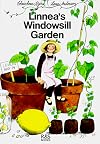
A little girl and how she grows plants in her apartment. She grows plants from the seeds and pits of produce brought home from the supermarket. She grows plants from cuttings given by a friend. She grows from seed packets from the nursery. And tells you all about how to do your own plant experiments (did you know that a pea, urged to grow, can break out from being sealed inside a lump of plaster of paris?!), how to care for the plants, how to get rid of nasty bugs, etc. I was delighted to show more find info about sprouting avocado and orange seeds, or how to soften water for sensitive plants (just let it sit out overnight). I like that she notes that not all plants will thrive, or all seeds germinate; you just have to try again. And that the bug-ridding methods include not only pick-them-off-and-squash them or spray with soapy water but also ingenious tricks I've never tried, like putting an aphid-infested plant in a bag and blowing cigarette smoke into it! Maybe I'm silly to get itchy green thumb over a kid's book, but now I'm eager to try growing experiments again... show less

So here's the deal: it took me 2 days to get through a 93-page, what I think is meant to be, children's book. I presume the author's intention was to create a book with fact and fiction blended together. Written primarily for children. Part story about the relationship between Alice and "Mr. Dodgson" (what the children called him); part biography. Unfortunately, the result is a muddled read.
For children, the stories are beautifully illustrated, but they feel underdeveloped and incomplete as show more individual short stories. For adults, there are many lesser-known tidbits to discover, but the storytelling distracts from the historical / biographical information.
I did enjoy learning more about the real Alice and playing the games sprinkled throughout the book. However, and this is most likely a product of my modern sensibilities and my personal experiences, I was thoroughly creeped out by Dodgson's lifelong hobby (which read more like an obsession) with photographing young children, mostly girls from the photos I saw in this book. He even took nude photos, "'The children had to think it was fun to take off their clothes,' said Mr. Dodgson; otherwise, he would not consider taking such a photograph."
Riiiight.
The author attempts to give Dodgson's hobby context by reminding the reader, "...in Victorian times, it was fashionable to have children photographed in this manner... Just think -- children could be naked in pictures, but they had to wear gloves on the beach!"
Please don't interpret my reaction as being against all grownups hanging out with kids. I understand the inclination: children are pure instinct and imagination. They haven't been sullied by the world and their zest for life (and play) is infectious. But I get a distinctly different vibe reading about Charles Dodgson's "child-friends" than the one I get whilst reading about Fred Rogers and his work with children. So my intention is not to pass judgment on Dodgson's behavior. Merely to convey my gut reaction to hearing about a 27-year-old single man actively seeking out children with whom he could hang out and take their pictures, naked ones if the kids (and parents) were down with it.
Further, throughout the book, Mrs. Liddell is reported as allowing Dodgson in her children's lives one moment and then refusing to let him even come to their property the next. I kept asking myself, why was she so fickle with her approval? Perhaps her gut was gnawing at her too?
An odd reading experience to say the least. 3 stars for the historical / biographical parts. show less
For children, the stories are beautifully illustrated, but they feel underdeveloped and incomplete as show more individual short stories. For adults, there are many lesser-known tidbits to discover, but the storytelling distracts from the historical / biographical information.
I did enjoy learning more about the real Alice and playing the games sprinkled throughout the book. However, and this is most likely a product of my modern sensibilities and my personal experiences, I was thoroughly creeped out by Dodgson's lifelong hobby (which read more like an obsession) with photographing young children, mostly girls from the photos I saw in this book. He even took nude photos, "'The children had to think it was fun to take off their clothes,' said Mr. Dodgson; otherwise, he would not consider taking such a photograph."
Riiiight.
The author attempts to give Dodgson's hobby context by reminding the reader, "...in Victorian times, it was fashionable to have children photographed in this manner... Just think -- children could be naked in pictures, but they had to wear gloves on the beach!"
Please don't interpret my reaction as being against all grownups hanging out with kids. I understand the inclination: children are pure instinct and imagination. They haven't been sullied by the world and their zest for life (and play) is infectious. But I get a distinctly different vibe reading about Charles Dodgson's "child-friends" than the one I get whilst reading about Fred Rogers and his work with children. So my intention is not to pass judgment on Dodgson's behavior. Merely to convey my gut reaction to hearing about a 27-year-old single man actively seeking out children with whom he could hang out and take their pictures, naked ones if the kids (and parents) were down with it.
Further, throughout the book, Mrs. Liddell is reported as allowing Dodgson in her children's lives one moment and then refusing to let him even come to their property the next. I kept asking myself, why was she so fickle with her approval? Perhaps her gut was gnawing at her too?
An odd reading experience to say the least. 3 stars for the historical / biographical parts. show less

Cute story; if I come across another Linnea book I'll read it. She's an established character in a series of books; in this one, she and an adult friend take a trip to France to visit Monet's house and garden, and delight in finding the scenes that he painted so often. A pleasant and at least mildly interesting story, which ends up being a sketchy biography of Monet as well. The illustrations are very nice, drawings of the garden and what they see as well as photographs of Monet and his show more family (some "never before published", it says). show less
Lists
Awards


You May Also Like
Associated Authors
Statistics
- Works
- 21
- Members
- 3,230
- Popularity
- #7,924
- Rating
- 4.2
- Reviews
- 37
- ISBNs
- 106
- Languages
- 15
- Favorited
- 1