
Sidney Rosen (1) (1916–2005)
Author of Galileo and the Magic Numbers
For other authors named Sidney Rosen, see the disambiguation page.
Series
Works by Sidney Rosen
Concepts in physical science 3 copies
Tagged
Common Knowledge
- Birthdate
- 1916
- Date of death
- 2005
- Gender
- male
- Education
- University of Massachusetts (BA)
Harvard University (PhD) - Occupations
- professor
- Relationships
- Rosen, Dorothy
- Short biography
- Sidney Rosen (1916-2005) was born in Boston and graduated with a bachelor's degree from the University of Massachusetts and a PhD from Harvard University. He gained tenure at the University of Illinois, where he taught in the astronomy department for nearly forty years. His first popular children's book was about Galileo. Among his many contributions to children's literature since, Rosen authored a number of illustrated children's books. With his wife, Dorothy Rosen, he also coauthored a mystery series featuring Belle Appleman, a Jewish immigrant from Boston's West End.
- Nationality
- USA
- Birthplace
- Boston, Massachusetts, USA
- Associated Place (for map)
- Massachusetts, USA
Members
Reviews
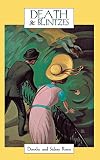
When a beautiful young factory employee is found floating in the Charles River, Belle Appleman indulges in her passion for crime (nutured by reading True Detective) and finds the murderer. (Actually she blunders into the murderer by accident.) The plot could be better, but this is a good historical mystery, set in the early Depression in the Jewish community of West Boston.

This book gives information about the moon in a questions and answer format. The children the book ask an owl questions and the owl answers. There are information bubbles on some pages with extra information and a glossary in the back.
Genre: Informational Text/Science
Key Words: Moon, inquiry
Grade Level: 3rd grade but could be used as a resource in 4th grade as well.
Possible Topics: Teaching students about what the moon is, what it looks like, the moon phases, where the moon goes during the day. You could even get students to think about why you can see the moon during the day. That could be the main theme or main focus of the unit.
Key Words: Moon, inquiry
Grade Level: 3rd grade but could be used as a resource in 4th grade as well.
Possible Topics: Teaching students about what the moon is, what it looks like, the moon phases, where the moon goes during the day. You could even get students to think about why you can see the moon during the day. That could be the main theme or main focus of the unit.

This question and answer book explores the history of the Big Dipper and other constellations. This book also answers many questions about astrology, the North Star, and the Zodiac.
Awards


You May Also Like
Associated Authors
Statistics
- Works
- 15
- Members
- 503
- Popularity
- #49,234
- Rating
- 3.6
- Reviews
- 4
- ISBNs
- 42
- Languages
- 6