
Sally Jenkins (1) (1960–)
Author of It's Not About the Bike: My Journey Back to Life
For other authors named Sally Jenkins, see the disambiguation page.
Works by Sally Jenkins
The State of Jones: The Small Southern County that Seceded from the Confederacy (2009) 330 copies, 14 reviews
The Real All Americans: The Team That Changed a Game, a People, a Nation (2007) 230 copies, 6 reviews
Associated Works
Sum It up : 1,098 Victories, a Couple of Irrelevant Losses, and a Life in Perspective (2013) 253 copies, 12 reviews
Reader's Digest Today's Best Nonfiction 2002 Volume 2: Public Enemies / Diana's Boys / An American Insurrection / Dave Barry Hits Below the Beltway / No Finish Line (2002) — Author — 3 copies
Sports Illustrated | September 5, 1994 (NFL '94 Preview: In the Line of Fire) (1994) — Contributor — 1 copy
Tagged
Common Knowledge
Members
Reviews
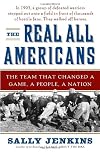
This is absolutely one of the best sports history books I’ve ever read. Sally Jenkins tells the full history of the Carlisle Indian football team, truly an amazing part of football history.
The Carlisle Indian Industrial School was opened by Lt. Col. Richard Henry Pratt in 1879. Pratt had been the Superintendent of a prison for Indians incarcerated during the various outbreaks of violence on the plains where he taught Indians to read and write and believed they were every bit the equal of show more white men. When Pratt opened the school, some of the students were sons of the very same men imprisoned by the U.S. government under Pratt, and in fact some of the students were essentially hostages of the U.S. government. Pratt believed that through education, discipline, and adoption of white man’s ways, that Indians could fully succeed in the growing American nation. While horribly paternalistic, it was enlightened for the times, as Pratt firmly believed Native Americans were every bit the equal of white men if given the chance to succeed.
Once the school opened some of the students became enamored of a new game evolving, American football, then dominated by the Ivy League schools, especially Yale and Harvard. Pratt agreed to put together a team called the Carlisle Indians, and eventually hired Glen “Pop” Warner to be its head coach. The school opened its inaugural football season in 1895, when they went 4-4 despite being robbed by the referees in some games. Given a very small recruiting pool and the violence of the game in that era, Pop Warner eventually made an undersized, and often undermanned team competitive with the likes of the dominant Yale, Harvard, and Army teams of the era.
The team soon had one of the most famous athletes in American history, Jim Thorpe. Jenkins does an excellent job of providing a mini-biography of Thorpe in this book and what he meant to the school. Thorpe was a somewhat eccentric, fun loving, even lazy character but his athletic prowess was amazing. Jenkins does an fantastic job of exploring Thorpe and the way Pop Warner got the best out of him, most of the time.
This book succeeds on many, many levels. First, it acts as a history of the Carlisle Indian Industrial School and the regime of Pratt. It fully places this amazing football team within the context of its times and what it meant for a team, all Native Americans, to be facing and competing equally with the scions of high society, and military teams, on the football field. She also puts the football team into the context and mission of the school itself, which was to instill education and discipline among its students, and how the team gave the school an additional reason to be proud. In fact, the team’s successes, and even its character when being cheated against by referees, was proof of Pratt’s philosophy and a showcasing of the proud, smart, solid character of its students.
Second, it acts as a biography, of sorts, of Glen “Pop” Warner and his unique coach-player relationship with the often recalcitrant Jim Thorpe. Warner was able to get the best out of Thorpe, and is the man who shepherded him to his gold medals in the Olympics. Further, Jenkins brings out how Warner was an innovator in the game, loving trick plays, but also devising strategies to take advantage of the smaller but speedier Indian teams against larger foes in an era when smashing into the line of scrimmage and sheer brawn and violence was the norm.
Third, she brings the team and drama to life in some of its biggest accomplishments and its biggest games. Maybe the most storied game of the Carlisle Indian team was its defeat of Army in 1912, only 22 years removed from the Army massacre of Indians at Wounded Knee. The Carlisle team featured Jim Thorpe, and the Army team included Dwight D. Eisenhower. The Indians won and had a great trick play. Read about it.
Finally, she follows the later careers of the players on this team. Some went on to serve in the U.S. military, including World War I. Others became successful in law or business. Yet others went home and become militant agitators for Indian rights. Not something Pratt had in mind, but their independence and intelligence was also something instilled in them at Carlisle.
This is a fabulous, well researched, and well written history of a forgotten team. It is a piece of history that goes beyond sports and beyond football. I highly recommend it. show less
The Carlisle Indian Industrial School was opened by Lt. Col. Richard Henry Pratt in 1879. Pratt had been the Superintendent of a prison for Indians incarcerated during the various outbreaks of violence on the plains where he taught Indians to read and write and believed they were every bit the equal of show more white men. When Pratt opened the school, some of the students were sons of the very same men imprisoned by the U.S. government under Pratt, and in fact some of the students were essentially hostages of the U.S. government. Pratt believed that through education, discipline, and adoption of white man’s ways, that Indians could fully succeed in the growing American nation. While horribly paternalistic, it was enlightened for the times, as Pratt firmly believed Native Americans were every bit the equal of white men if given the chance to succeed.
Once the school opened some of the students became enamored of a new game evolving, American football, then dominated by the Ivy League schools, especially Yale and Harvard. Pratt agreed to put together a team called the Carlisle Indians, and eventually hired Glen “Pop” Warner to be its head coach. The school opened its inaugural football season in 1895, when they went 4-4 despite being robbed by the referees in some games. Given a very small recruiting pool and the violence of the game in that era, Pop Warner eventually made an undersized, and often undermanned team competitive with the likes of the dominant Yale, Harvard, and Army teams of the era.
The team soon had one of the most famous athletes in American history, Jim Thorpe. Jenkins does an excellent job of providing a mini-biography of Thorpe in this book and what he meant to the school. Thorpe was a somewhat eccentric, fun loving, even lazy character but his athletic prowess was amazing. Jenkins does an fantastic job of exploring Thorpe and the way Pop Warner got the best out of him, most of the time.
This book succeeds on many, many levels. First, it acts as a history of the Carlisle Indian Industrial School and the regime of Pratt. It fully places this amazing football team within the context of its times and what it meant for a team, all Native Americans, to be facing and competing equally with the scions of high society, and military teams, on the football field. She also puts the football team into the context and mission of the school itself, which was to instill education and discipline among its students, and how the team gave the school an additional reason to be proud. In fact, the team’s successes, and even its character when being cheated against by referees, was proof of Pratt’s philosophy and a showcasing of the proud, smart, solid character of its students.
Second, it acts as a biography, of sorts, of Glen “Pop” Warner and his unique coach-player relationship with the often recalcitrant Jim Thorpe. Warner was able to get the best out of Thorpe, and is the man who shepherded him to his gold medals in the Olympics. Further, Jenkins brings out how Warner was an innovator in the game, loving trick plays, but also devising strategies to take advantage of the smaller but speedier Indian teams against larger foes in an era when smashing into the line of scrimmage and sheer brawn and violence was the norm.
Third, she brings the team and drama to life in some of its biggest accomplishments and its biggest games. Maybe the most storied game of the Carlisle Indian team was its defeat of Army in 1912, only 22 years removed from the Army massacre of Indians at Wounded Knee. The Carlisle team featured Jim Thorpe, and the Army team included Dwight D. Eisenhower. The Indians won and had a great trick play. Read about it.
Finally, she follows the later careers of the players on this team. Some went on to serve in the U.S. military, including World War I. Others became successful in law or business. Yet others went home and become militant agitators for Indian rights. Not something Pratt had in mind, but their independence and intelligence was also something instilled in them at Carlisle.
This is a fabulous, well researched, and well written history of a forgotten team. It is a piece of history that goes beyond sports and beyond football. I highly recommend it. show less
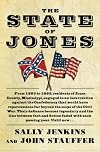
This amazing history book reads like a novel. I was fascinated at every turn: The description of the siege at Vicksburg, the utter decimation visited on the South as wartime policy, and the heartrending aftermath of the war. I'd been aware that blacks had been granted the vote in the immediate aftermath of the Civil War; I had never fully understood why the federal government allowed Jim Crow laws and the essential reversal of all the North fought for.
This beautifully written tome explains show more a great deal of how deep and all-encompassing not only Southern pride, but Southern racism really was. Is? It didn't touch on current politics, seeming to assume that in the decades since the Civil Rights Act, the teeming morass of racism, classism and political division has been largely tamped -- or perhaps assuming it best not to touch on current issues.
I finished this book shocked and horrified at all the atrocities committed during the Civil War and the following decades. During the first part of the book, Newton Knight and his band of Unionists reminded me so much of Robin Hood that I was actually disappointed when Confederate generals succeeded in hanging or shooting men from Jones County. Disappointed not just for the pointless deaths, but that Knight hadn't ridden down like an avenging angel and stopped the Confederate troops after they caught his men.
Ridiculous, I know, but seriously. Read about Knight defying Confederate-installed sheriffs, robbing from rich plantation owners to feed the poor whites and emancipated slaves, and living in the Mississippi swamps throughout the war and try not to make the Robin Hood parallel.
It's a boldly written, beautifully pieced-together book. It's rife with heroism, love, and betrayal -- all on both a grand and a personal scale. This is probably the most evocative, intriguing look at the Civil War South I've ever had the pleasure of reading. show less
This beautifully written tome explains show more a great deal of how deep and all-encompassing not only Southern pride, but Southern racism really was. Is? It didn't touch on current politics, seeming to assume that in the decades since the Civil Rights Act, the teeming morass of racism, classism and political division has been largely tamped -- or perhaps assuming it best not to touch on current issues.
I finished this book shocked and horrified at all the atrocities committed during the Civil War and the following decades. During the first part of the book, Newton Knight and his band of Unionists reminded me so much of Robin Hood that I was actually disappointed when Confederate generals succeeded in hanging or shooting men from Jones County. Disappointed not just for the pointless deaths, but that Knight hadn't ridden down like an avenging angel and stopped the Confederate troops after they caught his men.
Ridiculous, I know, but seriously. Read about Knight defying Confederate-installed sheriffs, robbing from rich plantation owners to feed the poor whites and emancipated slaves, and living in the Mississippi swamps throughout the war and try not to make the Robin Hood parallel.
It's a boldly written, beautifully pieced-together book. It's rife with heroism, love, and betrayal -- all on both a grand and a personal scale. This is probably the most evocative, intriguing look at the Civil War South I've ever had the pleasure of reading. show less
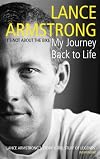
Lance Armstrong is a multiple winner of the Tour de France, an achievement that in itself is extremely praiseworthy. But what is amazing about Armstrong's victories is that he achieved them after recovering from cancer - at one stage the doctors had believed his chances of recovery were less than 20%. It's Not About the Bike is the story of Armstrong's life - his growing up, his riding, his becoming a father. Most of all, it is about his battle with cancer, and how it changed him for the show more better.
Don't fear - this is not some airy-fairy new-age hope story. Armstrong is very down to earth about the whole process that he went through, and is not afraid to share details (gory, icky details). This book achieves a lot that other autobiographies miss - he drops some pretty big names and doesn't shy away from comparing himself from the greats in cycling, yet you never feel he is boasting. You get a lot of detail - what goes into chemo treatments; a run through of his 1999 ride of the Tour de France - but it never feels boring or superfluous. Rather, Armstrong comes across as a guy that manages to be amazing and reassuringly normal at the same time - he likes to kick back and drink beer, he loves his Mother, he is proud of being a Dad. He just happens to be one of the greatest sports people competing today, and after reading this book you realise how hard he works to be so good.
You don't need to be a cyclist to enjoy this book - while there are sections on his riding, nothing is too technical, and all cycling terms used are explained. As the title says - it's not about the bike. It is about an amazing man that went to hell and back, and made the best of the second chance he was given. I guarantee this book will manage to make you laugh, make you think and inspire you all in the same reading. And there's not much more you can ask from in a book than that. show less
Don't fear - this is not some airy-fairy new-age hope story. Armstrong is very down to earth about the whole process that he went through, and is not afraid to share details (gory, icky details). This book achieves a lot that other autobiographies miss - he drops some pretty big names and doesn't shy away from comparing himself from the greats in cycling, yet you never feel he is boasting. You get a lot of detail - what goes into chemo treatments; a run through of his 1999 ride of the Tour de France - but it never feels boring or superfluous. Rather, Armstrong comes across as a guy that manages to be amazing and reassuringly normal at the same time - he likes to kick back and drink beer, he loves his Mother, he is proud of being a Dad. He just happens to be one of the greatest sports people competing today, and after reading this book you realise how hard he works to be so good.
You don't need to be a cyclist to enjoy this book - while there are sections on his riding, nothing is too technical, and all cycling terms used are explained. As the title says - it's not about the bike. It is about an amazing man that went to hell and back, and made the best of the second chance he was given. I guarantee this book will manage to make you laugh, make you think and inspire you all in the same reading. And there's not much more you can ask from in a book than that. show less

There is a part of the history of the American Civil War that is not very well-known, that is rarely taught in the schools. It is the story of southerners who believed in the Union, who not only refused to fight for the Confederacy, but actively fought against it. Some did so by joining the Union forces, others did so by engaging in guerrilla warfare. The rural county of Jones in Mississippi was a stronghold of men who opposed secession. Some were staunch Unionists. Some were anti-slavery. show more Some believed it was a rich man's war and a poor man's fight. One such man was Newton Knight, and this is his story.
Newton Knight was the grandson of Jackie Knight, one of the early settlers in this part of Mississippi. By the time war came, he was "merely a rich man in a state full of tycoons", but the owner of several hundred acres of cotton and rice, and of a couple of dozen slaves. But his son, Albert, Newton's father, unlike Jackie's other children, refused to own any slaves, and led a modest life as a shoemaker and tanner. This split in the family would echo down through the years and the generations.
When the Civil War began, Newton, like many others, was forced into service in the Confederate Army. After Vicksburg, he, like many others, deserted. He spent the rest of the war with a band of like-minded souls, fighting the Confederacy in Jones County. The book does not, however, end with Lee's surrender, because the war really didn't end there. There was a period when men like Knight were in the ascendancy, when it looked as though the Union had won the war. But it soon became apparent that, in Mississippi at least, the South had won. National politics meant that the federal government soon declined to enforce the rule of law, and ex-Confederates came to power through murder and intimidation at the polls, leaving a legacy of racial injustice that still haunts this country today.
There's another part of Newton's story that's told here, the story of his love for a black woman, a woman named Rachel who was owned by his grandfather. Newton was married to a woman named Serena, by whom he had several children, but he also had children by Rachel. Now, it wasn't unusual for a white man to have children by a slave woman. What was unusual was that theirs was a true consensual relationship. He viewed her as his wife (the authors suggest that later conversions of some members of the family to Mormonism might have been caused, at least in part, by that faith's then recognition of plural marriage), he recognized and helped to raise and support his children by her, he made sure she had financial independence.
One would like to know what it was that caused Albert (and, through him, his children) to be not only opposed to slavery, but a friend to African-Americans. I cannot, however, fault the authors for being unable to answer this question; it is, at this remove, likely unanswerable.
I was, for the most part, riveted by this book. If I have any quibble with it, it is that in the early part it jumps around a bit too much for my taste. However, the authors combine serious scholarship and research (among other things, they located and interviewed descendants of Knight) with good storytelling. Civil War buffs will appreciate the vivid descriptions of the battle of Corinth, the siege of Vicksburg, and the guerrilla bands. About the only folks who won't like this book are those who don't want their preconceived ideas about the south and the Confederacy disturbed.
(For another story of Union sympathizers in the South, this one fiction, I highly recommend Sharyn McCrumb's Ghost Riders, one of her "Ballad Series".) show less
Newton Knight was the grandson of Jackie Knight, one of the early settlers in this part of Mississippi. By the time war came, he was "merely a rich man in a state full of tycoons", but the owner of several hundred acres of cotton and rice, and of a couple of dozen slaves. But his son, Albert, Newton's father, unlike Jackie's other children, refused to own any slaves, and led a modest life as a shoemaker and tanner. This split in the family would echo down through the years and the generations.
When the Civil War began, Newton, like many others, was forced into service in the Confederate Army. After Vicksburg, he, like many others, deserted. He spent the rest of the war with a band of like-minded souls, fighting the Confederacy in Jones County. The book does not, however, end with Lee's surrender, because the war really didn't end there. There was a period when men like Knight were in the ascendancy, when it looked as though the Union had won the war. But it soon became apparent that, in Mississippi at least, the South had won. National politics meant that the federal government soon declined to enforce the rule of law, and ex-Confederates came to power through murder and intimidation at the polls, leaving a legacy of racial injustice that still haunts this country today.
There's another part of Newton's story that's told here, the story of his love for a black woman, a woman named Rachel who was owned by his grandfather. Newton was married to a woman named Serena, by whom he had several children, but he also had children by Rachel. Now, it wasn't unusual for a white man to have children by a slave woman. What was unusual was that theirs was a true consensual relationship. He viewed her as his wife (the authors suggest that later conversions of some members of the family to Mormonism might have been caused, at least in part, by that faith's then recognition of plural marriage), he recognized and helped to raise and support his children by her, he made sure she had financial independence.
One would like to know what it was that caused Albert (and, through him, his children) to be not only opposed to slavery, but a friend to African-Americans. I cannot, however, fault the authors for being unable to answer this question; it is, at this remove, likely unanswerable.
I was, for the most part, riveted by this book. If I have any quibble with it, it is that in the early part it jumps around a bit too much for my taste. However, the authors combine serious scholarship and research (among other things, they located and interviewed descendants of Knight) with good storytelling. Civil War buffs will appreciate the vivid descriptions of the battle of Corinth, the siege of Vicksburg, and the guerrilla bands. About the only folks who won't like this book are those who don't want their preconceived ideas about the south and the Confederacy disturbed.
(For another story of Union sympathizers in the South, this one fiction, I highly recommend Sharyn McCrumb's Ghost Riders, one of her "Ballad Series".) show less
Lists
Awards


You May Also Like
Associated Authors
Statistics
- Works
- 13
- Also by
- 9
- Members
- 3,931
- Popularity
- #6,433
- Rating
- 3.7
- Reviews
- 96
- ISBNs
- 88
- Languages
- 10