
Ron Cooper
Author of Finding Mezcal: A Journey into the Liquid Soul of Mexico, with 40 Cocktails
Works by Ron Cooper
Tagged
Common Knowledge
- Canonical name
- Cooper, Ron
- Birthdate
- 1960-08-22
- Gender
- male
- Education
- Rutgers University (PhD)
University of South Carolina (MA)
College of Charleston (BA) - Occupations
- professor (college)
- Awards and honors
- Breadloaf Writer's Conference Bakeless Prize (Fiction, Finalist)
- Relationships
- Cooper, Sandra (wife)
- Short biography
- Born in Moncks Corner, SC; attended the College of Charleston ('82), U. of So. Carolina (MA, '84), and Rutger U (Ph.D., '90); married Sandra Johnson, '85; moved to Florida, '88; three children: Stetson (15), Levi (11), and Grace (9); two books: novel,"Hume's Fork" (Bancroft Press, '07) and nonfiction, "Whitehead and Heidegger" (Ohio Univ. Press '93); another novel, "Purple Jesus," in the works; a number of short stories and poems
- Nationality
- USA
- Places of residence
- Ocala, Florida, USA
- Associated Place (for map)
- Florida, USA
Members
Reviews
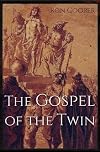
In a Nutshell: Imaginative, for sure. Traditional believers will find it controversial as well. I read it as pure fiction and hence wasn’t bothered much by the content. The book works in some ways but doesn’t meet the standards that the blurb claims.
Story:
Though this can be called a biblical story, it is more a creative retelling than a faithful narration. Thus there is a lot of inventive filling in the blanks for explaining the miracles and even the resurrection. The basic idea in the book is that Jesus was a regular human being who intended to be a political rebel against the Roman government. But he wasn’t ready to go against them with swords, rather with his words. Thus he begins preaching for a peaceful change. Thus the entire biblical story turns into one of Machiavellian politics and conspiracies. There are some elements of satire and humour but the overall impact is more of a shrewd politico-dramatic thriller.
As a practising Christian, I have read the New Testament a few times. Hence comparing and contrasting the story here with the story there was quite easy. There are a lot of familiar elements you will find in this book: the turning of water into wine at Cana, the baptism in the river Jordan, Jesus’s relation with John the Baptist, the various parables, and so on. Most are given the political spin that suits the focus of this tale very well. However, a few of the writing decisions were confusing for me. Why, for instance was Joseph turned into a stonecutter? His being a carpenter as mentioned in the Bible would not have affected the story at all. Mary is shown to be a very religious yet superstitious young woman who conducts arcane rituals to ward off evil. As a religious person, she would have known that those rituals go against the first tenet that God gave to Moses: you shall have no other gods before me. Also, why did their children call Mary as “Mother” but Joseph as “Joseph”? On the positive side, Mary Magdalene gets a prime place in the narrative and I loved the role placed on her shoulders in this retelling.
The surprise element for me in the story was the extent to which India and Indian culture makes an appearance in the narrative. Of course, I don’t know why this caught me unawares. Thomas is believed to have travelled to India circa 50 AD. He was killed with a spear on a mount near what is today Chennai city and some of his relics remain here in the San Thome Cathedral Basilica at Chennai. So yes, India would obviously be a part of Thomas’s story. But…. and this is a huge BUT…. the Indian content in the story is either stereotypical or inaccurate. (Ironic, isn’t it, that the Christian in me wasn’t offended but the Indian in me is annoyed?) The regular references to "Indian religion" irritated me. There is a lot of content which is absolutely unrelated to the biblical elements and are yet part of the book. References to Indian whores and to locals with skin the colour of coal were infuriating. There is a mention of Thomas marrying a “black” daughter of a Brahmin because no one else would marry her. I can’t exactly call this a “white saviour” attitude because Thomas wasn’t white, but it felt the same way. There is a comparison made between Jesus and Buddha, which makes some sense but was taken too far. Then there are the factual inaccuracies. Thomas is said to have arrived to India through the “place of the seven islands”, which is an obvious reference to Mumbai. However, Mumbai wasn’t a port in Thomas’s time and he made his way to India through Kerala, which is much further south on the west coast of the country. Then there’s a line that says that locals in South India drank a tea made by boiling some leaves in water. India wasn’t a tea-drinking nation until the British came here and set up tea estates. So this fact is off by many centuries. Basically, a major chunk of the Indian content seemed highly exaggerated to me.
The plot keeps going ahead at a steady pace but the Indian elements that keep coming up at random points damaged the core focus of the story and distracted me a lot. Also, some of the words sounded anachronistic. (“Roman police”?) The word “cubit” is highly overused in the story. I was so fed up of hearing it. If this were a Kindle copy, I would have hit the search button to find out the exact number of references to the measuring unit.
My faith isn’t dependent on such retellings, so I just distanced myself from my belief system and read this as a novel. If, however, you can’t compartmentalise the believer in you from the reader in you, you might be too enraged by the content because it is quite blasphemous. I was better prepared for the scandalous Christian fictionalisation than the hackneyed Indian one because the latter was totally uncalled for.
The audiobook clocks at 9 hrs 20 min and is narrated by Charles Henderson. He does an excellent job and his voice suits that of Thomas wonderfully. He also doesn’t go out of his way to provide distinct accents for the multitudinous characters but just reads them in a natural way. I enjoyed his narration.
All in all, 3 stars from me. I liked this fictional twist to “the greatest story ever told” but I wish it had stuck to the gospel narrative and not added Indian masalas.
I received a complimentary copy of this audiobook at my request from Audiobooks.com and these are my honest thoughts about it.
***********************
Join me on the Facebook group, Readers Forever!, for more reviews, book-related discussions and fun. show less
Story:
The story of Jesus, from his childhood to his initiation into preaching, the crucifixion and the resurrection, and finally the spread of his beliefs. All this is narrated through the point of view of his “twin brother” Thomas. Theshow more
first person narrative is written when Thomas is eighty and wants the world to understand the enigma behind his famous twin.
Though this can be called a biblical story, it is more a creative retelling than a faithful narration. Thus there is a lot of inventive filling in the blanks for explaining the miracles and even the resurrection. The basic idea in the book is that Jesus was a regular human being who intended to be a political rebel against the Roman government. But he wasn’t ready to go against them with swords, rather with his words. Thus he begins preaching for a peaceful change. Thus the entire biblical story turns into one of Machiavellian politics and conspiracies. There are some elements of satire and humour but the overall impact is more of a shrewd politico-dramatic thriller.
As a practising Christian, I have read the New Testament a few times. Hence comparing and contrasting the story here with the story there was quite easy. There are a lot of familiar elements you will find in this book: the turning of water into wine at Cana, the baptism in the river Jordan, Jesus’s relation with John the Baptist, the various parables, and so on. Most are given the political spin that suits the focus of this tale very well. However, a few of the writing decisions were confusing for me. Why, for instance was Joseph turned into a stonecutter? His being a carpenter as mentioned in the Bible would not have affected the story at all. Mary is shown to be a very religious yet superstitious young woman who conducts arcane rituals to ward off evil. As a religious person, she would have known that those rituals go against the first tenet that God gave to Moses: you shall have no other gods before me. Also, why did their children call Mary as “Mother” but Joseph as “Joseph”? On the positive side, Mary Magdalene gets a prime place in the narrative and I loved the role placed on her shoulders in this retelling.
The surprise element for me in the story was the extent to which India and Indian culture makes an appearance in the narrative. Of course, I don’t know why this caught me unawares. Thomas is believed to have travelled to India circa 50 AD. He was killed with a spear on a mount near what is today Chennai city and some of his relics remain here in the San Thome Cathedral Basilica at Chennai. So yes, India would obviously be a part of Thomas’s story. But…. and this is a huge BUT…. the Indian content in the story is either stereotypical or inaccurate. (Ironic, isn’t it, that the Christian in me wasn’t offended but the Indian in me is annoyed?) The regular references to "Indian religion" irritated me. There is a lot of content which is absolutely unrelated to the biblical elements and are yet part of the book. References to Indian whores and to locals with skin the colour of coal were infuriating. There is a mention of Thomas marrying a “black” daughter of a Brahmin because no one else would marry her. I can’t exactly call this a “white saviour” attitude because Thomas wasn’t white, but it felt the same way. There is a comparison made between Jesus and Buddha, which makes some sense but was taken too far. Then there are the factual inaccuracies. Thomas is said to have arrived to India through the “place of the seven islands”, which is an obvious reference to Mumbai. However, Mumbai wasn’t a port in Thomas’s time and he made his way to India through Kerala, which is much further south on the west coast of the country. Then there’s a line that says that locals in South India drank a tea made by boiling some leaves in water. India wasn’t a tea-drinking nation until the British came here and set up tea estates. So this fact is off by many centuries. Basically, a major chunk of the Indian content seemed highly exaggerated to me.
The plot keeps going ahead at a steady pace but the Indian elements that keep coming up at random points damaged the core focus of the story and distracted me a lot. Also, some of the words sounded anachronistic. (“Roman police”?) The word “cubit” is highly overused in the story. I was so fed up of hearing it. If this were a Kindle copy, I would have hit the search button to find out the exact number of references to the measuring unit.
My faith isn’t dependent on such retellings, so I just distanced myself from my belief system and read this as a novel. If, however, you can’t compartmentalise the believer in you from the reader in you, you might be too enraged by the content because it is quite blasphemous. I was better prepared for the scandalous Christian fictionalisation than the hackneyed Indian one because the latter was totally uncalled for.
The audiobook clocks at 9 hrs 20 min and is narrated by Charles Henderson. He does an excellent job and his voice suits that of Thomas wonderfully. He also doesn’t go out of his way to provide distinct accents for the multitudinous characters but just reads them in a natural way. I enjoyed his narration.
All in all, 3 stars from me. I liked this fictional twist to “the greatest story ever told” but I wish it had stuck to the gospel narrative and not added Indian masalas.
I received a complimentary copy of this audiobook at my request from Audiobooks.com and these are my honest thoughts about it.
***********************
Join me on the Facebook group, Readers Forever!, for more reviews, book-related discussions and fun. show less
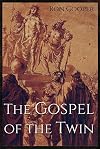
In a Nutshell: Imaginative, for sure. Traditional believers will find it controversial as well. I read it as pure fiction and hence wasn’t bothered much by the content. The book works in some ways but doesn’t meet the standards that the blurb claims.
Story:
Though this can be called a biblical story, it is more a creative retelling than a faithful narration. Thus there is a lot of inventive filling in the blanks for explaining the miracles and even the resurrection. The basic idea in the book is that Jesus was a regular human being who intended to be a political rebel against the Roman government. But he wasn’t ready to go against them with swords, rather with his words. Thus he begins preaching for a peaceful change. Thus the entire biblical story turns into one of Machiavellian politics and conspiracies. There are some elements of satire and humour but the overall impact is more of a shrewd politico-dramatic thriller.
As a practising Christian, I have read the New Testament a few times. Hence comparing and contrasting the story here with the story there was quite easy. There are a lot of familiar elements you will find in this book: the turning of water into wine at Cana, the baptism in the river Jordan, Jesus’s relation with John the Baptist, the various parables, and so on. Most are given the political spin that suits the focus of this tale very well. However, a few of the writing decisions were confusing for me. Why, for instance was Joseph turned into a stonecutter? His being a carpenter as mentioned in the Bible would not have affected the story at all. Mary is shown to be a very religious yet superstitious young woman who conducts arcane rituals to ward off evil. As a religious person, she would have known that those rituals go against the first tenet that God gave to Moses: you shall have no other gods before me. Also, why did their children call Mary as “Mother” but Joseph as “Joseph”? On the positive side, Mary Magdalene gets a prime place in the narrative and I loved the role placed on her shoulders in this retelling.
The surprise element for me in the story was the extent to which India and Indian culture makes an appearance in the narrative. Of course, I don’t know why this caught me unawares. Thomas is believed to have travelled to India circa 50 AD. He was killed with a spear on a mount near what is today Chennai city and some of his relics remain here in the San Thome Cathedral Basilica at Chennai. So yes, India would obviously be a part of Thomas’s story. But…. and this is a huge BUT…. the Indian content in the story is either stereotypical or inaccurate. (Ironic, isn’t it, that the Christian in me wasn’t offended but the Indian in me is annoyed?) The regular references to "Indian religion" irritated me. There is a lot of content which is absolutely unrelated to the biblical elements and are yet part of the book. References to Indian whores and to locals with skin the colour of coal were infuriating. There is a mention of Thomas marrying a “black” daughter of a Brahmin because no one else would marry her. I can’t exactly call this a “white saviour” attitude because Thomas wasn’t white, but it felt the same way. There is a comparison made between Jesus and Buddha, which makes some sense but was taken too far. Then there are the factual inaccuracies. Thomas is said to have arrived to India through the “place of the seven islands”, which is an obvious reference to Mumbai. However, Mumbai wasn’t a port in Thomas’s time and he made his way to India through Kerala, which is much further south on the west coast of the country. Then there’s a line that says that locals in South India drank a tea made by boiling some leaves in water. India wasn’t a tea-drinking nation until the British came here and set up tea estates. So this fact is off by many centuries. Basically, a major chunk of the Indian content seemed highly exaggerated to me.
The plot keeps going ahead at a steady pace but the Indian elements that keep coming up at random points damaged the core focus of the story and distracted me a lot. Also, some of the words sounded anachronistic. (“Roman police”?) The word “cubit” is highly overused in the story. I was so fed up of hearing it. If this were a Kindle copy, I would have hit the search button to find out the exact number of references to the measuring unit.
My faith isn’t dependent on such retellings, so I just distanced myself from my belief system and read this as a novel. If, however, you can’t compartmentalise the believer in you from the reader in you, you might be too enraged by the content because it is quite blasphemous. I was better prepared for the scandalous Christian fictionalisation than the hackneyed Indian one because the latter was totally uncalled for.
The audiobook clocks at 9 hrs 20 min and is narrated by Charles Henderson. He does an excellent job and his voice suits that of Thomas wonderfully. He also doesn’t go out of his way to provide distinct accents for the multitudinous characters but just reads them in a natural way. I enjoyed his narration.
All in all, 3 stars from me. I liked this fictional twist to “the greatest story ever told” but I wish it had stuck to the gospel narrative and not added Indian masalas.
I received a complimentary copy of this audiobook at my request from Audiobooks.com and these are my honest thoughts about it.
***********************
Join me on the Facebook group, Readers Forever!, for more reviews, book-related discussions and fun. show less
Story:
The story of Jesus, from his childhood to his initiation into preaching, the crucifixion and the resurrection, and finally the spread of his beliefs. All this is narrated through the point of view of his “twin brother” Thomas. Theshow more
first person narrative is written when Thomas is eighty and wants the world to understand the enigma behind his famous twin.
Though this can be called a biblical story, it is more a creative retelling than a faithful narration. Thus there is a lot of inventive filling in the blanks for explaining the miracles and even the resurrection. The basic idea in the book is that Jesus was a regular human being who intended to be a political rebel against the Roman government. But he wasn’t ready to go against them with swords, rather with his words. Thus he begins preaching for a peaceful change. Thus the entire biblical story turns into one of Machiavellian politics and conspiracies. There are some elements of satire and humour but the overall impact is more of a shrewd politico-dramatic thriller.
As a practising Christian, I have read the New Testament a few times. Hence comparing and contrasting the story here with the story there was quite easy. There are a lot of familiar elements you will find in this book: the turning of water into wine at Cana, the baptism in the river Jordan, Jesus’s relation with John the Baptist, the various parables, and so on. Most are given the political spin that suits the focus of this tale very well. However, a few of the writing decisions were confusing for me. Why, for instance was Joseph turned into a stonecutter? His being a carpenter as mentioned in the Bible would not have affected the story at all. Mary is shown to be a very religious yet superstitious young woman who conducts arcane rituals to ward off evil. As a religious person, she would have known that those rituals go against the first tenet that God gave to Moses: you shall have no other gods before me. Also, why did their children call Mary as “Mother” but Joseph as “Joseph”? On the positive side, Mary Magdalene gets a prime place in the narrative and I loved the role placed on her shoulders in this retelling.
The surprise element for me in the story was the extent to which India and Indian culture makes an appearance in the narrative. Of course, I don’t know why this caught me unawares. Thomas is believed to have travelled to India circa 50 AD. He was killed with a spear on a mount near what is today Chennai city and some of his relics remain here in the San Thome Cathedral Basilica at Chennai. So yes, India would obviously be a part of Thomas’s story. But…. and this is a huge BUT…. the Indian content in the story is either stereotypical or inaccurate. (Ironic, isn’t it, that the Christian in me wasn’t offended but the Indian in me is annoyed?) The regular references to "Indian religion" irritated me. There is a lot of content which is absolutely unrelated to the biblical elements and are yet part of the book. References to Indian whores and to locals with skin the colour of coal were infuriating. There is a mention of Thomas marrying a “black” daughter of a Brahmin because no one else would marry her. I can’t exactly call this a “white saviour” attitude because Thomas wasn’t white, but it felt the same way. There is a comparison made between Jesus and Buddha, which makes some sense but was taken too far. Then there are the factual inaccuracies. Thomas is said to have arrived to India through the “place of the seven islands”, which is an obvious reference to Mumbai. However, Mumbai wasn’t a port in Thomas’s time and he made his way to India through Kerala, which is much further south on the west coast of the country. Then there’s a line that says that locals in South India drank a tea made by boiling some leaves in water. India wasn’t a tea-drinking nation until the British came here and set up tea estates. So this fact is off by many centuries. Basically, a major chunk of the Indian content seemed highly exaggerated to me.
The plot keeps going ahead at a steady pace but the Indian elements that keep coming up at random points damaged the core focus of the story and distracted me a lot. Also, some of the words sounded anachronistic. (“Roman police”?) The word “cubit” is highly overused in the story. I was so fed up of hearing it. If this were a Kindle copy, I would have hit the search button to find out the exact number of references to the measuring unit.
My faith isn’t dependent on such retellings, so I just distanced myself from my belief system and read this as a novel. If, however, you can’t compartmentalise the believer in you from the reader in you, you might be too enraged by the content because it is quite blasphemous. I was better prepared for the scandalous Christian fictionalisation than the hackneyed Indian one because the latter was totally uncalled for.
The audiobook clocks at 9 hrs 20 min and is narrated by Charles Henderson. He does an excellent job and his voice suits that of Thomas wonderfully. He also doesn’t go out of his way to provide distinct accents for the multitudinous characters but just reads them in a natural way. I enjoyed his narration.
All in all, 3 stars from me. I liked this fictional twist to “the greatest story ever told” but I wish it had stuck to the gospel narrative and not added Indian masalas.
I received a complimentary copy of this audiobook at my request from Audiobooks.com and these are my honest thoughts about it.
***********************
Join me on the Facebook group, Readers Forever!, for more reviews, book-related discussions and fun. show less
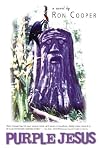
What does a monk, condensed milk and a town of backward country hicks have in common? Purple Jesus! I admit I was skeptical when I glimpsed a review claiming that this book belongs on the shelf beside Flannery O'Connor's, Wise Blood, which is one of my all-time favorites. However, after reading Ron Cooper's writing, I stand-up and applaud. Hell, I cheer! I give a woot, dance a jig and shout amen. Yes, indeed Purvis and his crew can toe the line beside O'Connor's religious misfits. So how show more does it compare? The dialogue is authentic, Cooper's voice original and the symbolism evokes humor, philosophical thought and moral dilemmas as well as perceived sexuality. A string of items are presented and seemingly unrelated, somehow connect and relate. For me, this story was about perception and assigning meaning to anything. An extremely entertaining read with a deep undercurrent. If you are a fan of Flannery O'Connor or Chuck Palahniuk, you will dig this book. I highly recommend. I received the ebook for review, but intend to purchase the paperback because this book needs to be on my shelf so I can read it again, and again. I'd love to discuss the story in a book club forum. Purple Jesus will definitely make my top 10 must reads of 2010.
* ebook provided for review compliments of publisher and Net Galley show less
* ebook provided for review compliments of publisher and Net Galley show less
For nothing else either is or shall be except Being,
since fate has tied it down to be a whole and motionless;
therefore all things that mortals have established,
believing in their truth, are just a name;
Becoming and Perishing, Being and Non-Being,
and change of position, an alteration of bright color. – Parmenides
Tomorrow is the launch of an amazing, intriguing, transformative, philosophical, thought-provoking story by Ron Cooper titled Purple Jesus. Honestly, I can’t explain the title, show more other than in the book, it represents several things: a wooden carving, an alcoholic drink, and an erotic portion of the female anatomy. Each play a part in the story, and each in a way represents the three main characters. Or could if your mind likes to find connectivity in all things like mine does.
As noted in the quotation by Parmenides, there is nothing except “Being”. So is life merely a journey through the illusory, tangibility a tool we use to try to give things and ourselves meaning? Is our true purpose what we make it?
Humans are by nature, goal-oriented. By having the end defined and visualized, we have a sense of purpose. Without this, we feel lost, unable to reach our goal.
It is through this journey, we either become who we are meant to be, or discover what we have been all along.
For some, like Purvis, Martha, and Andrew, they search not only to escape this sense of being lost, but to find a place where they truly belong. However as Ron Cooper shows us, ultimately, it is not about belonging and finding peace, it is the journey helps us discover many things, the most frightening of which is that this journey can be dark and ugly and may not end in a way you expect.
I got the impression that having three main characters was in a way, a trinity; a triangle in which each side is connected to another. That each was separated by an acute angle, yet they remain connected and part of a whole.
On one side, Purvis, a simple man. He is frail, fearful, yet has a desperate drive to change himself and his life any way he can.
On the second side is the beautiful Martha. Ethereal, haunted, also seeking a change and a way out of her circumstances and to be free of the ghosts that haunt her.
Lastly, there is Tom aka Brother Andrew. Mysterious and silent, connected to the earth and nature. A hunter who seeks, but doesn’t use language to express his needs and desires. Yet his thoughts speak for all the characters, and more eloquently than they can with the spoken word:
"Is mine a contradictory life, imbedded in forest yet alienated from nature? . . . Have I abstracted myself, stepped back as a spectator, forever cut off from a world that I can neither possess or renounce." – Brother Andrew
It is like each represents a different side of ourselves: desperate, haunted, and hunting for something different. Something . . . transcendent.
The writing is poetic at times, coarse in others. The author’s background in philosophy and as a professor of humanities is evident. Using his knowledge of the South Carolina Low Country, he conveys to the reader language and nuances that help create the setting and characters to an astonishing depth. The only detraction may be that this depth is one which some readers may never reach. Light reading this is not.
Purple Jesus has been nominated for the PEN/Faulkner award, and I have no doubt it will be a strong contender. I can also see the easy comparisons made to another southern writer, Flannery O’Connor.
This is literary fiction, but of a different kind. It is not for everyone. But for those of us who seek out the unique, a new voice in the wilderness of literature, I recommend you check out Ron Cooper. If Purple Jesus sounds a bit much, his first book Hume’s Fork has received wonderful reviews and may be a better introduction to his work. show less
since fate has tied it down to be a whole and motionless;
therefore all things that mortals have established,
believing in their truth, are just a name;
Becoming and Perishing, Being and Non-Being,
and change of position, an alteration of bright color. – Parmenides
Tomorrow is the launch of an amazing, intriguing, transformative, philosophical, thought-provoking story by Ron Cooper titled Purple Jesus. Honestly, I can’t explain the title, show more other than in the book, it represents several things: a wooden carving, an alcoholic drink, and an erotic portion of the female anatomy. Each play a part in the story, and each in a way represents the three main characters. Or could if your mind likes to find connectivity in all things like mine does.
As noted in the quotation by Parmenides, there is nothing except “Being”. So is life merely a journey through the illusory, tangibility a tool we use to try to give things and ourselves meaning? Is our true purpose what we make it?
Humans are by nature, goal-oriented. By having the end defined and visualized, we have a sense of purpose. Without this, we feel lost, unable to reach our goal.
It is through this journey, we either become who we are meant to be, or discover what we have been all along.
For some, like Purvis, Martha, and Andrew, they search not only to escape this sense of being lost, but to find a place where they truly belong. However as Ron Cooper shows us, ultimately, it is not about belonging and finding peace, it is the journey helps us discover many things, the most frightening of which is that this journey can be dark and ugly and may not end in a way you expect.
I got the impression that having three main characters was in a way, a trinity; a triangle in which each side is connected to another. That each was separated by an acute angle, yet they remain connected and part of a whole.
On one side, Purvis, a simple man. He is frail, fearful, yet has a desperate drive to change himself and his life any way he can.
On the second side is the beautiful Martha. Ethereal, haunted, also seeking a change and a way out of her circumstances and to be free of the ghosts that haunt her.
Lastly, there is Tom aka Brother Andrew. Mysterious and silent, connected to the earth and nature. A hunter who seeks, but doesn’t use language to express his needs and desires. Yet his thoughts speak for all the characters, and more eloquently than they can with the spoken word:
"Is mine a contradictory life, imbedded in forest yet alienated from nature? . . . Have I abstracted myself, stepped back as a spectator, forever cut off from a world that I can neither possess or renounce." – Brother Andrew
It is like each represents a different side of ourselves: desperate, haunted, and hunting for something different. Something . . . transcendent.
The writing is poetic at times, coarse in others. The author’s background in philosophy and as a professor of humanities is evident. Using his knowledge of the South Carolina Low Country, he conveys to the reader language and nuances that help create the setting and characters to an astonishing depth. The only detraction may be that this depth is one which some readers may never reach. Light reading this is not.
Purple Jesus has been nominated for the PEN/Faulkner award, and I have no doubt it will be a strong contender. I can also see the easy comparisons made to another southern writer, Flannery O’Connor.
This is literary fiction, but of a different kind. It is not for everyone. But for those of us who seek out the unique, a new voice in the wilderness of literature, I recommend you check out Ron Cooper. If Purple Jesus sounds a bit much, his first book Hume’s Fork has received wonderful reviews and may be a better introduction to his work. show less
Awards

Statistics
- Works
- 14
- Members
- 95
- Popularity
- #197,645
- Rating
- 3.9
- Reviews
- 11
- ISBNs
- 13
