
Peter Morville
Author of Information Architecture for the World Wide Web: Designing Large-Scale Web Sites
About the Author
Works by Peter Morville
Information Architecture for the World Wide Web: Designing Large-Scale Web Sites (1998) 1,882 copies, 16 reviews
The Internet Searcher's Handbook: Locating Information, People, & Software (1996) 10 copies, 1 review
Animals Are People 2 copies
Associated Works
Web Style Guide: Basic Design Principles for Creating Web Sites (1999) — Foreword, some editions — 466 copies, 2 reviews
Tagged
Common Knowledge
- Canonical name
- Morville, Peter
- Legal name
- Morville, Peter Stuart
- Birthdate
- 1969
- Gender
- male
- Education
- Tufts University (BA ∙ English Literature)
University of Michigan (MSI) - Occupations
- writer
speaker
information architect - Organizations
- Information Architecture Institute
- Short biography
- Peter Morville is a pioneer of the fields of information architecture and user experience. He's been helping people to plan since 1994. Clients include AT&T, Cisco, eBay, Harvard, IBM, Macy's, the Library of Congress, and the National Cancer Institute. He has delivered conference keynotes and workshops in North America, South America, Europe, Asia, and Australia. His work has been covered by Business Week, The Economist, NPR, and The Wall Street Journal. Peter lives in Ann Arbor, Michigan with his wife, two daughters, and a dog named Knowsy.
- Nationality
- UK (birth), USA (passport)
- Places of residence
- Ann Arbor, Michigan, USA
- Associated Place (for map)
- Ann Arbor, Michigan, USA
Members
Reviews
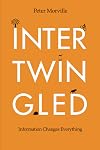
This is a deeply personal book, based on Morville's reading and experience, that elevates information architecture away from the practical towards the reflective and thoughtful by way of this elliptical and eclectic meditation on the skeins of information that surround us.
It sketches information in broad strokes, taking in the natural world and the invisible constraints of culture in order to expose the categories and limitations that inhibit thinking and the connections and levers that show more change thinking. An attempt, perhaps, at a more holistic epistemology of information systems that inspires, but doesn’t always succeed (in places it is a bit too gnomic).
Given how much of the book is informed by influential texts Morville has encountered it is also surprising their isn’t a bibliography to accompany the provided notes (which aren’t always well referenced). Morville also has a tendancy to drop references into the text that aren’t well noted, for example infoscent, and assume a higher level of cogniscence with terms than I have. For a book about connectedness this displays a surprising lack of context and linking.
There was much in here that resonated but overall it works best at creating an overall mindset about information, architecture and systems thinking. It is better than the sum of its sometimes vague parts and introduced me to a whole host of new thinkers, texts and ideas to explore by suggesting an interesting bibliographic path to wander by following up many of the quoted sources (that’s why I was so disappointed there wasn’t a full bibliography). For example Systemantics by John Gall, Thinking in Systems by Donella Meadows and Bruce Sterling’s concept of 'spime', are all new to me and look interesting. show less
It sketches information in broad strokes, taking in the natural world and the invisible constraints of culture in order to expose the categories and limitations that inhibit thinking and the connections and levers that show more change thinking. An attempt, perhaps, at a more holistic epistemology of information systems that inspires, but doesn’t always succeed (in places it is a bit too gnomic).
Given how much of the book is informed by influential texts Morville has encountered it is also surprising their isn’t a bibliography to accompany the provided notes (which aren’t always well referenced). Morville also has a tendancy to drop references into the text that aren’t well noted, for example infoscent, and assume a higher level of cogniscence with terms than I have. For a book about connectedness this displays a surprising lack of context and linking.
There was much in here that resonated but overall it works best at creating an overall mindset about information, architecture and systems thinking. It is better than the sum of its sometimes vague parts and introduced me to a whole host of new thinkers, texts and ideas to explore by suggesting an interesting bibliographic path to wander by following up many of the quoted sources (that’s why I was so disappointed there wasn’t a full bibliography). For example Systemantics by John Gall, Thinking in Systems by Donella Meadows and Bruce Sterling’s concept of 'spime', are all new to me and look interesting. show less
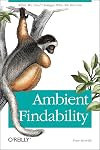
This is the book that has most influenced my thinking about my profession. Probably ever. I've sort of been coming to see books as boundary objects - as objects that connect people or concepts (like on this site) - for a while now and think that libraries need to make much more of the social networking power of books. This book gave me some vocabulary for these concepts but (although it's written by a librarian and I read it as a librarian) this is much more than a library book. It basically show more explains a number of concepts that are all converging to create a situation where objects (like books), people, anything, will be ambiently findable. The findability will be built in. A number of concepts are explained. Ubiquitous computing (the techie side of things); the long-tail (the economic forces that will drive these developments); spimes (objects that have precise history, that can be precisely tracked in time and space); and boundary objects (objects that sit on the boundary between two concepts). I'll be following up on some of the books referenced in this later to try and get a better understanding but I think this is the one that really pulls everything together. The author has a really good view of where these concepts are coming together and what the implications are. Brilliant. show less
Intertwingled is intertwingled
Information isn't singular. Boundaries are artificial, and not particularly helpful. Understanding comes through withstanding inputs crashing from all directions. This is the premise that Morville beautifully illustrates in Intertwingled. The book rambles from personal memoir to philosophy to information management treatise. Chapter markers are artificial. Understanding comes through assimilating Morville's varied inputs. It's a worthy effort.
Information isn't singular. Boundaries are artificial, and not particularly helpful. Understanding comes through withstanding inputs crashing from all directions. This is the premise that Morville beautifully illustrates in Intertwingled. The book rambles from personal memoir to philosophy to information management treatise. Chapter markers are artificial. Understanding comes through assimilating Morville's varied inputs. It's a worthy effort.
Morville covers a lot of ground for such a slim book, and he fails to integrate the material in a coherent way. His treatment of many subjects is superficial, and sometimes it's unclear whether that's because he lacks a deep understanding or because he just doesn't have the room to be more comprehensive; indeed, sometimes he seems to be name-checking for the hell of it. (Korzybski is relevant, I'll grant you, but we really needed those Escher pictures?) Nor does he get around to saying show more anything that's truly new: when he isn't summarizing someone else's research, he drifts into pie-eyed generalities that rival the worst of Wired magazine's excesses.
Having said that, Morville seems to be the kind of interesting guy who's interested in a lot of interesting things, and his passion for his subject does come through. As an annotated bibliography, Ambient Findability could keep someone new to this subject busy for a long, long time. I've read about half the books and papers he cites, but I suspect I'll be buying a few more books as a direct result of reading this one.
In short, Morville gets props for being out front in putting some of these ideas together in dead tree form. But the classic in this field has yet to be written.
[2005-12-03] show less
Having said that, Morville seems to be the kind of interesting guy who's interested in a lot of interesting things, and his passion for his subject does come through. As an annotated bibliography, Ambient Findability could keep someone new to this subject busy for a long, long time. I've read about half the books and papers he cites, but I suspect I'll be buying a few more books as a direct result of reading this one.
In short, Morville gets props for being out front in putting some of these ideas together in dead tree form. But the classic in this field has yet to be written.
[2005-12-03] show less
You May Also Like


Associated Authors
Statistics
- Works
- 8
- Also by
- 1
- Members
- 3,811
- Popularity
- #6,648
- Rating
- 3.8
- Reviews
- 50
- ISBNs
- 35
- Languages
- 4
- Favorited
- 4

