
About the Author
Series
Works by Molly Cone
Come Back, Salmon: How a Group of Dedicated Kids Adopted Pigeon Creek and Brought it Back to Life (1994) 268 copies, 3 reviews
Tagged
Common Knowledge
- Legal name
- Cone, Molly Lamken
- Other names
- More, Caroline
- Birthdate
- 1918
- Gender
- female
- Occupations
- children's book author
non-fiction writer - Nationality
- USA
- Places of residence
- Washington, USA
- Associated Place (for map)
- Washington, USA
Members
Reviews

Published by UAHC (Union of American Hebrew Congregations) Press, this attractively-produced book introduces children to the Ten Commandments, as they are understood by Reform Judaism. Each chapter begins with a discussion of a Commandment, its different levels of meaning, and includes a folktale that demonstrates the relevant lesson.
I discovered this book in the sources notes of Peninnah Schram's The Hungry Clothes and Other Jewish Folktales, and initially approached it from a folkloric show more perspective. It is impossible however, to divorce these tales from their religious subtext, which is perhaps why they are such effective teaching tools. Despite the fact that it is aimed at Jewish children, I found that I - an adult, non-practicing Christian woman with serious theological questions - gained a new appreciation for this foundational set of "rules," and their deeper meaning. The tales include:
Commandment I: The Reminder, in which a king promises God that he will not forget where he came from...
Commandment II: The Princess Who Wanted to See God, in which a princess learns that she will find God when she learns compassion...
Commandment III: A Place Called Kushta, in which a king seeks to learn the secret of the eternal youth of the people of Kushta...
Commandment IV: The Sweetest Sound, in which a king learns to value the silence of the Sabbath...
Commandment V: A Big Red Tomato, in which a man who hopes to become an adoptive father learns the importance of honoring his parents...
Commandment VI: His Name Was Chaim, in which a wealthy man discovers that no amount of money will be enough to bribe Chaim to take a man's life...
Commandment VII: The Promise, in which a foolish young man learns that his wife is wiser than he, when it comes to interpreting their marriage vows...
Commandment VIII: The Reward, in which an unscrupulous young man who attempts to fool King Solomon is given the reward he deserves...
Commandment IX: The Gossip, in which the town gossip learns that unkind comments can never be taken back... This folktale of a wise rabbi who uses feathers to teach a lesson can be found in many collections.
Commandment X: The Peach, the Pitcher, and the Fur Coat, in which a young boys longs for his elderly neighbor's possessions... show less
I discovered this book in the sources notes of Peninnah Schram's The Hungry Clothes and Other Jewish Folktales, and initially approached it from a folkloric show more perspective. It is impossible however, to divorce these tales from their religious subtext, which is perhaps why they are such effective teaching tools. Despite the fact that it is aimed at Jewish children, I found that I - an adult, non-practicing Christian woman with serious theological questions - gained a new appreciation for this foundational set of "rules," and their deeper meaning. The tales include:
Commandment I: The Reminder, in which a king promises God that he will not forget where he came from...
Commandment II: The Princess Who Wanted to See God, in which a princess learns that she will find God when she learns compassion...
Commandment III: A Place Called Kushta, in which a king seeks to learn the secret of the eternal youth of the people of Kushta...
Commandment IV: The Sweetest Sound, in which a king learns to value the silence of the Sabbath...
Commandment V: A Big Red Tomato, in which a man who hopes to become an adoptive father learns the importance of honoring his parents...
Commandment VI: His Name Was Chaim, in which a wealthy man discovers that no amount of money will be enough to bribe Chaim to take a man's life...
Commandment VII: The Promise, in which a foolish young man learns that his wife is wiser than he, when it comes to interpreting their marriage vows...
Commandment VIII: The Reward, in which an unscrupulous young man who attempts to fool King Solomon is given the reward he deserves...
Commandment IX: The Gossip, in which the town gossip learns that unkind comments can never be taken back... This folktale of a wise rabbi who uses feathers to teach a lesson can be found in many collections.
Commandment X: The Peach, the Pitcher, and the Fur Coat, in which a young boys longs for his elderly neighbor's possessions... show less
Reeney by Molly Cone

I'll admit I bought Reeney because I like Charles Geer's illustrations. Reeney Johnson is a high school sophomore whose mother has just died. The book opens with the family coming home after Mrs. Johnson's funeral. Aside from her father and her older brother, Matt, there are also Uncle Eddie and Aunt Ada. This is a story aimed at teen girls, so we aren't told much about them, not even if they're married to each other or to which parent one or both is a sibling.
The main thing to know is that show more Aunt Ada is willing to come keep house for the Johnsons and Uncle Eddie is fine with that. Aunt Ada is so bossy that Reeney and Matt are horrified at the thought of living under the same roof with her.
This is 1963, so it's up to Reeney to volunteer to cook and keep house for her family. She's going to do this even though she's got school and a steady boyfriend. What's Matt going to do? Polish his car.
Reeney makes plenty of mistakes in the kitchen and the housekeeping. Matt seems to delight in not cleaning up after himself. Something has to go from Reeney's busy life. It's the orchestra she drops for more time with Steve.
Good thing there's next-door neighbor Mrs. Turner to teach Reeney the finer points of housekeeping and making a good pie (skills the target audience would have been expected to learn).
Reeney has been so focused on keeping house well enough to fend off Aunt Ada, keep her grades up, and giving Steve the admiration he craves that she fails to notice Matt is falling apart. The crisis comes during a weekend when their father has to be out of town on business. Can Reeney get her priorities straight?
There's nothing about drugs or Civil Rights in this book, but I am pleased that Reeney kept up with her grades and figured Steve out. I was still in elementary school when this book came out, but I remember housework and cooking without today's labor-saving devices. If you like glimpses into the past, you might enjoy this novel. show less
The main thing to know is that show more Aunt Ada is willing to come keep house for the Johnsons and Uncle Eddie is fine with that. Aunt Ada is so bossy that Reeney and Matt are horrified at the thought of living under the same roof with her.
This is 1963, so it's up to Reeney to volunteer to cook and keep house for her family. She's going to do this even though she's got school and a steady boyfriend. What's Matt going to do? Polish his car.
Reeney makes plenty of mistakes in the kitchen and the housekeeping. Matt seems to delight in not cleaning up after himself. Something has to go from Reeney's busy life. It's the orchestra she drops for more time with Steve.
Good thing there's next-door neighbor Mrs. Turner to teach Reeney the finer points of housekeeping and making a good pie (skills the target audience would have been expected to learn).
Reeney has been so focused on keeping house well enough to fend off Aunt Ada, keep her grades up, and giving Steve the admiration he craves that she fails to notice Matt is falling apart. The crisis comes during a weekend when their father has to be out of town on business. Can Reeney get her priorities straight?
There's nothing about drugs or Civil Rights in this book, but I am pleased that Reeney kept up with her grades and figured Steve out. I was still in elementary school when this book came out, but I remember housework and cooking without today's labor-saving devices. If you like glimpses into the past, you might enjoy this novel. show less
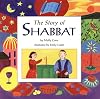
It is Friday evening, and the sun is about to set. If you are Jewish, you are probably getting ready to light candles, say blessings, and eat delicious food. What is the special occasion? It is the Sabbath, or the Day of Rest. The Bible tells how God created the world in six days, and on the seventh day God rested. This day was called the Sabbath. Molly Cone's clear, informative text and Emily Lisker's warm paintings present the cultural and historical origins of the Sabbath and the many show more meaningful traditions that are still practiced today. Instructions for making your own challah bread and challah cover round out this celebration of a very special day of thanks, rest, and renewal. show less

Ms. Cone uses the Ten Commandments found in Exodus 20:2-13, which is slightly different from the version in Deuteronomy 5:6-18. Each commandment has an explanation followed by a story. The sources for the stories are listed in the Acknowledgments at the beginning of the book.Two are from Folktales of Israel, c. University of Chicago.
"A Place Called Kushta," is the story I found most interesting; it is adapted from a Talmudic tale in A Rabbinic Anthology, C.G. Montefiore and H. Loewe, The show more World Publishing Company: When a king goes to Kushta, where everyone always tells the truth and no one seems to ever get old, he breaks his promise to give someone a bag of gold for explaining their agelessness. Surprisingly (at least to me), "[t]he people who had never grown old before suddenly began to grow older. When the king broke his promise in the town of truth, the spell (if a spell it was) was broken too. People didn't trust each other so completely any more." [p. 30]
(The other review mentions that this book is referenced in Peninah Schram's The Hungry Clothes and other Jewish folktales; Molly Cole uses "The Reminder" to explain the first commandment. BTW, not only are there two statements of the Ten Commandments in the Torah, but the numbering of them varies in different religions and the translations, which is to say the interpretations, also vary, even within the same religions.) show less
"A Place Called Kushta," is the story I found most interesting; it is adapted from a Talmudic tale in A Rabbinic Anthology, C.G. Montefiore and H. Loewe, The show more World Publishing Company: When a king goes to Kushta, where everyone always tells the truth and no one seems to ever get old, he breaks his promise to give someone a bag of gold for explaining their agelessness. Surprisingly (at least to me), "[t]he people who had never grown old before suddenly began to grow older. When the king broke his promise in the town of truth, the spell (if a spell it was) was broken too. People didn't trust each other so completely any more." [p. 30]
(The other review mentions that this book is referenced in Peninah Schram's The Hungry Clothes and other Jewish folktales; Molly Cole uses "The Reminder" to explain the first commandment. BTW, not only are there two statements of the Ten Commandments in the Torah, but the numbering of them varies in different religions and the translations, which is to say the interpretations, also vary, even within the same religions.) show less
Lists
Awards


You May Also Like


Associated Authors
Statistics
- Works
- 48
- Members
- 1,962
- Popularity
- #13,102
- Rating
- 3.7
- Reviews
- 18
- ISBNs
- 93
- Favorited
- 1