
Alfred J. Kolatch
Author of The Jewish Book of Why
About the Author
Alfred J. Kolatch, a graduate of the Teacher's Institute of Yeshiva University and its College of Liberal Arts, was ordained by the Jewish Theological Seminary of America, which subsequently awarded him the Doctor of Divinity Degree, honoris causa. From 1941 to 1948 he served as rabbi of show more congregations in Columbia, South Carolina, and Kew Gardens, New York, and as chaplain in the United States Army. In 1948 he founded Jonathan David Publishers, of which he has since been president and editor-in-chief show less
Image credit: Publicity photo from http://www.jdbooks.com/ourStory.htm
Works by Alfred J. Kolatch
HAGGADAH -THE FAMILY SEDER 3 copies
Fun-in-learning about Passover: Illustrated by Gabe Josephson (Fun-in-learning series) (1972) 3 copies
Names for boys & girls 1 copy
Scroll of Esther 1 copy
How to Live a Jewish Life 1 copy
Tagged
Common Knowledge
- Canonical name
- Kolatch, Alfred J.
- Birthdate
- 1916
- Gender
- male
- Education
- Yeshiva University
- Nationality
- USA
- Associated Place (for map)
- USA
Members
Reviews
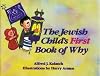
Kolatch uses concise explanations for why people of the Jewish faith follow specific customs, such as saying shalom, eating Challa bread, Shabbat, Sabbath, etc. It is informative, friendly, humorous and describes customs in language suitable (and readable) for children.
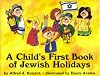
A Child's First Book of Jewish Holiday's goes through every Jewish holiday such as Shabbat, Passover, and Yom Kippur and explains what happens during these holidays in an entertaining, kid friendly way. This book talks about the values of the Jewish religion and why Jewish people still celebrate these holidays to this day. It also talk about importance of family values and spending meaningful time with the ones that you love. This is a great book to give to a young child to teach them about show more all about their religion in a way that they can easily relate to. show less
I read this so much as a child it literally fell apart, but it's not the best (or most accurate) name dictionary.
“The Jewish Child’s First Book of Why,” written by Rabbi Alfred J. Kolatch, is a great book filled with fascinating information for all readers. I personally found this book very easy to follow along with and it was extremely engaging and informative. The author made this book easy to learn from without giving too much detail and overwhelming the reader. The main goal of this book is to explain the significance of certain Jewish traditions and customs, and introduce the reader to show more various major and minor Jewish holidays. In order to relay this information, the author uses very simple and direct language to ensure the reader understands the information. Along with this, the illustrator, Harry Araten, provides colorful, fun pictures to engage the reader and capture their attention.
To make this book easy to follow and understand, the author has broken the information up into thirty-two different questions. Each question is presented on its own page with large, easy to read text. The author uses large text to ensure it is easy to follow along with and presents the questions in bold, which makes it easier to focus on each question individually. Each page also has an illustration that specifically relates to the question being answered. The bright colors and kid friendly characters used capture the reader’s attention and makes the book fun to read. This author also incorporated many commonly used Hebrew words and phrases to go along with the explanations, which gives the reader even more of an opportunity to learn the information. I believe that the use of Hebrew throughout the text also contributes to the engagement of reading. Learning the words in Hebrew gives the reader a better understanding of the Jewish religion and culture, making the information in the text much more meaningful.
Another way the author captures the reader’s attention and keeps them engaged is through a detailed layout of the book. At the beginning of the book, there is a table of contents that outlines all of the questions being answered, making it easy for readers to find what interests them most and what they really want to learn about. For example, if the reader wants to know the answer to the question “Why do we say ‘Shalom’?” they can simply look at the table of contents and find exactly what they’re looking for. The author and illustrator incorporated these aspects in order to make learning the information fun without overloading the reader with too much detail. For example, when the reader turns to the page with the question “Why do we say ‘Shalom’?” the bright colored illustration and the easy to read text makes learning new information stress free.
The author’s fun, easy to read book gives all readers the opportunity to expand their knowledge of their own culture or of a culture that is different than one’s own. The literary elements used, such as colorful, fun illustrations, large text that is simplistic and easy to read, the use of Hebrew words, and a layout that is easy to follow genuinely makes learning the information fun and simple. Through these elements, the author is able to effectively explain the significance of certain Jewish traditions and customs, and introduce the reader to some of the major and minor Jewish holidays, which is what this book aims to do.
show less
To make this book easy to follow and understand, the author has broken the information up into thirty-two different questions. Each question is presented on its own page with large, easy to read text. The author uses large text to ensure it is easy to follow along with and presents the questions in bold, which makes it easier to focus on each question individually. Each page also has an illustration that specifically relates to the question being answered. The bright colors and kid friendly characters used capture the reader’s attention and makes the book fun to read. This author also incorporated many commonly used Hebrew words and phrases to go along with the explanations, which gives the reader even more of an opportunity to learn the information. I believe that the use of Hebrew throughout the text also contributes to the engagement of reading. Learning the words in Hebrew gives the reader a better understanding of the Jewish religion and culture, making the information in the text much more meaningful.
Another way the author captures the reader’s attention and keeps them engaged is through a detailed layout of the book. At the beginning of the book, there is a table of contents that outlines all of the questions being answered, making it easy for readers to find what interests them most and what they really want to learn about. For example, if the reader wants to know the answer to the question “Why do we say ‘Shalom’?” they can simply look at the table of contents and find exactly what they’re looking for. The author and illustrator incorporated these aspects in order to make learning the information fun without overloading the reader with too much detail. For example, when the reader turns to the page with the question “Why do we say ‘Shalom’?” the bright colored illustration and the easy to read text makes learning new information stress free.
The author’s fun, easy to read book gives all readers the opportunity to expand their knowledge of their own culture or of a culture that is different than one’s own. The literary elements used, such as colorful, fun illustrations, large text that is simplistic and easy to read, the use of Hebrew words, and a layout that is easy to follow genuinely makes learning the information fun and simple. Through these elements, the author is able to effectively explain the significance of certain Jewish traditions and customs, and introduce the reader to some of the major and minor Jewish holidays, which is what this book aims to do.
show less
You May Also Like


Associated Authors
Statistics
- Works
- 42
- Members
- 3,048
- Popularity
- #8,378
- Rating
- 4.1
- Reviews
- 33
- ISBNs
- 64
- Languages
- 5
- Favorited
- 1