
Denys Cowan
Author of Batman: Blind Justice
About the Author
Image credit: Self portrait
Series
Works by Denys Cowan
Batman in Detective Comics, Vol. II: Featuring the Complete Covers of the Second 25 Years (Tiny Folios) (1994) — Illustrator — 21 copies, 1 review
Steel [1994] #46 — Illustrator — 1 copy
Associated Works
9-11: The World's Finest Comic Book Writers & Artists Tell Stories to Remember (2002) — Illustrator — 256 copies, 1 review
Green Arrow By Jeff Lemire & Andrea Sorrentino Deluxe Edition (2016) — Illustrator — 59 copies, 1 review
Tagged
Common Knowledge
There is no Common Knowledge data for this author yet. You can help.
Members
Reviews
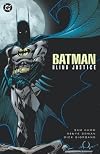
i had this on my to read list for a long while now, and picked it up cause i was looking for a guilty pleasure. it turned out to be one heck of a read!
the art and socio-political subplots are outdated (commies!!?) and, this being a graphic novel about a superhero, the plot (mind control) is totally over the top. but in spite of all these, i cannot deny that this particular batman comic is heavy with substance. it has the darkness of the nolan-verse except with less fireworks and more superb show more story-telling and gritty dialogue.
absolute joy for a batman fan to read :) show less
the art and socio-political subplots are outdated (commies!!?) and, this being a graphic novel about a superhero, the plot (mind control) is totally over the top. but in spite of all these, i cannot deny that this particular batman comic is heavy with substance. it has the darkness of the nolan-verse except with less fireworks and more superb show more story-telling and gritty dialogue.
absolute joy for a batman fan to read :) show less
Bruce Wayne inadvertently stumbles upon a nefarious mind-control experiment going on behind closed doors at WayneTech and before he knows it, his secret identity as Batman is at risk. What can Bruce do to save the day - and himself?
For the life of me, I can't remember now why I decided to seek this book out, but I am glad I did. This book was presented for the 50th anniversary of the Batman character's debut and was written by Sam Hamm, the screenwriter behind 1989's Batman movie. (Unlike show more the movie, this was a multi-layered, complex book with deeper themes explored underneath the ongoing action.) Hamm notes in the introduction that he was interested in taking an outsider's approach to the Batman character, studying Bruce Wayne's motivations obsessively. The result is a book that is peppered with moments of Bruce recalling and/or being haunted by his past as he wrestles with difficult decisions in his present.
Meanwhile, the book begins with a satisfying mystery containing a number of what at first seem like unrelated threads that ultimately come together to form a cohesive whole. There are numerous characters in this book but not so many that the story becomes unmanageable. Unlike with so many Batman books, we only hear a passing reference to ongoing villains like the Joker. Instead, we are presented with a more insidious evil plot that goes on right beneath Bruce's nose while he's out and about fighting off more typical (i.e., flashy) comic book villains.
In this book, we learn more about what Bruce was up to in the years after he left Wayne Manor as a grief-stricken young man and before he returned as the Batman. There's nothing too earth-shattering here for the modern audience, but some of this was new at the time of publication. The illustrations in this book are interesting - not as high-quality glossy and vivid as some current graphic series but definitely leaning more toward the realistic side than the cartoonish. Despite its age and the occasional ridiculous throwback (like the giant shoulder pads in Jeannie's outfits), this book holds up pretty well as an entertaining and quick read. show less
For the life of me, I can't remember now why I decided to seek this book out, but I am glad I did. This book was presented for the 50th anniversary of the Batman character's debut and was written by Sam Hamm, the screenwriter behind 1989's Batman movie. (Unlike show more the movie, this was a multi-layered, complex book with deeper themes explored underneath the ongoing action.) Hamm notes in the introduction that he was interested in taking an outsider's approach to the Batman character, studying Bruce Wayne's motivations obsessively. The result is a book that is peppered with moments of Bruce recalling and/or being haunted by his past as he wrestles with difficult decisions in his present.
Meanwhile, the book begins with a satisfying mystery containing a number of what at first seem like unrelated threads that ultimately come together to form a cohesive whole. There are numerous characters in this book but not so many that the story becomes unmanageable. Unlike with so many Batman books, we only hear a passing reference to ongoing villains like the Joker. Instead, we are presented with a more insidious evil plot that goes on right beneath Bruce's nose while he's out and about fighting off more typical (i.e., flashy) comic book villains.
In this book, we learn more about what Bruce was up to in the years after he left Wayne Manor as a grief-stricken young man and before he returned as the Batman. There's nothing too earth-shattering here for the modern audience, but some of this was new at the time of publication. The illustrations in this book are interesting - not as high-quality glossy and vivid as some current graphic series but definitely leaning more toward the realistic side than the cartoonish. Despite its age and the occasional ridiculous throwback (like the giant shoulder pads in Jeannie's outfits), this book holds up pretty well as an entertaining and quick read. show less

Access a version of the below that includes illustrations on my blog.
After Don McGregor's Black Panther run from Jungle Action was cancelled back in 1976, he actually got invited back two more times: he did a story called Panther's Quest published in Marvel Comics Presents in 1989 and a four-issue prestige miniseries called Panther's Prey in 1991. This "Epic Collection" collects both of them, along with five short Black Panther tales by other creators from the same era.
Panther's Quest sends show more the Black Panther into South Africa in order to find his mother, missing since childhood. Sure, we did apartheid in a thinly fictionalized version of South Africa in the immediate previous Black Panther storyline, but why not do it again in the real place? This story ran twenty-five biweekly installments of (usually) eight pages... and it is interminable. Like, eight pages will go by and all that's happened is Black Panther has punched a guy. One thing I liked about McGregor's Panther's Rage was how it really made you feel the difficulty of what the Black Panther did, but this goes too far with it, because everything is immensely difficult, everything is enormously slowed down, it never feels like we're getting anywhere, being crushed under the weight of McGregor's enormously wordy style. Being set in South Africa means we again lose the worldbuilding that made Panther's Rage so interesting, too. It has it moments, including some nice side characters in South Africa, but ultimately, a tedious slog with little to say.
Panther's Prey almost has the opposite problem: this is made up of four forty-page installments and is all over the place. Wakanda is modernizing, connecting with the outside world more—this is nicely demonstrated by the appearance of a food court selling pizza. But with the benefits of connecting to the outside world also come the downsides, and someone is smuggling crack into Wakanda and vibranium out... using an army of cyborg pterodactyls, of course! The story follows this main storyline, but also T'Challa's mother acclimating to life in Wakanda, what Monica Lynne's been up to in the U.S. since we last saw her in Jungle Action (McGregor ignores her later appearances), the guy organizing the drug smuggling operation, and updates to various members of Black Panther's Wakandan supporting cast. There's a lot of nice moments here but overall not much actually seems to happen despite the fact the story runs over one hundred and fifty pages. Black Panther doesn't even meet the villain until about ten pages from the end, and beats him by luck in about six seconds. And in the end, crack is still a problem in Wakanda! Way to cheer me up, McGregor.
The other stories here are nice to have for completism's sake, but not very memorable.
What's interesting to me reading Black Panther in terms of publication chronology is to see the development of the character I know from the movies. His mother, Raimonda, debuted in this volume, but she's not the imperious ruler of screen, but a South African woman romanced by T'Challa's father who returned to her homeland after her husband died. Many elements of the mythos have yet to appear at all. There's also still no sense of cohesion: McGregor doesn't really acknowledge that anyone used the character other than him since 1976. (Can't imagine why the "Black Musketeers" don't come up in discussions of T'Challa's family!) show less
After Don McGregor's Black Panther run from Jungle Action was cancelled back in 1976, he actually got invited back two more times: he did a story called Panther's Quest published in Marvel Comics Presents in 1989 and a four-issue prestige miniseries called Panther's Prey in 1991. This "Epic Collection" collects both of them, along with five short Black Panther tales by other creators from the same era.
Panther's Quest sends show more the Black Panther into South Africa in order to find his mother, missing since childhood. Sure, we did apartheid in a thinly fictionalized version of South Africa in the immediate previous Black Panther storyline, but why not do it again in the real place? This story ran twenty-five biweekly installments of (usually) eight pages... and it is interminable. Like, eight pages will go by and all that's happened is Black Panther has punched a guy. One thing I liked about McGregor's Panther's Rage was how it really made you feel the difficulty of what the Black Panther did, but this goes too far with it, because everything is immensely difficult, everything is enormously slowed down, it never feels like we're getting anywhere, being crushed under the weight of McGregor's enormously wordy style. Being set in South Africa means we again lose the worldbuilding that made Panther's Rage so interesting, too. It has it moments, including some nice side characters in South Africa, but ultimately, a tedious slog with little to say.
Panther's Prey almost has the opposite problem: this is made up of four forty-page installments and is all over the place. Wakanda is modernizing, connecting with the outside world more—this is nicely demonstrated by the appearance of a food court selling pizza. But with the benefits of connecting to the outside world also come the downsides, and someone is smuggling crack into Wakanda and vibranium out... using an army of cyborg pterodactyls, of course! The story follows this main storyline, but also T'Challa's mother acclimating to life in Wakanda, what Monica Lynne's been up to in the U.S. since we last saw her in Jungle Action (McGregor ignores her later appearances), the guy organizing the drug smuggling operation, and updates to various members of Black Panther's Wakandan supporting cast. There's a lot of nice moments here but overall not much actually seems to happen despite the fact the story runs over one hundred and fifty pages. Black Panther doesn't even meet the villain until about ten pages from the end, and beats him by luck in about six seconds. And in the end, crack is still a problem in Wakanda! Way to cheer me up, McGregor.
The other stories here are nice to have for completism's sake, but not very memorable.
What's interesting to me reading Black Panther in terms of publication chronology is to see the development of the character I know from the movies. His mother, Raimonda, debuted in this volume, but she's not the imperious ruler of screen, but a South African woman romanced by T'Challa's father who returned to her homeland after her husband died. Many elements of the mythos have yet to appear at all. There's also still no sense of cohesion: McGregor doesn't really acknowledge that anyone used the character other than him since 1976. (Can't imagine why the "Black Musketeers" don't come up in discussions of T'Challa's family!) show less
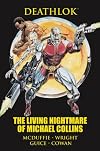
Reading this, I can't say I didn't enjoy it, but I really was aware of the loss of Deathlok's creator, Rich Buckler, and the bizarre world he'd created to surround the Demolisher.
Overall, this did was Marvel does: the original simply doesn't work for us anymore, so let's retcon the whole damn thing to bring it closer in line with the rest of the 616 universe...even if it waters down most of what made it so damn good in the first place.
For all of that, it was entertaining. Unfortunately, it show more felt more like a meal from McD's than being served something from that weird funky restaurant down on the corner with all the interesting clientele and strange atmosphere. show less
Overall, this did was Marvel does: the original simply doesn't work for us anymore, so let's retcon the whole damn thing to bring it closer in line with the rest of the 616 universe...even if it waters down most of what made it so damn good in the first place.
For all of that, it was entertaining. Unfortunately, it show more felt more like a meal from McD's than being served something from that weird funky restaurant down on the corner with all the interesting clientele and strange atmosphere. show less
Lists
You May Also Like
Associated Authors
Statistics
- Works
- 35
- Also by
- 19
- Members
- 670
- Popularity
- #37,679
- Rating
- 3.7
- Reviews
- 25
- ISBNs
- 34
- Languages
- 2
- Favorited
- 1