
John Parrington
Author of The Deeper Genome: Why there is more to the human genome than meets the eye
Works by John Parrington
The Deeper Genome: Why there is more to the human genome than meets the eye (2015) 46 copies, 1 review
Tagged
Common Knowledge
There is no Common Knowledge data for this author yet. You can help.
Members
Reviews
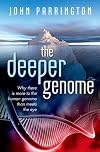
This important book takes us through the history of the development of scientific understanding of the human genome, and also outlines the key debates that are taking place in this field today.
It covers topics such as: the complexity of the genome; the importance of regulatory genes; epigenetics; the arguments about whether or not "junk DNA" is really junk; and the question of what distinguishes humans from other species.
Parrington also shows that we cannot understand human behaviour simply show more by saying that there is a gene for this behaviour and a gene for that. The genome itself is much more complex than that, and then there are the environmental and social influences on human behaviour.
So Parrington sums up his survey of the debates about mental disorders as follows. "A sensible viewpoint would, therefore, seem to be that social factors play an important role in the development of mental disorders, but susceptibility to conditions such as schizophrenia, which probably encompasses a range of different disorders, is affected by real biological differences between individuals."
Another positive aspect of the book is the scattering of interesting anecdotes about the individuals who have contributed to the scientific understanding of evolution and the genome. For example, there is a short but balanced and fair assessment of the relative contributions of Darwin and Wallace. We also learn that Jacques Monod spent the Second World War in Paris, not just working on his science, but also as one of the leaders of the French Resistance.
However, despite these positive comments, I am giving the book four stars rather than five for the following reasons. Firstly, although much of the book is understandable for an interested layperson like myself, there are quite a few parts which, quite frankly, I found very difficult to follow. I presume that the author has aimed his book at general readers as well as at his fellow professional scientists, but I fear that many general readers will find it heavy going in places.
Secondly, it seems to me that when he rightly argues that the "reductionism" of much of modern genetic theory has weaknesses and limitations as well as strengths, and when he correctly points to "the complex interacting role of biology and environment in shaping our lives", Parrington is adopting what the evolutionary biologist, geneticist and Marxist, Richard Lewontin, calls a dialectical approach to scientific understanding. But, disappointingly, Parrington makes no reference to dialectics in this book. Parrington also seems to be rather less critical of mainstream genetics than Lewontin is.
Finally, although I am not qualified to comment on the more technical content of the book, there is one specific point that Parrington makes about human evolution that I must criticise. This is where he uncritically repeats the discredited view that the "development of sophisticated technologies, art, and culture, which are assumed to have required a new kind of self-conscious awareness, only seem to have taken off as recently as 50,000 years ago, this event itself only occurring 100,000 years after the appearance of modern humans on the planet."
In fact this theory of a supposed creative explosion 40,000 - 50,000 years ago, which has been called the "Big Bang", the "Human Revolution", or the "Great Leap Forward", has been shot down in recent years.
The first thing wrong with this theory is that it assumes that behavioural change must be determined by biological change. But why does cultural change have to imply a change to the brain? It is more likely that the brain had become "modern" when Homo sapiens first evolved in Africa 150,000 or more years ago, and that any later cultural change took place for non-biological reasons. After all, the development of farming 12,000 years ago, of cities and writing 5,000 years ago and of industry 200 years ago were also "Great Leaps Forward", but no one believes that these were the result of genetic changes to the human brain.
Secondly, evidence of art and sophisticated tools has now been found which dates from much earlier than the time that the "Great Leap Forward" is supposed to have happened. For example, engraved pieces of ochre have been found in Africa dating from 75,000 years ago, and decorative beads have been found, again in Africa, dating back 100,000 years. As Stephen Oppenheimer has argued: "...humans came out of Africa already painting."
To sum up, I certainly recommend the book, but if you are not a scientist you will need to be prepared to work hard at it. show less
It covers topics such as: the complexity of the genome; the importance of regulatory genes; epigenetics; the arguments about whether or not "junk DNA" is really junk; and the question of what distinguishes humans from other species.
Parrington also shows that we cannot understand human behaviour simply show more by saying that there is a gene for this behaviour and a gene for that. The genome itself is much more complex than that, and then there are the environmental and social influences on human behaviour.
So Parrington sums up his survey of the debates about mental disorders as follows. "A sensible viewpoint would, therefore, seem to be that social factors play an important role in the development of mental disorders, but susceptibility to conditions such as schizophrenia, which probably encompasses a range of different disorders, is affected by real biological differences between individuals."
Another positive aspect of the book is the scattering of interesting anecdotes about the individuals who have contributed to the scientific understanding of evolution and the genome. For example, there is a short but balanced and fair assessment of the relative contributions of Darwin and Wallace. We also learn that Jacques Monod spent the Second World War in Paris, not just working on his science, but also as one of the leaders of the French Resistance.
However, despite these positive comments, I am giving the book four stars rather than five for the following reasons. Firstly, although much of the book is understandable for an interested layperson like myself, there are quite a few parts which, quite frankly, I found very difficult to follow. I presume that the author has aimed his book at general readers as well as at his fellow professional scientists, but I fear that many general readers will find it heavy going in places.
Secondly, it seems to me that when he rightly argues that the "reductionism" of much of modern genetic theory has weaknesses and limitations as well as strengths, and when he correctly points to "the complex interacting role of biology and environment in shaping our lives", Parrington is adopting what the evolutionary biologist, geneticist and Marxist, Richard Lewontin, calls a dialectical approach to scientific understanding. But, disappointingly, Parrington makes no reference to dialectics in this book. Parrington also seems to be rather less critical of mainstream genetics than Lewontin is.
Finally, although I am not qualified to comment on the more technical content of the book, there is one specific point that Parrington makes about human evolution that I must criticise. This is where he uncritically repeats the discredited view that the "development of sophisticated technologies, art, and culture, which are assumed to have required a new kind of self-conscious awareness, only seem to have taken off as recently as 50,000 years ago, this event itself only occurring 100,000 years after the appearance of modern humans on the planet."
In fact this theory of a supposed creative explosion 40,000 - 50,000 years ago, which has been called the "Big Bang", the "Human Revolution", or the "Great Leap Forward", has been shot down in recent years.
The first thing wrong with this theory is that it assumes that behavioural change must be determined by biological change. But why does cultural change have to imply a change to the brain? It is more likely that the brain had become "modern" when Homo sapiens first evolved in Africa 150,000 or more years ago, and that any later cultural change took place for non-biological reasons. After all, the development of farming 12,000 years ago, of cities and writing 5,000 years ago and of industry 200 years ago were also "Great Leaps Forward", but no one believes that these were the result of genetic changes to the human brain.
Secondly, evidence of art and sophisticated tools has now been found which dates from much earlier than the time that the "Great Leap Forward" is supposed to have happened. For example, engraved pieces of ochre have been found in Africa dating from 75,000 years ago, and decorative beads have been found, again in Africa, dating back 100,000 years. As Stephen Oppenheimer has argued: "...humans came out of Africa already painting."
To sum up, I certainly recommend the book, but if you are not a scientist you will need to be prepared to work hard at it. show less
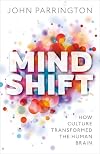
The author of this excellent book is an expert in pharmacology and genetics, but he is totally opposed to genetic determinism. He convincingly shows that to understand human behaviour, human differences, social inequality, mental illness etc, the study of our biology is not enough. We also need to take account of the vital importance of factors relating to upbringing, environment and society.
The book is incredibly wide-ranging. It covers everything from the origin of humans to the amazing show more flexibility of the human brain; from genetics and epigenetics to human consciousness; from mental illness to creativity and imagination.
I don’t feel qualified to comment on some of the technical sections of the book. But most of the book is very accessible for the interested non-specialist, and I found that I agreed with most of the arguments that Parrington puts forward.
That does not mean that I agree with everything the author says. For example, after rightly listing many of the weaknesses in Freud’s ideas, he disappoints me by saying that there are still things we can learn from Freud. Personally, I go along with biologist Peter Medawar’s view that psychoanalysis is “the most stupendous intellectual confidence trick of the twentieth century”. (Quoted by Parrington himself!)
Underlying all the specific things wrong with Freudianism, some of which Parrington mentions, is the fundamental problem that it is totally unscientific. Darwinism, for example, IS a scientific theory because it can be tested against the real world. There is evidence to support it. This does not apply to Freud’s ideas, which are basically untestable assertions – sometimes plausible but more often bizarre.
Freud was an expert at imposing his own preconceived ideas onto vulnerable, suggestible and gullible patients, and thousands of psychotherapists (whether well-intentioned or downright fraudulent) have followed in his footsteps.
Finally, Parrington is a Marxist. This is fine by me, because he belongs to the genuine Marxist tradition which puts democracy at its core. He is strongly opposed to Stalinism, with its bureaucracy and tyranny. But given his Marxism, I was disappointed that there was no discussion of the dialectical approach to science and society, as advocated, for example, by the (sadly recently deceased) geneticist and Marxist, Richard Lewontin. In fact Lewontin does not even get a mention in the index – a big omission as far as I am concerned.
Overall, this is an important book which I strongly recommend. show less
The book is incredibly wide-ranging. It covers everything from the origin of humans to the amazing show more flexibility of the human brain; from genetics and epigenetics to human consciousness; from mental illness to creativity and imagination.
I don’t feel qualified to comment on some of the technical sections of the book. But most of the book is very accessible for the interested non-specialist, and I found that I agreed with most of the arguments that Parrington puts forward.
That does not mean that I agree with everything the author says. For example, after rightly listing many of the weaknesses in Freud’s ideas, he disappoints me by saying that there are still things we can learn from Freud. Personally, I go along with biologist Peter Medawar’s view that psychoanalysis is “the most stupendous intellectual confidence trick of the twentieth century”. (Quoted by Parrington himself!)
Underlying all the specific things wrong with Freudianism, some of which Parrington mentions, is the fundamental problem that it is totally unscientific. Darwinism, for example, IS a scientific theory because it can be tested against the real world. There is evidence to support it. This does not apply to Freud’s ideas, which are basically untestable assertions – sometimes plausible but more often bizarre.
Freud was an expert at imposing his own preconceived ideas onto vulnerable, suggestible and gullible patients, and thousands of psychotherapists (whether well-intentioned or downright fraudulent) have followed in his footsteps.
Finally, Parrington is a Marxist. This is fine by me, because he belongs to the genuine Marxist tradition which puts democracy at its core. He is strongly opposed to Stalinism, with its bureaucracy and tyranny. But given his Marxism, I was disappointed that there was no discussion of the dialectical approach to science and society, as advocated, for example, by the (sadly recently deceased) geneticist and Marxist, Richard Lewontin. In fact Lewontin does not even get a mention in the index – a big omission as far as I am concerned.
Overall, this is an important book which I strongly recommend. show less
Statistics
- Works
- 5
- Members
- 78
- Popularity
- #229,021
- Rating
- 4.0
- Reviews
- 2
- ISBNs
- 22