
Tim Bowden (1937–2024)
Author of One crowded hour : Neil Davis, combat cameraman, 1934-1985
About the Author
Tim Bowden is an acclaimed oral historian, broadcaster, and radio and television documentary maker for the ABC. He is author of many books including the much acclaimed One Crowded Hour: Neil Davis, combat cameraman, The Changi Camera: A unique record of Changi and the Thai-Burma Railway, and show more Stubborn Buggers: Survivors of the infamous POW gaol that made Changi look like heaven. show less
Image credit: Courtesy of Allen and Unwin
Works by Tim Bowden
Stubborn Buggers: The Survivors of the Infamous POW Gaol That Made Changi Look Like Heaven (2014) 13 copies
I Just Get So ... Angry!: Dealing with anger and other strong emotions for teenagers (2015) 7 copies
Larrikins in Khaki: Tales of Irreverence and Courage From World War II Diggers (2019) 6 copies, 1 review
Tagged
Common Knowledge
- Legal name
- Bowden, Timothy Gibson
- Birthdate
- 1937-08-02
- Date of death
- 2024-09-01
- Gender
- male
- Education
- University of Tasmania
- Occupations
- oral historian
radio broadcaster
television presenter
producer
author
reporter - Awards and honors
- Order of Australia (Member)
Centenary Medal
Honorary Doctorate of Letters - Nationality
- Australia
- Birthplace
- Hobart, Tasmania, Australia
- Associated Place (for map)
- Tasmania, Australia
Members
Reviews
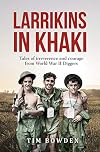
I read up to page 40, not much liking the tone of the book or its racism and vulgarity, but remaining mindful that these young men being valorised by Tim Bowden had put their lives on the line for the liberation of Europe and Southeast Asia.
However, when I read the racist remark quoted on page 40, that was it. I just didn’t want to read any more of it. I can’t bear the thought of any Indigenous Australian coming across this in print in the 21st century either.
I think the publication of show more this book is a mistake. Some readers may find it amusing, but quite apart from needing some professional development about contemporary attitudes to racism, the A&U editorial team and Tim Bowden should read what James Brown says in his book Anzac’s Long Shadow (Black Inc 2014)
IMO the unpublished and self-published memoirs of these men were not published for very good reasons, and A&U would have been better to have left it that way. show less
However, when I read the racist remark quoted on page 40, that was it. I just didn’t want to read any more of it. I can’t bear the thought of any Indigenous Australian coming across this in print in the 21st century either.
I think the publication of show more this book is a mistake. Some readers may find it amusing, but quite apart from needing some professional development about contemporary attitudes to racism, the A&U editorial team and Tim Bowden should read what James Brown says in his book Anzac’s Long Shadow (Black Inc 2014)
…by fostering the myth of the Aussie digger (braver and smarter than all other soldiers anywhere, lack of training notwithstanding) we are deluding ourselves if we imagine that similar unpreparedness can be victorious in future wars in our vicinity. And we’re not doing ourselves any favours by perpetrating the pseudo-democratic notion of contempt for the officers who lead them.
In a 2010 memorial lecture for Sir John Hackett, the current chief of the ADF, General David Hurley, outlined the kind of skills needed to operate in a ‘volatile, uncertain, complex and ambiguous’ region. In his view, Australia would face particular challenges in defending itself in this turbulent new world, lacking advantages in military size and unable to maintain a broad technological edge over regional powers. Australia’s military leaders would need to operate remotely and autonomously, and possess a deep understanding of the cultures, languages* and ways of thinking of regional countries. In short, Hurley suggested, defence would need to adopt a highly innovative culture and mould a new kind of officer – one able to master innovative strategy, strive for intellectual excellence, develop deep knowledge as well as strategically important personal relationships in two regional societies, and most importantly, think critically and analytically. (p. 105, bold highlight mine.)
IMO the unpublished and self-published memoirs of these men were not published for very good reasons, and A&U would have been better to have left it that way. show less

One of my favourite books, for the subject matter rather than the writing. Certainly my favourite ever quote:
"One crowded hour of glorious life is worth an age without a name" (Thomas Osbert Mordaunt -The Call)
I read this book many moons ago when I was living in Hong Kong and I used to drink with damaged American ex-servicemen who had never made it home after the Vietnam War.
It's the story of Neil Davis, a Tasmanian cameraman and journalist who covered conflicts in South East Asia, mainly show more the Vietnam War. He was the first western journalist to be shot at by the Americans when he was out filming with the Viet Cong. He was also the first westerner to film with the Khmer Roughe in Cambodia. You have probably seen his footage, the grainy, haunting images of the final few hours at the American embassy in Saigon were shot by Neil Davis.
He was an extraordinary character and it's difficult not to be enamored with all he achieved, and it's difficult not to be horrified by his pointless and stupid death.He died filming a bloodless coup in Thailand in 1985 show less
"One crowded hour of glorious life is worth an age without a name" (Thomas Osbert Mordaunt -The Call)
I read this book many moons ago when I was living in Hong Kong and I used to drink with damaged American ex-servicemen who had never made it home after the Vietnam War.
It's the story of Neil Davis, a Tasmanian cameraman and journalist who covered conflicts in South East Asia, mainly show more the Vietnam War. He was the first western journalist to be shot at by the Americans when he was out filming with the Viet Cong. He was also the first westerner to film with the Khmer Roughe in Cambodia. You have probably seen his footage, the grainy, haunting images of the final few hours at the American embassy in Saigon were shot by Neil Davis.
He was an extraordinary character and it's difficult not to be enamored with all he achieved, and it's difficult not to be horrified by his pointless and stupid death.
This is a dense and well written biography of an 'Australian Living Legend'the cameraman journalist Neil Davis.
Much of the appeal of this book is due to author Tim Bowden, who extensively uses transcripts of Davis's own remembering of his amazing life. It also uses letters Davis wrote home to his aunt. The portrait that emerges is of a man who lived a full-on larrakin life, yet didn't find the space for emotional attachment much beyond friendships with fellow journos and empathy for the show more people around him.
Sadly, Davis died the day Bowden started to write this biography. The situation of Davis's death was a low-level skirmish in one of Thailand's many coup attempts. While a dramatic way to go for most people - shot up in the stree - it was rather mediocre by Davis's standards, after he had lived through so many amazing conflicts and situations, being on the forefront of news reportage for much of the carnage that engulfed south asia in the second half of the twentieth century.
After finishing this book i was left thinking that i probably would not have been able to stand Davis if i met him in real life, but he was someone who lead an amazing life. show less
Much of the appeal of this book is due to author Tim Bowden, who extensively uses transcripts of Davis's own remembering of his amazing life. It also uses letters Davis wrote home to his aunt. The portrait that emerges is of a man who lived a full-on larrakin life, yet didn't find the space for emotional attachment much beyond friendships with fellow journos and empathy for the show more people around him.
Sadly, Davis died the day Bowden started to write this biography. The situation of Davis's death was a low-level skirmish in one of Thailand's many coup attempts. While a dramatic way to go for most people - shot up in the stree - it was rather mediocre by Davis's standards, after he had lived through so many amazing conflicts and situations, being on the forefront of news reportage for much of the carnage that engulfed south asia in the second half of the twentieth century.
After finishing this book i was left thinking that i probably would not have been able to stand Davis if i met him in real life, but he was someone who lead an amazing life. show less
One of my favourite books on a war correspondence/ photojournalist.
This is a well written biography of a courageous and large as life Australian who took immense risks to photograph the atrocities of war. For over twenty years journalist Neil Davis covered the conflicts in SouthEast Asia. Always at the battle front, he brought enduring images of the full horror of modern war to the world. Ironically, in September 1985, having survived so much war, Neil Davis was killed filming an attempted show more coup in the streets of Bangkok. show less
This is a well written biography of a courageous and large as life Australian who took immense risks to photograph the atrocities of war. For over twenty years journalist Neil Davis covered the conflicts in SouthEast Asia. Always at the battle front, he brought enduring images of the full horror of modern war to the world. Ironically, in September 1985, having survived so much war, Neil Davis was killed filming an attempted show more coup in the streets of Bangkok. show less
You May Also Like


Statistics
- Works
- 22
- Members
- 533
- Popularity
- #46,707
- Rating
- 4.2
- Reviews
- 11
- ISBNs
- 114