
Mary Elting (1906–2005)
Author of Q is for Duck: an Alphabet Guessing Game
About the Author
Works by Mary Elting
The Mysterious Grain 9 copies
Antworten und noch mehr Antworten. Das zweite große Antwortbuch.Deutsche Ausgabe v. Ehlert, Otto (1964) 2 copies
The First Book of Trucks 2 copies
Rolling Wheels 2 copies
Santa Claus 1 copy
Het tweede antwoordenboek 1 copy
Wishes and Secrets 1 copy
Battles: How They Are Won 1 copy
Miss Polly`s Animal School 1 copy
Associated Works
Tagged
Common Knowledge
- Legal name
- Folsom, Mary Elting
- Other names
- Cole, Davis
Tatham, Campbell - Birthdate
- 1906-06-21
- Date of death
- 2005-01-29
- Gender
- female
- Education
- University of Colorado
University of Strasbourg - Occupations
- activist
journalist
editor
translator
children's book author - Relationships
- Folsom, Franklin (husband)
Folsom, Michael (son) - Nationality
- USA
- Birthplace
- Creede, Colorado, USA
- Places of residence
- New York, New York, USA
Boulder, Colorado, USA
Roosevelt, New Jersey, USA - Associated Place (for map)
- USA
Members
Reviews
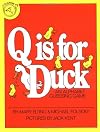
Before [b:A Is for Musk Ox|13538731|A Is for Musk Ox|Erin Cabatingan|https://images.gr-assets.com/books/1343314899s/13538731.jpg|19101081] and [b:Guess Again!|6281384|Guess Again!|Mac Barnett|https://images.gr-assets.com/books/1273759232s/6281384.jpg|6465333] (both of which I've given 5 stars) there was this. Fantastic first attempt at getting kids to have a giggly time learning to make unexpected connections. It's a pity that too many of the connections here are repeated versions of what show more the animal says (not a spoiler, amIright? you know the score from the title?).
Otoh, it's great for educators who want to reinforce the alphabet, the skill of engaging with the text, etc. It's also a wonderful leveled reader that is likely to engage and assist any struggling child. And it really is funny; [a:Jack Kent|176259|Jack Kent|https://images.gr-assets.com/authors/1354840021p2/176259.jpg]'s illustrations fit just right.
I'm also inspired to use it as the basis for a game or as a mentor text. Sure, there's a 'right' answer given in the book. But can we come up with *other* reasons that Q could be for Duck? show less
Otoh, it's great for educators who want to reinforce the alphabet, the skill of engaging with the text, etc. It's also a wonderful leveled reader that is likely to engage and assist any struggling child. And it really is funny; [a:Jack Kent|176259|Jack Kent|https://images.gr-assets.com/authors/1354840021p2/176259.jpg]'s illustrations fit just right.
I'm also inspired to use it as the basis for a game or as a mentor text. Sure, there's a 'right' answer given in the book. But can we come up with *other* reasons that Q could be for Duck? show less
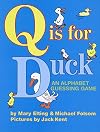
This is a great Alphabet book to keep children guessing. It keeps them entertained, becuase they are required to think about what they animal could be. I loved the art work, and its simplicity.
This book bills itself as an "alphabet guessing game". It's true that there's some guessing involved, but all too often the answer is "This wrong letter is for this animal because this animal says something that starts with that letter", with little variation from these theme. My nieces (4 and 6) grasped the pattern within a few letters, which takes all the guessing out of this guessing game. However, other people might prefer it because of the transparency of so many of the letter-animal show more pairs.
The artwork is great. Very silly. F is for bird (because birds Fly) and we see a shot of a bird aviator. R is for Lion and we see the two parent lions scared witless because their cub has let out a huge ROAR. When M is for Cow, we see the poor milkmaid covering her ears because her herd is mooing so loudly.
I do have a slight concern about diversity. There are 42 people in this book, I just counted. Of these 42, 1 is black. 3 might generously be described as being dark enough to have a tan. And the remaining 38 are "peach", the so-called "flesh" color from the crayon box. Given that when this book was published, in 1980, blacks made up slightly more than 10% of the US population, I would expect to see about 4 black people (and a few Hispanics and Asians as well). Barring that, seeing no minorities would at least not smack so blatantly of tokenism! show less
The artwork is great. Very silly. F is for bird (because birds Fly) and we see a shot of a bird aviator. R is for Lion and we see the two parent lions scared witless because their cub has let out a huge ROAR. When M is for Cow, we see the poor milkmaid covering her ears because her herd is mooing so loudly.
I do have a slight concern about diversity. There are 42 people in this book, I just counted. Of these 42, 1 is black. 3 might generously be described as being dark enough to have a tan. And the remaining 38 are "peach", the so-called "flesh" color from the crayon box. Given that when this book was published, in 1980, blacks made up slightly more than 10% of the US population, I would expect to see about 4 black people (and a few Hispanics and Asians as well). Barring that, seeing no minorities would at least not smack so blatantly of tokenism! show less
Q is for Duck by Mary Elting and Michael Folsom is subtitled “An Alphabet Guessing Game.” The reader is expected to make connections using the alphabet. Why is Q for Duck? Because a duck quacks, obviously! This is clever alphabet book.
Lists
Awards

You May Also Like


Associated Authors
Statistics
- Works
- 82
- Also by
- 4
- Members
- 1,933
- Popularity
- #13,323
- Rating
- 4.2
- Reviews
- 22
- ISBNs
- 78
- Languages
- 5