
Austin Frerick
Author of Barons: Money, Power, and the Corruption of America's Food Industry
Works by Austin Frerick
Tagged
Common Knowledge
- Gender
- male
- Education
- Grinnell College
University of Wisconsin-Madison - Nationality
- USA
- Birthplace
- Iowa, USA
- Places of residence
- Cedar Rapids, Iowa, USA
- Associated Place (for map)
- Iowa, USA
Members
Reviews
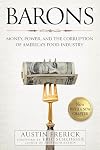
The American food system is as corrupt as they come. International gangsters are welcomed with billion dollar subsidies, antitrust laws are totally ignored while giant corporations buy up all the local competition, giant grocers destroy all local purveyors, and farmers are driven off their land by their total inability to deal with anyone but these megamonsters. That is the essence of Barons, by Austin Frerick, a horror story employing the profiles of seven of the worst. Enjoy your hot show more dog.
Frerick is a native of Iowa, and he spends a lot of time mourning its passing, from family businesses like his mother’s bakery, to family farms with a few cattle, a few pigs and varied crops, to lakes where you didn’t fear to put a canoe in the water, never mind drink the water. Those days are gone, thanks to cuts and new programs by MAGA-style politicians who end government guidelines, and allow corporate concentration and outright monopolies in essentially every domain. There are laws on the books to prevent what has happened, but policies against enforcing them rule the day.
The seven monsters are:
Jeff & Deb Hansen, who built a hog empire called Iowa Select Farms. Frerick says since they came onto the scene, the hog population has increased more than 50%, while hog farms have decreased by over 80%. Family farms cannot compete with heavily subsidized industrial hog confinement facilities. The Hansens spend a lot of time and money on their relationships with politicians, ensuring Iowa does not restrict their polluting the air, soil and water, and so far, it has worked like a charm. Iowans are losing what little is left of their clean water, and the Hansens have a private jet with the words “When pigs fly” on the fuselage. They seem to actually reside in Florida, to avoid Iowa taxes. But in Iowa, they are everywhere.
Cargill is the biggest private company in the USA, bigger even than the giant Koch Industries that has also damaged laws, the planet, and society as a whole (but which didn’t make the profiles cut). The founding MacMillan family controls 95% of Cargill, through about 95 family members. They process and ship food. They have touched probably everything in the average American shopping cart. If there’s a way to get in the middle, Cargill will find it. It handles more than 25% of the world’s grain. It has essentially eliminated all local granaries, mills and elevators. If a farmer wants to sell his grain, he has to deal with Cargill and the prices it alone sets. He says “Cargill is now one of the four largest companies in beef slaughtering, beef feedlots, pork slaughtering, turkey slaughtering, animal feeds, flour milling, corn milling, and soybean processing.” As such, they find themselves constantly involved in price fixing scandals. They pay the multimillion dollar fines, and go right back to work. As with all of them, such fines are just a cost of doing business, something Frerick finds himself repeating. Cargill is a major provider and promoter of high fructose corn syrup, a key ingredient in the USA’s ultraprocessed food binge, currently leading to better than 33% obesity among Americans.
They all have their crimes. They buy up grain elevators and shut them down, forcing everyone to use theirs, at their prices. The build slaughterhouses in rural areas so they can pollute more freely and not worry about the stench. They hire immigrants, documented or not, and pay them poorly, so they have to go on welfare and food stamps to survive. They force farmers into monocultures, mostly corn and soy, removing the fruit trees and vegetables farmers used to use to keep the soils rich and pantries full. And of course, the chemical fertilizers and the millions of pounds of manure seep into the groundwater. This is what has become of Iowa, and innovators like Cargill are busy deploying it worldwide.
Cargill is one of those tobacco-like companies that will place disinformation wherever it can benefit from it. Frerick gives the example of a 2012 study from Stanford University, which magically found that organic produce was no more nutritious than conventionally grown produce. Cargill money found its way into the study. The result they wanted should surprise no one.
Next up is dairy, fronted by Fair Oaks Farms, owned by Mike and Sue McCloskey. It is a (for real) dairy theme park in northwest Indiana (access to Chicagoland). It is the extreme production facility among extremes, larger than any in history Frerick says. It has branched off into branded dairy products under the Fairlife name. Basically, they take already highly processed milk and add additional processes to turn it into power drinks. They partnered with Coca-Cola if that gives a hint of its value. Their facilities have been exposed for their abuse of animals, despite the theme park upbeat ethos.
The Driscolls own berries: strawberries, raspberries, and such, now grown for them and not by them, all over the world. By contracting everything out, they take no responsibility for using all the potable water, bleeding soils of nutrients, or abusing farmworkers. And even though they specify every little thing to their contractors, when questioned they claim they have zero input in how contractors conduct their business. Right.
JAB Holding is the investment vehicle of the Reimann family, now of Luxembourg, a tax haven. They have been buying up coffee chains and bakeries like there is no tomorrow. Frerick lists Peet’s, Caribou, Einstein Bros. Bagels, Bruegger’s Bagels, Manhattan Bagel, Noah’s New York Bagels, Krispy Kreme, Pret A Manger, Insomnia Cookies and Panera Bread among their holdings. Much the way every beer Americans drink comes from one of just two companies, so coffee either comes from Starbucks, or a JAB chain. In fact, he says, JAB sells more coffee than Starbucks does. It’s a quick new monopoly, technically not allowed, but bankers are creating them in every domain they can. Politicians say and do nothing.
The Batistas are cattle gazillionaires, owning and operating JBS feedlots, slaughterhouses and processors. They like to finance and bribe, going right up to the president of Brazil in one case (and then betraying him in a plea deal).
But the worst of the worst, saved for last, is good old Walmart. The Waltons of Walmart, he says, have combined private wealth of nearly a quarter of a trillion dollars. They got it by being bullies. They employ tactics like avoiding property taxes by valuing their stores as if they were closed – the “dark stores” loophole. (They also apparently discovered an estate tax loophole they exploit- now along with every multimillionaire – but Frerick doesn’t name or describe it.) They attach riders to their old properties so that no grocery stores or discounters can rent them after they abandon them. They utterly destroy the shopping districts of their host towns. They continue to add services that will suck even more life out of the community. For example, they are now busy adding mental health clinics, doctors’ offices, X-ray labs, dental, optical, hearing, nutrition counseling, fitness advice, banking, insurance and veterinary services. All right inside Walmart. Where Americans used to go a butcher, a baker, a doctor and a bank, Walmart wants them all to come to it for everything. The more time people spend inside a Walmart, the more money they spend. It’s called share of wallet, and Walmart wins, hands down.
They are also famous for forcing vendors to lower prices and/or innovate a product every year to continue as vendors (The Plus One directive). This has led not to plunging prices but an endless variety of Oreo flavors and packaging, cheaper materials and quality, and higher environmental costs, Frerick says. It drives production to southeast Asia where it’s cheaper, despite the added pollution and shipping.
It is probably best known for destroying local retail. In an Iowa study, ten years after Walmart opened its first hundred stores there, Iowa lost “298 hardware stores, 293 building supply stores, 162 variety stores, 158 women’s apparel stores, 116 drugstores, and 111 men’s and boys’ apparel stores.”
Walmart is justifiably infamous for socializing its employees’ pay. It avoids hiring fulltimers, so it doesn’t have to pay benefits. It pays unlivable wages, and fobs the rest onto governments, in the form of food stamps and Obamacare among many programs. Walmart employees make up the biggest block of food stamps users. A 2013 study found government subsidizing Walmart’s 1.6 million workers to the tune of $5000 a year in taxpayer money, while the Waltons reaped billions. Fearing unions, they famously shut down and abandon whole Walmarts rather than continue with unionized employees. They own an astonishing 30% of the grocery market, perverting variety and innovation.
The list is endless.
Frerick puts a lot of the blame on what he calls the Wall Street Farm Bill, which encourages investment, innovation, and especially consolidation – monopolies. He says the Farm Bill used to be for farmers, to try to even out the ups and downs of farming, but since the Reagan era, it has all become about Wall Street and private equity.
Another fact that applies across the board is that “advertised wages decline by up to 25% as an industry consolidates.” The long period of declining power for unions has meant lower and lower wages with each acquisition, something most if not all of these magnificent seven have leveraged.
Despite all the impressive research, Frerick also has a couple of annoying habits. He concocts idiotic comparisons. The Hansen hog facilities produce as much manure as nearly 84 million people, more than the populations of California, Texas and Illinois combined. Kinda hard to picture those three states meaning anything in this context. Cargill’s annual revenues are as great as the revenues of SD, NH, MO, ND, VT, RI, DE, ME, WV, ID, NE, NM, HI, MS, NV, OK, KS, AR, IA – combined. Does that mean anything to you? I can’t picture it. Or that Walmart “has about the same market share as the number two, three, four, five six, seven and eight grocery companies combined.” He doesn’t name them; you are supposed to be impressed by his spelling out their ranks, showing he can count. He does this with everything. He seems to get a figure and an almanac, and adds up states or cities or acreage and matches them to odd combinations of dollars, ranks or geography. It doesn’t work. It would be entirely forgettable if it wasn’t so annoying.
Another thing he does is not name names. In discussing JAB coffee chains, he says their money came from selling their chemical company into a merger with a drug maker. Since the B in JAB stands for Benkiser, one would assume they were the Benkiser in Reckitt Benkiser, a major purveyor of otc drugs, remedies and household chemicals. What Frerick gets out of not naming Reckitt, I can’t imagine. It would certainly have been easier just to say it. Another time, he cites “an oil company in which the Brazilian government owned a majority of shares” – but doesn’t name it. It was almost certainly Petroleos Brasilieros, so why not just say so instead of teasing? He quotes Michael Needler testifying before Congress, labeling him the CEO of a regional grocery retailer. But doesn’t print the name. Why not?
Frerick’s biggest punch comes from history. It transpires that none of this is anything new in American food production: “Thomas Jefferson’s ‘yeoman farmer’ built his independence on the backs of enslaved men and women. The idyllic Midwestern family farm was possible only because the Homestead Act parceled out land stolen from American Indians in the midst of a genocidal frenzy. Even the New Deal Farm Bill, for all that it did to support economic and ecological balance, operated to benefit White farmers, who pocketed the New Deal Farm supports and used them to push Black farmers off their land.”
The conclusion is little more than we must stop all this and rescue our way of life. We have the laws; we need to enforce them. But obviously, with all these politicians in the pockets of the gazillionaires, there is no political will to do so. The Secretary of Agriculture (twice!), Tom Vilsack, is from Iowa too. He knows first hand what has been happening. He aids and supports it. Enough said.
David Wineberg show less
Frerick is a native of Iowa, and he spends a lot of time mourning its passing, from family businesses like his mother’s bakery, to family farms with a few cattle, a few pigs and varied crops, to lakes where you didn’t fear to put a canoe in the water, never mind drink the water. Those days are gone, thanks to cuts and new programs by MAGA-style politicians who end government guidelines, and allow corporate concentration and outright monopolies in essentially every domain. There are laws on the books to prevent what has happened, but policies against enforcing them rule the day.
The seven monsters are:
Jeff & Deb Hansen, who built a hog empire called Iowa Select Farms. Frerick says since they came onto the scene, the hog population has increased more than 50%, while hog farms have decreased by over 80%. Family farms cannot compete with heavily subsidized industrial hog confinement facilities. The Hansens spend a lot of time and money on their relationships with politicians, ensuring Iowa does not restrict their polluting the air, soil and water, and so far, it has worked like a charm. Iowans are losing what little is left of their clean water, and the Hansens have a private jet with the words “When pigs fly” on the fuselage. They seem to actually reside in Florida, to avoid Iowa taxes. But in Iowa, they are everywhere.
Cargill is the biggest private company in the USA, bigger even than the giant Koch Industries that has also damaged laws, the planet, and society as a whole (but which didn’t make the profiles cut). The founding MacMillan family controls 95% of Cargill, through about 95 family members. They process and ship food. They have touched probably everything in the average American shopping cart. If there’s a way to get in the middle, Cargill will find it. It handles more than 25% of the world’s grain. It has essentially eliminated all local granaries, mills and elevators. If a farmer wants to sell his grain, he has to deal with Cargill and the prices it alone sets. He says “Cargill is now one of the four largest companies in beef slaughtering, beef feedlots, pork slaughtering, turkey slaughtering, animal feeds, flour milling, corn milling, and soybean processing.” As such, they find themselves constantly involved in price fixing scandals. They pay the multimillion dollar fines, and go right back to work. As with all of them, such fines are just a cost of doing business, something Frerick finds himself repeating. Cargill is a major provider and promoter of high fructose corn syrup, a key ingredient in the USA’s ultraprocessed food binge, currently leading to better than 33% obesity among Americans.
They all have their crimes. They buy up grain elevators and shut them down, forcing everyone to use theirs, at their prices. The build slaughterhouses in rural areas so they can pollute more freely and not worry about the stench. They hire immigrants, documented or not, and pay them poorly, so they have to go on welfare and food stamps to survive. They force farmers into monocultures, mostly corn and soy, removing the fruit trees and vegetables farmers used to use to keep the soils rich and pantries full. And of course, the chemical fertilizers and the millions of pounds of manure seep into the groundwater. This is what has become of Iowa, and innovators like Cargill are busy deploying it worldwide.
Cargill is one of those tobacco-like companies that will place disinformation wherever it can benefit from it. Frerick gives the example of a 2012 study from Stanford University, which magically found that organic produce was no more nutritious than conventionally grown produce. Cargill money found its way into the study. The result they wanted should surprise no one.
Next up is dairy, fronted by Fair Oaks Farms, owned by Mike and Sue McCloskey. It is a (for real) dairy theme park in northwest Indiana (access to Chicagoland). It is the extreme production facility among extremes, larger than any in history Frerick says. It has branched off into branded dairy products under the Fairlife name. Basically, they take already highly processed milk and add additional processes to turn it into power drinks. They partnered with Coca-Cola if that gives a hint of its value. Their facilities have been exposed for their abuse of animals, despite the theme park upbeat ethos.
The Driscolls own berries: strawberries, raspberries, and such, now grown for them and not by them, all over the world. By contracting everything out, they take no responsibility for using all the potable water, bleeding soils of nutrients, or abusing farmworkers. And even though they specify every little thing to their contractors, when questioned they claim they have zero input in how contractors conduct their business. Right.
JAB Holding is the investment vehicle of the Reimann family, now of Luxembourg, a tax haven. They have been buying up coffee chains and bakeries like there is no tomorrow. Frerick lists Peet’s, Caribou, Einstein Bros. Bagels, Bruegger’s Bagels, Manhattan Bagel, Noah’s New York Bagels, Krispy Kreme, Pret A Manger, Insomnia Cookies and Panera Bread among their holdings. Much the way every beer Americans drink comes from one of just two companies, so coffee either comes from Starbucks, or a JAB chain. In fact, he says, JAB sells more coffee than Starbucks does. It’s a quick new monopoly, technically not allowed, but bankers are creating them in every domain they can. Politicians say and do nothing.
The Batistas are cattle gazillionaires, owning and operating JBS feedlots, slaughterhouses and processors. They like to finance and bribe, going right up to the president of Brazil in one case (and then betraying him in a plea deal).
But the worst of the worst, saved for last, is good old Walmart. The Waltons of Walmart, he says, have combined private wealth of nearly a quarter of a trillion dollars. They got it by being bullies. They employ tactics like avoiding property taxes by valuing their stores as if they were closed – the “dark stores” loophole. (They also apparently discovered an estate tax loophole they exploit- now along with every multimillionaire – but Frerick doesn’t name or describe it.) They attach riders to their old properties so that no grocery stores or discounters can rent them after they abandon them. They utterly destroy the shopping districts of their host towns. They continue to add services that will suck even more life out of the community. For example, they are now busy adding mental health clinics, doctors’ offices, X-ray labs, dental, optical, hearing, nutrition counseling, fitness advice, banking, insurance and veterinary services. All right inside Walmart. Where Americans used to go a butcher, a baker, a doctor and a bank, Walmart wants them all to come to it for everything. The more time people spend inside a Walmart, the more money they spend. It’s called share of wallet, and Walmart wins, hands down.
They are also famous for forcing vendors to lower prices and/or innovate a product every year to continue as vendors (The Plus One directive). This has led not to plunging prices but an endless variety of Oreo flavors and packaging, cheaper materials and quality, and higher environmental costs, Frerick says. It drives production to southeast Asia where it’s cheaper, despite the added pollution and shipping.
It is probably best known for destroying local retail. In an Iowa study, ten years after Walmart opened its first hundred stores there, Iowa lost “298 hardware stores, 293 building supply stores, 162 variety stores, 158 women’s apparel stores, 116 drugstores, and 111 men’s and boys’ apparel stores.”
Walmart is justifiably infamous for socializing its employees’ pay. It avoids hiring fulltimers, so it doesn’t have to pay benefits. It pays unlivable wages, and fobs the rest onto governments, in the form of food stamps and Obamacare among many programs. Walmart employees make up the biggest block of food stamps users. A 2013 study found government subsidizing Walmart’s 1.6 million workers to the tune of $5000 a year in taxpayer money, while the Waltons reaped billions. Fearing unions, they famously shut down and abandon whole Walmarts rather than continue with unionized employees. They own an astonishing 30% of the grocery market, perverting variety and innovation.
The list is endless.
Frerick puts a lot of the blame on what he calls the Wall Street Farm Bill, which encourages investment, innovation, and especially consolidation – monopolies. He says the Farm Bill used to be for farmers, to try to even out the ups and downs of farming, but since the Reagan era, it has all become about Wall Street and private equity.
Another fact that applies across the board is that “advertised wages decline by up to 25% as an industry consolidates.” The long period of declining power for unions has meant lower and lower wages with each acquisition, something most if not all of these magnificent seven have leveraged.
Despite all the impressive research, Frerick also has a couple of annoying habits. He concocts idiotic comparisons. The Hansen hog facilities produce as much manure as nearly 84 million people, more than the populations of California, Texas and Illinois combined. Kinda hard to picture those three states meaning anything in this context. Cargill’s annual revenues are as great as the revenues of SD, NH, MO, ND, VT, RI, DE, ME, WV, ID, NE, NM, HI, MS, NV, OK, KS, AR, IA – combined. Does that mean anything to you? I can’t picture it. Or that Walmart “has about the same market share as the number two, three, four, five six, seven and eight grocery companies combined.” He doesn’t name them; you are supposed to be impressed by his spelling out their ranks, showing he can count. He does this with everything. He seems to get a figure and an almanac, and adds up states or cities or acreage and matches them to odd combinations of dollars, ranks or geography. It doesn’t work. It would be entirely forgettable if it wasn’t so annoying.
Another thing he does is not name names. In discussing JAB coffee chains, he says their money came from selling their chemical company into a merger with a drug maker. Since the B in JAB stands for Benkiser, one would assume they were the Benkiser in Reckitt Benkiser, a major purveyor of otc drugs, remedies and household chemicals. What Frerick gets out of not naming Reckitt, I can’t imagine. It would certainly have been easier just to say it. Another time, he cites “an oil company in which the Brazilian government owned a majority of shares” – but doesn’t name it. It was almost certainly Petroleos Brasilieros, so why not just say so instead of teasing? He quotes Michael Needler testifying before Congress, labeling him the CEO of a regional grocery retailer. But doesn’t print the name. Why not?
Frerick’s biggest punch comes from history. It transpires that none of this is anything new in American food production: “Thomas Jefferson’s ‘yeoman farmer’ built his independence on the backs of enslaved men and women. The idyllic Midwestern family farm was possible only because the Homestead Act parceled out land stolen from American Indians in the midst of a genocidal frenzy. Even the New Deal Farm Bill, for all that it did to support economic and ecological balance, operated to benefit White farmers, who pocketed the New Deal Farm supports and used them to push Black farmers off their land.”
The conclusion is little more than we must stop all this and rescue our way of life. We have the laws; we need to enforce them. But obviously, with all these politicians in the pockets of the gazillionaires, there is no political will to do so. The Secretary of Agriculture (twice!), Tom Vilsack, is from Iowa too. He knows first hand what has been happening. He aids and supports it. Enough said.
David Wineberg show less
A look at who runs the (food) world in America, and I am a bit shook but also somehow unsurprised. Read this book because the author appeared on Factually and I wanted to know more. So glad I did
This is a very important book for anybody interested in how our food system works and why our whole food industry has changed so drastically in the last decade.
This book is only the tip of the iceberg but it's very important that people read and familiarize themselves with what's going on. I would suggest for anybody who has an open mind and is willing to learn to read this book.
This book is only the tip of the iceberg but it's very important that people read and familiarize themselves with what's going on. I would suggest for anybody who has an open mind and is willing to learn to read this book.
Statistics
- Works
- 1
- Members
- 88
- Popularity
- #209,355
- Rating
- 4.3
- Reviews
- 3
- ISBNs
- 4