
Rich Wallace
Author of The Roar of the Crowd
About the Author
Rich Wallace was born on January 29, 1957 in Hackensack, New Jersey. He began writing as a first grader but academics were not his strong suit and he did not read much beyond what was required for his classes. As a teen-ager he was mostly interested on sports, especially track and cross country. In show more high school He started writing often and working on his school newspaper. He continued his writing as he attended Montclair State College. He took creative writing classes, including one that required him to write a novel, one chapter a week. He also interned at the Passaic Herald-News where he was later offered a paid reporting job. After graduating Montclair State in 1980 with a bachelor of arts degree, Rich Wallace went to work for several N.J. newspapers as a sports reporter and news editor and continually reworking that first novel he started in creative writing class. In 1988 he started working for Highlights for Children as a copy editor. He has since become senior editor at the magazine and publishing well written stories has become his passion. Then in 1996 after several rewrites his first novel Wrestling Sturbridge was published. He continued writing with novels such as Shots on Goal, Riding Time and Playing Without the Ball - all with sports related themes. He also penned a series called Winning Season with titles such as The Roar of the Crowd, Technical Foul, Fast Company and Double Fake. Wallace has said he has one goal for his writing - to offer an honest representation of how adolescent boys struggle to find their identity. (Bowker Author Biography) show less
Series
Works by Rich Wallace
Double-Crossed at Cactus Flats: A Choose Your Own Ending Western Adventure (Up2u Adventures) (2013) 10 copies
Technical Foul 2 copies
Final Cut [short story] 1 copy
Moving Without the Ball 1 copy
Spielzeit 1 copy
Associated Works
Tagged
Common Knowledge
- Birthdate
- 1957-01-19
- Gender
- male
- Education
- Montclair State College (BA|1980)
- Occupations
- novelist
non-fiction author - Agent
- Liza Voges
- Relationships
- Wallace, Sara Neil (wife)
- Nationality
- USA
- Birthplace
- Hackensack, New Jersey, USA
- Places of residence
- New Hampshire, USA
- Associated Place (for map)
- USA
Members
Reviews

I am SO glad I got the chance to experience Rich Wallace's writing. He really knows how to create his characters, give them flaws and unique personalities, blend them with a life-like plot and bring it to life for the young readers. Not to mention the cover of this book totally ROCKS! I love the "hippie" era (as I like to refer to it...) and I LOVE watermelon so the combo of the peace sign from the watermelon was spot on for me! Really captured my eye and would have made this a book I would show more have snatched up off the shelf.
If I snatched this book up off the shelf solely on the cover, I would not have been disappointed with the outcome of the book itself. Brody, Tony, Ryan, Jenny and Skippy....all the characters were awesomely created. I felt a connection (albeit motherly!) to 12 year old Brody, as he told his story from back in the summer of '69. I know I know, that's a song, but I just couldn't help myself. It's one of my FAVORITE "hippie" songs (I so wish I could have been born back then....I LOVE the songs, I LOVE the clothes.....what can I say, I'm a hippie geek at heart!). He was that awkward age of 12 years old, he wasn't quite into girls, but they weren't quite as disgusting. He adored his big brother Ryan, and his best friend Tony...well let's just say that he was the perfect best friend for 12 year old Brody.
But, more than anything, is the world. Brody's story takes place in a world where war is raging on around them. Ryan is about to be drafting age, and instead of applying to college to do something about that, he's goofing off, going to places like Woodstock and hanging out with his girlfriend Jenny and her friend Skippy. It's not such a carefree life, but Brody does what he can to make the best of it. It is truly a piece of history brought to life through the eyes of 12 year old Brody.
I truly think that any young reader would love this book. It's a fast paced, easy read. Recommended for a day at the beach or poolside, definitely. It's 5 star worthy and gives a lesson in a not-so-easy-world life and the raging Vietnam war, while still being funny and engaging for those young minds. I'll be setting this book on the self for my soon-to-be 9 year old son to read. I know he'll love it as much as I did. I hope that Rich Wallace has more fun, history filled young reading books for us kid-at-heart book lovers! show less
If I snatched this book up off the shelf solely on the cover, I would not have been disappointed with the outcome of the book itself. Brody, Tony, Ryan, Jenny and Skippy....all the characters were awesomely created. I felt a connection (albeit motherly!) to 12 year old Brody, as he told his story from back in the summer of '69. I know I know, that's a song, but I just couldn't help myself. It's one of my FAVORITE "hippie" songs (I so wish I could have been born back then....I LOVE the songs, I LOVE the clothes.....what can I say, I'm a hippie geek at heart!). He was that awkward age of 12 years old, he wasn't quite into girls, but they weren't quite as disgusting. He adored his big brother Ryan, and his best friend Tony...well let's just say that he was the perfect best friend for 12 year old Brody.
But, more than anything, is the world. Brody's story takes place in a world where war is raging on around them. Ryan is about to be drafting age, and instead of applying to college to do something about that, he's goofing off, going to places like Woodstock and hanging out with his girlfriend Jenny and her friend Skippy. It's not such a carefree life, but Brody does what he can to make the best of it. It is truly a piece of history brought to life through the eyes of 12 year old Brody.
I truly think that any young reader would love this book. It's a fast paced, easy read. Recommended for a day at the beach or poolside, definitely. It's 5 star worthy and gives a lesson in a not-so-easy-world life and the raging Vietnam war, while still being funny and engaging for those young minds. I'll be setting this book on the self for my soon-to-be 9 year old son to read. I know he'll love it as much as I did. I hope that Rich Wallace has more fun, history filled young reading books for us kid-at-heart book lovers! show less
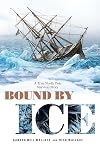
This nonfiction account tells of a group of 19-century explorers who attempted to reach the north pole but found disaster. With such a compelling premise, this narrative should have been quite solid, but I found myself disappointed overall; parts of this were great, but the whole thing should have been much better.
I want to say first of all that I think the authors are good writers. They have an excellent ability to set the tone, and their instincts for finding the right word for the right show more moment are unerring. They do not talk down to the readers. The topics in this book that could have been dry, such as the type of ship and its different provisions, are still presented in an interesting manner, and the more dramatic elements (starvation, death, etc.) are not overwritten, not over-the-top, not melodramatic in any sense. Parts of this book feel as page-turning as a thriller, and the authors certainly made good use of dramatic tension. The writing is tasteful, and while the authors don't shrink from recording the more gruesome aspects of the journey, they also don't dwell too much on the gory details. There are dogs in this story, so here is my spoiler:The dogs all die, and one in particular is killed for food, but the writing is matter-of-fact and without a lot of tragic details. I also applaud their wisdom in summarizing (but not dwelling on) some of the negative comments made by one of the survivors and published in the papers. The distinctive personalities of several of the adventurers shine through quite well. Primary sources abound, especially the journals kept by the lieutenant commander. It is very clear which elements are quotes from the primary sources and which are reconstructions, and yet this plethora of quoted material never disrupts the narrative flow. The writing is quite smooth. The subject matter is certainly interesting. The maps are helpful, and the epilogue ties up many loose ends.
The biggest problem is clarity. Some of these issues are relatively minor (e.g., one of the pen-and-ink drawings that illustrate this book was made by a specific crew member, but I have no idea who drew any of the others, if they're even from the expedition, or if they were made in modern times for this book). Other issues are more severe. For one thing, the timing is unclear. Some dates are given, but not all. How long was the initial delay, right at the start? Later, when the explorers were resting on an island, Melville and De Long disagreed about whether it was more important to rest or to leave immediately, and although their departure date is given, the date of their landing is not, so it is unclear how long the delay had been, or whether there had even been a delay at all. Consequently, it is impossible to know to what extent that rest cost them. It seems as though the whole party would have made it safely to Russian mainland if they hadn't been hit by a gale, and I think (again, it's not clear) that they only missed the fair weather by one day. Also frustrating was the lack of information about the travelers. Specifically, I wondered how many of them there were. 20-some? 30? It was difficult to visualize the party when I had no idea how large (or small) a group it was. A few of the names were given early on, with descriptions and even pictures of the men, but only six members of the expedition were described in this way. I wondered how many men there were. I wondered all the way from page 28, when it said that there were openings for 24 spots, to page 116, when the authors finally (finally!) listed the names of all the men who undertook this dangerous voyage: 34 names, all printed neatly in three columns across the page. What a relief! The group was quite a bit larger than I'd been picturing, but I wasn't about to reread the whole book just to re-imagine that one detail. At least I had an answer. Of course, now I'm back to wondering, because when I reached page 165, I read that 33 men undertook this voyage. So which is it?
Worst of all, for me, are the mistakes and omissions. There were 33 men but 34 names listed. There were 13 survivors (p. 150) but only 12 people survived (p. 165). De Long abandoned his rifle during his march through Siberia, leaving it behind on page 124, yet "De Long's rifle" was recovered with his body on page page 173. So did the group double back to retrieve it? Or did they have extra guns, and he just claimed a different (presumably lighter to carry) rifle as his own? The group of explorers included two Yup'ik men (Alaska Natives). Both of them were honored afterward with medals from the U.S. Congress. These medals are inscribed, but while the photos of them are clear enough for me to see that the letters are neat and well-formed, they are not clear enough for me to read the words, and the text of them is not given in the book. What a waste! But at least I know it was something positive. Conversely, the authors' lack of clarity is detrimental to the reputation of scientist and naturalist Raymond Newcomb. Newcomb had made friends with the Yup'ik men and took an interest in learning about their traditions, particularly when he worked closely with them on a task. On page 46, the authors quote a short excerpt from his journal in which he describes hunting with Alexey (one of the Yup'ik men). He recounts a conversation in which Alexey shared some hunting advice from his father. The authors uncharacteristically interrupt the flow of narrative here to interject, "Though Newcomb was fascinated by Yup'ik rituals, he incorrectly identified Alexey and Aneguin as Indians." This incorrect commentary hurts both Yup'ik men by muddying the information about their heritage. It also minimizes the relationship between these two friends, and Newcomb comes off as someone too careless even to pay attention to details about his coworkers. Every subsequent quote from Newcomb using the word "Indians" was equally distracting. Because here's the problem: Newcomb was correct. The different peoples native to North America were called Indians as early as the fifteenth century, and the term is still used today in schools, in books, and in official documents. The U.S. Government officially recognizes Native American nations as American Indians. That is the correct legal term, even to this day. According to the United States Bureau of Indian Affairs, the U.S. Government recognizes 574 entities who have official "status as Indian Tribes." The Yup'ik people are on the list. So in what way do these authors think that they don't count as Indians? The BIA seems like an obvious source to miss, and I was stunned to see that the authors DID list that website as one of their sources. Did they not read the list all the way to the bottom? The list is alphabetical, so they could just skip to the end, or at the very least, simply use ctrl F. I can't really believe they'd miss this, but if there is some sort of nuanced distinction here regarding the word "Indian" or the mens' status within their tribe, the authors never addressed it. I can't imagine what it could be.
Again, there was much to commend about this book. The writing is superb and the topic intriguing. But the editing seems rushed and sloppy, and that's really too bad. show less
I want to say first of all that I think the authors are good writers. They have an excellent ability to set the tone, and their instincts for finding the right word for the right show more moment are unerring. They do not talk down to the readers. The topics in this book that could have been dry, such as the type of ship and its different provisions, are still presented in an interesting manner, and the more dramatic elements (starvation, death, etc.) are not overwritten, not over-the-top, not melodramatic in any sense. Parts of this book feel as page-turning as a thriller, and the authors certainly made good use of dramatic tension. The writing is tasteful, and while the authors don't shrink from recording the more gruesome aspects of the journey, they also don't dwell too much on the gory details. There are dogs in this story, so here is my spoiler:
The biggest problem is clarity. Some of these issues are relatively minor (e.g., one of the pen-and-ink drawings that illustrate this book was made by a specific crew member, but I have no idea who drew any of the others, if they're even from the expedition, or if they were made in modern times for this book). Other issues are more severe. For one thing, the timing is unclear. Some dates are given, but not all. How long was the initial delay, right at the start? Later, when the explorers were resting on an island, Melville and De Long disagreed about whether it was more important to rest or to leave immediately, and although their departure date is given, the date of their landing is not, so it is unclear how long the delay had been, or whether there had even been a delay at all. Consequently, it is impossible to know to what extent that rest cost them. It seems as though the whole party would have made it safely to Russian mainland if they hadn't been hit by a gale, and I think (again, it's not clear) that they only missed the fair weather by one day. Also frustrating was the lack of information about the travelers. Specifically, I wondered how many of them there were. 20-some? 30? It was difficult to visualize the party when I had no idea how large (or small) a group it was. A few of the names were given early on, with descriptions and even pictures of the men, but only six members of the expedition were described in this way. I wondered how many men there were. I wondered all the way from page 28, when it said that there were openings for 24 spots, to page 116, when the authors finally (finally!) listed the names of all the men who undertook this dangerous voyage: 34 names, all printed neatly in three columns across the page. What a relief! The group was quite a bit larger than I'd been picturing, but I wasn't about to reread the whole book just to re-imagine that one detail. At least I had an answer. Of course, now I'm back to wondering, because when I reached page 165, I read that 33 men undertook this voyage. So which is it?
Worst of all, for me, are the mistakes and omissions. There were 33 men but 34 names listed. There were 13 survivors (p. 150) but only 12 people survived (p. 165). De Long abandoned his rifle during his march through Siberia, leaving it behind on page 124, yet "De Long's rifle" was recovered with his body on page page 173. So did the group double back to retrieve it? Or did they have extra guns, and he just claimed a different (presumably lighter to carry) rifle as his own? The group of explorers included two Yup'ik men (Alaska Natives). Both of them were honored afterward with medals from the U.S. Congress. These medals are inscribed, but while the photos of them are clear enough for me to see that the letters are neat and well-formed, they are not clear enough for me to read the words, and the text of them is not given in the book. What a waste! But at least I know it was something positive. Conversely, the authors' lack of clarity is detrimental to the reputation of scientist and naturalist Raymond Newcomb. Newcomb had made friends with the Yup'ik men and took an interest in learning about their traditions, particularly when he worked closely with them on a task. On page 46, the authors quote a short excerpt from his journal in which he describes hunting with Alexey (one of the Yup'ik men). He recounts a conversation in which Alexey shared some hunting advice from his father. The authors uncharacteristically interrupt the flow of narrative here to interject, "Though Newcomb was fascinated by Yup'ik rituals, he incorrectly identified Alexey and Aneguin as Indians." This incorrect commentary hurts both Yup'ik men by muddying the information about their heritage. It also minimizes the relationship between these two friends, and Newcomb comes off as someone too careless even to pay attention to details about his coworkers. Every subsequent quote from Newcomb using the word "Indians" was equally distracting. Because here's the problem: Newcomb was correct. The different peoples native to North America were called Indians as early as the fifteenth century, and the term is still used today in schools, in books, and in official documents. The U.S. Government officially recognizes Native American nations as American Indians. That is the correct legal term, even to this day. According to the United States Bureau of Indian Affairs, the U.S. Government recognizes 574 entities who have official "status as Indian Tribes." The Yup'ik people are on the list. So in what way do these authors think that they don't count as Indians? The BIA seems like an obvious source to miss, and I was stunned to see that the authors DID list that website as one of their sources. Did they not read the list all the way to the bottom? The list is alphabetical, so they could just skip to the end, or at the very least, simply use ctrl F. I can't really believe they'd miss this, but if there is some sort of nuanced distinction here regarding the word "Indian" or the mens' status within their tribe, the authors never addressed it. I can't imagine what it could be.
Again, there was much to commend about this book. The writing is superb and the topic intriguing. But the editing seems rushed and sloppy, and that's really too bad. show less
Brevity is the soul of... being able to get to the end of a lot of books.
The text of this book is only 170 pages, and the type is large and the book full of white space and illustrations. If it were set at a proper size and made continuous, I'd guess it would be only 80-100 pages long. Keep that in mind as you consider whether to read it.
But consider, too, that the Jeanette's story, while it lasted two years or so, was spent mostly just sitting around -- waiting for the expedition to the show more Arctic to be organized, then going to the ice, then getting stuck for endless dreary months. Then the ice destroyed the ship, and the survivors made a desperate run to Siberia to try to survive. Most of them failed to do so; they broke up into three parties, one of which disappeared (probably at sea) and another of which, including expedition commander George de Long, made it to shore but landed so far from anywhere that all but two men died of starvation.
It's tragic, and it's harsh -- and most of the time was spent just sitting on the ice waiting for something to happen. There were events in that time, but they don't really affect the story. I've read one other book on the Jeanette, Leonard F. Guttridge's Icebound, which tries to cover that time of inactivity, and it's interminable. This book, in that sense, doesn't give you a feeling what it was like to be on the expedition, but it gives you most of what you need to know.
It's not a perfect book. For instance, it says that Robert Peary made the North Pole, and as everyone who seriously studies the matter knows, he didn't -- he just lied about it. It would have been nice to know a little more about the aftermath -- we only get a sentence or two on the further career of the survivors, and nothing about de Long's beloved little daughter Sylvie. The maps really need work. But these are nitpicks. If you want a good overview of one of the (many, many) tragedies of arctic exploration, this is a great place to start. You can get on to the detailed discussions later. show less
The text of this book is only 170 pages, and the type is large and the book full of white space and illustrations. If it were set at a proper size and made continuous, I'd guess it would be only 80-100 pages long. Keep that in mind as you consider whether to read it.
But consider, too, that the Jeanette's story, while it lasted two years or so, was spent mostly just sitting around -- waiting for the expedition to the show more Arctic to be organized, then going to the ice, then getting stuck for endless dreary months. Then the ice destroyed the ship, and the survivors made a desperate run to Siberia to try to survive. Most of them failed to do so; they broke up into three parties, one of which disappeared (probably at sea) and another of which, including expedition commander George de Long, made it to shore but landed so far from anywhere that all but two men died of starvation.
It's tragic, and it's harsh -- and most of the time was spent just sitting on the ice waiting for something to happen. There were events in that time, but they don't really affect the story. I've read one other book on the Jeanette, Leonard F. Guttridge's Icebound, which tries to cover that time of inactivity, and it's interminable. This book, in that sense, doesn't give you a feeling what it was like to be on the expedition, but it gives you most of what you need to know.
It's not a perfect book. For instance, it says that Robert Peary made the North Pole, and as everyone who seriously studies the matter knows, he didn't -- he just lied about it. It would have been nice to know a little more about the aftermath -- we only get a sentence or two on the further career of the survivors, and nothing about de Long's beloved little daughter Sylvie. The maps really need work. But these are nitpicks. If you want a good overview of one of the (many, many) tragedies of arctic exploration, this is a great place to start. You can get on to the detailed discussions later. show less

A classic YA book: short, engaging and with a classic ethical dilemma. Star runner and general-all-around-good-kid Mike Kerrigan gets caught with a joint in his school locker. Authorities will let him off if he reveals the "dealer" who gave him the weed. The supplier is none other than his long-time buddy, Joey. Should Mike 'save' himself and rat out his friend or hold strong? The answer is obvious but the path there is not an easy one. Thought-provoking, well-written.
Awards


You May Also Like


Associated Authors
Statistics
- Works
- 52
- Also by
- 4
- Members
- 3,962
- Popularity
- #6,371
- Rating
- 3.7
- Reviews
- 53
- ISBNs
- 243
- Languages
- 3