
Nelson Algren (1909–1981)
Author of The Man with the Golden Arm
About the Author
Nelson Algren was a writer, novelist, columnist, and educator. He was born Nelson Algren Abraham on March 28, 1909 in Detroit, Michigan. Algren graduated from the University of Illinois with a degree in journalism in 1931. After graduation, Algren worked as a door-to-door salesman and a migratory show more worker. He also worked for a venereal disease control unit of the Board of Health and with the WPA writers' project. Algren served as a medical corpsman in the U.S. Army during World War II. Later, he served as co-editor of the magazine The New Anvil. Algren taught creative writing at the University of Iowa and the University of Florida. He also wrote a regular column for the Chicago Free Press. Algren's first novel, Somebody in Boots, was published in 1935. His second novel, Never Come Morning, was published in 1942. The book was banned from the Chicago Public Library. Algren received a 1947 Award from the American Academy of Arts and Letters and a grant from Chicago's Newberry Library. In 1949, Algren published The Man with the Golden Arm. The book won the National Book Award and was adapted as a film in 1956. Another book, A Walk on the Wild Side, was also adapted for film in 1962. Algren died in Sag Harbor, New York, on May 9, 1981. (Bowker Author Biography) show less
Works by Nelson Algren
A Bottle of Milk for Mother 4 copies
Juvenile Jungle 1 copy
La gata negra 1 copy
Algren Nelson 1 copy
LA GATA NEGRA 1 copy
Du Miel pour Rocco 1 copy
Galena guide 1 copy
Associated Works
Choice Cuts: A Savory Selection of Food Writing from Around the World and Throughout History (2002) — Contributor — 368 copies, 2 reviews
75 Short Masterpieces: Stories from the World's Literature (1961) — Contributor — 320 copies, 2 reviews
First Fiction: An Anthology of the First Published Stories by Famous Writers (1994) — Contributor — 196 copies, 1 review
The Graphic Canon, Vol. 3: From Heart of Darkness to Hemingway to Infinite Jest (2013) — Contributor — 162 copies, 1 review
Years of Protest: A Collection of American Writings of the 1930's (1967) — Contributor — 44 copies, 1 review
Story in America, 1933-1934: Thirty-Four Selections from the American Issues of "Story," the Magazine Devoted Solely to the Short Story (1934) — Contributor — 3 copies
O. Henry Memorial Award Prize Stories of 1935 — Contributor — 2 copies
The Ethnic Image in Modern American Literature, 1900-1950, Volumes 1-2 (1984) — Contributor — 1 copy
Tagged
Common Knowledge
- Canonical name
- Algren, Nelson
- Legal name
- Abraham, Nelson Ahlgren
- Birthdate
- 1909-03-28
- Date of death
- 1981-05-09
- Gender
- male
- Education
- University of Illinois (B.S., Journalism, 1931)
- Occupations
- writer
- Organizations
- United States Army
American Academy of Arts and Letters (Literature ∙ 1981) - Awards and honors
- Nelson Algren Award of the Chicago Tribune named in his honor
American Academy of Arts and Letters Academy Award (Literature ∙ 1947)
Chicago Literary Hall of Fame (2010) - Relationships
- de Beauvoir, Simone (lover)
- Cause of death
- heart attack
- Nationality
- USA (birth)
- Birthplace
- Detroit, Michigan, USA
- Places of residence
- Chicago, Illinois, USA
- Place of death
- Long Island, New York, USA
- Burial location
- Oakland Cemetery, Sag Harbor, New York, USA
- Map Location
- Illinois, USA
Members
Reviews
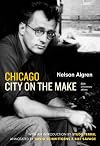
Published in 1951 this is a prose poem of 12000 words taking the city of Chicago as its subject. A city where the dollar has always been king and Algren's portrait of his hometown did not go down well with critics and editors. Times have changed and the initial scorn for the essay has now turned to something like admiration. Algren who grew up in a working class area of the city has an eye for the piquant: he tells of the colourful characters of its early history, the more notorious the show more better, he admires the energy, but decries the lack of humanity and culture. In his view Chicago is a city that seems to have gone backwards.
Chicago has progressed culturally from being the second city to being the second hand city
This is not the story of a city, you will not learn much of its history; it is a gaze and insiders gaze on what made the city that you would have found in 1951. Images and events run pell mell through its paragraphs, we learn of some infamous politicians, social climbers, hustlers of course, jazz musicians and baseball personalities, Hinky Dink Kempa and Bath House John from the early days and the working people of the city. It is best explained in Algrens own words:
'As well as the old soaks goats parts, backstreet brothels, unlit alleys and basement bars; for tavern traps and tenements, for all the pool room tigers in chequered caps, who've never seen a cow, and all the night club kittens who've never seen a cloud
For white lit show ups, dim lit lock ups, and the half lit hallway bedrooms, where the air along with the bed is stirred only by the passing of the Jackson Park express. For all our white walled asylums and all our dark walled courtrooms, overheated district stations, and disinfected charity wards, where the sunlight is always soiled and there are no holiday hours.
For hospitals, brothels prisons and such hells, where patronage comes up softly like a flower
For all the collerless wanderers of the horse and wagon alleys of home.
This sort of writing reminds me of the beat poets; Ginsburg Ferlinghetti perhaps. It is a roller coaster from start to finish;
Chicago isn't so much a city as it is a drafty hustlers junction in which to hustle awhile and move on out of the draft.
But Algren still claims to love his hometown, he certainly loves the White Socks baseball team, even though they were accused of accepting bribes to throw a world series, just par for the course in this city. but he say that once you become a part of this patch you will never love another.
I read the 1961 reprint in which Algren adds a long after word. He feels a need to make clear his views on racism and sexism in the city and also reflect a little on his essay that had upset so many important people in his hometown. It is certainly not a flattering portrait, but it is so full of life and energy that it almost tumbles off the pages. I thought it was excellent, but then I have never been to Chicago. 4 stars. show less
Chicago has progressed culturally from being the second city to being the second hand city
This is not the story of a city, you will not learn much of its history; it is a gaze and insiders gaze on what made the city that you would have found in 1951. Images and events run pell mell through its paragraphs, we learn of some infamous politicians, social climbers, hustlers of course, jazz musicians and baseball personalities, Hinky Dink Kempa and Bath House John from the early days and the working people of the city. It is best explained in Algrens own words:
'As well as the old soaks goats parts, backstreet brothels, unlit alleys and basement bars; for tavern traps and tenements, for all the pool room tigers in chequered caps, who've never seen a cow, and all the night club kittens who've never seen a cloud
For white lit show ups, dim lit lock ups, and the half lit hallway bedrooms, where the air along with the bed is stirred only by the passing of the Jackson Park express. For all our white walled asylums and all our dark walled courtrooms, overheated district stations, and disinfected charity wards, where the sunlight is always soiled and there are no holiday hours.
For hospitals, brothels prisons and such hells, where patronage comes up softly like a flower
For all the collerless wanderers of the horse and wagon alleys of home.
This sort of writing reminds me of the beat poets; Ginsburg Ferlinghetti perhaps. It is a roller coaster from start to finish;
Chicago isn't so much a city as it is a drafty hustlers junction in which to hustle awhile and move on out of the draft.
But Algren still claims to love his hometown, he certainly loves the White Socks baseball team, even though they were accused of accepting bribes to throw a world series, just par for the course in this city. but he say that once you become a part of this patch you will never love another.
I read the 1961 reprint in which Algren adds a long after word. He feels a need to make clear his views on racism and sexism in the city and also reflect a little on his essay that had upset so many important people in his hometown. It is certainly not a flattering portrait, but it is so full of life and energy that it almost tumbles off the pages. I thought it was excellent, but then I have never been to Chicago. 4 stars. show less

A Walk on the Wild Side - a great title for a book, great title for a film and a great title for a song (Lou Reed), but the book came first and I wonder how many people have read it. Of course it takes longer to read the book than to watch the film, but the song you can listen to in just 4mins and twelve seconds, so why bother with the book? The clue is in the title “A Walk on the Wild Side” its catchy it has that marvellous alliteration that runs right through the text and it encourages show more the prospective reader that there might be danger here; a danger that can safely be negotiated from the safety of your armchair, or your seat in the doctors waiting room, or your bench in the bus shelter.
Published in 1956 a year before Jack Kerouac’s On the Road it covers the same territory in that it is a rejection of the illusion of ‘the American Dream’; it looks at the underbelly of America, those trapped in poverty, in crime, in prostitution in one of the big cities, all through the eyes of a young man with plenty of youthful energy who is not afraid to get his hands dirty to get what he wants. Unlike the Beat generation of the 1950’s, whose protagonists were looking for kicks, Algren’s book is set in the early 1930’s, the years that heralded the great depression, when people were scrambling to keep alive. Dove Linkhorn is the main character and we pick him up in Arroyo a town in Texas, his father scratches a living emptying cess pools and spends his free time, when not drinking, as an itinerant preacher on the steps of the court house. He sees no reason to be sending Dove to school and Dove gains his education by hanging out with the hobo’s near the railroad tracks and listening to their stories. The illiterate 16 year old gets a job at the local cantina and has a brief affair with the Mexican Lady owner, who kicks him out after catching him stealing from the cash register. After adventures with a female runaway he hops a freight train to N’wawlins (New Orleans) and arrives in town barefoot in blue jeans with just some change in his pocket. He gets a bed in a run down flop with two older men; Fort and Luke and learns how to make a dollar through conniving semi-criminal enterprises. Door to door selling leads him to Oliver Finnerty’s brothel where he gets his big break as a stud breaking in young girls to a life of prostitution. Styling himself as Big Stingaree he moves into the brothel, a police raid lands him in jail and when he gets out, his quest to learn to read leads him to an affair with one of the girls in the brothel and when he absconds with her, he leaves himself open to recriminations.
Algren reworked older material to put together A Walk on the Wild Side, but you wouldn’t know this from reading the novel as it flows logically forward, but with hind sight you can pick out the various pieces that make up the novel. Young Dove growing up in Arroyo, his life as a young hobo, his work for a couple manufacturing condoms in their bungalow home, his six months in jail, but the largest chunk of the book is based in Oliver Finnerty’s brothel and Dock Dockery’s speakeasy that provides the cover. Algren spends 40 odd pages describing the characters and their way of life before Dove arrives at it’s door. Kerouac and the Beats tended to give impressions of the seamy side of life usually through first hand impressions in a new cool style of writing. Algren is more intent in rubbing our noses in it. He wants us to be moved by what we see and he is not averse to step in under the guise of one of his characters to tell us just what is wrong with the system, he stops short of preaching against the evils of capitalism and the differences between the haves and the have nots, but he leaves the reader no doubt as to where he stands. Algren seems to me to be a link between the more melodramatic style of Upton Sinclair’s The Jungle and the cooler clipped style of the Beats, but what makes Algren special is his own way of writing, which is a good marriage of style and content. An example from an early section of the book when young Dove is drawn to the hobos out by the railroad tracks:
“Dove felt the uneasy guilt go round them like the perfumed glove; it too had made the circle of homeless men.
Their home was ten thousand water towers, their home was any tin-can circle. Their home was down all lawless deeps where buffalo coloured box cars make their last stand in the West.
He saw their night fires burn and burn against the homeless heart, and felt he himself had gone West. That it had come to nothing then, and yet that he would go again.
Someone had done some cheating all right.”
Repetition, alliteration and word sound are as important as content, along with well used idioms that together give unique atmosphere to the scene, but there is more; there is social comment running all through this paragraph ending with “Someone had done some cheating all right” There are other stunning paragraphs and purple patches of writing throughout the novel, but Algren never loses sight of the tawdry meanness of some of his characters and their society. There is plenty of dialogue which Algren uses to highlight the social world of his character, they speak in homilies, they exaggerate, however they don’t often swear and sometimes the word play is a little too clever.
The dollar is king in Algren’s America; almost the first thing that characters say to each other when meeting is ‘Making any Money’. The richest, strongest and most unscrupulous are the ones that survive the hard times and they bear down on the weakest, their is little room for sentiment, but there is room for love and this can make people act out of character although coercion and force is the most usual method of operation. Algren’s world is an unedifying sight, but the way he manages to wrap it up in some inventive and radiant writing makes this a novel well worth reading. Five stars from me show less
Published in 1956 a year before Jack Kerouac’s On the Road it covers the same territory in that it is a rejection of the illusion of ‘the American Dream’; it looks at the underbelly of America, those trapped in poverty, in crime, in prostitution in one of the big cities, all through the eyes of a young man with plenty of youthful energy who is not afraid to get his hands dirty to get what he wants. Unlike the Beat generation of the 1950’s, whose protagonists were looking for kicks, Algren’s book is set in the early 1930’s, the years that heralded the great depression, when people were scrambling to keep alive. Dove Linkhorn is the main character and we pick him up in Arroyo a town in Texas, his father scratches a living emptying cess pools and spends his free time, when not drinking, as an itinerant preacher on the steps of the court house. He sees no reason to be sending Dove to school and Dove gains his education by hanging out with the hobo’s near the railroad tracks and listening to their stories. The illiterate 16 year old gets a job at the local cantina and has a brief affair with the Mexican Lady owner, who kicks him out after catching him stealing from the cash register. After adventures with a female runaway he hops a freight train to N’wawlins (New Orleans) and arrives in town barefoot in blue jeans with just some change in his pocket. He gets a bed in a run down flop with two older men; Fort and Luke and learns how to make a dollar through conniving semi-criminal enterprises. Door to door selling leads him to Oliver Finnerty’s brothel where he gets his big break as a stud breaking in young girls to a life of prostitution. Styling himself as Big Stingaree he moves into the brothel, a police raid lands him in jail and when he gets out, his quest to learn to read leads him to an affair with one of the girls in the brothel and when he absconds with her, he leaves himself open to recriminations.
Algren reworked older material to put together A Walk on the Wild Side, but you wouldn’t know this from reading the novel as it flows logically forward, but with hind sight you can pick out the various pieces that make up the novel. Young Dove growing up in Arroyo, his life as a young hobo, his work for a couple manufacturing condoms in their bungalow home, his six months in jail, but the largest chunk of the book is based in Oliver Finnerty’s brothel and Dock Dockery’s speakeasy that provides the cover. Algren spends 40 odd pages describing the characters and their way of life before Dove arrives at it’s door. Kerouac and the Beats tended to give impressions of the seamy side of life usually through first hand impressions in a new cool style of writing. Algren is more intent in rubbing our noses in it. He wants us to be moved by what we see and he is not averse to step in under the guise of one of his characters to tell us just what is wrong with the system, he stops short of preaching against the evils of capitalism and the differences between the haves and the have nots, but he leaves the reader no doubt as to where he stands. Algren seems to me to be a link between the more melodramatic style of Upton Sinclair’s The Jungle and the cooler clipped style of the Beats, but what makes Algren special is his own way of writing, which is a good marriage of style and content. An example from an early section of the book when young Dove is drawn to the hobos out by the railroad tracks:
“Dove felt the uneasy guilt go round them like the perfumed glove; it too had made the circle of homeless men.
Their home was ten thousand water towers, their home was any tin-can circle. Their home was down all lawless deeps where buffalo coloured box cars make their last stand in the West.
He saw their night fires burn and burn against the homeless heart, and felt he himself had gone West. That it had come to nothing then, and yet that he would go again.
Someone had done some cheating all right.”
Repetition, alliteration and word sound are as important as content, along with well used idioms that together give unique atmosphere to the scene, but there is more; there is social comment running all through this paragraph ending with “Someone had done some cheating all right” There are other stunning paragraphs and purple patches of writing throughout the novel, but Algren never loses sight of the tawdry meanness of some of his characters and their society. There is plenty of dialogue which Algren uses to highlight the social world of his character, they speak in homilies, they exaggerate, however they don’t often swear and sometimes the word play is a little too clever.
The dollar is king in Algren’s America; almost the first thing that characters say to each other when meeting is ‘Making any Money’. The richest, strongest and most unscrupulous are the ones that survive the hard times and they bear down on the weakest, their is little room for sentiment, but there is room for love and this can make people act out of character although coercion and force is the most usual method of operation. Algren’s world is an unedifying sight, but the way he manages to wrap it up in some inventive and radiant writing makes this a novel well worth reading. Five stars from me show less
The Man with the Golden Arm (50th Anniversary Edition): 50th Anniversary Critical Edition by Nelson Algren

It’s a powerful book, but it’ll take you on journeys not to be taken lightly. It will invite you to think about grifters and cons and “bummies” past, present, and future. It will make you sad and awaken your griefs, maybe offer a few new ones too.
There are many strands to my thinking about this book. One strand is: when I hear the cons and grifters in jail use their jail house law - little fragments of phrases they heard, little non sequiturs and inapposites- too narcissistic and show more too stupid to know how foolish they sound, so wrapped up in the conviction that no, it is they, the cons and grifters, who are the real victims, see - I realize that the political situation in the United States right now is what happens when the old school cons and grifters take charge of everything. That too is a grief, a deep one.
Another theme in the book is proximal guilt and trauma - the manner in which a police officer feels infected by his proximity to the hoods and cons - the manner in which he realizes “everybody is a habitual (offender) in his heart” - a universality of human experience, but not one that ennobles; rather, something tawdry and base.
So read this book and admire sone of the prose, forgive the occasional misstep, but be careful with it. show less
There are many strands to my thinking about this book. One strand is: when I hear the cons and grifters in jail use their jail house law - little fragments of phrases they heard, little non sequiturs and inapposites- too narcissistic and show more too stupid to know how foolish they sound, so wrapped up in the conviction that no, it is they, the cons and grifters, who are the real victims, see - I realize that the political situation in the United States right now is what happens when the old school cons and grifters take charge of everything. That too is a grief, a deep one.
Another theme in the book is proximal guilt and trauma - the manner in which a police officer feels infected by his proximity to the hoods and cons - the manner in which he realizes “everybody is a habitual (offender) in his heart” - a universality of human experience, but not one that ennobles; rather, something tawdry and base.
So read this book and admire sone of the prose, forgive the occasional misstep, but be careful with it. show less
The Man with the Golden Arm (50th Anniversary Edition): 50th Anniversary Critical Edition by Nelson Algren
The novel itself is wonderful. "We are all members of each other" seems to be the key. Low life Chicago. It's part of my family - my father grew up in Chicago; Polish was his first language. My cousin was a judge there, my uncles were fire fighters. A lot of the speech mannerisms captured by Algren in this book were used by my dad, mostly when he was in a nasty mood. This is the world he worked very hard to escape. He could never understand how I could fail to appreciate my good fortune in show more not being stuck back there.
I do think, reading a book like this, or walking through homeless camps etc., there but for the grace of God go I. Exactly how my middle class behavior helps to keep people stuck down at the bottom... I don't have any grand theories. I guess my best idea would be that social evolution is like species evolution. My body somehow keeps plodding along & it is not so easy to see why. These organisms are complicated beyond anyone's ability to comprehend. We can work out some of the major patterns.
This is a remarkable combination of sublime lyricism with total bleakness. Death of a Salesman, Revolutionary Road.. different worlds but similarly bleak. The lyricism is very effective at making the point: we are all members of each other. Our experiences are very similar in their depth and power. How we respond, what resources we have with which to respond, that varies enormously.
The critical essays at the end were excellent. I am no scholar of literature, but the essays seemed to cover a nice variety of responses & to augment the work itself very well. show less
I do think, reading a book like this, or walking through homeless camps etc., there but for the grace of God go I. Exactly how my middle class behavior helps to keep people stuck down at the bottom... I don't have any grand theories. I guess my best idea would be that social evolution is like species evolution. My body somehow keeps plodding along & it is not so easy to see why. These organisms are complicated beyond anyone's ability to comprehend. We can work out some of the major patterns.
This is a remarkable combination of sublime lyricism with total bleakness. Death of a Salesman, Revolutionary Road.. different worlds but similarly bleak. The lyricism is very effective at making the point: we are all members of each other. Our experiences are very similar in their depth and power. How we respond, what resources we have with which to respond, that varies enormously.
The critical essays at the end were excellent. I am no scholar of literature, but the essays seemed to cover a nice variety of responses & to augment the work itself very well. show less
Lists
Awards


You May Also Like


Associated Authors
Statistics
- Works
- 28
- Also by
- 34
- Members
- 3,391
- Popularity
- #7,519
- Rating
- 3.8
- Reviews
- 52
- ISBNs
- 158
- Languages
- 10
- Favorited
- 23
