
Sam R. Watkins (1829–1901)
Author of Co. Aytch: A Confederate Memoir of the Civil War
About the Author
Image credit: Civil War Preservation Trust
Works by Sam R. Watkins
Associated Works
The Civil War: The Second Year Told By Those Who Lived It (2012) — Contributor — 194 copies, 1 review
Tagged
Common Knowledge
- Legal name
- Watkins, Samuel Rush
- Birthdate
- 1829-06-26
- Date of death
- 1901-07-20
- Gender
- male
- Education
- Jackson College
- Occupations
- farmer
clerk
soldier
store owner - Short biography
- Samuel “Sam” Rush Watkins was a noted Confederate soldier during the American Civil War. He is known today for his memoir Company Aytch: Or, a Side Show of the Big Show, often heralded as one of the best primary sources about the common soldier's Civil War experience.
- Nationality
- USA
- Birthplace
- Columbia, Maury County, Tennessee, USA
- Places of residence
- Columbia, Tennessee, USA
- Place of death
- Maury County, Tennessee, USA
- Burial location
- Zion Churchyard, Columbia, Tennessee, USA
- Associated Place (for map)
- Tennessee, USA
Members
Reviews
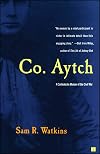
Watkins wrote this book near his death in his eighties, long after he fought with the confederate army of the tennesee through four years and all of it's major campaigns. As you read the book he continues to remind you that he is no writer and no historian and if you want the facts thats who you should talk to, this is just how he saw it.
Quickly the reader comes to see that for these very reasons this account offers something that no historian ever could. We hear about him foraging for a show more bite to eat as the army starves, he seems to remember the chickens he found and the girls he met more fondly than the battlefield victories he took part in. We hear about him stuck in inclimate weather with no shelter and how many find their deaths this way. In a very hokey country boy sort of way Watkins manages to magnify the civil war experience to that of the single anonymous private trudging in the ranks. Trials and tribulations that most of us would never consider come to the forefront. His recolections of combat are shocking and grotesque in their simplicity.
If you were going to read one book on the subject of the American Civil War, and one only, this would be a good one to pick up. It's short and to the point never bothering to paint the big picture but telling us more about the war than any multi-volume study has ever managed. READ IT!
(This can also be found under the title "A Sideshow of the Big Show" I think it's original title.) show less
Quickly the reader comes to see that for these very reasons this account offers something that no historian ever could. We hear about him foraging for a show more bite to eat as the army starves, he seems to remember the chickens he found and the girls he met more fondly than the battlefield victories he took part in. We hear about him stuck in inclimate weather with no shelter and how many find their deaths this way. In a very hokey country boy sort of way Watkins manages to magnify the civil war experience to that of the single anonymous private trudging in the ranks. Trials and tribulations that most of us would never consider come to the forefront. His recolections of combat are shocking and grotesque in their simplicity.
If you were going to read one book on the subject of the American Civil War, and one only, this would be a good one to pick up. It's short and to the point never bothering to paint the big picture but telling us more about the war than any multi-volume study has ever managed. READ IT!
(This can also be found under the title "A Sideshow of the Big Show" I think it's original title.) show less
Co. Aytch: The Classic Memoir of the Civil War by a Confederate Soldier (Library Edition) by Sam R. Watkins
A darn good reading of the memoirs of the confederate soldier Sam Watkins of the 1st Tennessee. One of the more famous book of remembrance of the war, written (and ultimately in this case listened to) eloquently and simply that coveys the thoughts and feeling s of the common soldier during that horrible war. Made more famous by Ken Burn's Civil War series, Mr. Watkins book is one that should be read or listened to by any and all who would like to get away from the academic side of the topic show more and get into the nitty gritty of what it was really like as a soldier for the southern side of things. This specific edition was read well enough by Pat Bottino, if I were to nit pick, I would have picked someone who had a bit more of a southern accent to do justice to the author and the topic. A four out of five for sure and would recommend to anyone who has interest in history. show less

I'd never heard of Company Aytch before stumbling upon it at LibriVox performed by one of my favorite narrators, Winston Tharp. I'm glad I listened to it since it translates well to audio, Tharp has a natural gift that brings back alive this old southern raconteur's conversational memoir. At times it seemed like a modernist or post-modernist work but really it was just Sam rebelling convention. The most interesting of course is the private's view of the war and I was amazed at how brutal show more Confederate soldiers were treated by top commanders and other petty acts on down the line. Sam saw a lot of death and details graphically brains slopping out into food plates, etc.. terrible but he remains lighthearted. Great memoir from any war this is a classic that has been widely quoted. show less
A well-written, very articulate memoir of the Civil War written 20 years later by a private in the Confederate Army of Tennessee.
While Watkins constantly claims to write about only what he saw as a common solider, leaving the overall accounts of batttles, such as how fought and casualties to the history books, he does more than record what he observed. His account is laced with sarcasm towards many of the officers of the Confederate army, and his judgement of Braxton Bragg is extremely harsh show more (with, it would seem, good reason). He, like just about all others in the Army of Tennessee, loved Joe Johnston who took over from Bragg after Ringgold Gap. Watkins' claim that the Army of Tnenessee was never defeated under Johnston and that it "whipped" the Yankees every time is simply not true; he calls Sherman a coward for outflanking rather than attacking Johnston's entrenched positions. Johnston refused to fight and constantly retreated rather than give battle where he could have; in most other cases, Sherman, rather than attack well-fortified positions (one of the very few Union or Confedeate generals who saw the stupidity of such atttacks) , outflanked Johnston and forced retreats.
When writing about the beginning of the war, Watkins recalls the excitement, the bands playing, the women waving their handkercheifs and cheering, the hope and expectations of the confederate army. Throughout, his account is laced with humor over litttle events and pastimes in the soldiers' lives, such as the time during the siege of Chattanooga when Watkins and a few others took Walter Hood, another member of Company H, out "a larking". The game was to take an inexperienced recruit out on a nasty, rainy night with an empty meal bag, and then have him stand in as cramped a position as possible near some undergrowth with the open meal bag; meantime, the others would supposedly go off to drive larks into the waiting bag. Of course, the others went off to get a night's sleep and a good laugh!
But there were other, grimmer times. Watkins records not one but a number of times when Bragg, under the name of discipline, had soldiers shot on one pretext or another; Watkins constantly comments that the sight made him sick and that Bragg did it just to exert his tyranny over the army. Meanwhile, conditions in the army were deteriorating to the point of near-starvation because of lack of rations. One reason why the soldiers loved Johnston was that when he took over, he saw to it that the men were fed regularly.
Watkins' account gets increasingly bitter as the army retreated to Atlanta. He records the nearly instant deterioration of the army when Johnston was relieved by Hood. There is very little humor in his account from that point to the surrender of the Army of Tennesee, by Johnston to Sherman, on April 26, 1865. His memory of the battle of Franklin, where Hood's incompentency destroyed the Army of Tennessee is so painful that he can not write of the battle itself--he can only describe the horror of the dead and dying, of the blood and bodies riddled with bullets. Nashville was but the coup de grace.
Of the original 120 men of Company H at the start of the war, Watkins was one of only 7 to survive and relatively intact; he did not suffer any major wound. He was unbelievably lucky. He survived to marry his sweetheart and produce a crowd of "young 'rebels' clustering around my knees and bumping my elbows". He indulged himself in the Lost Cause syndrome and never really lost his bitterness towards the victorious Federals. He agonized over the death of so many comrades, but as was true of almost all his contemporaries, he had a strong belief in God, and that carrried him through with the hope that he will see them all again in Heaven.
But we are lucky that he chose to write these memoirs. In no other account have I ever run across such graphic details of the carnage of the war. For example, in writing of the death of Lt. John Whittaker, Watkins writes:
"...Lieutenant John Whitaker, then in command of Company H, and myself were sitting down eating breakfast out of the same tin plate. We were sopping gravy out with some cold corn bread, when Captain W.C. Flournoy, of the Martin Guards, hallooed out, 'Look out, Sam; look! look!' I just turned my head, and in turning, the cannon ball knocked my hat off, and striking Lieutenant Whittaker full in the side of he head, carried away the whole of his skull part, leaving only the face. His brains fell in the plate from which we were sopping, and his head fell in my lap, deluging my face and clothes with his blood."
His epilogue is one of the best pieces I have ever read on what it was like to have taken part in such a struggle and survive into the relative peace of two decades later. It's prose poetry, as, in his imagination, "I am young again tonight. I feel the flush and vigor of my manhood....I hear the fife and drum playing dixie and Bonnie Blue Flag...I see our fair and beautiful women waving their handkerchiefs and encouraging their sweethearts to go to the war". He continues to see the gathering of the armies, the banners, the "cry everywhere, 'To arms, to arms!' " He sees a rich and prosperous country. Then come scenes in his memory of the early victories--but right after that comes the scenes of carnage, of "broken homes and broken hearts".
But then he asks himself--did I really see this, or was I dreaming? Did it really happen? as he looks out over a now-peaceful land. Then "But hush! I now hear the approach of battle. That low rumbling sound in the west is the roar of cannon in the distance..and listen! that loud report that makes the earth tremble and jar and sway, is but the burst of a shell, as it screams through the dark, tempestuous night. That black ebon cloud, where the lurid lightning flickers and flares, that is rolling through the heavens, is the smoke of battle; beneath is being enacted a carnage of blood and death." The war was real.
But "The tale is told. The world moves on....and the scene melts and gradually disappears forever."
A brilliant work. show less
While Watkins constantly claims to write about only what he saw as a common solider, leaving the overall accounts of batttles, such as how fought and casualties to the history books, he does more than record what he observed. His account is laced with sarcasm towards many of the officers of the Confederate army, and his judgement of Braxton Bragg is extremely harsh show more (with, it would seem, good reason). He, like just about all others in the Army of Tennessee, loved Joe Johnston who took over from Bragg after Ringgold Gap. Watkins' claim that the Army of Tnenessee was never defeated under Johnston and that it "whipped" the Yankees every time is simply not true; he calls Sherman a coward for outflanking rather than attacking Johnston's entrenched positions. Johnston refused to fight and constantly retreated rather than give battle where he could have; in most other cases, Sherman, rather than attack well-fortified positions (one of the very few Union or Confedeate generals who saw the stupidity of such atttacks) , outflanked Johnston and forced retreats.
When writing about the beginning of the war, Watkins recalls the excitement, the bands playing, the women waving their handkercheifs and cheering, the hope and expectations of the confederate army. Throughout, his account is laced with humor over litttle events and pastimes in the soldiers' lives, such as the time during the siege of Chattanooga when Watkins and a few others took Walter Hood, another member of Company H, out "a larking". The game was to take an inexperienced recruit out on a nasty, rainy night with an empty meal bag, and then have him stand in as cramped a position as possible near some undergrowth with the open meal bag; meantime, the others would supposedly go off to drive larks into the waiting bag. Of course, the others went off to get a night's sleep and a good laugh!
But there were other, grimmer times. Watkins records not one but a number of times when Bragg, under the name of discipline, had soldiers shot on one pretext or another; Watkins constantly comments that the sight made him sick and that Bragg did it just to exert his tyranny over the army. Meanwhile, conditions in the army were deteriorating to the point of near-starvation because of lack of rations. One reason why the soldiers loved Johnston was that when he took over, he saw to it that the men were fed regularly.
Watkins' account gets increasingly bitter as the army retreated to Atlanta. He records the nearly instant deterioration of the army when Johnston was relieved by Hood. There is very little humor in his account from that point to the surrender of the Army of Tennesee, by Johnston to Sherman, on April 26, 1865. His memory of the battle of Franklin, where Hood's incompentency destroyed the Army of Tennessee is so painful that he can not write of the battle itself--he can only describe the horror of the dead and dying, of the blood and bodies riddled with bullets. Nashville was but the coup de grace.
Of the original 120 men of Company H at the start of the war, Watkins was one of only 7 to survive and relatively intact; he did not suffer any major wound. He was unbelievably lucky. He survived to marry his sweetheart and produce a crowd of "young 'rebels' clustering around my knees and bumping my elbows". He indulged himself in the Lost Cause syndrome and never really lost his bitterness towards the victorious Federals. He agonized over the death of so many comrades, but as was true of almost all his contemporaries, he had a strong belief in God, and that carrried him through with the hope that he will see them all again in Heaven.
But we are lucky that he chose to write these memoirs. In no other account have I ever run across such graphic details of the carnage of the war. For example, in writing of the death of Lt. John Whittaker, Watkins writes:
"...Lieutenant John Whitaker, then in command of Company H, and myself were sitting down eating breakfast out of the same tin plate. We were sopping gravy out with some cold corn bread, when Captain W.C. Flournoy, of the Martin Guards, hallooed out, 'Look out, Sam; look! look!' I just turned my head, and in turning, the cannon ball knocked my hat off, and striking Lieutenant Whittaker full in the side of he head, carried away the whole of his skull part, leaving only the face. His brains fell in the plate from which we were sopping, and his head fell in my lap, deluging my face and clothes with his blood."
His epilogue is one of the best pieces I have ever read on what it was like to have taken part in such a struggle and survive into the relative peace of two decades later. It's prose poetry, as, in his imagination, "I am young again tonight. I feel the flush and vigor of my manhood....I hear the fife and drum playing dixie and Bonnie Blue Flag...I see our fair and beautiful women waving their handkerchiefs and encouraging their sweethearts to go to the war". He continues to see the gathering of the armies, the banners, the "cry everywhere, 'To arms, to arms!' " He sees a rich and prosperous country. Then come scenes in his memory of the early victories--but right after that comes the scenes of carnage, of "broken homes and broken hearts".
But then he asks himself--did I really see this, or was I dreaming? Did it really happen? as he looks out over a now-peaceful land. Then "But hush! I now hear the approach of battle. That low rumbling sound in the west is the roar of cannon in the distance..and listen! that loud report that makes the earth tremble and jar and sway, is but the burst of a shell, as it screams through the dark, tempestuous night. That black ebon cloud, where the lurid lightning flickers and flares, that is rolling through the heavens, is the smoke of battle; beneath is being enacted a carnage of blood and death." The war was real.
But "The tale is told. The world moves on....and the scene melts and gradually disappears forever."
A brilliant work. show less
Lists
You May Also Like


Associated Authors
Statistics
- Works
- 3
- Also by
- 1
- Members
- 1,004
- Popularity
- #25,689
- Rating
- 4.1
- Reviews
- 17
- ISBNs
- 55