
Bernhard Bischoff (1906–1991)
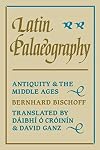
Author of Latin Palaeography: Antiquity and the Middle Ages
About the Author
Works by Bernhard Bischoff
Associated Works
The study of incunables : problems and aims (1924) — Introduction, some editions — 5 copies, 1 review
Karl der Grosse: Werk und Wirkung [Ausstellung] — Contributor — 3 copies
Grundbuchdokumentation und Grundbuchmanipulation in der fruheren DDR (Vermogensrechtliche Reihe) (German Edition) (1993) — Contributor — 1 copy
Tagged
Common Knowledge
- Birthdate
- 1906-12-20
- Date of death
- 1991-09-17
- Gender
- male
- Awards and honors
- Honorary Doctorate, Oxford University (1963)
- Nationality
- Germany
- Birthplace
- Altendorf
- Place of death
- Munich, Germany
- Map Location
- Germany
Members
Reviews
http://nhw.livejournal.com/975558.html
This book is not a popular introduction, but a scholarly overview of the subject, and so it's a surprisingly good read, especially when you consider it was originally written in German.
The book starts with an overview of what was written and how - the shift from scroll to codex (a codex being what we normally refer to as a "book"); the shift from papyrus to parchment/vellum to paper; different inks; other things that were written on, like the ubiquitous show more but ephemeral wax tablets. Fascinating stuff about what has survived and what hasn't; a personal letter from the bishop of London to the Archbishop of Canterbury, for instance, written in about 704.
Then the middle section, which is the must substantial and technical, on the spread of different styles of Latin handwriting, staring in Ireland and Britain and then concentrating on Germany, France and Italy, with excursions to Scandinavia, and the Czechs get a look-in too, as do the Mozarabs, a group one doesn't often hear much about. Not a lot of concentration on individual letters, more on general style issues and how they tie in with politics - Charlemagne is of course a very big figure here, the only person whose name is commemorated in a style of writing. But he also looks at the evolution of shorthand, and the abbreviations which are the biggest headache in palaeography (explaining why there is no real standard), and briefly looks at the evolution of the numbers.
For me, that last point was always the weirdest. Although in the documents I used to look at, the numbers 0,1,2,3,6,8 and 9 were normally tolerably recognisable, 4, 5 and 7 were not, and it was easy to mistake an early "5" for a modern "4" if reading quickly.
Apparently the man we have to thank for this is Gerbert of Aurillac, whose contribution to Western culture and the history of science deserves to be much better known.
The final section looks rather briefly at the manuscript as a cultural artifact, and while interesting enough could have done with a bit of contextualisation with other cultural artifacts. In fact, that is my biggest complaint about the book generally, that as a monograph on a pretty technical topic, admittedly written for the specialist, knowledge of a lot of the context is assumed. Most seriously, lots of places are mentioned, but there are no maps; I would have appreciated some sense of the geographical as well as intellectual connections between Corbie and Luxeuil, for instance.
Anyway, the business end of this is only 220 pages, so despite the density of the subject matter it is a quick read, and often intriguing for the glimpses we get of individual scribes and patrons who helped to shape the letters we read today. My favourite sentence:
"Nevertheless, in the ninth century, Danila, the scribe of the three-columned bible of La Cava, mastered capitalis, uncial, half-uncial, a slanting half-uncial with uncial admixture, and minuscule, all with equal elegance." (p. 99) show less
This book is not a popular introduction, but a scholarly overview of the subject, and so it's a surprisingly good read, especially when you consider it was originally written in German.
The book starts with an overview of what was written and how - the shift from scroll to codex (a codex being what we normally refer to as a "book"); the shift from papyrus to parchment/vellum to paper; different inks; other things that were written on, like the ubiquitous show more but ephemeral wax tablets. Fascinating stuff about what has survived and what hasn't; a personal letter from the bishop of London to the Archbishop of Canterbury, for instance, written in about 704.
Then the middle section, which is the must substantial and technical, on the spread of different styles of Latin handwriting, staring in Ireland and Britain and then concentrating on Germany, France and Italy, with excursions to Scandinavia, and the Czechs get a look-in too, as do the Mozarabs, a group one doesn't often hear much about. Not a lot of concentration on individual letters, more on general style issues and how they tie in with politics - Charlemagne is of course a very big figure here, the only person whose name is commemorated in a style of writing. But he also looks at the evolution of shorthand, and the abbreviations which are the biggest headache in palaeography (explaining why there is no real standard), and briefly looks at the evolution of the numbers.
For me, that last point was always the weirdest. Although in the documents I used to look at, the numbers 0,1,2,3,6,8 and 9 were normally tolerably recognisable, 4, 5 and 7 were not, and it was easy to mistake an early "5" for a modern "4" if reading quickly.
Apparently the man we have to thank for this is Gerbert of Aurillac, whose contribution to Western culture and the history of science deserves to be much better known.
The final section looks rather briefly at the manuscript as a cultural artifact, and while interesting enough could have done with a bit of contextualisation with other cultural artifacts. In fact, that is my biggest complaint about the book generally, that as a monograph on a pretty technical topic, admittedly written for the specialist, knowledge of a lot of the context is assumed. Most seriously, lots of places are mentioned, but there are no maps; I would have appreciated some sense of the geographical as well as intellectual connections between Corbie and Luxeuil, for instance.
Anyway, the business end of this is only 220 pages, so despite the density of the subject matter it is a quick read, and often intriguing for the glimpses we get of individual scribes and patrons who helped to shape the letters we read today. My favourite sentence:
"Nevertheless, in the ninth century, Danila, the scribe of the three-columned bible of La Cava, mastered capitalis, uncial, half-uncial, a slanting half-uncial with uncial admixture, and minuscule, all with equal elegance." (p. 99) show less
Tedious to read, but absolutely vital for any detailed study of paleography.
Lists
Awards

You May Also Like


Associated Authors
Statistics
- Works
- 10
- Also by
- 3
- Members
- 398
- Popularity
- #60,945
- Rating
- 4.0
- Reviews
- 3
- ISBNs
- 18
- Languages
- 4