
Jean-Louis Curtis (1917–1995)
Author of The Forests of the Night
About the Author
Image credit: academie-francaise.fr
Works by Jean-Louis Curtis
Associated Works
Tagged
Common Knowledge
- Other names
- Laffitte, Louis
- Birthdate
- 1917-05-22
- Date of death
- 1995-11-11
- Gender
- male
- Education
- Agrégation d'anglais (1943)
Université de la Sorbonne
Université de Bordeaux (Lettres)
Lycée d'Orthez, Pyrénées-Atlantiques - Occupations
- Professeur (Anglais)
Traducteur (Anglais, Français)
Romancier - Organizations
- Académie française (1986)
- Awards and honors
- Grand Prix de Littérature de l'Académie française (1972)
- Nationality
- France
- Birthplace
- Orthez, Pyrénées-Atlantiques, Nouvelle-Aquitaine, France
- Place of death
- 13e arrondissement, Paris, Île-de-France, France
- Map Location
- France
- Associated Place (for map)
- France
Members
Reviews
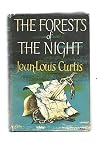
The last third of the book saved it. Long paragraphs w prosaic but unnecessary description told the story of life in occupied France. A much more ambivalent populace under the Germans than ususally decribed. This rocked-the-boat in a France recovering from the occupation. Many shades of gray. The last third was almost gripping. Some great lines and sense of place descriptions.

The Forests of the Night won the Prix Goncourt in 1947, probably France's most prestigious literary award. The story takes place during WWII on the homefront of occupied France, set in the small town of Saint-Clar near the Pyrenees. It opens in 1942 when the Resistance began in earnest, concluding in 1946. Stylistically the writing is straightforward and easy to read, Curtis was not a stylist, like Balzac his strength is in depicting society through a multitude of character portraits.
The show more Forests of the Night is historically important as the first post-war novel to question the myth that France was a nation of resistors, the idea that only a few bad apples were collaborators and that most everyone else resisted or at least objected to the German occupation. This issue wasn't openly resolved in French society until the 1970's, after many of the people involved in the events had passed away, so the novel was ahead of its time by daring to critically show what France was really like under the Germans, the good and the bad. Curtis' paints "acid portraits" of those who were apathetic, self-serving, unpatriotic and merely playing at being resistors. The novel is best read today for its historical content because it brings alive everything we read in history books. As entertainment, it is not bad, but something of a period piece. The story is believable and even exciting at times, but Curtis spends a lot of space atomizing certain French character types and classes that can seem tedious and opaque today. Still, it's an important document written just after the war describing the many faceted and complex French relationships with the Germans - as a social criticism, it's the best type of novel.
It was first published in English in 1950 (1951 US) and has been out of print since, probably very few English readers have heard of it. Curtis wrote dozens of novels over his lifetime and was very popular in France. This is critically his best, according to Martin Seymour-Smith.
--Review by Stephen Balbach, via CoolReading (c) 2008 cc-by-nd show less
The show more Forests of the Night is historically important as the first post-war novel to question the myth that France was a nation of resistors, the idea that only a few bad apples were collaborators and that most everyone else resisted or at least objected to the German occupation. This issue wasn't openly resolved in French society until the 1970's, after many of the people involved in the events had passed away, so the novel was ahead of its time by daring to critically show what France was really like under the Germans, the good and the bad. Curtis' paints "acid portraits" of those who were apathetic, self-serving, unpatriotic and merely playing at being resistors. The novel is best read today for its historical content because it brings alive everything we read in history books. As entertainment, it is not bad, but something of a period piece. The story is believable and even exciting at times, but Curtis spends a lot of space atomizing certain French character types and classes that can seem tedious and opaque today. Still, it's an important document written just after the war describing the many faceted and complex French relationships with the Germans - as a social criticism, it's the best type of novel.
It was first published in English in 1950 (1951 US) and has been out of print since, probably very few English readers have heard of it. Curtis wrote dozens of novels over his lifetime and was very popular in France. This is critically his best, according to Martin Seymour-Smith.
--Review by Stephen Balbach, via CoolReading (c) 2008 cc-by-nd show less
Le mouvement du récit, la justesse des personnages et des dialogues, l'émotion des vies perdues, la manière cruelle dont l'homme de quarante ans se voit exclu des fêtes de la jeunesse fait du roman, l'une des plus perspicaces chroniques de la sensibilité contemporaine.
Oct 28, 2015French
Awards


You May Also Like
Associated Authors
Statistics
- Works
- 30
- Also by
- 4
- Members
- 140
- Popularity
- #146,472
- Rating
- 3.7
- Reviews
- 3
- ISBNs
- 31
- Languages
- 1