
Linda Granfield
Author of In Flanders Fields: The Story of the Poem by John McCrae
About the Author
Linda Granfield is an award-winning author of over twenty nonfiction titles for young readers. She lives in Toronto, Canada, but still votes in her home state of Massachusetts. Steve Bjorkman has illustrated over seventy books for children. He lives and votes in Irvine, California.
Image credit: Linda Granfield
Works by Linda Granfield
I Remember Korea: Veterans Tell Their Stories of the Korean War, 1950-53 (2004) 39 copies, 2 reviews
Postcards 3 copies
This Little Piggy! 1 copy
Associated Works
Tagged
Common Knowledge
- Canonical name
- Granfield, Linda
- Birthdate
- 1950-11-22
- Gender
- female
- Education
- Northeastern University (MA)
University of Toronto
Salem State College (BA|1972)
University of Oxford - Occupations
- assistant children's librarian
book reviewer (Quill & Quire)
children's book author - Organizations
- International Board on Books for Young People—Canada,
Writers' Union of Canada
Canadian Society of Children's Authors, Illustrators, and Performers
Canadian Children's Book Centre
Friends of the Osborne Collection, Toronto Public Library
Pier 21 Society (show all 8)
International Reading Association
Society of Children's Book Writers and Illustrators - Awards and honors
- Vicky Metcalf award
- Short biography
- Linda Granfield is the award-winning author of nearly twenty-five nonfiction titles for young readers. Granfield’s writing brings history to life with such works as In Flanders Fields: The Story of the Poem by John McCrae, High Flight: A Story of World War II, and the acclaimed Amazing Grace: The Story of the Hymn. Linda Granfield grew up in a big family north of Boston, Massachusetts, and now makes her home in Toronto.
- Nationality
- Canada
- Places of residence
- Boston, Massachusetts, USA
Oxford, Oxfordshire, England, UK
Toronto, Ontario, Canada
Members
Reviews
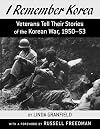
“I remember Korea” is a collection of short stories as told by the Korean War (1950-1953) veterans from USA and Canada. It also includes a map of Korea, chain of events at the beginning of each chapter, an overall timeline at the end of the book, glossary of military terms used, as well as an interesting introduction, foreword and afterword describing the background and aftermath of the conflict. I found this memoir to be really well written and the stories chosen for the book are truly show more interesting, some heartbreaking and some heartwarming, and most of all showing the different sides of a war, different aspects of any conflict. I had both tears in my eyes and a smile on my face while reading it. I would recommend it to all interested in war stories as well as in current affairs, as a background book for the ongoing North Korean issue. show less
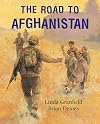
I was expecting a lot more from this picture book for older children. It is the story of a modern-day Canadian Forces soldier injured in Afghanistan by an IED. The actual identity of the soldier and the nature of the injury are not revealed until the end. This is a surprise and one of the book's positive features.
The Road to Afghanistan is also the story of soldiering in the generations of one Canadian family. The narrator's great-grandfather, a farm-boy from Alberta, went off to the Great show more War, a grandfather fought the good fight in the least morally ambiguous of recent wars: World War II, and now the soldier has returned from Afghanistan, forced by injury to take a new road in life.
Don't get me wrong: the bare bones of a good story are here. However, the author skirts around a modern day soldier's motivations for joining the military at all. The soldier/narrator says that the reasons for enlisting are "a story in themselves"--a tantalizing, but unsatisfactory aside to the reader. From what a number of military people have told me, it seems that many join when young and at loose ends. Wouldn't it have been interesting if Granfield had explored an idea like this with kids?! Instead we have yet another story of a sacrifice made--and for what?
I can't help reading any war-themed book for children (or adults for that matter) without thinking of eminent Jungian psychologist James Hillman's remark "Ah war...how we love it." It just wouldn't go on if we didn't love it. In his book A Terrible Love of War, Hillman describes how war provides people with a sense of moral clarity and purpose--a sense of the heroic. Until something else can fill that psychological need, I suspect it'll just go on and on.
The Road to Afghanistan could have been a good deal better if the author had had the courage to reveal something of the young soldier's (possibly confused reasons) for joining up.
Having said all of this, this book might be a good discussion starter in a Canadian upper elementary classroom. No doubt it will be read in all kinds of Canadian classrooms right before Remembrance Day. And so it goes.
I should add that I'm a big admirer of Granfield's other nonfiction works on Canada's role in the big wars of the last century. I feel, however, that she missed the mark here. I hope she tries another fiction piece for kids that will actually address some of the thornier issues show less
The Road to Afghanistan is also the story of soldiering in the generations of one Canadian family. The narrator's great-grandfather, a farm-boy from Alberta, went off to the Great show more War, a grandfather fought the good fight in the least morally ambiguous of recent wars: World War II, and now the soldier has returned from Afghanistan, forced by injury to take a new road in life.
Don't get me wrong: the bare bones of a good story are here. However, the author skirts around a modern day soldier's motivations for joining the military at all. The soldier/narrator says that the reasons for enlisting are "a story in themselves"--a tantalizing, but unsatisfactory aside to the reader. From what a number of military people have told me, it seems that many join when young and at loose ends. Wouldn't it have been interesting if Granfield had explored an idea like this with kids?! Instead we have yet another story of a sacrifice made--and for what?
I can't help reading any war-themed book for children (or adults for that matter) without thinking of eminent Jungian psychologist James Hillman's remark "Ah war...how we love it." It just wouldn't go on if we didn't love it. In his book A Terrible Love of War, Hillman describes how war provides people with a sense of moral clarity and purpose--a sense of the heroic. Until something else can fill that psychological need, I suspect it'll just go on and on.
The Road to Afghanistan could have been a good deal better if the author had had the courage to reveal something of the young soldier's (possibly confused reasons) for joining up.
Having said all of this, this book might be a good discussion starter in a Canadian upper elementary classroom. No doubt it will be read in all kinds of Canadian classrooms right before Remembrance Day. And so it goes.
I should add that I'm a big admirer of Granfield's other nonfiction works on Canada's role in the big wars of the last century. I feel, however, that she missed the mark here. I hope she tries another fiction piece for kids that will actually address some of the thornier issues show less

This book tells the story of the famous WW1 poem, "In Flanders Fields." It contains the poem text, illustrated competently by Janet Wilson. Interspersed with the picture book is information on John McCrae, how he came to write the poem, and what happened to him afterwards. My only criticism of the book is the editorial decision to break up the poem with the biographical content. Otherwise, it's an excellent elementary level WW1 resource.
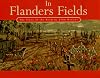
Shaking my head at the library's decision to discard again. Wow. This was so well done. I learned the following stuff from this book that I should have learned in either public school or college:
* About the origins of the poem "In Flanders Fields" (to which I hadn't even been exposed; can you believe it?) and its impact.
* About poppies and their connection to WWI (NEVER KNEW)
* An important date to remember...why don't we remember?
* Everyday issues of a soldier in WWI
* Warfare stuff I cared show more little about, but think is interesting now that I've learned it.
I feel that this is really important history, a matter of cultural literacy at the very least, and I feel compelled to pass this along.
This stunningly illustrated and well-written book ends with "Lest we forget." Man...we really did forget. Mission accomplished McCrae, Granfield, and Wilson. Fortunately, I predict that this is just right for my jr. high kids, so the message won't end here. Thank you. show less
* About the origins of the poem "In Flanders Fields" (to which I hadn't even been exposed; can you believe it?) and its impact.
* About poppies and their connection to WWI (NEVER KNEW)
* An important date to remember...why don't we remember?
* Everyday issues of a soldier in WWI
* Warfare stuff I cared show more little about, but think is interesting now that I've learned it.
I feel that this is really important history, a matter of cultural literacy at the very least, and I feel compelled to pass this along.
This stunningly illustrated and well-written book ends with "Lest we forget." Man...we really did forget. Mission accomplished McCrae, Granfield, and Wilson. Fortunately, I predict that this is just right for my jr. high kids, so the message won't end here. Thank you. show less
Lists
Awards


You May Also Like


Associated Authors
Statistics
- Works
- 29
- Also by
- 2
- Members
- 1,859
- Popularity
- #13,846
- Rating
- 3.9
- Reviews
- 22
- ISBNs
- 98
- Languages
- 3
