
Anthony Ham
Author of Lonely Planet : Norway
Works by Anthony Ham
Associated Works
Tagged
Common Knowledge
- Birthdate
- 20th Century
- Gender
- male
- Education
- University of Melbourne
- Occupations
- travel writer
photographer - Nationality
- Australia
- Places of residence
- Madrid, Spain
Melbourne, Australia - Associated Place (for map)
- Australia
Members
Reviews

I grew up with zoos and circuses that always had lions and with the Serengeti documentaries of lions running in the savanna. I had known for a long time that this had wrapped up my perception of the king of animals in multiple ways so Anthony Ham's book sounded like something that may help change that. And it did.
A travel writer and a photographer, he had spent a lot of time chasing the stories in this book. There are 5 chapters, almost unconnected (although later in the book, there are show more some comparisons that tie things a bit), it tells the stories of 5 areas and the human/lion interactions and relationship there.
For centuries, lions and humans had lived together in Africa - almost never peacefully but together. And then humans started expanding into places they never lived before, expecting lions and the rest of the wild life to just move. Things don't work exactly like that and as most of the tales in this book show, lions don't really understand boundaries. Some of those stories are hard to read because bad things happen to lions, some are hard to read because bad things happen to people. But the underlying story is always the same - lions are lions and short of killing them, they will be lions. And from the looks of it, we are doing a pretty good job of killing them.
The book takes us to 5 countries (Kenya, Tanzania, Zambia, Zimbabwe and Botswana) and to 6 National Parks and Game Preserves (Amboseli National Park, Selous Game Preserve, Liuwa Plan National Park, Hwange National Park, Central Kalahari Game Preserve and Khutse Game Preserve respectively - the last two are both in Botswana). Different countries, different conditions, different people... similar issues and problems. Hunters want to kill lions, governments want money and corruption thrives and lions don't understand border and boundaries and if gives a chance, will kill human. The stories are personal - the author was there for all of them, often returning for followups and they could have been a series in a magazine somewhere. Collected together, they trace the inevitability of civilization. Some of the stories made me wonder just who came up with that - a game reserve separated from a national part by a railroad for example - on one side you can kill a lion, on the other he is protected. My favorite one was the author's trip in the Kalahari, looking for the lions.
Because of how the book is built, each chapter is different - depending on how involved the author was with the story and at what stage, some were about things he was told, some were about things he lived through - most of the chapters contain parts of both. He also makes a point not to include Serengeti - it is a well known story. But he also makes a point that what worked there does not work elsewhere - just like people, lions are different and their surroundings shape them.
If you like nature, you will probably like this book. If you want to learn more about lions, you will like this book. If you want to learn more about the history of humans and lions in the area, you will find a lot to like here. If you like reading articles about wild life in magazines, you will like this book. I suspect that most people will like this book. It may be too late for a wake up call and restoring Nature completely but maybe, just maybe, at least in some areas, we may be able to protect the wild life. Maybe... show less
A travel writer and a photographer, he had spent a lot of time chasing the stories in this book. There are 5 chapters, almost unconnected (although later in the book, there are show more some comparisons that tie things a bit), it tells the stories of 5 areas and the human/lion interactions and relationship there.
For centuries, lions and humans had lived together in Africa - almost never peacefully but together. And then humans started expanding into places they never lived before, expecting lions and the rest of the wild life to just move. Things don't work exactly like that and as most of the tales in this book show, lions don't really understand boundaries. Some of those stories are hard to read because bad things happen to lions, some are hard to read because bad things happen to people. But the underlying story is always the same - lions are lions and short of killing them, they will be lions. And from the looks of it, we are doing a pretty good job of killing them.
The book takes us to 5 countries (Kenya, Tanzania, Zambia, Zimbabwe and Botswana) and to 6 National Parks and Game Preserves (Amboseli National Park, Selous Game Preserve, Liuwa Plan National Park, Hwange National Park, Central Kalahari Game Preserve and Khutse Game Preserve respectively - the last two are both in Botswana). Different countries, different conditions, different people... similar issues and problems. Hunters want to kill lions, governments want money and corruption thrives and lions don't understand border and boundaries and if gives a chance, will kill human. The stories are personal - the author was there for all of them, often returning for followups and they could have been a series in a magazine somewhere. Collected together, they trace the inevitability of civilization. Some of the stories made me wonder just who came up with that - a game reserve separated from a national part by a railroad for example - on one side you can kill a lion, on the other he is protected. My favorite one was the author's trip in the Kalahari, looking for the lions.
Because of how the book is built, each chapter is different - depending on how involved the author was with the story and at what stage, some were about things he was told, some were about things he lived through - most of the chapters contain parts of both. He also makes a point not to include Serengeti - it is a well known story. But he also makes a point that what worked there does not work elsewhere - just like people, lions are different and their surroundings shape them.
If you like nature, you will probably like this book. If you want to learn more about lions, you will like this book. If you want to learn more about the history of humans and lions in the area, you will find a lot to like here. If you like reading articles about wild life in magazines, you will like this book. I suspect that most people will like this book. It may be too late for a wake up call and restoring Nature completely but maybe, just maybe, at least in some areas, we may be able to protect the wild life. Maybe... show less
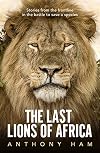
In The Last Lions of Africa Anthony Ham explores the various factors that have contributed to the decline of this apex predator and the many challenges faced by those trying to save them.
The book is comprised of five insightful essays, each focussing on a different aspect of the struggle and/or lion region in Africa. My favourite amongst these the story of a lone lioness that developed an unusual bond with a wildlife ranger.
Ham marries well his journalistic approach to investigating the show more drivers of change and interpreting information gleaned from experts with his own passionate interest in the subject matter.
He offers readers a remarkably balanced assessment of historical and recent events, from lion pride behaviour through to political game-playing and urban sprawl. For example, he does not downplay economic imperatives, nor does he sugarcoat the first-hand experiences of those that have lasting injuries or witnessed loved ones dragged from their beds and consumed by lions. And, while not particularly palatable, he considers the conservationists’ theoretical argument that trophy-hunting could actually be the key to the lion species’ survival. Continue reading: https://www.bookloverbookreviews.com/2020/08/the-last-lions-of-africa-by-anthony... show less
The book is comprised of five insightful essays, each focussing on a different aspect of the struggle and/or lion region in Africa. My favourite amongst these the story of a lone lioness that developed an unusual bond with a wildlife ranger.
Ham marries well his journalistic approach to investigating the show more drivers of change and interpreting information gleaned from experts with his own passionate interest in the subject matter.
He offers readers a remarkably balanced assessment of historical and recent events, from lion pride behaviour through to political game-playing and urban sprawl. For example, he does not downplay economic imperatives, nor does he sugarcoat the first-hand experiences of those that have lasting injuries or witnessed loved ones dragged from their beds and consumed by lions. And, while not particularly palatable, he considers the conservationists’ theoretical argument that trophy-hunting could actually be the key to the lion species’ survival. Continue reading: https://www.bookloverbookreviews.com/2020/08/the-last-lions-of-africa-by-anthony... show less
Very much enjoyed Anthony Hams tales of his encounters with lions and local tribesmen in different parks in Africa. Learned a lot about lion behaviour and habitats especially how they cohabitate with local tribes.
A lot of great information in this book.
A lot of great information in this book.

This guide has a broad scope, covering the "Middle East", as of 2019. It is good for an overview for those thinking about visiting the area, perhaps to decide what particular places to visit. It tends to focus on the entry level/basic needs traveller, as opposed to the middle to high end one, and the selection of hotels, restaurants and modes of travel reflects that orientation. It's worth a read either in trip planning or for a quick study of the area.
Awards

You May Also Like


Associated Authors
Statistics
- Works
- 53
- Also by
- 3
- Members
- 1,181
- Popularity
- #21,763
- Rating
- 3.7
- Reviews
- 13
- ISBNs
- 183
- Languages
- 6