
Linda Simon (1) (1946–)
Author of The Biography of Alice B. Toklas
For other authors named Linda Simon, see the disambiguation page.
About the Author
Image credit: via goodreads
Works by Linda Simon
Associated Works
Tagged
Common Knowledge
- Birthdate
- 1946-12-12
- Gender
- female
Members
Reviews
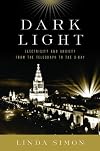
Though the book without the end notes is only 299 pages, I read it very slowly over the several weeks and really enjoyed it. The book was well-researched, interesting, and entertaining. I also loved its massive bibliography.
When I started the book, I'd just been reading about all the worries of 5G technology... Reading that the Victorians were worried the lightbulb would make them blind, I wondered if our fears would come to nothing as well. I finished the book during the first week of show more America's COVID-19 crisis and felt like I could reread the whole thing with a totally different perspective.
I enjoyed learning about Frank Mesmer---from which the term "mesmerize" came. Reading about the crazy uses for magnets (which I put no faith in, by the way) reminded me of our elderly high school Spanish teacher (probably with Jesus for awhile now) who would do home demonstrations with the magnetic socks, arm bands, etc. she was selling as a side job in the 90s. So funny.
It was neat to read that these early inventors admired the teachings of 18th c. scientist Michael Faraday as my 13-year-old daughter is reading his lectures on the chemical history of a candle now.
I thought the chapters on hypnotism were the most interesting, though I don't believe in it for a minute. Ha! I don't think Dickens' wife was being "passively hypnotised". He was a cheater and she knew it and probably did whatever she could to get his attention.
Lots of funny stuff... Wacky Victorian fiction featuring creepy uses for electricity (reviving the dead, reanimating severed body parts, etc). Oh, and x-rays as entertainment! Yikes! Several interesting-sounding Victorian era books were mentioned---I'll have to see what I can find.
Overall, it was a great read and I'm happy I spent the time. show less
When I started the book, I'd just been reading about all the worries of 5G technology... Reading that the Victorians were worried the lightbulb would make them blind, I wondered if our fears would come to nothing as well. I finished the book during the first week of show more America's COVID-19 crisis and felt like I could reread the whole thing with a totally different perspective.
I enjoyed learning about Frank Mesmer---from which the term "mesmerize" came. Reading about the crazy uses for magnets (which I put no faith in, by the way) reminded me of our elderly high school Spanish teacher (probably with Jesus for awhile now) who would do home demonstrations with the magnetic socks, arm bands, etc. she was selling as a side job in the 90s. So funny.
It was neat to read that these early inventors admired the teachings of 18th c. scientist Michael Faraday as my 13-year-old daughter is reading his lectures on the chemical history of a candle now.
I thought the chapters on hypnotism were the most interesting, though I don't believe in it for a minute. Ha! I don't think Dickens' wife was being "passively hypnotised". He was a cheater and she knew it and probably did whatever she could to get his attention.
Lots of funny stuff... Wacky Victorian fiction featuring creepy uses for electricity (reviving the dead, reanimating severed body parts, etc). Oh, and x-rays as entertainment! Yikes! Several interesting-sounding Victorian era books were mentioned---I'll have to see what I can find.
Overall, it was a great read and I'm happy I spent the time. show less
Not exactly what I expected, but interesting nevertheless. Publisher’s blurbs suggested this would be a book about irrational resistance to the introduction of electricity due to pseudoscientific beliefs, and I was looking forward to numerous anecdotes of absurd fears that could be hurled in the faces of neoLuddites. There is some of that; the author, Linda Simon, does cite a few 19th century letters to the editor (no blogs then) claiming that the telegraph could be used to read people’s show more minds, that electricity would “leak out” of wires, that electric lights would cause blindness, or that there was only so much electricity in the world and using it to power light bulbs would inevitably drain it out of human bodies and make our nerves stop working. However much I’d like it be, the author’s paradox of widespread use of electricity for medical purposes contrasted against widespread resistance to its use in the home isn’t really supported. From her own text, it seems like resistance to electricity in the home was much more due to economics than fear. Before Tesla and the polyphase transformer, if you wanted electricity in your home, you had to be wealthy enough to continuously replace expensive batteries or have your own dynamo in the basement.
However, there is quite a case developed for irrational fear about the psychological effects of electrification, rather than the physical effects, and this is intriguing in light of similar beliefs expressed nowadays - that the world is moving “too fast” and causing stress-related illness. Similar fears were expressed about the telegraph - that excitable people would be overwhelmed by a constant flood of news and go dingbats.
The 19th century name for this was “neurasthenia” and one of the means proposed to cure it was, surprisingly, electricity. A large section of the book is devoted to a biography of Dr. George Beard, who described himself as an “electrician” - not in the sense of being able to correctly wire a three-way outlet, but being able to cure things with electricity. The catalog of curable things reads a lot like the things that can be cured by homeopathy - headaches, depression, anxiety, fatigue, insomnia. (To be fair, “electricians” also discovered that they could cure constipation by correctly applied electrodes. Also, ladies praised electro therapy as a cure for “female problems”; in some cases the electricity was applied to the naked or scantily clothed patient with an “electrified glove”. Ahem.)
(Aside: I’m sometimes intrigued by the way seemingly unrelated books connect serendipitously. Ms. Simon notes that the predecessor to electricity as a mysterious healing force was magnetism, and cites the 18th century practitioner James Graham, who cured various things with his “Celestial Bed”, which was underlain by a layer of magnets. One of the attractions of the “Celestial Bed” was the presence of attractive young ladies in negligee, who assisted the sufferer in receiving the full benefit of “animal magnetism”. As it happens, I earlier read a biography of Perdita (Mary Robinson) who was one of the magnetic young ladies at one stage in her career.)
Another good chunk of the book is a biography of Thomas Edison. I’m not quite sure where Ms. Simon intended to go with this; although Edison is more or less the patron saint of electricity, she doesn’t really develop his life in the context of public resistance to electrification. Edison did receive some opprobrium in the press when his electric light didn’t mature quite as fast as he promised (possibly leading to the famous definition in The Devil’s Dictionary) :
”The power that causes all natural phenomena not known to be caused by something else. ... Electricity seems destined to play a most important part in the arts and industries. The question of its economical application to some purposes is still unsettled, but experiment has already proved that it will propel a street car better than a gas jet and give more light than a horse.”
However, to a lot of people Edison was “the Wizard of Menlo Park” and could do no wrong, even becoming the hero of contemporary science fiction stories: Edison’s Conquest of Mars and Tomorrow’s Eve. Ms. Simon references the later as an example of the (then) somewhat scandalous overtones of electricity; in the story, Edison (not explicitly by name, but clearly who the author intended) invents what’s essentially (although in the 19th century this had to be handled circumspectly) an electric sex doll for a wealthy British nobleman (presumably as a triumphant improvement over the earlier coal-fired sex dolls, which had repeated problems with having their ashes hauled). See Edison's Eve.
The book concludes with a brief (because it’s confined to the 19th century) discussion of the X-ray. There’s an interesting inversion of some of the responses to electricity - nobody had the slightest qualms about potential dangers and people flocked to have themselves X-rayed for the amusement value, until things began to happen that weren’t very amusing.
All in all, the book’s biggest problem is lack of focus. Although all the individual sections are interesting, they read more like a collection of essays than an integrated book. Nonetheless, I’ll go with three and a half stars. show less
However, there is quite a case developed for irrational fear about the psychological effects of electrification, rather than the physical effects, and this is intriguing in light of similar beliefs expressed nowadays - that the world is moving “too fast” and causing stress-related illness. Similar fears were expressed about the telegraph - that excitable people would be overwhelmed by a constant flood of news and go dingbats.
The 19th century name for this was “neurasthenia” and one of the means proposed to cure it was, surprisingly, electricity. A large section of the book is devoted to a biography of Dr. George Beard, who described himself as an “electrician” - not in the sense of being able to correctly wire a three-way outlet, but being able to cure things with electricity. The catalog of curable things reads a lot like the things that can be cured by homeopathy - headaches, depression, anxiety, fatigue, insomnia. (To be fair, “electricians” also discovered that they could cure constipation by correctly applied electrodes. Also, ladies praised electro therapy as a cure for “female problems”; in some cases the electricity was applied to the naked or scantily clothed patient with an “electrified glove”. Ahem.)
(Aside: I’m sometimes intrigued by the way seemingly unrelated books connect serendipitously. Ms. Simon notes that the predecessor to electricity as a mysterious healing force was magnetism, and cites the 18th century practitioner James Graham, who cured various things with his “Celestial Bed”, which was underlain by a layer of magnets. One of the attractions of the “Celestial Bed” was the presence of attractive young ladies in negligee, who assisted the sufferer in receiving the full benefit of “animal magnetism”. As it happens, I earlier read a biography of Perdita (Mary Robinson) who was one of the magnetic young ladies at one stage in her career.)
Another good chunk of the book is a biography of Thomas Edison. I’m not quite sure where Ms. Simon intended to go with this; although Edison is more or less the patron saint of electricity, she doesn’t really develop his life in the context of public resistance to electrification. Edison did receive some opprobrium in the press when his electric light didn’t mature quite as fast as he promised (possibly leading to the famous definition in The Devil’s Dictionary) :
”The power that causes all natural phenomena not known to be caused by something else. ... Electricity seems destined to play a most important part in the arts and industries. The question of its economical application to some purposes is still unsettled, but experiment has already proved that it will propel a street car better than a gas jet and give more light than a horse.”
However, to a lot of people Edison was “the Wizard of Menlo Park” and could do no wrong, even becoming the hero of contemporary science fiction stories: Edison’s Conquest of Mars and Tomorrow’s Eve. Ms. Simon references the later as an example of the (then) somewhat scandalous overtones of electricity; in the story, Edison (not explicitly by name, but clearly who the author intended) invents what’s essentially (although in the 19th century this had to be handled circumspectly) an electric sex doll for a wealthy British nobleman (presumably as a triumphant improvement over the earlier coal-fired sex dolls, which had repeated problems with having their ashes hauled). See Edison's Eve.
The book concludes with a brief (because it’s confined to the 19th century) discussion of the X-ray. There’s an interesting inversion of some of the responses to electricity - nobody had the slightest qualms about potential dangers and people flocked to have themselves X-rayed for the amusement value, until things began to happen that weren’t very amusing.
All in all, the book’s biggest problem is lack of focus. Although all the individual sections are interesting, they read more like a collection of essays than an integrated book. Nonetheless, I’ll go with three and a half stars. show less
It is quite difficult to summarize this sprawl, but a place to start would be that it summarizes Americans' fraught relationship with electricity and the many inventions which eventuated therefrom during the nineteenth century. The first third of the book is a straightforward account of the career of Thomas A. Edison and the laboratory and many inventions which resulted, together with a look at his public image as it changed over the decades. Then the author takes us offroad as she proceeds show more to relate how ambivalent the nation was about adoption of the new technologies; they were slow to be adopted and their advent came with many an overwrought projection of the edenic progress or the disaster-prone hellscape which might ensue, sometimes interspersed with outright confusion as to what benefit they would afford to daily life.. All of this is continually linked to the period's propensity to looking at larger consequences which lurked in the twilight zone of the period where religion, metaphysics, pseudoscience, quackery, and the fringes of legitimate medicine met to give us such now-dated concepts as neurasthenia, mesmerism, Walt Whitman's Body Electric, reincarnation,spirit messaging, and many more. These were wildly popular not only with the common man; it's not easy to think of any of the century's public intellectuals who didn't exhibit a certain buyin or at least interest in these concepts. 'All of this is interspersed with liberal dollops of literary criticism (she's an English professor, after all). Some of these are interesting and instructive; most are not. Other than that I enjoyed the book and it gave me a lot to think about. show less
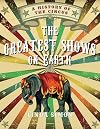
I would imagine it's difficult to write a strictly-chronological history of the circus because there are so many different facets that developed along different timelines. As such, Simon breaks out a variety of facets into individual histories. The roots of the circus as an equestrian showcase, The Greatest Shows on Earth, acrobats, animals, clowns, tricks & performances, and human oddities. Other reviewers have noted the abundance of names Simon mentions along the way, and I agree that show more those can get in the way of a strong narrative throughline for each of the chapters. Instead, the book reads in two ways.
First, it feels like a book researched and written by a scholar for a more general audience. If this is the case, I think Simon can't help herself but drop the names of minor historical figures she ran across as part of her research. This tendency is probably out of respect for the value and quality of her source material (which I can appreciate), but it really bogs down any narrative momentum she manages to generate.
The other way to read this book is as a starter text for people who want a light, historical overview of different facets of the circus. For instance, I came to this book wanting to learn more about circus clowns. The info was pretty good, but Simon seems stuck between covering several different influential clowns and offering us a more thorough description/analysis of any given performer. That's pretty common for a text meant as an introduction to a topic, so I don't see it as a flaw.
My biggest disappointment with this book is that I was hoping Simon might pay more attention to the everyday lives of the circus performers. There's virtually none of that. Again, I don't think that was ever Simon's intent, so it's not a flaw.
Overall, a good introduction to circus history with decent coverage of different elements that make up the spectacle of the circus. show less
First, it feels like a book researched and written by a scholar for a more general audience. If this is the case, I think Simon can't help herself but drop the names of minor historical figures she ran across as part of her research. This tendency is probably out of respect for the value and quality of her source material (which I can appreciate), but it really bogs down any narrative momentum she manages to generate.
The other way to read this book is as a starter text for people who want a light, historical overview of different facets of the circus. For instance, I came to this book wanting to learn more about circus clowns. The info was pretty good, but Simon seems stuck between covering several different influential clowns and offering us a more thorough description/analysis of any given performer. That's pretty common for a text meant as an introduction to a topic, so I don't see it as a flaw.
My biggest disappointment with this book is that I was hoping Simon might pay more attention to the everyday lives of the circus performers. There's virtually none of that. Again, I don't think that was ever Simon's intent, so it's not a flaw.
Overall, a good introduction to circus history with decent coverage of different elements that make up the spectacle of the circus. show less
Lists
You May Also Like
Associated Authors
Statistics
- Works
- 10
- Also by
- 1
- Members
- 463
- Popularity
- #53,108
- Rating
- 3.6
- Reviews
- 9
- ISBNs
- 34