
Jackson Lears
Author of Rebirth of a Nation: The Making of Modern America, 1877-1920
About the Author
Jackson Lears is Board of Governors Professor of History at Rutgers University and the editor of Raritan: A Quarterly Review. The author of Fables of Abundance (winner of the Los Angeles Times Book Prize for history), Something for Nothing, and No Place of Grace, Lears writes for The New York show more Times, The Washington Post, and The New Republic. He lives in western New Jersey. show less
Image credit: Center for American Progress
Works by Jackson Lears
No Place of Grace: Antimodernism and the Transformation of American Culture, 1880-1920 (1981) 287 copies, 1 review
Fables Of Abundance: A Cultural History Of Advertising In America (1994) — Author — 184 copies, 3 reviews
The Culture of Consumption: Critical Essays in American History 1880-1980 (1983) — Editor — 58 copies
Conjurers, Cranks, Provincials, and Antediluvians: The Off-Modern in American History (2024) 6 copies
Raritan — Editor — 4 copies
Raritan Volume 25, Number 2 3 copies
Raritan — Editor — 2 copies
Fables of Abundance 1 copy
Raritan (XXIV:3) — Editor — 1 copy
Raritan (XXV: 1) — Editor — 1 copy
Associated Works
Tagged
Common Knowledge
- Canonical name
- Lears, Jackson
- Legal name
- Lears, T. J. Jackson
- Birthdate
- 1947-07-26
- Gender
- male
- Education
- University of Virginia (B.A.)
University of North Carolina, Chapel Hill (M.A.)
Yale University (Ph.D.) - Occupations
- professor
historian - Organizations
- Rutgers University
- Awards and honors
- American Academy of Arts & Sciences (2009)
Los Angeles Times Book Award in History (1995) - Nationality
- USA
- Map Location
- USA
Members
Reviews
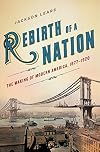
The cover is a photo of a span bridge under construction, and I suspect that the book designer had read the book and realized that it, like the bridge, had two or three really strong points but was otherwise more or less dangling, disconnected bits and pieces.
I was primed to love this: I needed to read something about the time period anyway; Lears throws in quotes by people I love but historians usually don't touch (e.g., the Henrys Adams and James); he's no averse to actually, like, trying show more to tell you what happened (rather than banging on about contingency and the deeply individualistic sufferings of short-sighted workers in the Pimlinail factory of Northern Workerville's easter district in the third week of March, 1875) and he's open to the fact that you need to theorize in order to explain what happened. And yet.
The obvious problem that faces a historiographer, particularly if you're seeking a wider audience, is that you probably don't think writing according to chronology is possible. Prohibition needs a narrative different from the narrative that Militarism needs, even if they're connected; so maybe you have thematic chapters? And then, of course, you end up repeating yourself over and over and over... as Lears does.
The obvious problem is that you're probably too intelligent to write a simple Great Man story about what the Presidents were doing during this time period, so you choose a theme: here, the trope of rebirth or regeneration of self/nation/humankind. Great theme. But how exactly do you expound your theme while still giving enough detail? Well, I sure as heck wouldn't want to try. Lears fails at it. He dutifully re-states his theme at the start and end of every chapter, but in between there's very little indication that the facts and stories he tells are connected by this theme, and if so, how, why we should care, and how it all hangs together. If you think the U.S. during this time period is best understood as Regeneration Nation, you need to explain why.
So without chronology or coherent theme to connect the chapters, or the sections, or the paragraphs, the book comes out, I fear, like a big miscellany. It has a *great* bibliographical essay at the end, but that's probably the best thing about the book. Better written than your standard history? On a sentence level, yes. But sentences make paragraphs, which make sections, which make chapters. And having all of them hang together is also a part of good writing. show less
I was primed to love this: I needed to read something about the time period anyway; Lears throws in quotes by people I love but historians usually don't touch (e.g., the Henrys Adams and James); he's no averse to actually, like, trying show more to tell you what happened (rather than banging on about contingency and the deeply individualistic sufferings of short-sighted workers in the Pimlinail factory of Northern Workerville's easter district in the third week of March, 1875) and he's open to the fact that you need to theorize in order to explain what happened. And yet.
The obvious problem that faces a historiographer, particularly if you're seeking a wider audience, is that you probably don't think writing according to chronology is possible. Prohibition needs a narrative different from the narrative that Militarism needs, even if they're connected; so maybe you have thematic chapters? And then, of course, you end up repeating yourself over and over and over... as Lears does.
The obvious problem is that you're probably too intelligent to write a simple Great Man story about what the Presidents were doing during this time period, so you choose a theme: here, the trope of rebirth or regeneration of self/nation/humankind. Great theme. But how exactly do you expound your theme while still giving enough detail? Well, I sure as heck wouldn't want to try. Lears fails at it. He dutifully re-states his theme at the start and end of every chapter, but in between there's very little indication that the facts and stories he tells are connected by this theme, and if so, how, why we should care, and how it all hangs together. If you think the U.S. during this time period is best understood as Regeneration Nation, you need to explain why.
So without chronology or coherent theme to connect the chapters, or the sections, or the paragraphs, the book comes out, I fear, like a big miscellany. It has a *great* bibliographical essay at the end, but that's probably the best thing about the book. Better written than your standard history? On a sentence level, yes. But sentences make paragraphs, which make sections, which make chapters. And having all of them hang together is also a part of good writing. show less
No Place of Grace: Antimodernism and the Transformation of American Culture 1880-1920 by Jackson Lears

Acquired this book from a remainder house some decades ago; finally read as a follow-up to Peter Williams’ Religion, Art, and Money, which covers a similar period in American history and mentions Lears’ book. Basically a soft Freudian approach to understanding the apparent contradictions of the period: the nostalgia for Mediaeval art and culture combined with increasing individualism and the decline of religion as a source of meaning and purpose in society. The phrase “modern show more superego” appears on practically every page; the word “neurasthenia” is regularly used, apparently intended as a real diagnosis; and the quest for cultural authority is frequently described as “therapeutic.” The last two chapters put a number of representative figures on the couch, notably Henry Adams, and carry out a more systematic analysis of their Oedipal issues in a fashion that seems parodic at this date. I was interested to note that while Williams identifies some of the relevant figures as homosexual, with the implication that this is/was widely known, the subject does not arise even once in Lears’ book, although the conflict between the “masculine” and the “feminine” sides of many of those who contributed to the Antimodernist movement is discussed at length.
I assume the fact that the book remains in print despite its reliance on largely-abandoned Freudian explanations for social phenomena reflects the interest which the period continues to hold for readers and scholars, and the wide-ranging research Lears presents on the subject. Extensive notes and bibliography. show less
I assume the fact that the book remains in print despite its reliance on largely-abandoned Freudian explanations for social phenomena reflects the interest which the period continues to hold for readers and scholars, and the wide-ranging research Lears presents on the subject. Extensive notes and bibliography. show less

Jackson Lears’ “Something for Nothing” is an interesting and thought-provoking work written in the vein of social and cultural history, much like his “No Place of Grace,” now some thirty years old. It looks at a wide swath of subjects from gambling, the rise of the market, and various Native American and slave folk traditions related to chance and luck.
According to Lears, two contradictory forces have always been at the heart of American experience: that of the speculative show more confidence man who has his eye on “main chance rather than moral imperative” and the other which “exalts a disciplined self-made man whose success comes through the careful cultivation of Protestant values” (p. 3). He calls these two instincts the “culture of chance” and “culture of control” respectively. Even though the growth of Protestantism and especially Puritanism damaged a vernacular culture of luck (by trying to impose a Providential reason and rationality upon it, instead of allowing for the free flow of play embodied by Fortuna), the split between the elite idea that Providence was superior and the more popular, demotic idea of divination persisted throughout the culture. Lears looks at the cultural importations of African slaves and Indians that created complex social relations with whites. As John Greenleaf Whittier asked rhetorically in 1847 “Is it not strange that the desire to lift the great veil of the mystery before us should overcome, in some degree, our peculiar and most republican prejudice against color, and reconcile us to the necessity of looking at Futurity through a black medium?”
By the late eighteenth century, luck had become less providential and more secularized, and the idea that “misfortune fell upon the worthy as on the licentious” became more widespread. This is related to the American idea of secular reinvention, or as Martin Buber put it, “the grace of beginning again and ever again.” But as chance was secularized, it was simultaneously driven into the underbelly of society. There were gentlemen who took pride in their flirtation with luck for luck’s sake, while sharpers (that is, swindlers, gamblers, and confidence men) would cheat the game for a dollar. The bourgeois ethic of what Lears calls “evangelical rationality” demonized gambling, thereby giving rise to the “masculinity of moderation” and the domestication of gambling.
The last couple of chapters cover the increasing trends in Taylorism and bureaucratic rationality that Lears claims were always at odds with the cultural idioms of chance and fortune; still another covers how various thinkers, artists, and musicians used these ideas during the rise of Modernism. While Lears clearly roots on the side of chance for the entire book, he is intellectually honest enough to admit that neither side has definitely won a victory. In fact, our age, much like any other, might be ruled by the uneasy co-rule of both luck and control.
Lears is a superb historian and a professor at Rutgers who has gained considerable mastery over his sources; the body of scholarship that he draws from is impressive. However, the one major complaint I have about the book is that some of it is very repetitive: it seems like the idea of “luck versus control” pops up over and over again, sometimes with so little variation that it doesn’t really need recapitulation. This makes the first two-thirds of the book move very slowly, even though the last third picks up, though this may just have been because of the shift toward cultural toward a more narrow kind of intellectual history.
A note on my rating: for someone only passingly interested in this kind of history, I would only give it three stars; for someone with a less casual interest, I think it deserves another star. Most people will probably not enjoy this as beach reading; it’s not a popular history that the cover might have you think it is. However, if you’re interested in the topic, Lears handles it with a scholarly, thorough care that he has fostered throughout his career. show less
According to Lears, two contradictory forces have always been at the heart of American experience: that of the speculative show more confidence man who has his eye on “main chance rather than moral imperative” and the other which “exalts a disciplined self-made man whose success comes through the careful cultivation of Protestant values” (p. 3). He calls these two instincts the “culture of chance” and “culture of control” respectively. Even though the growth of Protestantism and especially Puritanism damaged a vernacular culture of luck (by trying to impose a Providential reason and rationality upon it, instead of allowing for the free flow of play embodied by Fortuna), the split between the elite idea that Providence was superior and the more popular, demotic idea of divination persisted throughout the culture. Lears looks at the cultural importations of African slaves and Indians that created complex social relations with whites. As John Greenleaf Whittier asked rhetorically in 1847 “Is it not strange that the desire to lift the great veil of the mystery before us should overcome, in some degree, our peculiar and most republican prejudice against color, and reconcile us to the necessity of looking at Futurity through a black medium?”
By the late eighteenth century, luck had become less providential and more secularized, and the idea that “misfortune fell upon the worthy as on the licentious” became more widespread. This is related to the American idea of secular reinvention, or as Martin Buber put it, “the grace of beginning again and ever again.” But as chance was secularized, it was simultaneously driven into the underbelly of society. There were gentlemen who took pride in their flirtation with luck for luck’s sake, while sharpers (that is, swindlers, gamblers, and confidence men) would cheat the game for a dollar. The bourgeois ethic of what Lears calls “evangelical rationality” demonized gambling, thereby giving rise to the “masculinity of moderation” and the domestication of gambling.
The last couple of chapters cover the increasing trends in Taylorism and bureaucratic rationality that Lears claims were always at odds with the cultural idioms of chance and fortune; still another covers how various thinkers, artists, and musicians used these ideas during the rise of Modernism. While Lears clearly roots on the side of chance for the entire book, he is intellectually honest enough to admit that neither side has definitely won a victory. In fact, our age, much like any other, might be ruled by the uneasy co-rule of both luck and control.
Lears is a superb historian and a professor at Rutgers who has gained considerable mastery over his sources; the body of scholarship that he draws from is impressive. However, the one major complaint I have about the book is that some of it is very repetitive: it seems like the idea of “luck versus control” pops up over and over again, sometimes with so little variation that it doesn’t really need recapitulation. This makes the first two-thirds of the book move very slowly, even though the last third picks up, though this may just have been because of the shift toward cultural toward a more narrow kind of intellectual history.
A note on my rating: for someone only passingly interested in this kind of history, I would only give it three stars; for someone with a less casual interest, I think it deserves another star. Most people will probably not enjoy this as beach reading; it’s not a popular history that the cover might have you think it is. However, if you’re interested in the topic, Lears handles it with a scholarly, thorough care that he has fostered throughout his career. show less
Lears' book on 'the making of modern America' was very disappointing, whereas this was fabulous. As a caveat, I think it's fabulous because it was not only exactly what I wanted (a history of advertising tied to the culture of early to mid twentieth century America told from a vaguely Frankfurt Schoolish perspective), but also suggested something to me that I'd never considered, which was utterly engaging (the relationship between advertising and literary/artistic modernism--whether they show more were at war or at peace). Lears shows, pretty convincingly, how advertising played off and created distinctions between authenticity and deception, tradition and progress, objects and lifestyles and so on. And his forays into literary criticism are surprisingly good. It helps that he devotes a few pages to William Gaddis' 'The Recognitions,' which I think is probably my favorite novel of the twentieth century.
That said, there are a few problems. His very self-consciously 'bricolage' approach is often frustrating, because there's no way to get a sense of historical change. But this helps explain why this book was so engaging, whereas 'Rebirth of a Nation' was such a dud. You can be a bricoleur when writing about modernism & advertising, because the field is so restricted. A bricoleur's history of America, on the other hand, is a pretty sure-fire disaster.
As a side note, I just discovered that there's a 'Bricoleur Capital Management' company. Weird. show less
That said, there are a few problems. His very self-consciously 'bricolage' approach is often frustrating, because there's no way to get a sense of historical change. But this helps explain why this book was so engaging, whereas 'Rebirth of a Nation' was such a dud. You can be a bricoleur when writing about modernism & advertising, because the field is so restricted. A bricoleur's history of America, on the other hand, is a pretty sure-fire disaster.
As a side note, I just discovered that there's a 'Bricoleur Capital Management' company. Weird. show less
Lists
Awards


You May Also Like


Associated Authors
Statistics
- Works
- 27
- Also by
- 1
- Members
- 1,173
- Popularity
- #21,938
- Rating
- 3.6
- Reviews
- 9
- ISBNs
- 29
- Favorited
- 1