
Antoinette May
Author of Pilate's Wife
About the Author
Works by Antoinette May
Adventures of a Psychic: A Fascinating and Inspiring True-Life Story of One of America's Most Successful Clairvoyants (1990) 285 copies, 3 reviews
Haunted Houses of California: A Ghostly Guide to Haunted Houses and Wandering Spirits (1990) 107 copies, 2 reviews
Celle qui voulut sauver Jésus 2 copies
Associated Works
Tagged
Common Knowledge
Members
Reviews
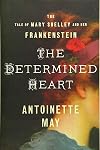
I first read Frankenstein in college. It was for a class in popular fiction from pre-Victorian times onward. Of course, prior to actually reading it, I was pretty certain I knew all about the tale, so ingrained it is in our own pop culture collective. So it was fascinating to see that it was so very different from what I had thought. And as a physical manifestation of a terrifying and desperate mental state, it was that much scarier than I ever expected. Between Frankenstein and Dracula, it show more was a rough semester for me. But if it was hard to read the novel because of the nightmares it inspired, I remained completely fascinated by Mary Shelley and the origins of the book. The Determined Heart, Antoinette May's fictionalization of Mary Shelley's personal life and how it contributed to her creation of her dark monster, is an engrossing read that fleshes out what I already knew about the author and her tale.
Mary Shelley, daughter of the famous and notorious Mary Wollstonecraft and philosopher William Godwin, was intelligent, strong, determined, and destined to write. Although her mother died only days after her birth, young Mary is raised to know her as an amazing, progressive woman, at least until her father remarries. Her stepmother dislikes Mary and her older half-sister, Fanny, and makes Mary's life unpleasant, denying her many things that she claims are too expensive. She supplies these same denied things to her own daughter, Claire, despite the impoverished state of the Godwin family. Mary's growing up years are very much a Cinderella story, with her father loathe to anger his wife by supporting his intelligent daughter. After the family moves to London, setting up their press on a squalid street, William Godwin finds a potential investor in the young Percy Bysshe Shelly. His introduction of Bysshe into their home changes everything. Fanny, Mary, and Claire all fall for the young poet, despite the fact that he is married. He, in turn, falls for Mary, convincing her to elope with him to Europe after her father's enraged denial of their love despite his famous scorn for traditional marriage. They leave behind an apoplectic Godwin, Bysshe's pregnant wife, and his young daughter.
But it's not just Bysshe and Mary heading to the Continent, Mary's scheming stepsister Claire accompanies them as well. Their actions provoke a scandal but Bysshe and Mary are in love and determined to weather anything. Their life together is one of penury and hardship, constant moving, and tragedy after tragedy. Bysshe is continually unfaithful, even having an affair with Claire, and he comes across as needy and selfish. Mary is unaccountably devoted to him, bearing (and burying) his children, enduring the hardships and scorn of their chosen life, and putting his own intellectual life ahead of hers, albeit sometimes grudgingly. Mary is clearly faced with the uneasy dichotomy of the times between life as a model wife and that of a strong woman author. The literary luminaries of the time pass in and out of their lives and it is, of course, Lord Byron who, during a lengthy storm, challenges Mary to write the ghost story that becomes her most famous work, Frankenstein.
Mary's character is both frustrating and heartbreaking. She desires love and family but she gets Bysshe, who refuses to remain true, and her father, who disowns her but still comes knocking on her husband's door for monetary infusions that the small Shelly family, estranged from Bysshe's purse string controlling grandfather, can ill afford. Despite the high minded beliefs of the men around her, Mary is not valued as she should be simply because of her sex. And she refuses to assert herself for the recognition due her. Stepsister Claire is an odious character who again and again highlights Mary's inability to challenge for what she wants and deserves. May has used the facts of Shelly's life to weave this well researched and engrossing novel about the author. Reading about the darkness and heartbreak in her own life, it is not hard to see where she could create a tale like Frankenstein, a tale of monsters, loneliness, and rejection. The novel focuses mainly on Shelly's life with Bysshe, wrapping up quickly after his untimely death, and some of the repeated details (repeated because Bysshe does the same thing over and over) could have been left out without significantly altering the reader's feelings of empathy for Mary and her situation. But over all, the novel is quite a quick read, one that elaborates well on the popular, but rarely detailed, specifics of the famed author's life. Readers curious about Shelly, her place in the pantheon of Romantic Poets, and the origins of her enduring and disturbing novel will find much to think about here. show less
Mary Shelley, daughter of the famous and notorious Mary Wollstonecraft and philosopher William Godwin, was intelligent, strong, determined, and destined to write. Although her mother died only days after her birth, young Mary is raised to know her as an amazing, progressive woman, at least until her father remarries. Her stepmother dislikes Mary and her older half-sister, Fanny, and makes Mary's life unpleasant, denying her many things that she claims are too expensive. She supplies these same denied things to her own daughter, Claire, despite the impoverished state of the Godwin family. Mary's growing up years are very much a Cinderella story, with her father loathe to anger his wife by supporting his intelligent daughter. After the family moves to London, setting up their press on a squalid street, William Godwin finds a potential investor in the young Percy Bysshe Shelly. His introduction of Bysshe into their home changes everything. Fanny, Mary, and Claire all fall for the young poet, despite the fact that he is married. He, in turn, falls for Mary, convincing her to elope with him to Europe after her father's enraged denial of their love despite his famous scorn for traditional marriage. They leave behind an apoplectic Godwin, Bysshe's pregnant wife, and his young daughter.
But it's not just Bysshe and Mary heading to the Continent, Mary's scheming stepsister Claire accompanies them as well. Their actions provoke a scandal but Bysshe and Mary are in love and determined to weather anything. Their life together is one of penury and hardship, constant moving, and tragedy after tragedy. Bysshe is continually unfaithful, even having an affair with Claire, and he comes across as needy and selfish. Mary is unaccountably devoted to him, bearing (and burying) his children, enduring the hardships and scorn of their chosen life, and putting his own intellectual life ahead of hers, albeit sometimes grudgingly. Mary is clearly faced with the uneasy dichotomy of the times between life as a model wife and that of a strong woman author. The literary luminaries of the time pass in and out of their lives and it is, of course, Lord Byron who, during a lengthy storm, challenges Mary to write the ghost story that becomes her most famous work, Frankenstein.
Mary's character is both frustrating and heartbreaking. She desires love and family but she gets Bysshe, who refuses to remain true, and her father, who disowns her but still comes knocking on her husband's door for monetary infusions that the small Shelly family, estranged from Bysshe's purse string controlling grandfather, can ill afford. Despite the high minded beliefs of the men around her, Mary is not valued as she should be simply because of her sex. And she refuses to assert herself for the recognition due her. Stepsister Claire is an odious character who again and again highlights Mary's inability to challenge for what she wants and deserves. May has used the facts of Shelly's life to weave this well researched and engrossing novel about the author. Reading about the darkness and heartbreak in her own life, it is not hard to see where she could create a tale like Frankenstein, a tale of monsters, loneliness, and rejection. The novel focuses mainly on Shelly's life with Bysshe, wrapping up quickly after his untimely death, and some of the repeated details (repeated because Bysshe does the same thing over and over) could have been left out without significantly altering the reader's feelings of empathy for Mary and her situation. But over all, the novel is quite a quick read, one that elaborates well on the popular, but rarely detailed, specifics of the famed author's life. Readers curious about Shelly, her place in the pantheon of Romantic Poets, and the origins of her enduring and disturbing novel will find much to think about here. show less

This is a biographical novel of the imagined life of Claudia, wife of Pontius Pilate. In reality, we know next to nothing about the real life woman, apart from the verse in the Gospel of Matthew about an alleged vision she had of Jesus's innocence of the crimes for which her husband was, somewhat reluctantly due to mob pressure, putting him on trial. Only the last quarter of the novel covers this period of her life when her husband is governor of Judaea. For the rest of the novel, we follow show more Claudia from her childhood in what is now Germany, where her father is an adviser to the famous Germanicus, conqueror of the German tribes and potential successor to Emperor Tiberius. This background allows the author to write what I thought she really wanted to write, i.e. a novel about a key period at the height of the Roman Empire featuring Tiberius, his mother the infamous Livia, and Germanicus's family including his third son the future Emperor Caligula. We learn about Claudia's life long fascination with the Egyptian cult of Isis, as well as the tragic and horrible fates of her sister Marcella, and their parents, and most of Germanicus's family. I found Claudia a slightly exasperating character at times, though this was an interesting fictional take on her life. I enjoyed the novel, though nowhere near as much as the author's fictionalised biography of Mary Shelley, The Determined Heart, which was probably one of my favourite dozen or so books I have read in the last decade (of over 1000 books read during that time period). show less
Frankenstein would be the result of Mary Shelley’s creativity. But, that would not come until several years later. The focus of this novel is the life of Mary Godwin, daughter of William Godwin and Mary Wollstonecraft, both authors in their own right. Mary Wollstonecraft was an early feminist, and many hated her outspoken manner. But, Mary Wollstonecraft died shortly after Mary’s birth, leaving William Godwin to raise two young girls, his stepdaughter Frances (Fanny) Imlay, and Mary. show more When Mary was four, he remarried Jane Clairmont who had two children of her own.
Money from the sale of William’s books was rapidly declining and times were financially burdensome for the family. They moved to London where Jane had the idea to open a book store. Mary’s first impression of Skinner Street was “… worse than anything she could have imagined. Offal and blood from the Smithfield Slaughterhouse had been left to putrefy in open gutters, and every kind of trash littered the road.”
As Mary matured, she met and fell head over heels in love with Percy Bysshe Shelley. He was already married and could not part from his wife, Harriet, and so they left together to form their own illegitimate union. Her step sister, Claire, went with them. Soon he was intimate with Claire, cheating on Mary as he had cheated on Harriet. Yet her love for him remained unusually strong.
This is a very gripping historical fiction novel set in the early 19th century. In the author’s note, Antoinette May explains, “Dates and incidents have sometimes been slightly altered in the interests of presenting Mary’s life in its true, totality.” I loved how the story enveloped ‘shadows’ of things that would stimulate Mary’s later writing of Frankenstein. For instance, as a young girl, she’d sneak behind a sofa and listen to her father and his friends. One evening, scientist Anthony Carlisle told about experiments being conducted on executed prisoners. He said, “…tonight we finally succeeded in passing electricity through the corpse of one of them. Can you believe—the poor creature actually moved!” Rating: 4 out of 5. show less
Money from the sale of William’s books was rapidly declining and times were financially burdensome for the family. They moved to London where Jane had the idea to open a book store. Mary’s first impression of Skinner Street was “… worse than anything she could have imagined. Offal and blood from the Smithfield Slaughterhouse had been left to putrefy in open gutters, and every kind of trash littered the road.”
As Mary matured, she met and fell head over heels in love with Percy Bysshe Shelley. He was already married and could not part from his wife, Harriet, and so they left together to form their own illegitimate union. Her step sister, Claire, went with them. Soon he was intimate with Claire, cheating on Mary as he had cheated on Harriet. Yet her love for him remained unusually strong.
This is a very gripping historical fiction novel set in the early 19th century. In the author’s note, Antoinette May explains, “Dates and incidents have sometimes been slightly altered in the interests of presenting Mary’s life in its true, totality.” I loved how the story enveloped ‘shadows’ of things that would stimulate Mary’s later writing of Frankenstein. For instance, as a young girl, she’d sneak behind a sofa and listen to her father and his friends. One evening, scientist Anthony Carlisle told about experiments being conducted on executed prisoners. He said, “…tonight we finally succeeded in passing electricity through the corpse of one of them. Can you believe—the poor creature actually moved!” Rating: 4 out of 5. show less
Mary, the daughter of a philosopher and feminist, is drawn to poet Percy Shelley. Despite Percy’s wife and children, the two run off with one another, determined to make the most out of life. Mary’s step-sister Claire tags along, complicating matters between the two lovers. With the ideas of free love, feminism and equality, the three-some quickly become entangled with one another, and others that they meet along the way. There was much more to the plot of this book, as it follows Mary show more through the birth and death of several children, the writing of Frankenstein, poverty and loss.
Overall, this book was well written and engaging. The lives of Mary, Percy, Claire and their paramours was fascinating. I really felt for Mary when she experienced loss after loss and she struggled to define who she was. A very interesting read. show less
Overall, this book was well written and engaging. The lives of Mary, Percy, Claire and their paramours was fascinating. I really felt for Mary when she experienced loss after loss and she struggled to define who she was. A very interesting read. show less
Lists
You May Also Like


Associated Authors
Statistics
- Works
- 21
- Also by
- 1
- Members
- 1,066
- Popularity
- #24,147
- Rating
- 3.5
- Reviews
- 29
- ISBNs
- 63
- Languages
- 9