

Thomas Doherty (1)
Author of Pre-Code Hollywood: Sex, Immorality, and Insurrection in American Cinema; 1930-1934
For other authors named Thomas Doherty, see the disambiguation page.
Series
Works by Thomas Doherty
Pre-Code Hollywood: Sex, Immorality, and Insurrection in American Cinema; 1930-1934 (1999) 176 copies, 2 reviews
Cold War, Cool Medium: Television, McCarthyism, and American Culture (Film and Culture) (2003) 60 copies
Teenagers and Teenpics: The Juvenilization of American Movies in the 1950s (1988) 25 copies, 1 review
Little Lindy Is Kidnapped: How the Media Covered the Crime of the Century (2020) 17 copies, 1 review
Associated Works
Tagged
Common Knowledge
There is no Common Knowledge data for this author yet. You can help.
Members
Reviews

Classic 1950s films about teens like The Blackboard Jungle and Rebel Without a Cause were the tip of a very large cinematic iceberg. Major studios and (especially) small-time independent production companies cranked out dozens of teen-oriented films a year: rock-and-roll films, juvenile-delinquent films, surfing films, high-school melodramas, hot-rod films, and science-fiction/horror films. Most of them were shot with low budgets, no-name casts, and tight schedules . . . and most of them show more fell somewhere between competently formulaic and jaw-droppingly awful. Teens were the most reliable movie-going audience in 1950s America, however, and even formulaic teenpics drew substantial audiences and turned respectable profits.
Thomas Doherty’s Teenagers and Teenpics is, by far, the best book available on 1950s teenpics. It traces the changes in Hollywood, and the changes in the wider culture, that made them a viable genre, and breaks down each of the major teen subgenres that flourished in the 1950s. Doherty is more interested in analyzing the films than in cataloging them, to the book and reader’s benefit. The book doesn’t list every significant teen film of the era (or try) but it covers enough ground to clearly set the teenpics in the context of 1950s Hollywood and 1950s culture in general. The last chapter – the only one that breaks from this pattern – is, tellingly, also the weakest. Trying to survey the development of teenpics from the end of the fifties into the then-present day (late 1990s), it sacrifices insightful analysis for mere base-covering, and feels unsatisfying by comparison.
The book as a whole, though, is both analytically satisfying and smoothly, accessibly written. It’s a rewarding read for anyone with even a passing interest in Hollywood film or 1950s culture, and a must-own for anyone with a serious interest in either. show less
Thomas Doherty’s Teenagers and Teenpics is, by far, the best book available on 1950s teenpics. It traces the changes in Hollywood, and the changes in the wider culture, that made them a viable genre, and breaks down each of the major teen subgenres that flourished in the 1950s. Doherty is more interested in analyzing the films than in cataloging them, to the book and reader’s benefit. The book doesn’t list every significant teen film of the era (or try) but it covers enough ground to clearly set the teenpics in the context of 1950s Hollywood and 1950s culture in general. The last chapter – the only one that breaks from this pattern – is, tellingly, also the weakest. Trying to survey the development of teenpics from the end of the fifties into the then-present day (late 1990s), it sacrifices insightful analysis for mere base-covering, and feels unsatisfying by comparison.
The book as a whole, though, is both analytically satisfying and smoothly, accessibly written. It’s a rewarding read for anyone with even a passing interest in Hollywood film or 1950s culture, and a must-own for anyone with a serious interest in either. show less
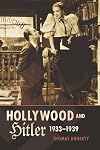
When the Nazis came to power in Germany in 1933, they understood the power of propaganda and the powerful role of cinema in promoting the party's aims. Joseph Goebbels, as Reich Minister of Public Enlightenment and Propaganda, made it a priority to Nazify all areas of art and took a particular interest in the powerful UFA film studio.
During the six years of the Nazi Reich before the beginning of World War II in 1939, the US film industry was not quick to tackle Nazism. It's not too show more surprising, given the strength of isolationist feeling, but Doherty tells us exactly why there was only one Hollywood film released about the Nazis and their violent practices before 1939. (I Was a Captive of Nazi Germany, whose making Doherty describes in detail.) He details how the Production Code Administration and local censorship boards quashed nearly every attempt to tackle the subject, and how the studios themselves hesitated to rock the boat and lose the opportunity to sell their own products to German distributors.
For an academic publication, this is written in an almost breezy style. Maybe that's an exaggeration, but it's certainly a very readable treatment, filled with personalities and inside-Hollywood stories. Chapters about the abortive attempt to make nice with Mussolini by getting his son involved in the picture biz, Leni Riefenstahl's disastrous publicity junket to the US to promote her film Olympia, about the 1936 Berlin Olympics, and the Hollywood Anti-Nazi League's near-whiplash when Germany and the Soviet Union signed their Non-Aggression Pact, all read as entertainingly as a gossip column.
Some of the most interesting parts of the book cover the role of newsreels in covering Nazi Germany. Newsreel-only theaters in New York played to full houses and audiences didn't hold back their feelings when big-name political personalities appeared on the screen. There was even a newsreel theater on 96th Street that showed pro-Nazi reels right up until Pearl Harbor.
Although isolationist feeling in the US continued even after England and France declared war on Germany in 1939, Hollywood finally went to war, beginning with films like Confessions of a Nazi Spy and The Mortal Storm. They must have hit a nerve: a Warner Bros. Warsaw executive reported, after he fled Poland with just the clothes on his back, that the Polish theater owners who booked the former film "were hanged by the Nazis from the ratters of their own theaters."
This is a rewarding read for anybody interested in World War II history or the history of the film industry. Double points for those interested in both show less
During the six years of the Nazi Reich before the beginning of World War II in 1939, the US film industry was not quick to tackle Nazism. It's not too show more surprising, given the strength of isolationist feeling, but Doherty tells us exactly why there was only one Hollywood film released about the Nazis and their violent practices before 1939. (I Was a Captive of Nazi Germany, whose making Doherty describes in detail.) He details how the Production Code Administration and local censorship boards quashed nearly every attempt to tackle the subject, and how the studios themselves hesitated to rock the boat and lose the opportunity to sell their own products to German distributors.
For an academic publication, this is written in an almost breezy style. Maybe that's an exaggeration, but it's certainly a very readable treatment, filled with personalities and inside-Hollywood stories. Chapters about the abortive attempt to make nice with Mussolini by getting his son involved in the picture biz, Leni Riefenstahl's disastrous publicity junket to the US to promote her film Olympia, about the 1936 Berlin Olympics, and the Hollywood Anti-Nazi League's near-whiplash when Germany and the Soviet Union signed their Non-Aggression Pact, all read as entertainingly as a gossip column.
Some of the most interesting parts of the book cover the role of newsreels in covering Nazi Germany. Newsreel-only theaters in New York played to full houses and audiences didn't hold back their feelings when big-name political personalities appeared on the screen. There was even a newsreel theater on 96th Street that showed pro-Nazi reels right up until Pearl Harbor.
Although isolationist feeling in the US continued even after England and France declared war on Germany in 1939, Hollywood finally went to war, beginning with films like Confessions of a Nazi Spy and The Mortal Storm. They must have hit a nerve: a Warner Bros. Warsaw executive reported, after he fled Poland with just the clothes on his back, that the Polish theater owners who booked the former film "were hanged by the Nazis from the ratters of their own theaters."
This is a rewarding read for anybody interested in World War II history or the history of the film industry. Double points for those interested in both show less
Doherty offers an extensive study of studio films during the years 1933 to 1939 and explains why virtually none of the studios mentioned Hitler or the horrors of what was happening in Germany. Basically, the companies did not want to lose the German audience in Germany. The only one to stand up and say no to Germany was Warner Brothers. It finally took newsreels such as MovieTone news to get the word out.
A fascinating, in depth if over long study.
A fascinating, in depth if over long study.
I love history & love reading non-fiction, though I don't read as much of it as I'd like to or should. I was interested in this title & got the book to review back in January & started reading it then, but then life got busy & this book got pushed to the back shelf in favor of lighter, faster reads. I was looking through netgalley & saw the title & was reminded of my obligation to read, and picked it up & reread it from the beginning.
Doherty writes about the subject in a fairly lighthearted show more manner, making this easy to read for those who don't read a lot of non-fiction. Like I said, I love non-fiction but sometimes the language makes it tough for a layperson to read, but this one isn't like that. Admittedly there were some terms I had to look up, such as "hagio-biopic" (still don't know what that means).
Besides the obvious, Doherty gives us inside looks into Hollywood's early history and gossip and the background of Nazi movies (often times in much more detail than I would have liked, but movie buffs will certainly enjoy this). Doherty's other books are also on TV & film, so certainly this is a passion of his. My favorite chapter was on Leni Riefenstahl, who directed two popular Nazi propaganda war films.
I received this book to read and review from netgalley & was not paid for my honest review. show less
Doherty writes about the subject in a fairly lighthearted show more manner, making this easy to read for those who don't read a lot of non-fiction. Like I said, I love non-fiction but sometimes the language makes it tough for a layperson to read, but this one isn't like that. Admittedly there were some terms I had to look up, such as "hagio-biopic" (still don't know what that means).
Besides the obvious, Doherty gives us inside looks into Hollywood's early history and gossip and the background of Nazi movies (often times in much more detail than I would have liked, but movie buffs will certainly enjoy this). Doherty's other books are also on TV & film, so certainly this is a passion of his. My favorite chapter was on Leni Riefenstahl, who directed two popular Nazi propaganda war films.
I received this book to read and review from netgalley & was not paid for my honest review. show less
Awards

You May Also Like
Associated Authors
Statistics
- Works
- 9
- Also by
- 1
- Members
- 501
- Popularity
- #49,398
- Rating
- 3.8
- Reviews
- 8
- ISBNs
- 38