
Roger Daltrey
Author of Thanks a Lot Mr Kibblewhite: My Story
About the Author
Image credit: Annie Mole, July 2, 2006
Works by Roger Daltrey
Can't wait to see the movie 3 copies
The Who: Who's Better, Who's Best 2 copies
After The Fire 2 copies
Ride A Rock Horse 2 copies
Rocks in the head 2 copies
Parting Should Be Painless 2 copies
Going Back Home 1 copy
Daltrey songbook 1 copy
Days of Light 1 copy
The Pride You Hide 1 copy
One of the boys 1 copy
Associated Works
The Best of the Who: The Millennium Collection (20th Century Masters) (1999) — Contributor — 19 copies
The Who's Tommy: The Amazing Journey [1993 film] — Actor — 5 copies
Mutiny on the Bounty: An Award-Winning Three-Part Classic Serial: A Full-Cast BBC Radio Drama (1997) — Actor — 1 copy, 1 review
Tagged
Common Knowledge
- Birthdate
- 1944-03-01
- Gender
- male
- Occupations
- singer
musician
actor - Awards and honors
- Kennedy Center Honors (2008)
- Relationships
- The Who (band)
- Nationality
- UK
- Birthplace
- Hammersmith, London, England, UK
- Map Location
- England, UK
Members
Reviews
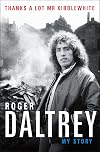
You know, this is a really enjoyable, well-written, honest autobiography. Roger Daltrey, like Greg Lake, grew up in a working-class, asbestos-infused neighborhood with many alternatives in his life that could have led to his working in a welding factory all his life, rather than becoming a distinctive voice in rock and roll music.
Daltrey brings in observations on his life (the shortened stature of children born in 1944 due to war-time food shortages) and music (the University of Sheffield's show more paper from 2005 on music and marginalized populations) as well as his family growing up in Shepherd's Bush, London, and their love for one another. And there is plenty of humor as well: he starts the book with a fainting episode that leads to his wondering how on earth he broke his back. The hospital had the X-Rays to prove it, and he had no memory of which of three falls might have done it!
There are also keen observations on his late bandmates, especially the self-destructive drive that led Keith Moon to an early, tragic death, and how John Entwistle died the way he would have wanted to. And there are the humanizing stories about life on the road in the early days, how their management team were so addicted to their own drugs that many of The Who's millions went up their noses, and the smaller venues where the band first played. And like Lake, Daltrey has been married to the same woman for decades.
The style is humanizing, there are plenty of slang terms, and it is easy to read without getting bogged down in self-effacement or band drama. And I am very, very glad that the Muses saw fit to bring Daltrey his first idea for a guitar (another humorous story) that led to a better guitar and finally to being a front-man for an iconic rock band. show less
Daltrey brings in observations on his life (the shortened stature of children born in 1944 due to war-time food shortages) and music (the University of Sheffield's show more paper from 2005 on music and marginalized populations) as well as his family growing up in Shepherd's Bush, London, and their love for one another. And there is plenty of humor as well: he starts the book with a fainting episode that leads to his wondering how on earth he broke his back. The hospital had the X-Rays to prove it, and he had no memory of which of three falls might have done it!
There are also keen observations on his late bandmates, especially the self-destructive drive that led Keith Moon to an early, tragic death, and how John Entwistle died the way he would have wanted to. And there are the humanizing stories about life on the road in the early days, how their management team were so addicted to their own drugs that many of The Who's millions went up their noses, and the smaller venues where the band first played. And like Lake, Daltrey has been married to the same woman for decades.
The style is humanizing, there are plenty of slang terms, and it is easy to read without getting bogged down in self-effacement or band drama. And I am very, very glad that the Muses saw fit to bring Daltrey his first idea for a guitar (another humorous story) that led to a better guitar and finally to being a front-man for an iconic rock band. show less
As he comes across in the pages of Thanks A Lot, Mr. Kibblewhite: My Story, Roger Daltrey is a personable, engaging fella. It's a rather slender book to cover such a long and prolific career, but Daltrey writes in a brisk conversational tone that was fun to read. I particularly enjoyed the sections on his childhood, his early bands, his family, and his complicated relationship with Pete Townshend. Prompted me to listen to some albums by The Who, which I hadn't done in a while. I didn't show more realize how much solo work Daltrey's done; I'll have to give some of that a listen as well. In short: good book, enjoyable and a quick but engaging read. show less
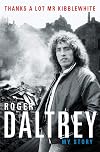
First off, I have to say it was a genuine pleasure to pick up a hardback again, and this one is really well made: has excellent paper quality, well bound, nicely laid out, crisp print – none of this makes a book great but it definitely enhances the reading experience.
The title, predictably, refers to Daltrey’s high school headmaster who, as he expelled him, told 15 year old Roger he would never amount to anything. At the time, he thought “Thanks a lot” in a sarcastic way but by the show more end of the book (spoiler alert!) he genuinely thanks Mr K for setting him on a path to his brilliant career.
Still sounds bitter to me.
The book is structured around a basic chronology but Daltrey jumps around with anecdotes with the usual “many years later … but all that was yet to come” devices to get back on track. The whole thing is like Roger’s sitting in the pub telling his mates (that’s you) his life story. “Well, what would YOU do, eh?”
To be fair, he’s a very good raconteur and has some fantastic stories to tell. He goes into quite a lot of detail about his bandmates, each of whom has very specific failings that somehow only serve to strengthen the friendship – nay, the BROTHERHOOD, that binds them! His rollicking storytelling style kept me well engaged but my overall impression was that he’s just not a very nice bloke.
He’s explicit about leaving his first wife and child because they would hold back his career and he plays the end-justifies-the-means card as he explains that it was all for the best because he became rich and so was able to support them as promised and they all get along fabulously now. As he does with the several children and their mothers he has scattered around the globe. And his second wife of 30 years, who is still with him.
There’s a fair bit of predictable music industry stuff – inept or corrupt managers and label owners, bad decisions, lucky breaks, it was the 60s/70s/80s/90s, breaking America is hard, drug use (not HIM, of course, those around him) – but probably the most interesting for me is when Daltrey talks bout his approach to singing, how he modified his voice, extended his range, changed his breathing, changed his phrasing – all in the context of figuring out how to be a front man for The Who.
It was also fun comparing Daltrey’s version of certain events to Pete Townshend’s in Who I Am (another who comes across as unlikable in his own autobiography).
All in all, not a waste of time. show less
The title, predictably, refers to Daltrey’s high school headmaster who, as he expelled him, told 15 year old Roger he would never amount to anything. At the time, he thought “Thanks a lot” in a sarcastic way but by the show more end of the book (spoiler alert!) he genuinely thanks Mr K for setting him on a path to his brilliant career.
Still sounds bitter to me.
The book is structured around a basic chronology but Daltrey jumps around with anecdotes with the usual “many years later … but all that was yet to come” devices to get back on track. The whole thing is like Roger’s sitting in the pub telling his mates (that’s you) his life story. “Well, what would YOU do, eh?”
To be fair, he’s a very good raconteur and has some fantastic stories to tell. He goes into quite a lot of detail about his bandmates, each of whom has very specific failings that somehow only serve to strengthen the friendship – nay, the BROTHERHOOD, that binds them! His rollicking storytelling style kept me well engaged but my overall impression was that he’s just not a very nice bloke.
He’s explicit about leaving his first wife and child because they would hold back his career and he plays the end-justifies-the-means card as he explains that it was all for the best because he became rich and so was able to support them as promised and they all get along fabulously now. As he does with the several children and their mothers he has scattered around the globe. And his second wife of 30 years, who is still with him.
There’s a fair bit of predictable music industry stuff – inept or corrupt managers and label owners, bad decisions, lucky breaks, it was the 60s/70s/80s/90s, breaking America is hard, drug use (not HIM, of course, those around him) – but probably the most interesting for me is when Daltrey talks bout his approach to singing, how he modified his voice, extended his range, changed his breathing, changed his phrasing – all in the context of figuring out how to be a front man for The Who.
It was also fun comparing Daltrey’s version of certain events to Pete Townshend’s in Who I Am (another who comes across as unlikable in his own autobiography).
All in all, not a waste of time. show less
After reading Pete Townshend's [b:Who I Am|13609867|Who I Am|Pete Townshend|https://i.gr-assets.com/images/S/compressed.photo.goodreads.com/books/1334931711l/13609867._SY75_.jpg|19207504] I was expecting a gruff tale about Roger punching people in the face in between singing. This is not what I got at all. In fact, I was a little shocked at how sincere and inspiring this book was. On one hand, he left a trail of illegitimate children in his wake (and didn't really feel particularly show more apologetic about it), but on the other hand he claimed and connected with those children on some level and still managed to keep his second marriage together. More important than all of that is the real sense of a blue-collar success story. He never shies away from the hard work, and there's something especially charming about a man who still spends his time putting in manual labor around his house in between making albums that are some of the most important works in rock and roll history.
Now, Roger doesn't get deep into most of the stuff he discusses like Pete does, but I got the sense that that's just who Roger is--straightforward and rolling with the punches. I *did* find it pretty interesting where Pete's story and Roger's story deviate slightly, but I'll just chalk that up to all the substances that were being used at the time (though, again, Roger is surprisingly chaste in that department, relatively speaking). There are moments where you can get a sense that there's still some resentment toward some situations, but he doesn't seem to let that get in the way of forming important bonds with the people in his life. All in all, I thoroughly enjoyed reading this, and it makes listening to The Who all the sweeter.
By the way, he mentions pairing Ox with The Chieftains twice in this book, and encourages us to look up the performance online. I did. Wow. Just wow. Probably the absolute best version of "Behind Blue Eyes" in existence...go check it out! show less
Now, Roger doesn't get deep into most of the stuff he discusses like Pete does, but I got the sense that that's just who Roger is--straightforward and rolling with the punches. I *did* find it pretty interesting where Pete's story and Roger's story deviate slightly, but I'll just chalk that up to all the substances that were being used at the time (though, again, Roger is surprisingly chaste in that department, relatively speaking). There are moments where you can get a sense that there's still some resentment toward some situations, but he doesn't seem to let that get in the way of forming important bonds with the people in his life. All in all, I thoroughly enjoyed reading this, and it makes listening to The Who all the sweeter.
By the way, he mentions pairing Ox with The Chieftains twice in this book, and encourages us to look up the performance online. I did. Wow. Just wow. Probably the absolute best version of "Behind Blue Eyes" in existence...go check it out! show less
Lists
Awards

You May Also Like


Associated Authors
Statistics
- Works
- 26
- Also by
- 18
- Members
- 352
- Popularity
- #67,993
- Rating
- 4.0
- Reviews
- 10
- ISBNs
- 28
- Languages
- 5