
Robbie Robertson (1) (1943–2023)
Author of Hiawatha and the Peacemaker
For other authors named Robbie Robertson, see the disambiguation page.
About the Author
Robbie Robertson was born on July 5, 1943 in Toronto, Canada. He is most known for his work as lead guitarist for the music group "The Band", which began the Americana music genre. As a songwriter, Robertson wrote "The Night They Drove Old Dixie Down" and "Broken Arrow" among many others. His show more talent was recognized when he was inducted into the Rock and Roll Hall of Fame and the Canadian Music Hall of Fame. He also worked as a soundtrack producer and composer when he teamed up with Martin Scorsese on the fims: The Last Waltz, Raging Bull and Casino. He also became an author with his titles Testimony and Hiawatha and the Peacemaker. (Bowker Author Biography) show less
Image credit: Truejustice, 2007-07-28
Works by Robbie Robertson
The Story of Storyville 1 copy
A Musical History 1 copy
What About Now (EP) 1 copy
...robbie robertson (disk 2) 1 copy
...robbie robertson (disk 1) 1 copy
Associated Works
Tagged
Common Knowledge
- Canonical name
- Robertson, Robbie
- Other names
- Robertson, Jaime Royal
Robertson, J. Robbie
Klegerman, Jaime Royal - Birthdate
- 1943-07-05
- Date of death
- 2023-08-09
- Gender
- male
- Occupations
- singer
guitarist
songwriter - Organizations
- The Band [musical group]
- Nationality
- Canada
- Birthplace
- Toronto, Ontario, Canada
- Places of residence
- Toronto, Ontario, Canada
Beverly Hills, California, USA - Place of death
- Los Angeles, California, USA
Members
Reviews

The Iroquois legend of the prophet Deganawida (the Peacemaker) and his disciple Hiawatha, who together brought unity and peace to the warring Iroquois tribes in precolonial North America, is retold for children in this beautiful picture-book from Mohawk and Cayuga-descended musician Robbie Robertson, and Caldecott Honor-winning Euro-American illustrator David Shannon. Consumed by grief and rage at the killing of his wife and children by the forces of the terrible Onondaga chief, Tadodaho, show more Mohawk warrior Hiawatha is set on revenge, until the arrival of the mysterious Peacemaker, a quiet man who travels in a stone canoe, and speaks of the Great Law of Peace that will unite all mankind under one tree. Won over to this new vision, Hiawatha becomes the Peacemaker's spokesman, and together they travel to the different Haudenosaunee (Iroquois) nations, convincing them one by one to join their new league. Eventually, only the Onondaga are left to convince, but first the snake-bedeviled Tadodaho must be cured and forgiven. When this is accomplished, the members of the new Iroquois Confederacy - Mohawk, Cayuga, Oneida, Seneca and Onondaga** - bury their weapons underneath a great pine tree, and usher in a new era of peace and cooperation...
Many readers might be familiar with the name Hiawatha from Longfellow's famous poem, The Song of Hiawatha, but the story told there is almost completely the poet's own, and bears little resemblance to the stories told by the Haudenosaunee themselves. I myself have never read the Longfellow, although I would like to at some point. I am familiar with this story however, having read the fuller, adult version in Paul A.W. Wallace's 1946 White Roots of Peace: The Iroquois Book of Life, which is cited by Robertson in his back matter as a source. I therefore went into Hiawatha and the Peacemaker already knowing the story, and curious to see how it would be retold for children. What I discovered was an absolutely beautiful book, one which retold the story in such a way as to make the Peacemaker's message most powerful. By focusing on Hiawatha, and his journey from grief and anger to acceptance and forgiveness, Robertson demonstrates how the Peacemaker's vision has both personal and political aspects to it. As I commented in my review of the Wallace retelling, "this is a story whose political and religious components are inseparable," and it is clear that although it is a tale about the founding of the Iroquois Confederacy - a powerful tribal alliance whose structure would provide inspiration to the founding fathers, in their creation of a new form of government in the American state - it is also a tale about the individual's struggle to find the right way through life. There are interesting elements of the story that have been left out - the fact that Deganawida is often thought to have been Huron, an outsider and potential enemy to the Iroquois peoples, for instance, or that some retelling claim he was (like Jesus) the product of a virgin birth - but that makes sense, as the narrative focus here is on the disciple, rather than the prophet. Although I would have liked to see more information in the afterword, about these matters, or about the eventual structure of the Iroquois Confederacy - the name Tadodaho, for instance, is used to this day for the traditional leader chosen to preside over the Grand Council of the Iroquois League - I also wasn't terribly exercised by their absence.
As poignant and powerful as Robertson's retelling is, the artwork here from Shannon is equally moving. Done in oil paint, the illustrations are vividly colorful and immensely expressive. I got a shiver down my spine, looking at the image of Hiawatha speaking, with Deganawida behind him, and am little appalled that this didn't receive a Caldecott nod. In any case, this was simply a wonderful book all around, with a fascinating story and beautiful artwork. It explores an aspect of American history - the founding of the Iroquois Confederacy - that many young people may be unaware of. It's fairly long and text-heavy for a picture-book, so I would recommend it to readers who are on the older end of the picture-book audience. Perhaps ages 7 and up.
** The Iroquois Confederacy is now also known as the Six Nations, as they were joined by their linguistically-related cousins, the Tuscarora, in 1722. show less
Many readers might be familiar with the name Hiawatha from Longfellow's famous poem, The Song of Hiawatha, but the story told there is almost completely the poet's own, and bears little resemblance to the stories told by the Haudenosaunee themselves. I myself have never read the Longfellow, although I would like to at some point. I am familiar with this story however, having read the fuller, adult version in Paul A.W. Wallace's 1946 White Roots of Peace: The Iroquois Book of Life, which is cited by Robertson in his back matter as a source. I therefore went into Hiawatha and the Peacemaker already knowing the story, and curious to see how it would be retold for children. What I discovered was an absolutely beautiful book, one which retold the story in such a way as to make the Peacemaker's message most powerful. By focusing on Hiawatha, and his journey from grief and anger to acceptance and forgiveness, Robertson demonstrates how the Peacemaker's vision has both personal and political aspects to it. As I commented in my review of the Wallace retelling, "this is a story whose political and religious components are inseparable," and it is clear that although it is a tale about the founding of the Iroquois Confederacy - a powerful tribal alliance whose structure would provide inspiration to the founding fathers, in their creation of a new form of government in the American state - it is also a tale about the individual's struggle to find the right way through life. There are interesting elements of the story that have been left out - the fact that Deganawida is often thought to have been Huron, an outsider and potential enemy to the Iroquois peoples, for instance, or that some retelling claim he was (like Jesus) the product of a virgin birth - but that makes sense, as the narrative focus here is on the disciple, rather than the prophet. Although I would have liked to see more information in the afterword, about these matters, or about the eventual structure of the Iroquois Confederacy - the name Tadodaho, for instance, is used to this day for the traditional leader chosen to preside over the Grand Council of the Iroquois League - I also wasn't terribly exercised by their absence.
As poignant and powerful as Robertson's retelling is, the artwork here from Shannon is equally moving. Done in oil paint, the illustrations are vividly colorful and immensely expressive. I got a shiver down my spine, looking at the image of Hiawatha speaking, with Deganawida behind him, and am little appalled that this didn't receive a Caldecott nod. In any case, this was simply a wonderful book all around, with a fascinating story and beautiful artwork. It explores an aspect of American history - the founding of the Iroquois Confederacy - that many young people may be unaware of. It's fairly long and text-heavy for a picture-book, so I would recommend it to readers who are on the older end of the picture-book audience. Perhaps ages 7 and up.
** The Iroquois Confederacy is now also known as the Six Nations, as they were joined by their linguistically-related cousins, the Tuscarora, in 1722. show less
I’m not sure what to make of Robbie Robertson’s memoir, Testimony.
Jaime Royal Robertson, who died in 2023, was lead guitarist for The Band from its 1959 beginning as The Hawks backing Canadian singer Ronnie Hawkins in Canada, through their time as Bob Dylan’s backing band (when they became The Band), followed by six albums of their own, and until their breakup in 1976.
In that year, Martin Scorsese filmed their farewell concert, The Last Waltz, and that closes the book.
Robertson is show more generally acknowledged as the primary songwriter for the band, but this is not without some controversy. For example, he gets sole credit for one of their most enduring, popular, and influential songs, The Weight but this was later disputed by several band members, most notably drummer Levon Helm, who claimed in his memoir that Robertson either finagled or outright stole the credit from other band members.
In Testimony, Robertson does not address this even though Helm died in 2012, some four years before Robertson’s book came out. It’s possible Robertson doesn’t discuss because his book only goes up to the 1976 post-The Last Waltz breakup and most of the acrimony by his band mates was expressed in ensuing years. Maybe.
In fact, Robertson doesn’t talk about the well known problems within The Band much at all, other than to say he was concerned about the heavy drug use by some members. The impression Robertson gives is that he didn’t have a drug problem, but this is contradicted by the recent TV series Mr Scorsese, in which the director talks candidly about his excessive cocaine use for several years, mostly in the company of the equally indulgent Robbie Robertson.
What Robertson projects in Testimony is that The Band was a close knit “band of brothers”, with whom he took great pains to ensure songwriting credits, and whose drug use concerned him greatly. He talks of Helm as his closest “brother”, even though Helm and several other band members expressed their dissatisfaction with Robertson’s overbearing manner and claiming of too much credit for the group’s success.
Aside from that, Testimony is really easy to read, well structured (it bounces between his childhood and the band’s early history), and on the whole very well written.
I was a bit disappointed that it stopped before Robertson’s solo career as I’m as much a fan of his solo albums as that of The Band.
I was also a bit nagged that such an articulate writer, consummate songwriter and extremely gifted country / blues / rock guitarist has very little to say about the songs and music, other than in very broad, exalted terms. When he describes his exposure to musical greats, he writes of ecstatic, sometimes slightly hysterical experiences, but without much technical detail.
He doesn’t even explain how he crafted the lyrics to some of his classic songs, just “the words came to me”. It’s a relief when Jimi Hendrix shows him how to string a guitar so it’ll stay in tune even through excessive use of the tremolo bar. OK, maybe that’s not the content that everyone reads books like this for, but I do.
Robertson is also a terrible (or perhaps, to be fair, an excellent) name dropper. And yes, that is also what I read music bios for, but he does go a bit over the top.
Still, 500 pages passes very quickly, and Testimony is mostly very enjoyable. I just felt it was not the whole story and a bit too self-aggrandising. My impression of one of my rock heroes was left a little tarnished. show less
Jaime Royal Robertson, who died in 2023, was lead guitarist for The Band from its 1959 beginning as The Hawks backing Canadian singer Ronnie Hawkins in Canada, through their time as Bob Dylan’s backing band (when they became The Band), followed by six albums of their own, and until their breakup in 1976.
In that year, Martin Scorsese filmed their farewell concert, The Last Waltz, and that closes the book.
Robertson is show more generally acknowledged as the primary songwriter for the band, but this is not without some controversy. For example, he gets sole credit for one of their most enduring, popular, and influential songs, The Weight but this was later disputed by several band members, most notably drummer Levon Helm, who claimed in his memoir that Robertson either finagled or outright stole the credit from other band members.
In Testimony, Robertson does not address this even though Helm died in 2012, some four years before Robertson’s book came out. It’s possible Robertson doesn’t discuss because his book only goes up to the 1976 post-The Last Waltz breakup and most of the acrimony by his band mates was expressed in ensuing years. Maybe.
In fact, Robertson doesn’t talk about the well known problems within The Band much at all, other than to say he was concerned about the heavy drug use by some members. The impression Robertson gives is that he didn’t have a drug problem, but this is contradicted by the recent TV series Mr Scorsese, in which the director talks candidly about his excessive cocaine use for several years, mostly in the company of the equally indulgent Robbie Robertson.
What Robertson projects in Testimony is that The Band was a close knit “band of brothers”, with whom he took great pains to ensure songwriting credits, and whose drug use concerned him greatly. He talks of Helm as his closest “brother”, even though Helm and several other band members expressed their dissatisfaction with Robertson’s overbearing manner and claiming of too much credit for the group’s success.
Aside from that, Testimony is really easy to read, well structured (it bounces between his childhood and the band’s early history), and on the whole very well written.
I was a bit disappointed that it stopped before Robertson’s solo career as I’m as much a fan of his solo albums as that of The Band.
I was also a bit nagged that such an articulate writer, consummate songwriter and extremely gifted country / blues / rock guitarist has very little to say about the songs and music, other than in very broad, exalted terms. When he describes his exposure to musical greats, he writes of ecstatic, sometimes slightly hysterical experiences, but without much technical detail.
He doesn’t even explain how he crafted the lyrics to some of his classic songs, just “the words came to me”. It’s a relief when Jimi Hendrix shows him how to string a guitar so it’ll stay in tune even through excessive use of the tremolo bar. OK, maybe that’s not the content that everyone reads books like this for, but I do.
Robertson is also a terrible (or perhaps, to be fair, an excellent) name dropper. And yes, that is also what I read music bios for, but he does go a bit over the top.
Still, 500 pages passes very quickly, and Testimony is mostly very enjoyable. I just felt it was not the whole story and a bit too self-aggrandising. My impression of one of my rock heroes was left a little tarnished. show less
A caveat concerning this review is that I read Robertson's Testimony just after reading Helm's This Wheel's On Fire, and it is safe to say that the two accounts do not mesh well in certain areas. To name a few, would be the treatment of Muddy Waters at the Last Waltz, how the other band members felt about the Last Waltz to begin with, why Richard Manual stopped writing, and the biggie, the publishing.
The way the publishing was handled was the primary cause of animosity between Robertson and show more Helm; Robertson barely touches upon it, and quite frankly, his account is not very believable. Helm addresses it throughout his book, and while he does sound like a musician scorned, he consistently sticks up for his band mates, and history seems to bear him out.
Testimony itself is very well written, extremely entertaining, and most insightful. Even though it is close to 500 pages, it is still a fast read. But if you are looking for a history of The Band, this may leave you wanting a bit. This book is mostly about Robertson, and while he is an incredible musician and song writer, who lived through one of the most transcendent eras in Rock 'N' Roll, this book often crosses the line from a Who's Who of the period to an exercise in name dropping.
Mostly, if you want to get to better know the members who comprised The Band, I would advise you to get Helm's book; Helm does a great job of developing each member's character throughout his narrative. Robertson too often refers to his band mates as 'the guys' and sometimes gives an obligatory one line description of each, but that is it. They remain cardboard characters.
Finally, at the very end of the book, Robertson describes the day after the Last Waltz when the group was to meet in a recording studio and no one shows up. That's how he ends the book. It is infuriating. If you read Helm's book, well you would know where everyone was on that day. Robertson too often demonstrates his distance from his band mates, which was the complaint about him in the first place.
To summarize, this is the lowest rating that I ever gave a book that I so enjoyed reading. I guess the reason being was that I was a bit frustrated with it. Oh, and Helm's book goes beyond the Last Waltz, he painfully describes both Manuel's and Danko's deaths. Testimony was far better written than Wheel's On Fire, but it is not as satisfying. show less
The way the publishing was handled was the primary cause of animosity between Robertson and show more Helm; Robertson barely touches upon it, and quite frankly, his account is not very believable. Helm addresses it throughout his book, and while he does sound like a musician scorned, he consistently sticks up for his band mates, and history seems to bear him out.
Testimony itself is very well written, extremely entertaining, and most insightful. Even though it is close to 500 pages, it is still a fast read. But if you are looking for a history of The Band, this may leave you wanting a bit. This book is mostly about Robertson, and while he is an incredible musician and song writer, who lived through one of the most transcendent eras in Rock 'N' Roll, this book often crosses the line from a Who's Who of the period to an exercise in name dropping.
Mostly, if you want to get to better know the members who comprised The Band, I would advise you to get Helm's book; Helm does a great job of developing each member's character throughout his narrative. Robertson too often refers to his band mates as 'the guys' and sometimes gives an obligatory one line description of each, but that is it. They remain cardboard characters.
Finally, at the very end of the book, Robertson describes the day after the Last Waltz when the group was to meet in a recording studio and no one shows up. That's how he ends the book. It is infuriating. If you read Helm's book, well you would know where everyone was on that day. Robertson too often demonstrates his distance from his band mates, which was the complaint about him in the first place.
To summarize, this is the lowest rating that I ever gave a book that I so enjoyed reading. I guess the reason being was that I was a bit frustrated with it. Oh, and Helm's book goes beyond the Last Waltz, he painfully describes both Manuel's and Danko's deaths. Testimony was far better written than Wheel's On Fire, but it is not as satisfying. show less
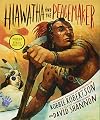
I really loved this story--sometimes kids' books like this that are in that funny historical-mythic realm get filed under "original content by," and other times as retellings of myth, but the story of Hiawatha and the Peacemaker and how they united the nations and healed the evil Tadodaho found its way immediately into my heart as felt history, regardless of the (somewhat obscure) facts. History, but also a story about pain and forgiveness and new beginnings. Good one.
Lists
4th Grade Books (1)
VBL Picturebooks (1)
Awards


You May Also Like


Associated Authors
Statistics
- Works
- 20
- Also by
- 9
- Members
- 913
- Popularity
- #28,083
- Rating
- 4.1
- Reviews
- 53
- ISBNs
- 49
- Languages
- 1
