
About the Author
Barney Hoskyns is a music historian, editorial director of the online music-journalism library Rock's Backpages, and author of Hotel California, Lowside of the Road: A Life of Tom Waits, and an oral history of Led Zeppelin. He lives in London.
Image credit: Courtesy of Serpent's Tail Press
Works by Barney Hoskyns
Hotel California: The True-Life Adventures of Crosby, Stills, Nash, Young, Mitchell, Taylor, Browne, Ronstadt, Geffen, the Eagles, and Their Many Friends (2021) 332 copies, 8 reviews
Waiting for the Sun: Strange Days, Weird Scenes and the Sound of Los Angeles (1996) 144 copies, 2 reviews
Small Town Talk: Bob Dylan, The Band, Van Morrison, Janis Joplin, Jimi Hendrix and Friends in the Wild Years of Woodstock (2016) 130 copies, 4 reviews
The Sound and the Fury: 40 Years of Classic Rock Journalism: A Rock's Backpages Reader (2003) 63 copies, 3 reviews
Tom Waits. Życie na poboczu 1 copy
Associated Works
Tagged
Common Knowledge
- Birthdate
- 1959
- Gender
- male
- Occupations
- music critic
editor - Relationships
- Hoskyns, John (father)
Hoskyns, Tam (sister) - Nationality
- UK
- Associated Place (for map)
- UK
Members
Reviews
The Sound and the Fury: A Rock's Backpages Reader: 40 Years of Classic Rock Journalism by Barney Hoskyns
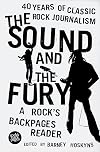
A solid, if not essential, anthology of rock journalism that's somewhat biased towards British bands, guitar rock and scenes that today's kids might now describe as "rockist," though sixties-era rhythm and blues and Northern Soul get some column inches, too. There are some genuinely good writers here, such as Jon Savage, Will Self, and Nick Hornby, and some genuinely thoughtful pieces, such as David Toop's musings on the connections between the later Beach Boys and Charles Manson and Mary show more Harron's investigation of the link between Andy Warhol and the pop music scene. "The Sound and the Fury" might also give some readers a chance to expose themselves to scenes and musicians they don't or care much about: I learned more about Mod music and Northern Soul than I thought there was to know, and that's not a bad thing.
Other reviewers here have been critical of some of this book's pieces, and they might not be wrong. Journalism, as they say, is the first draft of history, and that seems to apply to rock journalism, too. Some of these pieces are more informative than insightful, but not every rockwriter can be Lester Bangs, right? Also, some of the judgements in these pages haven't exactly aged too well. Michael Lydon, who turns in a strong piece about what it was like to attend the Monterey Pop Festival, seems taken with both the Mamas and the Papas and Janis Joplin, whose stuff I don't think has aged all that well. Also, it doesn't help that he describes Janis's face as "plain." Bill Millar's report from a Stax showcase in London circa 1967 is straight-out clunky, though it's to his credit that he owns up to it. Still, there's an immediacy to a lot of these pieces that I think a lot of readers might find valuable, whether it's Caroline Coon asking herself, way back in 1976, where this whole punk rock thing might take us, or Simon Reynolds reporting from the first Lollapalooza just months before "Nevermind" hit and tracing out the contours of American alternative rock's possible futures. All of this aside, I suspect that the editors' interest here was always historical: "The Sound and the Fury" was likely published in order to document salient moments in rock and pop's past, many of them already well-known to record-collector types. But, depending on your interests, it still might be worth your time. I certainly enjoyed it. show less
Other reviewers here have been critical of some of this book's pieces, and they might not be wrong. Journalism, as they say, is the first draft of history, and that seems to apply to rock journalism, too. Some of these pieces are more informative than insightful, but not every rockwriter can be Lester Bangs, right? Also, some of the judgements in these pages haven't exactly aged too well. Michael Lydon, who turns in a strong piece about what it was like to attend the Monterey Pop Festival, seems taken with both the Mamas and the Papas and Janis Joplin, whose stuff I don't think has aged all that well. Also, it doesn't help that he describes Janis's face as "plain." Bill Millar's report from a Stax showcase in London circa 1967 is straight-out clunky, though it's to his credit that he owns up to it. Still, there's an immediacy to a lot of these pieces that I think a lot of readers might find valuable, whether it's Caroline Coon asking herself, way back in 1976, where this whole punk rock thing might take us, or Simon Reynolds reporting from the first Lollapalooza just months before "Nevermind" hit and tracing out the contours of American alternative rock's possible futures. All of this aside, I suspect that the editors' interest here was always historical: "The Sound and the Fury" was likely published in order to document salient moments in rock and pop's past, many of them already well-known to record-collector types. But, depending on your interests, it still might be worth your time. I certainly enjoyed it. show less
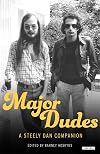
If you don't adore Steely Dan, don't read another word. If you do, grab this incredible compendium of reviews and rare interviews for the sheer vindication of your superior musical taste, and to chortle at how snarky "Charles Starkweather and Charles Manson" really are. And RIP, Walter Becker.
Quotes about the band:
"Where else can a deafened connoisseur get his shots of lyrical succinctness matched with thoroughly coherent musicality?"
"Fagen reels in his sixty-one years, planted behind his show more Fender Rhodes electric piano like some Hebraic Ray Charles with a mouth like Moe The Bartender. When occasionally he gets to his feet, he patrols the stage like a kind of king penguin."
"Fagen's not a very good singer but he sings it well. The lyrics have a way of covering themselves, of protecting themselves from the vulnerable emotions they arise from."
"One day rock concerts will run backwards, starting with the encores, so that the show can climax with the artist's entrance."
"They were a twisty subplot in the history of man's cruelty to man, all educated and eaten up with longing to be hip; a subplot involving terrible sarcasm, brilliant musicianship, a sordid anxiety about being white and suburban, a writing style so coldly acute you KNEW they must hate themselves, and an attachment to the simple pleasures of the pop tune."
"A grace that is both sensuous and sinister."
"Their critics said that rock should be guts and fire and feeling, not difficult chords and ironic detachment."
Descriptions of Becker and Fagen:
"Librarians on acid." "Wry Walt and doleful Don." "Pseudo-post-irony.” "The Dour Duo." "White-hot chops and black humor."
"This game of verbal Ping-Pong, in which the hapless interviewer is batted about between the two of them...Becker is sharp and perky, where Fagen is laconic and droll in a somewhat weary fashion."
"Those who hate the band call them sterile, surgical, cold, which is sort of the point. They are fundamentally sociopaths masquerading as benign dictators. They like to give the impression that they're being as insincere as possible, the very antithesis of almost everyone else in the music business."
"Fagen always seemed to be singing with one eyebrow raised."
"Fagen has been described as behaving like a college professor trying to get fired."
Quotes from the band:
Becker: "The difference being that in Brandeis, they would take a somewhat eccentric youth with bizarre ideation as long as he had a 96.3 grade point, whereas at Bard they would take anyone with POTENTIAL. And four thousand dollars a year."
Becker: "We try to write a sleek exterior with a turbulent lyric."
Becker: "We don't want its political or social overtones to be so specific that someone who hasn't lived in New York would have no use for the song."
Fagen: "In that band, there was a three-man guitar section: one guy who played badly and offensively, one guy who played very crudely, and one guy who just wore the guitar in an interesting way."
Fagen: "The collective persona we unintentionally developed is a guy without girls, a guy who's talking to the guys, except once in a while, he breaks down and you see that he's unstable. Kind of like Dick Cheney."
Fagen: "I think what happens with a lot of people is that after that initial youthful spurt, they never come out of it. They either succumb to despair or intoxicants. Part of it is that you have to throw off the narcissism of youth, which is your energy when you start. When that's gone, you have to find another source."
Fagen: "I didn't think most people wanted to hear a Jew sing. Even a Jewish Bryan Ferry." show less
Quotes about the band:
"Where else can a deafened connoisseur get his shots of lyrical succinctness matched with thoroughly coherent musicality?"
"Fagen reels in his sixty-one years, planted behind his show more Fender Rhodes electric piano like some Hebraic Ray Charles with a mouth like Moe The Bartender. When occasionally he gets to his feet, he patrols the stage like a kind of king penguin."
"Fagen's not a very good singer but he sings it well. The lyrics have a way of covering themselves, of protecting themselves from the vulnerable emotions they arise from."
"One day rock concerts will run backwards, starting with the encores, so that the show can climax with the artist's entrance."
"They were a twisty subplot in the history of man's cruelty to man, all educated and eaten up with longing to be hip; a subplot involving terrible sarcasm, brilliant musicianship, a sordid anxiety about being white and suburban, a writing style so coldly acute you KNEW they must hate themselves, and an attachment to the simple pleasures of the pop tune."
"A grace that is both sensuous and sinister."
"Their critics said that rock should be guts and fire and feeling, not difficult chords and ironic detachment."
Descriptions of Becker and Fagen:
"Librarians on acid." "Wry Walt and doleful Don." "Pseudo-post-irony.” "The Dour Duo." "White-hot chops and black humor."
"This game of verbal Ping-Pong, in which the hapless interviewer is batted about between the two of them...Becker is sharp and perky, where Fagen is laconic and droll in a somewhat weary fashion."
"Those who hate the band call them sterile, surgical, cold, which is sort of the point. They are fundamentally sociopaths masquerading as benign dictators. They like to give the impression that they're being as insincere as possible, the very antithesis of almost everyone else in the music business."
"Fagen always seemed to be singing with one eyebrow raised."
"Fagen has been described as behaving like a college professor trying to get fired."
Quotes from the band:
Becker: "The difference being that in Brandeis, they would take a somewhat eccentric youth with bizarre ideation as long as he had a 96.3 grade point, whereas at Bard they would take anyone with POTENTIAL. And four thousand dollars a year."
Becker: "We try to write a sleek exterior with a turbulent lyric."
Becker: "We don't want its political or social overtones to be so specific that someone who hasn't lived in New York would have no use for the song."
Fagen: "In that band, there was a three-man guitar section: one guy who played badly and offensively, one guy who played very crudely, and one guy who just wore the guitar in an interesting way."
Fagen: "The collective persona we unintentionally developed is a guy without girls, a guy who's talking to the guys, except once in a while, he breaks down and you see that he's unstable. Kind of like Dick Cheney."
Fagen: "I think what happens with a lot of people is that after that initial youthful spurt, they never come out of it. They either succumb to despair or intoxicants. Part of it is that you have to throw off the narcissism of youth, which is your energy when you start. When that's gone, you have to find another source."
Fagen: "I didn't think most people wanted to hear a Jew sing. Even a Jewish Bryan Ferry." show less

This fairly slim unassuming-looking volume is an important book, even if it's rather disappointingly short and sometimes sketchy. There have been plenty of attempts to chronicle great pop singers, either in biographical broth or in the patchwork histories of rock and soul which every pop scholar takes a shot at sooner or later. Yet here we are pressed into higher considerations: the very grain of human voices, their textures and pulses, as they have been sec to work a t the rhymes and show more melodies of pop over the past half-century. It starts with Sinatra and Holiday, ends with Vandross and Baker, and in between is a wondrous congregation of voices, more than any but the most dedicated fan might have imagined You must know the singing of Sam Cooke: but what about 0.V. Wright, Tommy Hunt , Linda Jones?
Hoskyns doesn't set out to rescue these names from obscurity; nor does he try and make sense of them. His book is rather like a vocal line itself, straining after release, twisting itself into shapes that will try and evoke the sound of these voices and what they do to him . His introduction somewhat ominously picks up a lead from Roland Barthes and his complaint about "the way we say only 'what can be said' about music". To which one might answer, what the hell else can you do? Except: "In great singers there is something instinctive, something almost innocent, as if their voices were really only ciphers for something altogether more powerful than the representation of what a song 'says' ". Any jazz follower will know what Hoskyns means. It is much the same as an instrumentalist shaping some standard with their differing 'voice'. Yet for singers to do that, to break out of their own signifying skins, is something else, and to annotate such efforts by the vocal giants is a formidable task.
To do it absolutely comprehensively is probably impossible, which is why From A Whisper To A Scream is more like an eloquent notebook on the pop voice's progress than a clear narrative he author codifies his voices into categories of delivery rather than any geosocial structure: 'Earth Mamas', 'Holy Fools' and 'Freaks And Angels' are some of the chapter headings. After Frank and Billie, he explores gospel traditions, the soul of every stripe, and just a few white voices. There are many evaluations which are startling. I wish I could make every misled 'soul fan' read Hopkins's elegant critique of Otis Redding, and it takes a courageous writer to call Marvin Gaye's "1 Heard It Through The Grapevine" "surely the most overrated of soul records". Longer portraits of Etta James, Bobby Bland and George Jones especially will make you annoyed that you haven't dug deeper in to their music before; there are surprising hosannas for Michael McDonald and im Buckley; and there is a piece on Luther Vandross which catches the drift of this elusive contemporary master better than anything I've read.
Hoskyns casts his net wide enough to catch Horace Andy and Burning Spear, too, but on some of the areas less defined by rocking soul he's weaker. He mentions Dick Haynes and Mel Tore, for instance, but you don't get the feeling he's really listened to them; or to Chris Connors, Chet Baker, Sue Raney and other voices in the swirl between jazz and pop. In that sense, the book is a pendant to Will Friedwald's superb Jazz Singing which, however it may share Hopkins's efforts to get into the grain, is fundamentally shy of post-50s pop. Hoskyns seems to get through the thesaurus twice (and Barthes wouldn't have approved). Bur he can be amazingly sharp and vivid. On Holiday: "a Little Mother Time prematurely old with suffering" On Smokey: "an angelfairy, serenading or lamenting with a courtly, ethereal tenderness". It is this colloquial juice chat makes the book compelling. show less
Hoskyns doesn't set out to rescue these names from obscurity; nor does he try and make sense of them. His book is rather like a vocal line itself, straining after release, twisting itself into shapes that will try and evoke the sound of these voices and what they do to him . His introduction somewhat ominously picks up a lead from Roland Barthes and his complaint about "the way we say only 'what can be said' about music". To which one might answer, what the hell else can you do? Except: "In great singers there is something instinctive, something almost innocent, as if their voices were really only ciphers for something altogether more powerful than the representation of what a song 'says' ". Any jazz follower will know what Hoskyns means. It is much the same as an instrumentalist shaping some standard with their differing 'voice'. Yet for singers to do that, to break out of their own signifying skins, is something else, and to annotate such efforts by the vocal giants is a formidable task.
To do it absolutely comprehensively is probably impossible, which is why From A Whisper To A Scream is more like an eloquent notebook on the pop voice's progress than a clear narrative he author codifies his voices into categories of delivery rather than any geosocial structure: 'Earth Mamas', 'Holy Fools' and 'Freaks And Angels' are some of the chapter headings. After Frank and Billie, he explores gospel traditions, the soul of every stripe, and just a few white voices. There are many evaluations which are startling. I wish I could make every misled 'soul fan' read Hopkins's elegant critique of Otis Redding, and it takes a courageous writer to call Marvin Gaye's "1 Heard It Through The Grapevine" "surely the most overrated of soul records". Longer portraits of Etta James, Bobby Bland and George Jones especially will make you annoyed that you haven't dug deeper in to their music before; there are surprising hosannas for Michael McDonald and im Buckley; and there is a piece on Luther Vandross which catches the drift of this elusive contemporary master better than anything I've read.
Hoskyns casts his net wide enough to catch Horace Andy and Burning Spear, too, but on some of the areas less defined by rocking soul he's weaker. He mentions Dick Haynes and Mel Tore, for instance, but you don't get the feeling he's really listened to them; or to Chris Connors, Chet Baker, Sue Raney and other voices in the swirl between jazz and pop. In that sense, the book is a pendant to Will Friedwald's superb Jazz Singing which, however it may share Hopkins's efforts to get into the grain, is fundamentally shy of post-50s pop. Hoskyns seems to get through the thesaurus twice (and Barthes wouldn't have approved). Bur he can be amazingly sharp and vivid. On Holiday: "a Little Mother Time prematurely old with suffering" On Smokey: "an angelfairy, serenading or lamenting with a courtly, ethereal tenderness". It is this colloquial juice chat makes the book compelling. show less
Small Town Talk: Bob Dylan, The Band, Van Morrison, Janis Joplin, Jimi Hendrix and Friends in the Wild Years of Woodstock by Barney Hoskyns
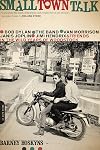
Barney Hoskyns is the rock fan's critic: accessible, humorous, and, in my case, loving the same bands as me. He’s written about ten books, the most recent a Steely Dan anthology. His book on The Band, Across The Great Divide, was an intimate look at the five members and the major consequences of Ronnie Hawkins and Bob Dylan's weaving in and out of their story. This one came about because Hoskyns lived in Woodstock in the late ‘90s as a music critic for MOJO Magazine. It takes a broad show more look at the town itself, a haven for folk artists and visual artists initially, and then colonized by Dylan manager Albert Grossman, a Svengali-Harvey-Weinstein-ish figure who also, for short periods of time, controlled the careers of Janis Joplin, The Band, Foghat (!), Paul Butterfield, and Todd Rundgren. Musicians such as Van Morrison, Jimi Hendrix, and Tim Hardin. Other artists - Happy and Artie Traum, Mike Bloomfield, Jesse Winchester, Ellen McIlwaine, and Maria Muldaur - also bought homes and became part of the coffeehouse-bar-recording studio rondele. Hoskyns has great appreciation and empathy for his subjects, especially for those brought to ground by their addictions, and tells his story well until it peters out with minor artists with little success at the book's end, where the death of Levon Helm of The Band and the passing of his Rambles, the renowned jam gatherings, pares Woodstock down to isolated introverts avoiding the tourists who still trickle in, searching for remnants of the Dylan days of glory. show less
Lists
Awards


You May Also Like


Associated Authors
Statistics
- Works
- 37
- Also by
- 2
- Members
- 1,676
- Popularity
- #15,334
- Rating
- 3.6
- Reviews
- 39
- ISBNs
- 128
- Languages
- 6
- Favorited
- 2