
Clinton Heylin
Author of Bob Dylan: Behind the Shades Revisited
About the Author
Described by the Mew York Times as "the only Dylanologist worth reading," Clinton Heylin is the author of Dylan: Behind the Shades, which remains in print more than twenty years after publication; two volumes detailing the histories of all 610 original Dylan songs, Revolution in the Air and Still show more on the Road; Stolen Moments: Dylan Day by Day; and The Recording Sessions 1960-1994. show less
Series
Works by Clinton Heylin
From the Velvets to the Voidoids: A Pre-Punk History for a Post-Punk World (1993) 278 copies, 2 reviews
Revolution in the Air: The Songs of Bob Dylan, 1957-1973 (Cappella Books) (2009) 168 copies, 3 reviews
E Street Shuffle: The Glory Days of Bruce Springsteen and the E Street Band (2012) 75 copies, 2 reviews
All the Madmen: Barrett, Bowie, Drake, Pink Floyd, The Kinks, The Who & A Journey to the Dark Side of English Rock (2012) 64 copies
The Act You've Known for All These Years: A Year in the Life of Sgt. Pepper and Friends (2007) 40 copies, 1 review
Judas!: From Forest Hills to the Free Trade Hall: A Historical Overview of the (2016) 16 copies, 1 review
No One Else Could Play That Tune: The Making and Unmaking of Bob Dylan's 1974 Masterpiece (Wanted Man Study Series) (2018) 10 copies
What We Did Instead Of Holidays: A History Of Fairport Convention And Its Extended Folk-Rock Family (2018) 8 copies
Associated Works
The Basement Tapes Complete: The Bootleg Series, Vol. 11 [sound recording] (1975) — Liner Notes — 88 copies
Tagged
Common Knowledge
- Birthdate
- 1960-04-08
- Gender
- male
- Education
- Bedford College (B.A.)
University of Sussex (M.A.)
Manchester Grammar School - Occupations
- author
- Nationality
- UK
- Places of residence
- Urmston, Manchester, England, UK
Sale, Manchester, England, UK - Associated Place (for map)
- Manchester, England, UK
Members
Reviews

This book is meant to "chronicle the evolution and influence of Springsteen’s E Street Band as they rose from blue-collar New Jersey to the heights of rock stardom." (That's straight from the book jacket.) What it really is is a poorly written, thinly sourced, morally bankrupt hatchet job that denigrates and belittles the artist it's meant to celebrate.
How did I hate this book? Let me count the ways …
1. The book has virtually no original reporting in it at all. Nearly every page has one show more or more paragraph-length excerpts of interviews of Bruce Springsteen from other printed sources.
The author did not speak to Bruce or, as far as I can tell, anyone except Bruce's first producer/manager, who Springsteen ended up suing in the late 1970s to get released from a bad contract, and the original drummer in the band who was fired after punching out another guy in the studio. Naturally, both of those people are portrayed extremely positively; the author takes the side of the producer/manager (Mike Appel) to an almost laughable extent. Seriously, I have read a fair bit about the lawsuit and that whole period and nothing I've read ever claimed that Springsteen was completely blameless in what happened, but this guy makes him seem like some combination of Machiavelli and Lenny from 'Of Mice and Men'.
2. The author repeatedly asserts that none of Springsteen's recordings with the E Street Band come close to replicating the magic that they conjure in a live show. Fair enough; that's a common assertion by rock critics and fans all over the world. But the author seems to feel that simply asserting that as his opinion is sufficient; he offers absolutely nothing to try to explain what it is about the live Springsteen concert experience that so thoroughly has captivated and mesmerized fans and critics over the past 40 years. By contrast, Springsteen biographers [[Dave Marsh]] and [[Peter Ames Carlin]] both managed to convey the magic and the mystery that happens when the E Street Band comes together on a stage in front of an audience.
3. In the album by album chronology of the book, the author repeatedly mocks and denigrates the process by which Springsteen, his band, and his subsequent producer/manager Jon Landau (who is clearly held in the highest contempt by the author) managed to produce albums that have sold tens of millions of copies and been listed by respected critics* as among the very best rock records ever produced.
* A sidetone: Every critic who ever wrote a complimentary review of one of these albums (i.e., disagreed with the author's viewpoint) is a sycophantic fool; writers who voiced reservations or criticism of Springsteen or his albums are portrayed as bravely speaking truth to power.
The author criticizes the song choices, the recording process, the sequencing of the songs on the albums, the choice of cover art — pretty much everything. With every album, he has a list of songs that are supposedly so superior to the ones that made the final cut that only an idiot would have left them off the record. Some of these discarded songs, which were later released on a boxed set, are amazing cuts, no doubt about it. But the author curtly refuses to take into account the fact that they were not included because they did not fit the mood or theme of the album being recorded, as Springsteen (you know, the guy whose name is on the record) conceived it.
4. Some of the songs that the author holds in highest esteem have still never been released in any official way, either as B-sides of singles or in the compilation set of unreleased songs called "Tracks". So how does the author know these unreleased tracks are so great? How did he happen to hear them? By purchasing illegal bootleg* records of studio sessions that were stolen from Springsteen and then sold to fans. This is where the morally corrupt charge comes in. The author makes no apologies for buying studio bootlegs; indeed, he seems to feel that he and other Springsteen fans are entitled to hear everything the man has ever recorded, whether he himself felt it was suitable for public listening or not. And that's just wrong.
* There are two types of bootlegs when it comes to music: There are live bootlegs, surreptitious fan recordings of concerts that are traded or sold among fans, and there are studio bootlegs, which are copies of the tape that is recorded during studio sessions when albums are being produced. Some people think all bootlegs are wrong. I have a more nuanced viewpoint which is important to this review. I have a number of live bootlegs, of Springsteen and other artists, and I don't apologize for it. To my mind, the difference is that those live bootlegs are recordings of public performances; in other words, the music was meant to be heard by fans. Studio bootlegs, on the other hand, are recordings that the artist for whatever reason chose not to release to the public. Some of those unreleased recordings might even be superior to material that was officially released but that is irrelevant; the point is that the artist did not intend anyone to hear them outside of the studio and therefore fans and even self-important writers have absolutely no right to listen to them, let along make someone else rich by purchasing them.
5. For a book with the subtitle "The Glory Days of Bruce Springsteen and the E Street Band" there is virtually nothing about the individual members of the E Street Band. If they are so important (and they are) why does the author ignore their contributions? The relationships between Bruce and Steven Van Zandt, and between Bruce and Clarence Clemons, are legendary. For all this book tells you about them, they might as well have met via classified ad.
6. I left this one for last because I freely admit it's a petty criticism. The book is just poorly written. The author (who is apparently British) uses words like "gotta" and "gonna" and "ain't" repeatedly in the narrative of the book ad apparently without irony. If the rest of the book had been worthwhile, this would have resulted in no more than the occasional eye-roll and a footnote in the review. But the rest of the book is crap, and thus I'm piling on with this final gripe.
If anyone reading this is interested in a decent, objective biography of Bruce Springsteen that doesn't shy away from criticizing him or his actions when it's warranted but also manages to explore all the reasons why and how he became one of the biggest and most acclaimed rock and roll singer-songwriters of his generation, I'd recommend [12789068::Bruce] by Peter Ames Carlin. As for this piece of dreck, it's the rare music biography that isn't suitable either for diehard or casual fans. show less
How did I hate this book? Let me count the ways …
1. The book has virtually no original reporting in it at all. Nearly every page has one show more or more paragraph-length excerpts of interviews of Bruce Springsteen from other printed sources.
The author did not speak to Bruce or, as far as I can tell, anyone except Bruce's first producer/manager, who Springsteen ended up suing in the late 1970s to get released from a bad contract, and the original drummer in the band who was fired after punching out another guy in the studio. Naturally, both of those people are portrayed extremely positively; the author takes the side of the producer/manager (Mike Appel) to an almost laughable extent. Seriously, I have read a fair bit about the lawsuit and that whole period and nothing I've read ever claimed that Springsteen was completely blameless in what happened, but this guy makes him seem like some combination of Machiavelli and Lenny from 'Of Mice and Men'.
2. The author repeatedly asserts that none of Springsteen's recordings with the E Street Band come close to replicating the magic that they conjure in a live show. Fair enough; that's a common assertion by rock critics and fans all over the world. But the author seems to feel that simply asserting that as his opinion is sufficient; he offers absolutely nothing to try to explain what it is about the live Springsteen concert experience that so thoroughly has captivated and mesmerized fans and critics over the past 40 years. By contrast, Springsteen biographers [[Dave Marsh]] and [[Peter Ames Carlin]] both managed to convey the magic and the mystery that happens when the E Street Band comes together on a stage in front of an audience.
3. In the album by album chronology of the book, the author repeatedly mocks and denigrates the process by which Springsteen, his band, and his subsequent producer/manager Jon Landau (who is clearly held in the highest contempt by the author) managed to produce albums that have sold tens of millions of copies and been listed by respected critics* as among the very best rock records ever produced.
* A sidetone: Every critic who ever wrote a complimentary review of one of these albums (i.e., disagreed with the author's viewpoint) is a sycophantic fool; writers who voiced reservations or criticism of Springsteen or his albums are portrayed as bravely speaking truth to power.
The author criticizes the song choices, the recording process, the sequencing of the songs on the albums, the choice of cover art — pretty much everything. With every album, he has a list of songs that are supposedly so superior to the ones that made the final cut that only an idiot would have left them off the record. Some of these discarded songs, which were later released on a boxed set, are amazing cuts, no doubt about it. But the author curtly refuses to take into account the fact that they were not included because they did not fit the mood or theme of the album being recorded, as Springsteen (you know, the guy whose name is on the record) conceived it.
4. Some of the songs that the author holds in highest esteem have still never been released in any official way, either as B-sides of singles or in the compilation set of unreleased songs called "Tracks". So how does the author know these unreleased tracks are so great? How did he happen to hear them? By purchasing illegal bootleg* records of studio sessions that were stolen from Springsteen and then sold to fans. This is where the morally corrupt charge comes in. The author makes no apologies for buying studio bootlegs; indeed, he seems to feel that he and other Springsteen fans are entitled to hear everything the man has ever recorded, whether he himself felt it was suitable for public listening or not. And that's just wrong.
* There are two types of bootlegs when it comes to music: There are live bootlegs, surreptitious fan recordings of concerts that are traded or sold among fans, and there are studio bootlegs, which are copies of the tape that is recorded during studio sessions when albums are being produced. Some people think all bootlegs are wrong. I have a more nuanced viewpoint which is important to this review. I have a number of live bootlegs, of Springsteen and other artists, and I don't apologize for it. To my mind, the difference is that those live bootlegs are recordings of public performances; in other words, the music was meant to be heard by fans. Studio bootlegs, on the other hand, are recordings that the artist for whatever reason chose not to release to the public. Some of those unreleased recordings might even be superior to material that was officially released but that is irrelevant; the point is that the artist did not intend anyone to hear them outside of the studio and therefore fans and even self-important writers have absolutely no right to listen to them, let along make someone else rich by purchasing them.
5. For a book with the subtitle "The Glory Days of Bruce Springsteen and the E Street Band" there is virtually nothing about the individual members of the E Street Band. If they are so important (and they are) why does the author ignore their contributions? The relationships between Bruce and Steven Van Zandt, and between Bruce and Clarence Clemons, are legendary. For all this book tells you about them, they might as well have met via classified ad.
6. I left this one for last because I freely admit it's a petty criticism. The book is just poorly written. The author (who is apparently British) uses words like "gotta" and "gonna" and "ain't" repeatedly in the narrative of the book ad apparently without irony. If the rest of the book had been worthwhile, this would have resulted in no more than the occasional eye-roll and a footnote in the review. But the rest of the book is crap, and thus I'm piling on with this final gripe.
If anyone reading this is interested in a decent, objective biography of Bruce Springsteen that doesn't shy away from criticizing him or his actions when it's warranted but also manages to explore all the reasons why and how he became one of the biggest and most acclaimed rock and roll singer-songwriters of his generation, I'd recommend [12789068::Bruce] by Peter Ames Carlin. As for this piece of dreck, it's the rare music biography that isn't suitable either for diehard or casual fans. show less
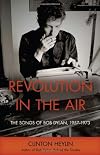
This is the first of a two-volume series discussing each of the songs Dylan has written, in chronological order; this volume 1 covers the first 300 songs, from his high school efforts through the songs that appeared on Planet Waves. Heylin discusses the genesis of each song, the circumstances around its writing and recording. In may cases, Heylin talks about meaningful rewrites and reimaginings of the songs in performance. Other books, and even a current blog, have attempted the same thing. show more The previous book covered only a few songs, and the follow-up titles never appeared; ita and the current blog fail because the authors aren't in good command of the material.
You can't say Clinton Heylin is not in command of the material; his knowledge of Dylan's life, the recording history, and the Dylan's musical and literary influences, is second to none, and he shares all that here. He draws on (and cites, frequently) his earlier biographies and recording history.
So if he's a bit opinionated, that's fine -- he's earned his opinions. He's also an often very funny writer (his frequent references to Dylan's Chronicles are a riot). There's a lot of important work here; unless you've been down this road before, there will be a few surprises, such as learning that Bob held Mr Tambourine Man off Another Side of Bob Dylan and saved it for Bringing It All Back Home, mostly because his first studio attempt at recording it was not all he knew he could do. The sequencing of the writing of the Blonde on Blonde and Basement Tapes/John Wesley Harding songs is also fascinating.
Bob Dylan wrote 50 songs in 1962. Many, if not most, of these songs are of amazing quality. There are at least several real masterpieces in that number -- A Hard Rain's A-Gonna Fall, Blowing in the Wind, Girl of the North Country, Don't Think Twice, It's Alright, for example. The next few years, through 1967 were all amazingly productive. Dylan loses something, starts mis-stepping sometime in 1968, and falls into a strange slump. Planet Waves was something different, a supposed "comeback." Dylan's arc through these years thus becomes Heylin's arc, and even he can hardly make the writing if New Morning interesting. That'll be a problem, too, in the second volume, which will open with a bang of genius with Blood On The Tracks, and the Jesus years should be interesting. But I don't expect much from the discussion of how the songs on Down in The Groove came to be written. show less
You can't say Clinton Heylin is not in command of the material; his knowledge of Dylan's life, the recording history, and the Dylan's musical and literary influences, is second to none, and he shares all that here. He draws on (and cites, frequently) his earlier biographies and recording history.
So if he's a bit opinionated, that's fine -- he's earned his opinions. He's also an often very funny writer (his frequent references to Dylan's Chronicles are a riot). There's a lot of important work here; unless you've been down this road before, there will be a few surprises, such as learning that Bob held Mr Tambourine Man off Another Side of Bob Dylan and saved it for Bringing It All Back Home, mostly because his first studio attempt at recording it was not all he knew he could do. The sequencing of the writing of the Blonde on Blonde and Basement Tapes/John Wesley Harding songs is also fascinating.
Bob Dylan wrote 50 songs in 1962. Many, if not most, of these songs are of amazing quality. There are at least several real masterpieces in that number -- A Hard Rain's A-Gonna Fall, Blowing in the Wind, Girl of the North Country, Don't Think Twice, It's Alright, for example. The next few years, through 1967 were all amazingly productive. Dylan loses something, starts mis-stepping sometime in 1968, and falls into a strange slump. Planet Waves was something different, a supposed "comeback." Dylan's arc through these years thus becomes Heylin's arc, and even he can hardly make the writing if New Morning interesting. That'll be a problem, too, in the second volume, which will open with a bang of genius with Blood On The Tracks, and the Jesus years should be interesting. But I don't expect much from the discussion of how the songs on Down in The Groove came to be written. show less

Since a teacher labeled me a Dylanologist in junior high—hey, cut me some slack, this was even before middle schools existed—I’ve read dozens of Bob books. Now, this book’s author, Clinton Heylin, has written ten books just on Dylan, and many more about rock and punk music. I was already experiencing a certain gravitational pull from this, his latest Bob book, when a knowing relative gave it to me for my birthday. Why would he write another one, when he’s known by many to have show more written one of the definitive books on Mr. Dylan, Bob Dylan: Behind the Shades? Simple, because in 2016, Dylan sold his personal archive to the George Kaiser Foundation in Tulsa, Oklahoma. After that $22 million sale, the foundation asked Heylin to come and assess the materials. Seemingly, the very definition of a kid in a candy store. Combining that with other materials from Sony Music and Dylan’s office, he realized that he had a whole other world of information with which to correct the record. Anyone familiar with Dylan, knows that, not only does he never want to do a song the same way twice, but he has never wanted to give the same answers to the flood of questions about himself and his music. The owner of a Woodstock café owner who had exposure to Dylan, once said of him. “He’s got so many sides, he’s round.”
The book goes through time in chapter bites of a few months, from 1961 to July of 1966, when the man disappeared after his famous/infamous motorcycle accident. When he finally came back after that crash, his appearance was different, the sound of his voice had changed, and his songs were different. But readers won’t be able to read about that from Heylin, until he publishes the second and final volume of this revision. What a tease. If I could line up for it now, I’d be tempted.
Heylin does slide in much information about Robert Allen Zimmerman’s early life and music evolution throughout this book. Each chapter begins with some pretty fascinating and revealing quotes from Dylan himself, the people he played with, outsiders, music critics and insiders, as well as both hostile and enthusiastic members of the press. The author has a clever way of reflecting his subject with his own humor and word play. I should also say that if you haven’t read much about Dylan, be prepared to see a young man treat people badly as he’s finding his way in a world around him that is changing constantly … in short, he can be a real ass. With the press he could be extremely hostile, coy, non-responsive, or playing any of many different games. The reader has to always remember that the times were changing, as this was all new territory … they were revolutionary times. In the beginning, Dylan was a sponge in how he was absorbing everything from accents, musical stylings, lyrics and expressions, even the clothes he wore, before he became a true American original—and one who loved nothing more than to be constantly changing his spots.
Dylan himself might be the least reliable source of all, because as he says in Martin Scorsese’s film, Rolling Thunder Revue, when asked about the 1975 tour, “I can’t remember a damn thing.” On the other hand, considering the abundant amounts of drugs in circulation around and within Dylan, maybe that line is purely factual. Before his history was a known entity, he loved to tell people that he was from New Mexico. As Dave Van Ronk once said, “You never could pin him down on anything. He had a lot of stories about who he was and where he came from, [but] he never seemed to be able to keep [any of] them straight.”
It’s always easy to write Dylan off as being way past his discard date, but like his 2020 album Rough and Rowdy Ways topping charts in both England and the states, it’s unwise to ever doubt that he can still connect with music fans.
The New York Times said of Heylin, “The only Dylanologist worth reading.” I find myself much the richer for having read the book. I’m as fascinated by Dylan as I ever have been during all the different stages of my own evolution … since that junior high classroom. Vicky, my choice of a life and business partner, and my wife of over thirty years, spent many hours and miles in our car singing along with me and Bob. I always figured that it was going to be a rough day for the two of us when the news of Dylan’s eventual death came our way, but now that Vicky has died, I’ll face that day very alone, unless he outlives us both. I’m left with a simple question, who will be the last man standing from our traveling trio? show less
The book goes through time in chapter bites of a few months, from 1961 to July of 1966, when the man disappeared after his famous/infamous motorcycle accident. When he finally came back after that crash, his appearance was different, the sound of his voice had changed, and his songs were different. But readers won’t be able to read about that from Heylin, until he publishes the second and final volume of this revision. What a tease. If I could line up for it now, I’d be tempted.
Heylin does slide in much information about Robert Allen Zimmerman’s early life and music evolution throughout this book. Each chapter begins with some pretty fascinating and revealing quotes from Dylan himself, the people he played with, outsiders, music critics and insiders, as well as both hostile and enthusiastic members of the press. The author has a clever way of reflecting his subject with his own humor and word play. I should also say that if you haven’t read much about Dylan, be prepared to see a young man treat people badly as he’s finding his way in a world around him that is changing constantly … in short, he can be a real ass. With the press he could be extremely hostile, coy, non-responsive, or playing any of many different games. The reader has to always remember that the times were changing, as this was all new territory … they were revolutionary times. In the beginning, Dylan was a sponge in how he was absorbing everything from accents, musical stylings, lyrics and expressions, even the clothes he wore, before he became a true American original—and one who loved nothing more than to be constantly changing his spots.
Dylan himself might be the least reliable source of all, because as he says in Martin Scorsese’s film, Rolling Thunder Revue, when asked about the 1975 tour, “I can’t remember a damn thing.” On the other hand, considering the abundant amounts of drugs in circulation around and within Dylan, maybe that line is purely factual. Before his history was a known entity, he loved to tell people that he was from New Mexico. As Dave Van Ronk once said, “You never could pin him down on anything. He had a lot of stories about who he was and where he came from, [but] he never seemed to be able to keep [any of] them straight.”
It’s always easy to write Dylan off as being way past his discard date, but like his 2020 album Rough and Rowdy Ways topping charts in both England and the states, it’s unwise to ever doubt that he can still connect with music fans.
The New York Times said of Heylin, “The only Dylanologist worth reading.” I find myself much the richer for having read the book. I’m as fascinated by Dylan as I ever have been during all the different stages of my own evolution … since that junior high classroom. Vicky, my choice of a life and business partner, and my wife of over thirty years, spent many hours and miles in our car singing along with me and Bob. I always figured that it was going to be a rough day for the two of us when the news of Dylan’s eventual death came our way, but now that Vicky has died, I’ll face that day very alone, unless he outlives us both. I’m left with a simple question, who will be the last man standing from our traveling trio? show less
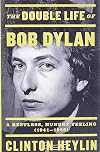
This is the most well-researched (thanks to Tulsa and lots of new work by the author) biography of Bob Dylan there is, and I've read them all. It's a pity it ends after the '66 tour, and I hope Heylin is able to convince his publishers to do two more volumes instead of just one.
This only really covers the years of 1961, when Dylan went to New York, to mid-66, with good flashbacks to his real youth. The level of detail is perfect. Heylin is not shy about pointing out errors in others works show more (and boy, is he not shy), but he is also good at owning up to his own mistakes in other books, especially about the contracts that Columbia and Dylan and Grossman signed. Previously, it had been presented as a Grossman power grab, and it was, but it was also Columbia taking advantage of a young Bob Dylan. It'll take the next volume to get to the bottom of this.
(I found two errors in the book, a misspelling of Samuel R. Delany's name as "Delaney" and calling a different composer the composer of The Good The Bad and The Ugly soundtrack, instead of Ennio Morricone.)
Those who aren't familiar with Dylan's career, or don't have the correct level of obsession, might want to skip it in favor of a more complete biography, though I don't have one to recommend. As for me, who is obsessed enough, I found it to be very enjoyable and informative read. It'll be a long time before we get a better biography. I'd give it 5 stars, but I like to reserve those. show less
This only really covers the years of 1961, when Dylan went to New York, to mid-66, with good flashbacks to his real youth. The level of detail is perfect. Heylin is not shy about pointing out errors in others works show more (and boy, is he not shy), but he is also good at owning up to his own mistakes in other books, especially about the contracts that Columbia and Dylan and Grossman signed. Previously, it had been presented as a Grossman power grab, and it was, but it was also Columbia taking advantage of a young Bob Dylan. It'll take the next volume to get to the bottom of this.
(I found two errors in the book, a misspelling of Samuel R. Delany's name as "Delaney" and calling a different composer the composer of The Good The Bad and The Ugly soundtrack, instead of Ennio Morricone.)
Those who aren't familiar with Dylan's career, or don't have the correct level of obsession, might want to skip it in favor of a more complete biography, though I don't have one to recommend. As for me, who is obsessed enough, I found it to be very enjoyable and informative read. It'll be a long time before we get a better biography. I'd give it 5 stars, but I like to reserve those. show less
Lists
Bull Tongue (2)
Knup (1)
Awards


You May Also Like


Associated Authors
Statistics
- Works
- 42
- Also by
- 2
- Members
- 2,222
- Popularity
- #11,536
- Rating
- 3.8
- Reviews
- 28
- ISBNs
- 137
- Languages
- 8