
Lester Bangs (1948–1982)
Author of Psychotic Reactions and Carburetor Dung
About the Author
Image credit: Courtesy of Serpent's Tail Press
Works by Lester Bangs
The White Noise supremacists 1 copy
Associated Works
The Rolling Stone Book of the Beats: The Beat Generation and American Culture (1999) — Contributor — 180 copies, 2 reviews
The Dylan Companion: A Collection of Essential Writing About Bob Dylan (1990) — Contributor, some editions — 103 copies
Lou Reed: The Last Interview: and Other Conversations (The Last Interview Series) (2015) — Interviewer, some editions — 29 copies
Tagged
Common Knowledge
- Canonical name
- Bangs, Lester
- Legal name
- Bangs, Leslie Conway
- Birthdate
- 1948-12-13
- Date of death
- 1982-04-03
- Gender
- male
- Occupations
- music critic
- Nationality
- USA
- Places of residence
- Escondido, California, USA
Detroit, Michigan, USA
New York, New York, USA - Burial location
- New York, USA
- Associated Place (for map)
- USA
Members
Reviews
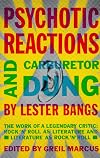
Lester Bangs was a prominent rock critic from the late 60s through the early 80s, when he died suddenly. He was one of a trio of rock writers, along with Nick Tosches (see above) and Richard Meltzer who were known as the "Noise Boys" for their irreverent self-referential style of writing. Gonzo journalism, in other words. This book is a collection of Bangs' writing, some pieces relatively well known/notorious and other culled by editor Greil Marcus (a rock writer of high quality himself and show more a friend of Bangs') from notes and unpublished writing Bangs left behind.
Bangs was a breathtaking writer, and his reviews could start out as relatively standard record or concert reviews but quickly morph into fascinating (if you like Bangs' style) diatribes into the state of music, or American culture or human nature or all three, composed in a runaway train of stream of consciousness and, sometimes, vitriol. You can't take the opinions entirely seriously, though, because he often changed his opinion about individual musicians or genres. ("I double back on myself all the time" was how he put it to an interviewer.)
There is one particularly meaningful and resonant essay about the amount of racism in the punk rock scene (Bangs was an early and longtime admirer of that scene and is even given credit by some of inventing the term) called "The White Noise Supremacists." Here is a quote:
"Whereas you don't have to try at all to be a racist. It's a little coiled clot of venom lurking there in all of us, white, black, goy and Jew, ready to strike out when we feel embattled, belittled, brutalized. Which is why it has to be monitored, made taboo and restrained, by society and the individual."
This essay is a brutal assault on hypocrisy, not least of all his own. You can still find the whole thing on the website of the Village Voice, which is where it was originally published back in 1979. But beware that it is a howling blast, and it is pretty long. Well worth reading.
At any rate, these essays are funny/disturbing/exhilarating. He died in 1982 at age 36, as Marcus says in his introduction, "accidentally due to respiratory and pulmonary complications brought on by flu and ingestion of Darvon." Marcus believes that Bangs' recent regimen of fighting off his alcoholism (he was succeeding) had left his body in a weakened state, "shaken, vulnerable to even the slightest anomaly, be it a commonplace bug or an ordinary dose of anyone else's everyday painkiller; that he had shocked his system toward health and that that was what killed him." Of course the question of where a writer of Bangs' prowess would have taken is art had he lived is part of the equation of any died-young master. But Marcus certainly did us all who care about this sort of writing a great service by creating this collection, which was first published in 1987. show less
Bangs was a breathtaking writer, and his reviews could start out as relatively standard record or concert reviews but quickly morph into fascinating (if you like Bangs' style) diatribes into the state of music, or American culture or human nature or all three, composed in a runaway train of stream of consciousness and, sometimes, vitriol. You can't take the opinions entirely seriously, though, because he often changed his opinion about individual musicians or genres. ("I double back on myself all the time" was how he put it to an interviewer.)
There is one particularly meaningful and resonant essay about the amount of racism in the punk rock scene (Bangs was an early and longtime admirer of that scene and is even given credit by some of inventing the term) called "The White Noise Supremacists." Here is a quote:
"Whereas you don't have to try at all to be a racist. It's a little coiled clot of venom lurking there in all of us, white, black, goy and Jew, ready to strike out when we feel embattled, belittled, brutalized. Which is why it has to be monitored, made taboo and restrained, by society and the individual."
This essay is a brutal assault on hypocrisy, not least of all his own. You can still find the whole thing on the website of the Village Voice, which is where it was originally published back in 1979. But beware that it is a howling blast, and it is pretty long. Well worth reading.
At any rate, these essays are funny/disturbing/exhilarating. He died in 1982 at age 36, as Marcus says in his introduction, "accidentally due to respiratory and pulmonary complications brought on by flu and ingestion of Darvon." Marcus believes that Bangs' recent regimen of fighting off his alcoholism (he was succeeding) had left his body in a weakened state, "shaken, vulnerable to even the slightest anomaly, be it a commonplace bug or an ordinary dose of anyone else's everyday painkiller; that he had shocked his system toward health and that that was what killed him." Of course the question of where a writer of Bangs' prowess would have taken is art had he lived is part of the equation of any died-young master. But Marcus certainly did us all who care about this sort of writing a great service by creating this collection, which was first published in 1987. show less
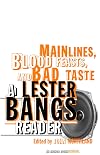
Lester Bangs is one of those writers anyone who writes about rock 'n' roll will eventually get around to. Though an acerbic, irreverent blowhard, he never let himself be trapped by the persona he created, often crafting literate, well-thought pieces about some of the best popular music of his time. Until this collection was released, the only available source of Bangs' work for most people was the Greil Marcus-edited "Psychotic Reactions and Carburetor Dung," an excellent collection hampered show more by Marcus's pompous introduction and his editorial cherry picking. Avoiding pieces on more popular bands, he chose articles and reviews that allowed him to fit Bangs into his own preconceived notion of him. In "Main Lines," editor John Morthland acts with a little more humility, letting Bangs hang out in all his glory.
Articles on Dylan, the Stones and Black Sabbath sit along with the more obscure works, showing a side of Bangs "PSCD" avoided (his ferocious slam of Dylan's "Desire" album should be required reading for rock critics and his article on Sabbath shows an intelligent, thoughtful Ozzy Osbourne that has been forgotten in the haze of drugs and television camp over the past few decades). A great collection, and necessary reading for those interested in rock writing.
(This review originally appeared on zombieunderground.net) show less
Articles on Dylan, the Stones and Black Sabbath sit along with the more obscure works, showing a side of Bangs "PSCD" avoided (his ferocious slam of Dylan's "Desire" album should be required reading for rock critics and his article on Sabbath shows an intelligent, thoughtful Ozzy Osbourne that has been forgotten in the haze of drugs and television camp over the past few decades). A great collection, and necessary reading for those interested in rock writing.
(This review originally appeared on zombieunderground.net) show less

The only completed portion of Bangs's Beyond the Law: Four Rock 'n' Roll Extremists (really? that was the title?), a planned book focusing on Eno, Marianne Faithfull, Screamin' Jay Hawkins, and the writer Danny Fields. This is an extended ramble/memoir/conversation/attempt to engage with what the artist's work means and how it feels, on the model of Bangs's work on Lou Reed but with less bleeding and profanity. Eno is (mais naturellement) a great man, and Bangs presents him sensitively, so show more that he comes off like a gentleman; also there is of course intrinsic interest in his girl picking-up techniques and description of his early life and reminiscences about art school and the glitterdrama that was Roxy Music; but Bangs is too gentlemanly himself, letting him go on at great length and transcribing unstintingly. There's just one too many paragraphs in a row that begin with quotation marks and go on for 300 words without pause.
But Bangs still manages to isolate Eno's most interesting observations--about the terror of art that creates itself without need of supervision; about fun as a legitimate litmus test for dividing a future of new algorithmic forms from a future of technotalitarianism. And he manages to only embarrass himself a little with his 20th-century rockist fretting, always just shying away from saying something like "but what will we do when rock stars aren't keeping it real, man?" because he knows how stupid that is but nevertheless can't quite replace the guitar-hero paradigm without more extensive assurances than Eno, the superflat techromancer, is willing to give. And from 2009, that's the most striking thing about both our characters here, the way they take for granted that pop music is serious, important, earthshaking stuff. Eno was closer, with his music-as-essential-lifestyle-aid, than Bangs with his future shock, but neither of them remotely saw how inessential music would come to seem, how tired, how ineradicably stained with the logic of capital (and I don't just mean that as a criticism--I recognize all the complex ways that availability and freeness has hurt music's mystique and the cultural mulch it needs to thrive). What oh what will cutting-edge art sound like in 2049? show less
But Bangs still manages to isolate Eno's most interesting observations--about the terror of art that creates itself without need of supervision; about fun as a legitimate litmus test for dividing a future of new algorithmic forms from a future of technotalitarianism. And he manages to only embarrass himself a little with his 20th-century rockist fretting, always just shying away from saying something like "but what will we do when rock stars aren't keeping it real, man?" because he knows how stupid that is but nevertheless can't quite replace the guitar-hero paradigm without more extensive assurances than Eno, the superflat techromancer, is willing to give. And from 2009, that's the most striking thing about both our characters here, the way they take for granted that pop music is serious, important, earthshaking stuff. Eno was closer, with his music-as-essential-lifestyle-aid, than Bangs with his future shock, but neither of them remotely saw how inessential music would come to seem, how tired, how ineradicably stained with the logic of capital (and I don't just mean that as a criticism--I recognize all the complex ways that availability and freeness has hurt music's mystique and the cultural mulch it needs to thrive). What oh what will cutting-edge art sound like in 2049? show less
Psychotic Reactions and Carburetor Dung: The Work of a Legendary Critic: Rock'N'Roll as Literature and Literature as Rock 'N'Roll by Lester Bangs

I had never heard of Lester Bangs prior to having this book recommended to me. By the time I finished it, I found myself mourning the loss of what could have been a great author. His reviews are highly entertaining, although they do require a bit of knowledge on the background of the music scene at the time and the bands he wrote about. The piece that grabbed me however, was his fictional story inspired by the song "Maggie May." It really demonstrates what a talented writer he could have show more become had he not died. The writing in this piece is like a more vulgar Salinger mixed with Kerouac stream of consciousness and Hunter Thompson drugginess. show less
Lists
You May Also Like


Associated Authors
Statistics
- Works
- 12
- Also by
- 7
- Members
- 1,717
- Popularity
- #14,959
- Rating
- 3.8
- Reviews
- 17
- ISBNs
- 35
- Languages
- 5
- Favorited
- 13