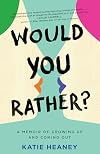
I enjoyed this title greatly, although I did find that it slowed down in the last third. The interludes listing her early crushes were a fun device. It was a unique coming out memoir and I'm always glad to see more stories from members of the LGBT community. I think many people in the community could find something to relate to, even though the details are her own.
 This review was written for LibraryThing Early Reviewers.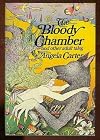
Incredible retellings of fairy tales. The language is beautiful and the stories compelling. The stories primarily focus on the women of fairy tales and give them quite a bit more agency than they display in the originals. I can draw a clear line from these stories to those of Neil Gaiman.
This Will Be My Undoing: Living at the Intersection of Black, Female, and Feminist in (White) America by Morgan Jerkins
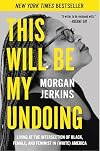
An incredible collection of essays. Highly recommend this for fans of Roxane Gay. Jerkins does an amazing job of weaving together memoir with cultural and societal history to produce compelling essays on race, gender, feminism, and sexuality.
This review was written for LibraryThing Early Reviewers.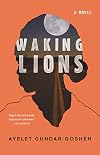
The characters are fascinatingly human. The book truly highlights the depths people can descend to when desperate, as well as the depths people can descend to when powered by greed. The language is sparse and blunt, which matches the material.
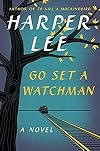
This book really made me appreciate how skilled an editor Harper Lee must've had, to pull the timeless work that To Kill a Mockingbird out of this, which is utterly of its time. Had this book been published in place of To Kill a Mockingbird, it would've been a perfectly appropriate coming-of-age tale for the time it was published, albeit one which is incredibly on the nose. At a certain point, it would've been allowed to gracefully fall out of print. As it is, it stands as a relic of another time and does not feel particularly interesting to read in 2015.

The book was fairly predictable, but I was still incredibly moved by the ending, so that's something I guess. Excellent portrayal of manic episodes.

IF THEY HAVE GUNS THAT VAPORIZE PEOPLE WHY DID THEY NEED A GODDAMN VIRUS TO LOWER THE POPULATION
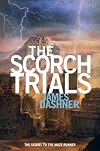
This might be one of the rare times I liked a sequel more than the initial book. This one struck me as more of a straightforward horror novel, with the dystopian world just happening to be the setting. I legitimately jumped and shrieked at one point because the book actually managed to trigger the same fear response as something jumping out at you in a movie at one point. Much like the first book, I still feel that the characters (aside from Thomas) are incredibly shallow and exist merely to move the story forward, without having their own internal motivations, but I'm more okay with that in a horror story than in other genres.

Dear God, you cannot just keep declaring random characters as Thomas' best friend and expect that to substitute for actually showing the relationship develop and in action. His "best friend" has to change at least 12 times in this trilogy and at least eight of those times happened in this book alone. This especially shouldn't be done just to heighten the emotional impact when you kill them off pages later. None of the secondary characters have any sort of consistent personality, except maybe Minho, and his personality is "wiseass." Some of this is "cleverly" masked by the use of a disease that conveniently attacks the brain and changes personality at any speed that's most convenient for the plot.
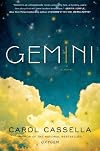
Eh, this was okay. It was a bit more predictable than I think the author really intended it to be, but it was enjoyable. The chimerism reveal was obvious to me, having heard of the condition through a million different procedural TV shows, but if you are not as into trashy TV as I am, it may have been a more interesting reveal. Overall, I enjoyed the way the story was presented. Pretty good use of multiple POVs, although having only one brief segment from Eric's POV was a strange choice.
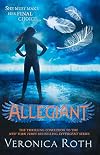
The book suffered considerably from Roth's decision to alternate between Tobias and Tris' points of view. While I understand why she made that choice, a switch to third-person narration probably would have worked better given her inability to make the two points of view sound significantly different from one another. I frequently found myself drawn out of the story because I couldn't remember at any given time which of the two characters was narrating. That being said, the depictions of grief continue to be phenomenal and heartbreaking and the ending was fantastic, especially when being considered as the ending to the trilogy as a whole.
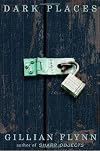
Couldn't put this book down, although it definitely began to become more and more contrived as it continued. I enjoyed switching between past and present; it was interesting to see the mystery unfold in two different timelines. There was too much of a reliance on coincidence toward the end and way too much of the cheap gimmick in which a character in the present is magically thinking about the same thing a character in the past was in the prior segment of the book. There was also a tendency for Libby to magically figure out everyone's motivations and thoughts without nearly enough information to do so. Overall though, these moments tend to not detract overly much from the storytelling and it's a compelling read.
The Devil in the White City: Murder, Magic & Madness and the Fair that Changed America (Illinois) by Erik Larson
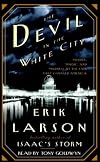
While both stories told in this book are interesting, Larson never quite gets them to weave together in the way he leads you to believe he will. The two events are tangentially related, but the book is laced with hints that the Holmes story and the World's Fair story at some point directly impact each other. More should have been done to demonstrate the connection between the two, especially given the fact that it is clear that Holmes continues his spree elsewhere and really did not the World's Fair at all to do so.

The Minutemen storyline captured the feel of the original Watchmen perfectly. Unfortunately, the Silk Spectre storyline was severely lacking. 5 stars for Minutemen, 2 or 3 for Silk Spectre.
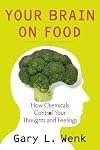
This may be one of the most misleading book titles I've ever encountered. In the entire book, there are maybe a handful of sentences actually discussing food. Presumably "Your Brain on Drugs" was already claimed by those PSAs, but that would be the far more accurate title for the book. The vast majority of it discusses the effects of various drugs on the brain, particularly with regards to neurotransmitters. Additionally, the author doesn't seem entirely sure of who his audience is. The books is somewhat too advanced for a layperson audience, but a bit too simplified for an audience with a background in psych/neuro/brain science and several chunks of it come off as him trying to come across as the "cool professor." Many of the facts were fairly interesting, but all in all it was a strange read.
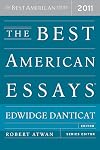
What a superb collection of essays. While I found the subject matter almost universally interesting, I was even more amazed by the different creative forms the essays took. Very few were merely straightforward musings on a subject, many had incredibly creative constructions, helping to interweave seemingly unrelated topics.
I couldn't put this book down. I read the entire thing today in one extended session. The unique format makes the book a bit difficult to follow initially, but overall it adds a great deal to the novel. It helps in creating sympathy for almost every character you encounter, while providing enough distance to keep things from seeming too sentimental or soap opera-esque.
Feel the need to write about the ending now, I'll do my best to keep it vague, but I suggest not reading further if you want to be truly unspoiled.
I didn't love the ending; it felt like a cop-out and wrapped things up a bit too neatly for my tastes. I was rooting for Bee, but the ending ended up a little too pat and happy for me. Additionally, it was incredibly predictable and I found myself getting pretty close to the truth when I was still 50 or so pages away.
Feel the need to write about the ending now, I'll do my best to keep it vague, but I suggest not reading further if you want to be truly unspoiled.
I didn't love the ending; it felt like a cop-out and wrapped things up a bit too neatly for my tastes. I was rooting for Bee, but the ending ended up a little too pat and happy for me. Additionally, it was incredibly predictable and I found myself getting pretty close to the truth when I was still 50 or so pages away.
I ain't saying she a golddigger, but yes, that is exactly what I'm saying.
Amazingly hilarious. The book captured the tone of the show and each of the characters perfectly.
Psychotic Reactions and Carburetor Dung: The Work of a Legendary Critic: Rock'N'Roll as Literature and Literature as Rock 'N'Roll by Lester Bangs

I had never heard of Lester Bangs prior to having this book recommended to me. By the time I finished it, I found myself mourning the loss of what could have been a great author. His reviews are highly entertaining, although they do require a bit of knowledge on the background of the music scene at the time and the bands he wrote about. The piece that grabbed me however, was his fictional story inspired by the song "Maggie May." It really demonstrates what a talented writer he could have become had he not died. The writing in this piece is like a more vulgar Salinger mixed with Kerouac stream of consciousness and Hunter Thompson drugginess.
One of the few books I've ever read to make me truly laugh out loud as I read it.
The book was poorly paced, the plot could have been accomplished in half the length of the book.