
Nick Tosches (1949–2019)
Author of In the Hand of Dante
About the Author
Born in Newark & schooled in his father's bar, Nick Tosches is one of the most original & individualistic writers at work today. He is the author of acclaimed biographies of Sonny Liston, (The Devil & Sonny Liston), Dean Martin (Dino), the Mafia financier Michele Sindona (Power on Earth), & Jerry show more Lee Lewis (Hellfire); of several books about popular music (Country & Unsung Heroes of Rock 'n' Roll); & of the novels "Trinities" & "Cut Numbers". Thirty years of his writing was recently collected into "The Nick Tosches Reader" (Da Capo). He is a contributing editor of "Vanity Fair". He lives in New York City, & his poetry readings are legend. (Bowker Author Biography) show less
Works by Nick Tosches
Nightmare Alley 1 copy
If You Knew Sushi 1 copy
Associated Works
Literary Las Vegas: The Best Writing About America's Most Fabulous City (1995) — Introduction — 74 copies, 1 review
The Italian American Reader: A Collection of Outstanding Stories, Memoirs, Journalism, Essays, and Poetry (2003) — Foreword — 26 copies
Tagged
Common Knowledge
- Canonical name
- Tosches, Nick
- Legal name
- Tosches, Nicholas P.
- Birthdate
- 1949-10-23
- Date of death
- 2019-10-20
- Gender
- male
- Occupations
- journalist
poet
novelist
biographer
music critic - Organizations
- Peace Eye Bookstore (Greenwich Village, NYC)
Fusion (magazine in Boston)
Rolling Stone (magazine)
Vanity Fair - Nationality
- USA
- Birthplace
- Newark, New Jersey, USA
- Places of residence
- New York, New York, USA
- Place of death
- Manhattan, New York, USA
- Associated Place (for map)
- New York, USA
Members
Reviews

Tosches effectively describes a musical (d)evolution, as country music's affinity for violence and raunch gives way to God, Mother, Sin, Guilt, and Sorrow. These then are the dying metaphors of Country's subtitle.
I never much cared for country music, my understanding of it defined by radio play while living in Texas and Tennessee. It was only after college that I could appreciate some country, though never the Nashville Pop stuff. The music that resonates with me I tend to tag as "roots", show more everything else from the genre I relegate to the "country & western" label.
Tosches' ruminations appeal precisely because they're interesting cultural commentary. I took his country music examples as illustrations of general musical trends, for the most part uninterested in the particular artists or subgenres. Tosches on the other hand is keen on the specifics, lamenting a lost rebel side of country, which I admire mostly as a matter of principle, and from afar. The rebel myth is hard enough to swallow in rock n roll, put a rhinestone cowboy hat on it and I'm most apt to snigger.
What's clear is that the commercial juggernaut warps and pressures all music. Following along in an unfamiliar musical tradition --one in which I have little interest-- helped me see the generic forces at work. They're targeting music I like, too, of course (and a lot more besides music), so while it's always been fairly easy to see, Tosches helps identify some less-evident trends at play. The biggest was obvious but not always clear: transform the unorthodox into something more easily commodifiable, the trappings of rebellion without the threat. show less
I never much cared for country music, my understanding of it defined by radio play while living in Texas and Tennessee. It was only after college that I could appreciate some country, though never the Nashville Pop stuff. The music that resonates with me I tend to tag as "roots", show more everything else from the genre I relegate to the "country & western" label.
Tosches' ruminations appeal precisely because they're interesting cultural commentary. I took his country music examples as illustrations of general musical trends, for the most part uninterested in the particular artists or subgenres. Tosches on the other hand is keen on the specifics, lamenting a lost rebel side of country, which I admire mostly as a matter of principle, and from afar. The rebel myth is hard enough to swallow in rock n roll, put a rhinestone cowboy hat on it and I'm most apt to snigger.
What's clear is that the commercial juggernaut warps and pressures all music. Following along in an unfamiliar musical tradition --one in which I have little interest-- helped me see the generic forces at work. They're targeting music I like, too, of course (and a lot more besides music), so while it's always been fairly easy to see, Tosches helps identify some less-evident trends at play. The biggest was obvious but not always clear: transform the unorthodox into something more easily commodifiable, the trappings of rebellion without the threat. show less
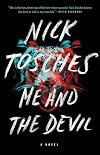
I'm a great admirer of Nick Tosches. More than any other living author, for me he defines erudition. He is, without doubt, one of the great prose stylists of the English language. His artistry and craftsmanship, the astounding depth and breadth of his intellect, is unparalleled.
So how is it that I come to rate Me and the Devil a paltry 2 stars?
Because it's disappointing. It still has all the style and intellect I expect from Mr. Tosches—his typical hallmarks are as much in evidence in this show more work as in any of his others.
But I walked away from this book asking the one question I've never asked about any of his work before:
What was the point of all this?
Me and the Devil ultimately had little effect on me whatsoever. Far worse than if I'd actively disliked this book, I find myself indifferent towards it. And that's just about the worst thing anyone can say about a Nick Tosches book. I wish I could love this book, I wish I could outright hate it.
I wish it could be anything to me other than... meh. Even with his stylistic accomplishment and intellectual fireworks, it's still just kinda... meh.
Like his previous novels, Me and the Devil is a compelling mix of fiction and autobiography, a narrative world in which the reader can never be certain how much is true and how much is imagination. The distinction between the main character and the author is deeply obscured.
There is about this book something which feels to me disjointed. Compared to his previous works, this one seems to lack focus.
There's too much navel-gazing going on here, and not enough storytelling. Not that his previous works don't contain plenty of navel-gazing, but telling the story always came first.
In Me and the Devil the story feels secondary. I'm not entirely sure he ever really figured out what the story was even supposed to be.
One of the most impressive aspects of Mr. Tosches' body of work is the depth of learning on display. He's strikingly well-educated and his understanding of classic literature, history, philosophy, and Christian theology is astounding. Intellectually, he's the kind of person all traditionally well-educated people aspire to be.
Of particular note is the breadth of his reading. The man is voracious—he has intimate and detailed knowledge of the entire corpus of the Western Canon at his fingertips. His literary alter-ego, who populates all of his works of fiction, is characterized by his ability to reference any and all of the foundational works of our culture, as appropriate.
Reading Nick Tosches is a crash course in Western intellectual history. This is a man who has devoted his life to studying it.
For the first time, though, in Me and the Devil, I wonder if, perhaps, in the end, his admirable learning isn't much more than merely parroting the wit and wisdom of those philosophers and writers who came before him. As eloquently as he expresses himself, as thoroughly as he displays his knowledge of their work, I'm not sure there's much of anything in this book that isn't just him regurgitating the ideas of his predecessors.
So it's not that his great intelligence isn't still fully on display, and it's certainly not that his incredible depth of learning isn't still breathtakingly impressive. But in this book, it feels like showing off has become more important to him than actually saying anything of substance. It starts to feel like a gimmick, a stale parlor trick.
Another defining characteristic of Mr. Tosches' fiction is his brutal self-criticism. He's merciless in calling out his own hypocrisy and tallying his personal failures.
I find, now, that I no longer have much patience for his crap. His constant contradictions of himself, his undercutting, his abrupt tonal shifts, his innate contrariness, no longer come across as honest and insightful, but as a dodge.
Like his myriad literary allusions and philosophical references, his self-criticism now feels formulaic. It feels like Nick Tosches trying too hard to do Nick Tosches.
Through both his fiction and nonfiction writings, Mr. Tosches has established himself as one of our harshest and most incisive cultural critics. It's an understatement to say that he takes issue with much of what he sees in present-day society.
I used to find such a dark delight in his evisceration of modern culture. And while I still agree with many of his individual criticisms of, and disappointments in, our present-day world, for the first time I find his tone of superiority far more grating than insightful.
Honestly, despite the sheer beauty and power of his prose, he's beginning to sound more and more like a crotchety old man yelling for the damn kids to get off his lawn.
It's beginning to smack not just of his usual superiority, but almost of desperation—a desperation to believe in his own continued relevance in a world that has become increasingly alien to him.
A desperation to believe that his hypocrisy can be transubstantiated into something admirable simply because he names it hypocrisy.
A desperation to believe that the life he chose to live was, in fact, as great and glorious, as brutally honest, as significant and filled with power as he wanted it to be.
He's becoming a bit pathetic. He's beginning to wear thin. And his brutal, unflinchingly self-critical honesty, while still admirable, is no longer enough of a virtue to make up for that. show less
So how is it that I come to rate Me and the Devil a paltry 2 stars?
Because it's disappointing. It still has all the style and intellect I expect from Mr. Tosches—his typical hallmarks are as much in evidence in this show more work as in any of his others.
But I walked away from this book asking the one question I've never asked about any of his work before:
What was the point of all this?
Me and the Devil ultimately had little effect on me whatsoever. Far worse than if I'd actively disliked this book, I find myself indifferent towards it. And that's just about the worst thing anyone can say about a Nick Tosches book. I wish I could love this book, I wish I could outright hate it.
I wish it could be anything to me other than... meh. Even with his stylistic accomplishment and intellectual fireworks, it's still just kinda... meh.
Like his previous novels, Me and the Devil is a compelling mix of fiction and autobiography, a narrative world in which the reader can never be certain how much is true and how much is imagination. The distinction between the main character and the author is deeply obscured.
There is about this book something which feels to me disjointed. Compared to his previous works, this one seems to lack focus.
There's too much navel-gazing going on here, and not enough storytelling. Not that his previous works don't contain plenty of navel-gazing, but telling the story always came first.
In Me and the Devil the story feels secondary. I'm not entirely sure he ever really figured out what the story was even supposed to be.
One of the most impressive aspects of Mr. Tosches' body of work is the depth of learning on display. He's strikingly well-educated and his understanding of classic literature, history, philosophy, and Christian theology is astounding. Intellectually, he's the kind of person all traditionally well-educated people aspire to be.
Of particular note is the breadth of his reading. The man is voracious—he has intimate and detailed knowledge of the entire corpus of the Western Canon at his fingertips. His literary alter-ego, who populates all of his works of fiction, is characterized by his ability to reference any and all of the foundational works of our culture, as appropriate.
Reading Nick Tosches is a crash course in Western intellectual history. This is a man who has devoted his life to studying it.
For the first time, though, in Me and the Devil, I wonder if, perhaps, in the end, his admirable learning isn't much more than merely parroting the wit and wisdom of those philosophers and writers who came before him. As eloquently as he expresses himself, as thoroughly as he displays his knowledge of their work, I'm not sure there's much of anything in this book that isn't just him regurgitating the ideas of his predecessors.
So it's not that his great intelligence isn't still fully on display, and it's certainly not that his incredible depth of learning isn't still breathtakingly impressive. But in this book, it feels like showing off has become more important to him than actually saying anything of substance. It starts to feel like a gimmick, a stale parlor trick.
Another defining characteristic of Mr. Tosches' fiction is his brutal self-criticism. He's merciless in calling out his own hypocrisy and tallying his personal failures.
I find, now, that I no longer have much patience for his crap. His constant contradictions of himself, his undercutting, his abrupt tonal shifts, his innate contrariness, no longer come across as honest and insightful, but as a dodge.
Like his myriad literary allusions and philosophical references, his self-criticism now feels formulaic. It feels like Nick Tosches trying too hard to do Nick Tosches.
Through both his fiction and nonfiction writings, Mr. Tosches has established himself as one of our harshest and most incisive cultural critics. It's an understatement to say that he takes issue with much of what he sees in present-day society.
I used to find such a dark delight in his evisceration of modern culture. And while I still agree with many of his individual criticisms of, and disappointments in, our present-day world, for the first time I find his tone of superiority far more grating than insightful.
Honestly, despite the sheer beauty and power of his prose, he's beginning to sound more and more like a crotchety old man yelling for the damn kids to get off his lawn.
It's beginning to smack not just of his usual superiority, but almost of desperation—a desperation to believe in his own continued relevance in a world that has become increasingly alien to him.
A desperation to believe that his hypocrisy can be transubstantiated into something admirable simply because he names it hypocrisy.
A desperation to believe that the life he chose to live was, in fact, as great and glorious, as brutally honest, as significant and filled with power as he wanted it to be.
He's becoming a bit pathetic. He's beginning to wear thin. And his brutal, unflinchingly self-critical honesty, while still admirable, is no longer enough of a virtue to make up for that. show less

This is a great book, like Tosches's biographies of Emmett Miller and Jerry Lee Lewis (those biographies seem to be an outgrowth of this work). Tosches, with his ear for arcane similarities and his attention for minutiae, makes connections, draws analogies, underscores influences, et cetera, all geared to describing how country music (whatever that is) gave rise to rock 'n' roll (whatever that is). The point? Genres were fluid and flux, and nothing as real as the music of the American South show more never has a clear-cut beginning. The greatest things to come out of this book:
(1) It highlights the fact that country music was never the genteel, safe alternative to "black music" (whatever that is) or rock (or, today, rap, for that matter). The music was full of course metaphors, sex, death, etc., just like the black, English, and Scots-Irish music it descended from.
(2) It demolishes the well-worn LIE that whites just stole black music. (Where Dead Voices Gather does this too.) The color line was there, but it was always blurred, often times ignored. Blacks stole from whites, whites stole from blacks, blacks copied, whites copied, and so on and so forth.
Luckily, many of the arcane tunes found here can be searched for on YouTube, which means you can, without spending a fortune, listen to many of the tunes Tosches mentions. Tosches, in this originally 1977 work (it has been updated), is not as unnecessarily erudite as he is in some of his more recent works. He does harbor a hatred for Johnny Cash, who I guess he thinks is a sellout, and Roy Acuff. (I for one never much liked Roy Acuff.)
I can't get his read on Bob Wills and the Texas Playboys, who, I would argue, are more influential than his pet Emmett Miller. There are a few remarks here that can be taken as snide towards the Playboys, but perhaps his views have softened, as they don't appear in Where Dead Voices Gather. I still say that Tosches should turn his prodigious energy to such a book on Bob Wills (and one on Gary Stewart to boot.) As such, he makes a mistake referencing Wills. He states that Wills and the Playboys finally got around to recording "Milk Cow Blues" in 1969, when, in fact, they recorded two versions (one with a searing guitar solo by Junior Barnard, the other with a brilliant twin (or triple?) "guitar"-solo) for the Tiffany Company in 1947, one which was actually pressed (and released?) on a 78 (according to Townsend's discography). Certainly they played "Milk Cow Blues" live well before then. (I wonder what Tosches's opinion is, as I respect it, of Wills, the amazing Tiffany Transcriptions, and Junior Barnard.) Tragic indeed that Tosches does not mention, in a book about country rock roots, the rocking 1946 single by the Texas Playboys, "Bob Wills Boogie," which has boogie piano by Millard Kelso, a rock-like solo by electric MANDOLINIST Tiny Moore, under-girded throughout by the manic playing and soloing of Junior Barnard. This rocks better than many of the tunes Tosches mentions for the surrounding era. (Or, for that matter, what is his opinion of "Fat Boy Rag" from the Tiffany Sessions, the solos in it would make T-Bone Walker, hell, Chuck Berry, ashamed to be on the stage.) As an aside, this is the problem with Charles Townsend's great but tame biography of Wills, San Antonio Rose. It explores the fiddlin' roots of Wills and compares Will's music to the jazz of the 1920s and 1930s, but only pays lip-service to any blues influence on Wills and his cohorts. (To me, it appears Wills absolutely idolizes the Mississippi Sheiks; and in the Tiffany Transcription of "I'm a Ding Dong Daddy," Tommy Duncan adds a line to the song that does not exist in other versions, echoing a dirty blues of Charlie Patton, singing "you can shake you can break it you can hang it on the wall, throw it out the window I'll catch it 'fore it falls." There are a many such signposts to the blues. Perhaps I'll write the damn thing.)
All in all, bravo to Tosches again. If you like his other works, you'll like this'n. show less
(1) It highlights the fact that country music was never the genteel, safe alternative to "black music" (whatever that is) or rock (or, today, rap, for that matter). The music was full of course metaphors, sex, death, etc., just like the black, English, and Scots-Irish music it descended from.
(2) It demolishes the well-worn LIE that whites just stole black music. (Where Dead Voices Gather does this too.) The color line was there, but it was always blurred, often times ignored. Blacks stole from whites, whites stole from blacks, blacks copied, whites copied, and so on and so forth.
Luckily, many of the arcane tunes found here can be searched for on YouTube, which means you can, without spending a fortune, listen to many of the tunes Tosches mentions. Tosches, in this originally 1977 work (it has been updated), is not as unnecessarily erudite as he is in some of his more recent works. He does harbor a hatred for Johnny Cash, who I guess he thinks is a sellout, and Roy Acuff. (I for one never much liked Roy Acuff.)
I can't get his read on Bob Wills and the Texas Playboys, who, I would argue, are more influential than his pet Emmett Miller. There are a few remarks here that can be taken as snide towards the Playboys, but perhaps his views have softened, as they don't appear in Where Dead Voices Gather. I still say that Tosches should turn his prodigious energy to such a book on Bob Wills (and one on Gary Stewart to boot.) As such, he makes a mistake referencing Wills. He states that Wills and the Playboys finally got around to recording "Milk Cow Blues" in 1969, when, in fact, they recorded two versions (one with a searing guitar solo by Junior Barnard, the other with a brilliant twin (or triple?) "guitar"-solo) for the Tiffany Company in 1947, one which was actually pressed (and released?) on a 78 (according to Townsend's discography). Certainly they played "Milk Cow Blues" live well before then. (I wonder what Tosches's opinion is, as I respect it, of Wills, the amazing Tiffany Transcriptions, and Junior Barnard.) Tragic indeed that Tosches does not mention, in a book about country rock roots, the rocking 1946 single by the Texas Playboys, "Bob Wills Boogie," which has boogie piano by Millard Kelso, a rock-like solo by electric MANDOLINIST Tiny Moore, under-girded throughout by the manic playing and soloing of Junior Barnard. This rocks better than many of the tunes Tosches mentions for the surrounding era. (Or, for that matter, what is his opinion of "Fat Boy Rag" from the Tiffany Sessions, the solos in it would make T-Bone Walker, hell, Chuck Berry, ashamed to be on the stage.) As an aside, this is the problem with Charles Townsend's great but tame biography of Wills, San Antonio Rose. It explores the fiddlin' roots of Wills and compares Will's music to the jazz of the 1920s and 1930s, but only pays lip-service to any blues influence on Wills and his cohorts. (To me, it appears Wills absolutely idolizes the Mississippi Sheiks; and in the Tiffany Transcription of "I'm a Ding Dong Daddy," Tommy Duncan adds a line to the song that does not exist in other versions, echoing a dirty blues of Charlie Patton, singing "you can shake you can break it you can hang it on the wall, throw it out the window I'll catch it 'fore it falls." There are a many such signposts to the blues. Perhaps I'll write the damn thing.)
All in all, bravo to Tosches again. If you like his other works, you'll like this'n. show less
The first half of this book was fantastic, darkly perverse and definitely not everyone's cup of tea. The narrator, a man in his 60's, finds himself rejuvenated after drinking a young woman's blood during sex play. He isn't becoming a vampire, he is becoming a god. As good as the book is in the beginning, it just loses steam in the latter half. It was as if the author just got tired of the entire thing and wanted to finish it off. Tosches' use of language is amazing, it is obvious he is a show more poet, but it isn't enough to save the book. show less
Lists
Awards


You May Also Like


Associated Authors
Statistics
- Works
- 23
- Also by
- 4
- Members
- 2,974
- Popularity
- #8,577
- Rating
- 3.7
- Reviews
- 62
- ISBNs
- 148
- Languages
- 9
- Favorited
- 13
