
Stanley Booth (1942–2024)
Author of The True Adventures of the Rolling Stones
About the Author
Stanley Booth is the author of The True Adventures of the Rolling Stones, Keith: Till I Roll Over Dead, and Rhythm Oil: A Journey Through the Music of the American South. He has written for Rolling Stone, Esquire, and Playboy, among other publications. He wrote the first serious articles about show more Elvis Presley and Otis Redding in 1967 and won the Playboy Best Nonfiction Award for his 1970 piece on Furry Lewis. He lives In Memphis, Tennessee. show less
Image credit: via Jacksonville.com
Works by Stanley Booth
The Munnings Collection 1 copy
Associated Works
Tagged
Common Knowledge
- Birthdate
- 1942
- Date of death
- 2024-12-19
- Gender
- male
- Nationality
- USA
- Associated Place (for map)
- USA
Members
Reviews
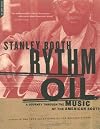
This is a collection of writings about the South (mainly Memphis), its musicians, and its music. Booth has gotten to know and hang out with musicians as diverse as Furry Lewis, Al Green, Phineas Newborn, Jr., and Keith Richards (okay, he's not from the South). And his portraits of each gets right to what makes them tick.
The most poignant, for me, was the chapter on Phineas Newborn, Jr., someone I hadn't known much about. Newborn was a virtuoso jazz pianist, with unmatched style and facility. show more Booth's portrayal sent me straight to iTunes and YouTube to check out Newborn's music more closely.
But the thing about Newborn, and all of Booth's subjects, is the friction in their lives. Newborn was repeatedly hospitalized for mental or emotional disorders. Furry Lewis collected garbage on the streets of Memphis to make ends meet. Keith Richards is an unholy mess. James Brown ran into legal problems and some obvious emotional troubles. But the personalities, the talents, and the friction are all one thing -- that's what makes these people interesting, more than just "heroes of music".
Well worth the time spent reading, for the background of the music, but more importantly for the portraits of the musicians as people. show less
The most poignant, for me, was the chapter on Phineas Newborn, Jr., someone I hadn't known much about. Newborn was a virtuoso jazz pianist, with unmatched style and facility. show more Booth's portrayal sent me straight to iTunes and YouTube to check out Newborn's music more closely.
But the thing about Newborn, and all of Booth's subjects, is the friction in their lives. Newborn was repeatedly hospitalized for mental or emotional disorders. Furry Lewis collected garbage on the streets of Memphis to make ends meet. Keith Richards is an unholy mess. James Brown ran into legal problems and some obvious emotional troubles. But the personalities, the talents, and the friction are all one thing -- that's what makes these people interesting, more than just "heroes of music".
Well worth the time spent reading, for the background of the music, but more importantly for the portraits of the musicians as people. show less
ROLLING WITH THE STONES ON THE WAVES OF THE TIMES
This is less a formal review of Stanley Booth’s now-classic book, The True Adventures of the Rolling Stones, than it is a statement of appreciation for the same. In fact, I can say at this time that my biggest criticism of the title, or at least of the edition I own, is that it lacks an index. Having become one of the modern essential reference texts on British rock band the Rolling Stones that it has, a reader can only hope that someone show more plans to publish an edition that contains one. But for the time being I’ll say this––
If you could arrange a chat over a cup of coffee or tea with a literary journalist from any given period –such as Ralph Ellison, Truman Capote, Joan Didion, or Tom Wolfe––about how they accomplished what they have as literary journalists, one thing they shared in common might soon become clear: a huge part of getting the job done was allowing whatever situation they were covering to swallow them whole. As in mind, body, soul, and the bits and pieces of dreams and nightmares that held their lives together. Apply that concept to the reality of Stanley Booth making his way through the giant waves of counterculture rebellion that swept over the 1960s and a profound mosaic of imagery emerges.
For one, there is the ambitious writer with a distinct literary sensibility born and bred in Waycross, Georgia (where the late great actor Ossie Davis attended high school) lobbying in England, California, and elsewhere for a contract to write the book now known as The True Adventures of the Rolling Stones with the band’s “full and exclusive cooperation.” There is the artist determined to maintain focus on his work ––taking detailed notes on everything from the style of Keith Richards’ jacket and the impact of Mick Jagger’s toothache on a rehearsal, to the polish on B.B. King’s custom-made Gibson guitar and the nearly overwhelming heat generated by Tina Turner’s on-stage sensuality.
Beyond simply noting such observances is an enviable talent for transforming them into transcendent poetry, as with this snapshot of Jagger at the L.A. Forum in 1969 just before he goes onstage: “In the backstage doorway Jagger was standing, dressed in black trousers with silver buttons down the legs, black scoop-neck jersey with white Leo glyph on chest, wide metal-studded black belt, long red flowing scarf, on his head an Uncle Sam hat, his eyes wide and dark, looking like a bullfighter standing in the sun just inside the door of the arena, seeing nothing but the path he walks, toreros and banderilleros beside and behind him, to his fate.”
Along the same lines, Booth writes like something of a natural seer when interpreting certain moments that might be described as the philosophical nuances of the psychedelic times: “It is possible that to know the essence of this moment you would have to be part of the most Damoclean time yet seen on earth… to have come to this music in the innocence of youth because of its humanity… to follow it steadfastly through all manner of troubles, and to have found yourself in a huge dark saucer-mushroom, doing it again, playing for survival, for your life. You had to be there.”
That he was there and allowed the powerful uproar of the 1960s, as set to the music of the Rolling Stones, to swallow him whole in order to deliver an enduring first-hand account of it, is a major part of what makes Booth’s work the titanic achievement that it is. The 1960s laid the groundwork for the end of one era and the beginning of another. By the time Booth hit the road to tag along with the Stones on tour during the latter part of the decade, scenes like those of the more recent beatings and pepper-sprayings experienced by Occupy Wall Street protesters were fairly common in the U.S. and elsewhere. So was a seemingly ceaseless flow of marijuana, cocaine, LSD, and other drugs that everyone knew were illegal but which many consumed to sedate themselves from the brutalities of the times (NOTE: Please DO NOT interpret that last statement as an endorsement for the use of hard drugs).
With a string of well-known assassinations, racial tension that boiled over into actual physical clashes, war, and a serious push to reestablish the tenets of sexual expressiveness, the world vibrated from one day to the next between frequencies of barely-contained anarchy and imploding chaos. To place oneself in the burning thick of it all, open-eyed and armed only with a pen, a pad, a Georgia boy’s swamp-grown bravado, and hopes for future literary vindication as Booth did, is every bit as admirable as so many have already said. To have accomplished what he set out to, at a cost much greater than most would ever consider paying in 2012, is the kind of marvel described sometimes as a miracle.
by Aberjhani show less
This is less a formal review of Stanley Booth’s now-classic book, The True Adventures of the Rolling Stones, than it is a statement of appreciation for the same. In fact, I can say at this time that my biggest criticism of the title, or at least of the edition I own, is that it lacks an index. Having become one of the modern essential reference texts on British rock band the Rolling Stones that it has, a reader can only hope that someone show more plans to publish an edition that contains one. But for the time being I’ll say this––
If you could arrange a chat over a cup of coffee or tea with a literary journalist from any given period –such as Ralph Ellison, Truman Capote, Joan Didion, or Tom Wolfe––about how they accomplished what they have as literary journalists, one thing they shared in common might soon become clear: a huge part of getting the job done was allowing whatever situation they were covering to swallow them whole. As in mind, body, soul, and the bits and pieces of dreams and nightmares that held their lives together. Apply that concept to the reality of Stanley Booth making his way through the giant waves of counterculture rebellion that swept over the 1960s and a profound mosaic of imagery emerges.
For one, there is the ambitious writer with a distinct literary sensibility born and bred in Waycross, Georgia (where the late great actor Ossie Davis attended high school) lobbying in England, California, and elsewhere for a contract to write the book now known as The True Adventures of the Rolling Stones with the band’s “full and exclusive cooperation.” There is the artist determined to maintain focus on his work ––taking detailed notes on everything from the style of Keith Richards’ jacket and the impact of Mick Jagger’s toothache on a rehearsal, to the polish on B.B. King’s custom-made Gibson guitar and the nearly overwhelming heat generated by Tina Turner’s on-stage sensuality.
Beyond simply noting such observances is an enviable talent for transforming them into transcendent poetry, as with this snapshot of Jagger at the L.A. Forum in 1969 just before he goes onstage: “In the backstage doorway Jagger was standing, dressed in black trousers with silver buttons down the legs, black scoop-neck jersey with white Leo glyph on chest, wide metal-studded black belt, long red flowing scarf, on his head an Uncle Sam hat, his eyes wide and dark, looking like a bullfighter standing in the sun just inside the door of the arena, seeing nothing but the path he walks, toreros and banderilleros beside and behind him, to his fate.”
Along the same lines, Booth writes like something of a natural seer when interpreting certain moments that might be described as the philosophical nuances of the psychedelic times: “It is possible that to know the essence of this moment you would have to be part of the most Damoclean time yet seen on earth… to have come to this music in the innocence of youth because of its humanity… to follow it steadfastly through all manner of troubles, and to have found yourself in a huge dark saucer-mushroom, doing it again, playing for survival, for your life. You had to be there.”
That he was there and allowed the powerful uproar of the 1960s, as set to the music of the Rolling Stones, to swallow him whole in order to deliver an enduring first-hand account of it, is a major part of what makes Booth’s work the titanic achievement that it is. The 1960s laid the groundwork for the end of one era and the beginning of another. By the time Booth hit the road to tag along with the Stones on tour during the latter part of the decade, scenes like those of the more recent beatings and pepper-sprayings experienced by Occupy Wall Street protesters were fairly common in the U.S. and elsewhere. So was a seemingly ceaseless flow of marijuana, cocaine, LSD, and other drugs that everyone knew were illegal but which many consumed to sedate themselves from the brutalities of the times (NOTE: Please DO NOT interpret that last statement as an endorsement for the use of hard drugs).
With a string of well-known assassinations, racial tension that boiled over into actual physical clashes, war, and a serious push to reestablish the tenets of sexual expressiveness, the world vibrated from one day to the next between frequencies of barely-contained anarchy and imploding chaos. To place oneself in the burning thick of it all, open-eyed and armed only with a pen, a pad, a Georgia boy’s swamp-grown bravado, and hopes for future literary vindication as Booth did, is every bit as admirable as so many have already said. To have accomplished what he set out to, at a cost much greater than most would ever consider paying in 2012, is the kind of marvel described sometimes as a miracle.
by Aberjhani show less
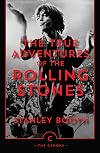
Follows the Stones on the fated 1969 US tour that culminated in the concert at Altamont. I knew I was in good hands as soon as I read the following early passage, describing the reporters at a pre-tour Stones press conference:
"They all appeared to be in their early twenties... dressed in the current style, achieved by spending large sums of money to look poor and bedraggled, like a new race of middle-class gypsies. They ate like gypsies, snatching up cakes and fruit and drinks."
Captures not show more only The Stones at the peak of their world dominance, but also the peak and decline of an era. Wonderful reading. show less
"They all appeared to be in their early twenties... dressed in the current style, achieved by spending large sums of money to look poor and bedraggled, like a new race of middle-class gypsies. They ate like gypsies, snatching up cakes and fruit and drinks."
Captures not show more only The Stones at the peak of their world dominance, but also the peak and decline of an era. Wonderful reading. show less
For me, Stanley Booth and Nick Tosches are the two finest writers on 20th-century popular music and its creators. True Adventures is fascinating for all the reasons you'd expect an account of touring with the Stones in 1969 to be fascinating, but Booth's abilities as observer and writer take this out of the realm of "music journalism". Completed and released years after the events described, Booth brings the perspective of age while still beautifully conveying his original sensations, show more emotions, and reactions to the mad world he briefly inhabited. show less
Awards


You May Also Like


Associated Authors
Statistics
- Works
- 9
- Also by
- 1
- Members
- 474
- Popularity
- #52,000
- Rating
- 4.1
- Reviews
- 7
- ISBNs
- 56
- Languages
- 6