
Robert Greenfield
Author of Bill Graham Presents: My Life Inside Rock And Out
About the Author
Robert Greenfield is an award-winning journalist, novelist, playwright, and screenwriter. The former associate editor of Rolling Stone, magazine's London bureau, he is the author of nine books, among them acclaimed biographies of Bill Graham, Jerry Garcia, and Timothy Leary.
Image credit: Robert Greenfield (Photograph by Kira Godbe)
Works by Robert Greenfield
Associated Works
The New York quarterly : NYQ : Number 35, Spring 1988 — Contributor — 1 copy
Tagged
Common Knowledge
- Birthdate
- 1946
- Gender
- male
- Occupations
- professor (Composition and Literature)
Film and Literature teacher
English teacher
journalist
screenwriter - Organizations
- University of San Francisco
Chapman University
Cabrillo College - Relationships
- Greenfield, Anna (child)
- Nationality
- USA
- Places of residence
- Carmel, California, USA
- Associated Place (for map)
- California, USA
Members
Reviews
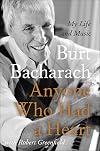
Ever since the days of such musical artists as Cole Porter and Hoagy Carmichael, there have been a plethora of very fine American songwriters, and of course everyone has their favorites. But in my lifetime, the two giants, who have truly delighted me and enriched the soundtrack of my life, have been Burt Bacharach (and his lyricist, Hal David) and Jimmy Webb, the greatest of them all. (I consider Bob Dylan a poet, more than a songwriter.) From my adolescence, when Bacharach was just getting show more his start with such singers as the great Dionne Warwick, his music has been a constant joy. I admired him.
Until I read this book. His music will always soar, somewhere in the more shallow recesses of my heart, and still occupy a large part of my personal "playlist." But Bacharach the man, as described in this autobiography, is a scoundrel, an egomaniac, and a roué. It is not for me to list his shortcomings; he does that quite well himself, although he seems to view them as strengths. Even in the face of a personal tragedy which I will not describe, Bacharach was primarily devoted to sexual conquests and personal disloyalties. This book is testament to the sad fact that even the most talented people can be utterly wretched human beings. Hence, my rating.
Not recommended. show less
Until I read this book. His music will always soar, somewhere in the more shallow recesses of my heart, and still occupy a large part of my personal "playlist." But Bacharach the man, as described in this autobiography, is a scoundrel, an egomaniac, and a roué. It is not for me to list his shortcomings; he does that quite well himself, although he seems to view them as strengths. Even in the face of a personal tragedy which I will not describe, Bacharach was primarily devoted to sexual conquests and personal disloyalties. This book is testament to the sad fact that even the most talented people can be utterly wretched human beings. Hence, my rating.
Not recommended. show less
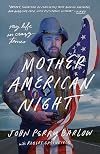
It's pretty rare that reading a memoir leaves me with a worse impression of someone than when I started, but that's the case here. To some extent, I blame the ghostwriter, whose first-person narrative uses a terse, short-sentenced style that makes Barlow sound less intelligent than he obviously was. As I read the matching section, I looked up Barlow's influential and impressive 1994 essay "The Economy of Ideas," and found a completely different voice that was — well — less dickish. Maybe show more that voice is the less accurate one? Because I regret to say that this man was a dick. Like most people who were born into money, his sense of entitlement is even greater than his fortune. And on his own evidence, he seems never to have done something purely for someone else's sake. Entrusted with the care of 17-year-old JFK Jr., he gives the young man a high dose of LSD. "We went driving because back then what I liked to do when I was tripping was get in my truck and see how far I could go in directions where you weren't supposed to get very far at all." He gets drunk and shoots guns indoors; on at least one occasion, a friend is hit by the shrapnel. (Two of the center section photos show him holding guns, which he carefully identifies by make and model.) He helps Dick Cheney get elected to the Senate. It's telling that he believes the greatest lesson of his life was to learn not to give love, but to accept it.
Barlow was an interesting character and an independent thinker with a sharp mind, and that's the best I can say about him. show less
Barlow was an interesting character and an independent thinker with a sharp mind, and that's the best I can say about him. show less
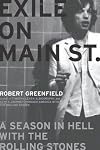
If you're looking for a good read about sex, drugs, and rock-n-roll, you'll get a lot of drugs, a little sex, and a hint of rock in this account of the Rolling Stones' sordid summer in France which eventuated in the eponymous album the next year. The book contains very little emphasis on music save for a coda which digests various critical reactions to the album over the years, together with an update on the fates of the dramatis personae, as well as a meditation on the state of the band at show more the dawn of this century. To me, this was by far the best part of the book. The main thrust of it is almost entirely populated by an unending series of pushers, drug buddies, petty thieves, and mules who are a little hard to keep straight or care much about and is marred, as is much of the book, by its supercilious author trashing every book about the Stones except his and Marianne Faithfull's and decrying the inconsistency of critical appreciation of the record through the years, though it must be said that said appreciations are indeed annoyingly muddled and inconsistent. show less
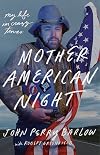
The Book of Breaks – John Perry Barlow’s Last Words
It was a most uncomfortable feeling to receive and begin reading Mother American Night the day John Perry Barlow died. The Prologue didn’t make it any easier. It is titled Not Dead Enough. It describes how the book came about. Barlow had been dead eight minutes when a young intern yanked him off the bed onto the floor and proceeded to knee him in the chest until his heart reactivated. This after barely surviving the removal of a huge show more tumor on his spine, discovered while treating a horrendous staph infection he got from brand new cowboy boots. He decided it was time to focus on this book of memoirs.
It contains a chronological stack of wonderful stories spread over 47 lightning-quick chapters. They make Barlow an American Original. Some stories are being told for the first time, like when he drove to Boston to become the first American suicide bomber, in the 1960s. The who’s who of Wesleyan University, where he was Student President, descended on the place he was crashing, brought him back and put him in a sanatorium to bring him down. It took two weeks – and he resumed classes as if nothing had happened.
All through his life, Barlow (known as johnperry to anyone who mattered) caught breaks: getting through Customs with a life-sized head sculpture filled with hash plus a page full of LSD tabs. Or hitting gravel on a motorcycle, wearing only cutoffs and not even shoes, and taking himself to the hospital. He couldn’t wear clothes while he healed, and showed up at a university board meeting in just shorts. Given the choice, Barlow always took the more dangerous path, and never got caught.
Aimlessly, he managed to be in absolutely the right place at the right time. He spent the Summer of Love (1967) in Haight Ashbury, right in the home of The Grateful Dead. In the early 70s, he lived right by Needle Park on New York’s Upper West Side, and dealt cocaine in Spanish Harlem. He got into computers in the mid 80s, and his links to the Dead got him entrée to computer high society, which was populated by deadheads.
Among the right places at the right time, Barlow:
-had his pick of top eastern universities (despite his school record) simply because he was from Wyoming, where few applications originated.
-forged three medical excuses from the draft, and though discovered (he used the same typewriter for all three), got away with it.
-worked with Dick Cheney to get him into Congress, but realized he was a “global sociopath” interested only in pure power. They argued fiercely, and went their separate ways.
-had John F. Kennedy Jr as a 17 year old summer intern on his ranch, taught him how to fly, and warned him about instrument flying, which, like Barlow, he could not master. Before Kennedy plunged his plane in the ocean, they danced together at a Prince concert in New York and got the whole Radio City audience up and dancing – and no one recognized them.
-became a close friend of Timothy Leary, after having been taken to see him as an anonymous undergrad. It was Barlow who Leary wanted at his side when he died, though that didn’t quite work out.
-got a $5000 advance on a novel while an undergraduate, and instead of finishing it, took off to India with the money.
-with no connections, sold several screenplays to Hollywood to raise money for the family ranch.
-wrote the lyrics for 30 Grateful Dead songs.
-with no qualifications but his Dead connection, worked for Steve Jobs on a book idolizing the corporate culture of Apple, and later, the NeXT news magazine.
-co-founded the Electronic Frontier Foundation with Mitch Kapor, who diverted his private transcontinental flight to Wyoming to meet him.
It was a remarkable, varied, exciting, and high profile life. But it’s not as if John Perry Barlow is anyone’s idol. He was an alcoholic, smoked three packs a day, took more than a thousand hits of LSD, dealt cocaine, cheated on women (a family tradition) with abandon, and tested his luck constantly. With homes in San Francisco, Wyoming and New York, he was an absentee father of three. On the other hand, he consciously and deliberately tried to make things better, opening up copyright for art’s sake, helping Wikileaks in its time of need, and building an environmental startup to clean and recycle biomass. The book ends as it begins, with his newly acquired appreciation of love and how he had finally been able to accept the love freely shown to him over a lifetime. His wish seemed to be that we not wait quite as long.
David Wineberg show less
It was a most uncomfortable feeling to receive and begin reading Mother American Night the day John Perry Barlow died. The Prologue didn’t make it any easier. It is titled Not Dead Enough. It describes how the book came about. Barlow had been dead eight minutes when a young intern yanked him off the bed onto the floor and proceeded to knee him in the chest until his heart reactivated. This after barely surviving the removal of a huge show more tumor on his spine, discovered while treating a horrendous staph infection he got from brand new cowboy boots. He decided it was time to focus on this book of memoirs.
It contains a chronological stack of wonderful stories spread over 47 lightning-quick chapters. They make Barlow an American Original. Some stories are being told for the first time, like when he drove to Boston to become the first American suicide bomber, in the 1960s. The who’s who of Wesleyan University, where he was Student President, descended on the place he was crashing, brought him back and put him in a sanatorium to bring him down. It took two weeks – and he resumed classes as if nothing had happened.
All through his life, Barlow (known as johnperry to anyone who mattered) caught breaks: getting through Customs with a life-sized head sculpture filled with hash plus a page full of LSD tabs. Or hitting gravel on a motorcycle, wearing only cutoffs and not even shoes, and taking himself to the hospital. He couldn’t wear clothes while he healed, and showed up at a university board meeting in just shorts. Given the choice, Barlow always took the more dangerous path, and never got caught.
Aimlessly, he managed to be in absolutely the right place at the right time. He spent the Summer of Love (1967) in Haight Ashbury, right in the home of The Grateful Dead. In the early 70s, he lived right by Needle Park on New York’s Upper West Side, and dealt cocaine in Spanish Harlem. He got into computers in the mid 80s, and his links to the Dead got him entrée to computer high society, which was populated by deadheads.
Among the right places at the right time, Barlow:
-had his pick of top eastern universities (despite his school record) simply because he was from Wyoming, where few applications originated.
-forged three medical excuses from the draft, and though discovered (he used the same typewriter for all three), got away with it.
-worked with Dick Cheney to get him into Congress, but realized he was a “global sociopath” interested only in pure power. They argued fiercely, and went their separate ways.
-had John F. Kennedy Jr as a 17 year old summer intern on his ranch, taught him how to fly, and warned him about instrument flying, which, like Barlow, he could not master. Before Kennedy plunged his plane in the ocean, they danced together at a Prince concert in New York and got the whole Radio City audience up and dancing – and no one recognized them.
-became a close friend of Timothy Leary, after having been taken to see him as an anonymous undergrad. It was Barlow who Leary wanted at his side when he died, though that didn’t quite work out.
-got a $5000 advance on a novel while an undergraduate, and instead of finishing it, took off to India with the money.
-with no connections, sold several screenplays to Hollywood to raise money for the family ranch.
-wrote the lyrics for 30 Grateful Dead songs.
-with no qualifications but his Dead connection, worked for Steve Jobs on a book idolizing the corporate culture of Apple, and later, the NeXT news magazine.
-co-founded the Electronic Frontier Foundation with Mitch Kapor, who diverted his private transcontinental flight to Wyoming to meet him.
It was a remarkable, varied, exciting, and high profile life. But it’s not as if John Perry Barlow is anyone’s idol. He was an alcoholic, smoked three packs a day, took more than a thousand hits of LSD, dealt cocaine, cheated on women (a family tradition) with abandon, and tested his luck constantly. With homes in San Francisco, Wyoming and New York, he was an absentee father of three. On the other hand, he consciously and deliberately tried to make things better, opening up copyright for art’s sake, helping Wikileaks in its time of need, and building an environmental startup to clean and recycle biomass. The book ends as it begins, with his newly acquired appreciation of love and how he had finally been able to accept the love freely shown to him over a lifetime. His wish seemed to be that we not wait quite as long.
David Wineberg show less
Lists
Entertainment (1)
Awards


You May Also Like


Associated Authors
Statistics
- Works
- 19
- Also by
- 1
- Members
- 1,155
- Popularity
- #22,249
- Rating
- 3.7
- Reviews
- 23
- ISBNs
- 98
- Languages
- 5