
Other Title John Lee Hooker and Coast to Coast Blues Band Live Well
Recorded At – Aula Universität Köln (Released 1978)
Bass – Roger Brouse
Drums – Ken Swank
Guitar – Jim Kahr, John Lee Hooker
Recorded At – Aula Universität Köln (Released 1978)
Bass – Roger Brouse
Drums – Ken Swank
Guitar – Jim Kahr, John Lee Hooker

5 song compilation from Canadian Airlines. 1 CD.

This is the concert CD, live recordings from 2012, 2017, 2018, which accompanies Music Is The Drug: The Authorised Biography of the Cowboy Junkies.

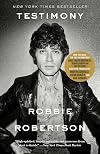
A caveat concerning this review is that I read Robertson's Testimony just after reading Helm's This Wheel's On Fire, and it is safe to say that the two accounts do not mesh well in certain areas. To name a few, would be the treatment of Muddy Waters at the Last Waltz, how the other band members felt about the Last Waltz to begin with, why Richard Manual stopped writing, and the biggie, the publishing.
The way the publishing was handled was the primary cause of animosity between Robertson and Helm; Robertson barely touches upon it, and quite frankly, his account is not very believable. Helm addresses it throughout his book, and while he does sound like a musician scorned, he consistently sticks up for his band mates, and history seems to bear him out.
Testimony itself is very well written, extremely entertaining, and most insightful. Even though it is close to 500 pages, it is still a fast read. But if you are looking for a history of The Band, this may leave you wanting a bit. This book is mostly about Robertson, and while he is an incredible musician and song writer, who lived through one of the most transcendent eras in Rock 'N' Roll, this book often crosses the line from a Who's Who of the period to an exercise in name dropping.
Mostly, if you want to get to better know the members who comprised The Band, I would advise you to get Helm's book; Helm does a great job of developing each member's character throughout his narrative. Robertson too often refers to his band mates show more as 'the guys' and sometimes gives an obligatory one line description of each, but that is it. They remain cardboard characters.
Finally, at the very end of the book, Robertson describes the day after the Last Waltz when the group was to meet in a recording studio and no one shows up. That's how he ends the book. It is infuriating. If you read Helm's book, well you would know where everyone was on that day. Robertson too often demonstrates his distance from his band mates, which was the complaint about him in the first place.
To summarize, this is the lowest rating that I ever gave a book that I so enjoyed reading. I guess the reason being was that I was a bit frustrated with it. Oh, and Helm's book goes beyond the Last Waltz, he painfully describes both Manuel's and Danko's deaths. Testimony was far better written than Wheel's On Fire, but it is not as satisfying. show less
The way the publishing was handled was the primary cause of animosity between Robertson and Helm; Robertson barely touches upon it, and quite frankly, his account is not very believable. Helm addresses it throughout his book, and while he does sound like a musician scorned, he consistently sticks up for his band mates, and history seems to bear him out.
Testimony itself is very well written, extremely entertaining, and most insightful. Even though it is close to 500 pages, it is still a fast read. But if you are looking for a history of The Band, this may leave you wanting a bit. This book is mostly about Robertson, and while he is an incredible musician and song writer, who lived through one of the most transcendent eras in Rock 'N' Roll, this book often crosses the line from a Who's Who of the period to an exercise in name dropping.
Mostly, if you want to get to better know the members who comprised The Band, I would advise you to get Helm's book; Helm does a great job of developing each member's character throughout his narrative. Robertson too often refers to his band mates show more as 'the guys' and sometimes gives an obligatory one line description of each, but that is it. They remain cardboard characters.
Finally, at the very end of the book, Robertson describes the day after the Last Waltz when the group was to meet in a recording studio and no one shows up. That's how he ends the book. It is infuriating. If you read Helm's book, well you would know where everyone was on that day. Robertson too often demonstrates his distance from his band mates, which was the complaint about him in the first place.
To summarize, this is the lowest rating that I ever gave a book that I so enjoyed reading. I guess the reason being was that I was a bit frustrated with it. Oh, and Helm's book goes beyond the Last Waltz, he painfully describes both Manuel's and Danko's deaths. Testimony was far better written than Wheel's On Fire, but it is not as satisfying. show less
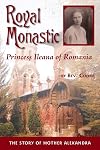
I struggled mightily with this work. I did realize prior to starting that the book was written at a young adult level, but the narrative contained far too many generalities, and Ileana's role was often sugar coated. There was too much fascination with royalty and romance. This led me to take what few facts that I could gleam from the book with a grain of salt. I picked up this book after reading a biography of Ileana's nephew, King Mihai (or Michael). In his biography, Ileana did not come off as a sympathetic historical figure, and I was looking for an alternative view. I was disappointed. In the end, I couldn't finish the book.
It left me to wonder how much I would have enjoyed the book, without previously seeing the film. The film is a must see for anyone liking this genre. It is Paul Gross' best work, and I am a Paul Gross fan, so I will admit bias. Still, when I picked up the book, I expected light fluff, the type of promotional material that is put out there to market a major movie. And at times, it did feel like that but......it was better than what I thought it would be.
Did it give added insight. A little, there were a few small sections written from the perspective of 'the ghost'. It lets the reader know how Pete Mitchell was viewed by others. Mostly, it was just an easy enjoyable read. My first recommendation would be, if you haven't already, is to see the movie.
Did it give added insight. A little, there were a few small sections written from the perspective of 'the ghost'. It lets the reader know how Pete Mitchell was viewed by others. Mostly, it was just an easy enjoyable read. My first recommendation would be, if you haven't already, is to see the movie.
The majority of this novel dealt with an impatient protagonist, Isaac Devins, and his impetuous and unsuccessful attempts to advance up the social ladder during the birth of the city of Toronto. The story was strongest when it kept with this narrative, bringing in elements of the earliest settlers, American immigrants (my family too came north the Upper Canada at this time), British hierarchy and class structure in early Canada, and the relationships with the first nations, in this case the Mississauga people.
Unfortunately, the story strayed in some of the later chapters, moving into a first person narrative by peripheral characters and relating the events of some of the early battles of the war of 1812 by letter, which sounded more like reading from a text book. This took away from the earlier theme, and unfortunately made the ending a bit too hasty and unfulfilled.
I would still give it a thumbs up, as it would appeal to both history buffs, and those native to Toronto and Southern Ontario, as well as those who enjoy local artists.
Unfortunately, the story strayed in some of the later chapters, moving into a first person narrative by peripheral characters and relating the events of some of the early battles of the war of 1812 by letter, which sounded more like reading from a text book. This took away from the earlier theme, and unfortunately made the ending a bit too hasty and unfulfilled.
I would still give it a thumbs up, as it would appeal to both history buffs, and those native to Toronto and Southern Ontario, as well as those who enjoy local artists.
I originally gave a higher rating for this book. Being one of those that Butz termed an 'outsider', that is someone who is not reading this from a practicing Christian point of view, I thought it was refreshing to read a work on the origins of Christianity, that to me was quite obvious. I am referring to the original teachings of Jesus, and the distortions contributed by the Pauline church.
Butz does many things well. For one, the book is very readable. He builds his arguments patiently, summarizes his points well, and is most willing to take some non-traditional stances. He makes abundant uses of third party scholarship and quotes directly.
However, I began to deduct stars as some things began to wear on me. For starters, Butz uses only Christian scholars and does not make use of those who have made substantial contributions to the field but are not Christian. As a result, Butz accepts much of the gospels and early Christian writings as factual. One point that particularly gnawed on me, was how he constantly repeated that Jesus predicted the destruction of the Temple while not once mentioning that the Temple was destroyed prior to the writing of any of the gospels. He also does not mention that the Books of James and Jude, and some of the later letters of Paul were forged, and the pseudonyms were commonly used during that period.
He also had a weak sense of the history of the time. He refers to the Catholic church in the 3rd and 4th centuries, a period where many scholars show more prefer the term 'proto-orthodoxy', and Rome was competing with other Christian centers, namely Antioch, Alexandria, and Constantinople for ascendency and was often on the outside. The council at Nicea did not confirm Christian doctrine, but was the start of 2 centuries of conflict within the church.
Lastly, after so much effort in pointing out the divergence between Christian Judiasm and Pauline Christianity, Butz bails in his conclusions, attempting to reconcile the two theologies, and stating that the latter still faithfully reports the original message of Jesus. I would have preferred Butz heading in the other direction. How did James view the resurrection of Jesus and his subsequent divinity? The conclusion there may be quite startling.
Still, despite my reservations, I would recommend this book as it does contain some good information. However, someone who is well read on the subject will get a different reaction than someone who is new to early Christian history. show less
Butz does many things well. For one, the book is very readable. He builds his arguments patiently, summarizes his points well, and is most willing to take some non-traditional stances. He makes abundant uses of third party scholarship and quotes directly.
However, I began to deduct stars as some things began to wear on me. For starters, Butz uses only Christian scholars and does not make use of those who have made substantial contributions to the field but are not Christian. As a result, Butz accepts much of the gospels and early Christian writings as factual. One point that particularly gnawed on me, was how he constantly repeated that Jesus predicted the destruction of the Temple while not once mentioning that the Temple was destroyed prior to the writing of any of the gospels. He also does not mention that the Books of James and Jude, and some of the later letters of Paul were forged, and the pseudonyms were commonly used during that period.
He also had a weak sense of the history of the time. He refers to the Catholic church in the 3rd and 4th centuries, a period where many scholars show more prefer the term 'proto-orthodoxy', and Rome was competing with other Christian centers, namely Antioch, Alexandria, and Constantinople for ascendency and was often on the outside. The council at Nicea did not confirm Christian doctrine, but was the start of 2 centuries of conflict within the church.
Lastly, after so much effort in pointing out the divergence between Christian Judiasm and Pauline Christianity, Butz bails in his conclusions, attempting to reconcile the two theologies, and stating that the latter still faithfully reports the original message of Jesus. I would have preferred Butz heading in the other direction. How did James view the resurrection of Jesus and his subsequent divinity? The conclusion there may be quite startling.
Still, despite my reservations, I would recommend this book as it does contain some good information. However, someone who is well read on the subject will get a different reaction than someone who is new to early Christian history. show less
This was the audio for a 2 pt radio series for CBC and not an actual printed book. As a result, it wasn't meant to be all encompassing. In fact, it centered only on a couple different personalites involved in the development of the study of dinosaurs. Still, I found it informative and entertaining.
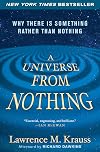
Parts of this book just went 'whoosh' over my head, still I think I walked away learning quite a bit. The big detractor in the book is Kraus's constant attack on religion. I picked up this book to learn more about cosmology, physics, and the history of science, the latter is a topic I enjoy very much. If I wanted to entertain a debate on the sustainability of religion, I would have read somethng on that topic.
Finally, Richard Dawkins Afterward at the end warrants taking half a star away from my ratings. I had the audio book, I believe Dawkings was reading it himself, and I had to eject the CD before my stomach did something foul.
Finally, Richard Dawkins Afterward at the end warrants taking half a star away from my ratings. I had the audio book, I believe Dawkings was reading it himself, and I had to eject the CD before my stomach did something foul.
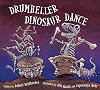
This was one of those favourite never fail books when I would read my daughter to sleep at night.
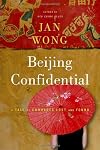
Definitely not in the same class as Red China Blues, which was an excellent book by Wong, this entry is basically a travelogue. Still, it is very readable with Wong's wit, humour, and ironic sense. It should be taken for what it is though, not a definitive history of Beijing, but one person's experience. In that sense, it is very entertaining.
My one reservation was that throughout the book, I did wonder if the purpose of the trip truly was to apologize to this one indivdiual she wronged so long ago, or was the apologize just the preconceived premise for writing this book.
Still, I would recommend it.
My one reservation was that throughout the book, I did wonder if the purpose of the trip truly was to apologize to this one indivdiual she wronged so long ago, or was the apologize just the preconceived premise for writing this book.
Still, I would recommend it.
Cyprus 1974, “This Ain’t No Picnic, It’s War”: The Combat Diary of Al Gaudet, Canadian Peacekeeper by Alain Gaudet
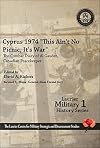
It is what it is. You will not get a scintillating narration or a detailed overview of events, instead you get a soldier's thoughts and insights on a short and concise period of time.
The book contains Gaudet's diary of the period, another shorter one he wrote after the events, a foreward by one of his commanding officers, and a present day reflection by Gaudet.
What I found most striking, is that I read this book immediately after Arkady Babchencko's "One Soldier's War", and the contrast could not be more striking; the professionalism of the Canadian soldier, the regard he has for his job, his comrades, and his commanding officers, and the comprehension he has of the big picture. Babchenko's world was nothing short of a cesspool of corruption, bullying, and blatant disregard for anything and everything.
I look forward to more books in this series.
The book contains Gaudet's diary of the period, another shorter one he wrote after the events, a foreward by one of his commanding officers, and a present day reflection by Gaudet.
What I found most striking, is that I read this book immediately after Arkady Babchencko's "One Soldier's War", and the contrast could not be more striking; the professionalism of the Canadian soldier, the regard he has for his job, his comrades, and his commanding officers, and the comprehension he has of the big picture. Babchenko's world was nothing short of a cesspool of corruption, bullying, and blatant disregard for anything and everything.
I look forward to more books in this series.
Harlan Ellison's The city on the edge of forever : the original teleplay that became the classic Star trek episode by Harlan Ellison
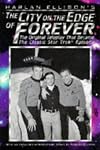
I know that Ellison was wronged a thousand times between his original draft and the publishing of this book 30 years later, but to read the 100 pages of foul mouthed drivel that he called an essay prior to reading the script took all enjoyment out of reading the script. We might not be able to force the other guy to act with honour, but there is never a reason why we, ourselves, cannot display a little class.

The book used 7 pt fonts, (paperback edition) so as much as I wanted to read the book, I wanted to maintain my eyesight even more.
I read this book just after I completed Churchill's 6 volume WWII epic, so I might be more favourable disposed to provide a more positive review than someone who picked up this book, and read it cold. This is an eye opening, brutally honest, and at times touching portrait of a decline of an icon, written by someone who obviously liked him very much, and stood by him until the end. Reading the Second World War, one gets a sense of the man behind the boldness and bluster, this book confirms it with all his charms and warts. Moran often seeks out other contemporaries' opinions of Churchill, both politically, and as a man, and in particular his record during wartime. At the same time, a personal side of Churchill is presented,including his ego, his fears, and his despair at being no longer needed.
I would not recommend this book as a first book to read about Churchill, but for someone who has a background and would like more exposure to the man, I think it is a definite read.
I would not recommend this book as a first book to read about Churchill, but for someone who has a background and would like more exposure to the man, I think it is a definite read.

This is not a starter book for anyone seeking a general history of Romania or of the period in question. The book is not an armslength narration of the 1848 Walachia revolution, but instead, is a view of the revolution through the eyes of one man, Nicolae Plesoianu. In that context, the book does very well. I found I didn't get a good feel for the man untl late in his life, both when as an exile, he struggled to return to his homeland, and when he became afflicted with Tuberculosis. That is due both to the material and personal letters available to the author, and the author's sometimes dry writing style (or translation). At the very same time, the snapshot of life, both political, and social during that era was very well received.
If this was a more mainstream history book, I may be more critical of my analysis. But since the author confined himself to a very specific topic, I give recogniion to the greater difficulty in the task, and give him marks for that. For if the author didn't write this history, it would have remained unwritten.
If this was a more mainstream history book, I may be more critical of my analysis. But since the author confined himself to a very specific topic, I give recogniion to the greater difficulty in the task, and give him marks for that. For if the author didn't write this history, it would have remained unwritten.
In many ways, this is an extraordinary book, as it deals with Romania's internal affairs, as well as her international relations vis a vis the Paris Peace conference. Marie seemed to have brushed shoulders with everyone of any note, and makes some very inciteful comments. I highly recommended this book for anyone with WW1 or post WW1 interests.
Where the book may lose a star is her descriptive and indirect writing style, which in itself is beautiful, but if I may paraphrase a line Marie made herself from the book "(North) Americans are straight foward and efficient whereas Europeans are more poetic." There were times where I wished she would be more to the point and offer much more concrete details. This I admit, I am being subjective to my own taste. Others may absolutely adore the book from cover to cover.
Where the book may lose a star is her descriptive and indirect writing style, which in itself is beautiful, but if I may paraphrase a line Marie made herself from the book "(North) Americans are straight foward and efficient whereas Europeans are more poetic." There were times where I wished she would be more to the point and offer much more concrete details. This I admit, I am being subjective to my own taste. Others may absolutely adore the book from cover to cover.
I've read a number of books, such as Stay Alive My Son, When Broken Glass Floats, A Long Way Gone, and others, and while being very moved and wrenched by the stories, I was also frustrated as the stories always seemed to end on the plane or in the refugee camp. The narratives always felt as if they were one chapter short, and you are left to ask "What happened next?". It is not as if a magic wand is waved and everything was made alright.
Ung finishes the story where First They Killed My Father" left off. While it is impossible to follow a work as horrific and devastating as her first book, Ung has written her second book to stand on its own, it being emotional and thought provoking. She writes about the parallel lives of herself in the U.S. and her sister in Cambodia during their 15 year separation. While I didn't fit into the story's format at first, as the years moved forward within the pages, I grasped a greater appreciation of the message and the pain she was portraying. Ung depicts herself as awkward, selfish, brandishing brutal thoughts, and just wanting a place to run to and hide. Her honesty has to be respected. War does not end on the battlefield
Ung finishes the story where First They Killed My Father" left off. While it is impossible to follow a work as horrific and devastating as her first book, Ung has written her second book to stand on its own, it being emotional and thought provoking. She writes about the parallel lives of herself in the U.S. and her sister in Cambodia during their 15 year separation. While I didn't fit into the story's format at first, as the years moved forward within the pages, I grasped a greater appreciation of the message and the pain she was portraying. Ung depicts herself as awkward, selfish, brandishing brutal thoughts, and just wanting a place to run to and hide. Her honesty has to be respected. War does not end on the battlefield
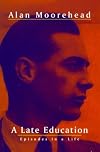
From the first book of Moorehead's, that I read, Gallipolli, I became a fan of his style, detail, and insight. After the first chapter, the narrative unfolds as a modest telling about Moorehead himself, his main focus is on his closest friend and colleague, and their many years together, their warm relationship, and an unfinished life.
One questions why Moorehead did not talk more about his wife, considering their long marriage. That is until you read the notes accompanying the book, and that is where the true tragedy unfolds. Moorehead was never able to finish his biography, his wife had to complete it for him. For a mind so active and aware, a stroke left him paralyzed for the last 20 years of his life, including watching his beloved wife die without being able to do anything about it.
Moorehead's work garnered my respect, but his humanity put him in a class of his own. After reading this book, I could not revel in the former without thinking of the latter.
One questions why Moorehead did not talk more about his wife, considering their long marriage. That is until you read the notes accompanying the book, and that is where the true tragedy unfolds. Moorehead was never able to finish his biography, his wife had to complete it for him. For a mind so active and aware, a stroke left him paralyzed for the last 20 years of his life, including watching his beloved wife die without being able to do anything about it.
Moorehead's work garnered my respect, but his humanity put him in a class of his own. After reading this book, I could not revel in the former without thinking of the latter.
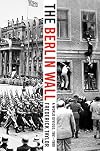
The title of this book is a little deceiving, in that a good portion of the text deals with events prior to 1961. Not that this is a fault, Taylor actually gives a good accounting of the events that led up to the wall, including a brief history of Berlin and the German state. The period of 1945-61 are discussed in detail, including the roles of the occupying powers, the city, and the two German states. A solid biography of the main players is presented, such as Ulbricht, Brandt, and Honicker.
What I thought was a little odd, was when I was 300 pages into the book, I was still on 1962/63. The actual life of the wall is only discussed in a few chapters, and for those intrigued by the cold war espionage legends of Check Point Charlie, that angle was not prominent in this book, although John Le Carre's name does arise a few times. The book mainly concentrates on the immigration, economic, and leadership issues surrounding the wall, the divided city of Berlin, and the divided nation of Germany, and using this theme, Taylor does an excellent job. His findings and conclusions seem to correlate with previous information I possessed about the topic, which allowed me to be comfortable with the credibility of the work.
On the whole, I would highly recommend this book. 450 pages may scare off the feint hearted, but the narration itself is not a very difficult read.
What I thought was a little odd, was when I was 300 pages into the book, I was still on 1962/63. The actual life of the wall is only discussed in a few chapters, and for those intrigued by the cold war espionage legends of Check Point Charlie, that angle was not prominent in this book, although John Le Carre's name does arise a few times. The book mainly concentrates on the immigration, economic, and leadership issues surrounding the wall, the divided city of Berlin, and the divided nation of Germany, and using this theme, Taylor does an excellent job. His findings and conclusions seem to correlate with previous information I possessed about the topic, which allowed me to be comfortable with the credibility of the work.
On the whole, I would highly recommend this book. 450 pages may scare off the feint hearted, but the narration itself is not a very difficult read.
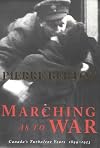
I have read many of Pierre Berton's books, and this one is typical Berton in many ways. He always attempts to take a look at events through a different slant. This book is no different. It both describes Canada's development and maturation of a nation through its participation in four separate international conflicts, and it also uses those conflicts as a measure of the nation itself. The two word wars were the major interest points in this book. Of particular significance is when Berton smashes Canada's storm trooper image in the second world war, that it had acquired in WWI. He effectively discredits both the armed forces and political leadership during WWII, revealling Mackenzie King's once revered "Not necessarily conscription but conscription if necessary" stance as what it truly was, political indecision that resulted in the needless loss of soldier's lives. The book starts and ends slowly, with the chapters on the Boer and Korean wars not being as compelling. Overall, the book is very informative read. It loses a star in that it is not as entertaining or as smooth flowing as some of Berton's previous works, particular his two on the War of 1812 and the Arctic Grail
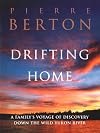
This is one of the lighter and shorter entries from Pierre Berton. The book follows directly or indirectly three generations of Bertons. Taking his family rafting down the Yukon river in the early 1970's, Berton talks about the present, reminices about his own trip down the same river as a boy with his father, and intertwines a biography of his father into the story as well. The narrative starts slowly, but as Berton warms up, he weaves the three stories together with magical results. It is a well written personal history
The book is slow to acclimatize at first, for you are immediately plopped into the middle of Bayhan, and not brought into the environment gradually. Afterwards, the narrative is very informative and eye opening. Nigel Groom shares his experience as a 23 year old political officer assigned in his first posting in Bayhan in Aden (now part of Yemen) but at that time (1948), part of the British protectorate.
The book is a combination of Groom's tribulations and quarks in the politics of a place that existed 60 years ago, and his continual fascination of a more glorious history 2500 years ago. It is very much worth the reading, I doubt if you will find many more on the topic.
The book is a combination of Groom's tribulations and quarks in the politics of a place that existed 60 years ago, and his continual fascination of a more glorious history 2500 years ago. It is very much worth the reading, I doubt if you will find many more on the topic.
The book may never stand out as a literary gem, but it is an emotional and stirring account of one man's experience both growing up in Romania and his experience with the revolution. It is a recount that you will not find in any history book, but one that is just as relevant, of the euphoria Christmas 1989 and subsequent disappointment afterwards. Each Romanian has their own opinion of that time, as events affected everyone differently, and the revolution was short in duration and not wide spread. My wife's recounts vary greatly from Antal's. I wish more people like Antal would put their recollections into print. The bottomline is, Antal does tell a good story.

Because of the horrific subject matter, and the heroic role of the main author in the saving of countless lives, and the everpressing need for all survivors of all holocausts to have their voices heard, I am initially hesitant to say something bad about this book, but the truth is, this is not a very good book.
The book is comprised of two sections, Jagendorf's memoirs, and background information by Aron Hirt-Manheimer. The book states at the beginning that Jagendorf's first attempt to publish his memoirs ended in failure. Not a wonder. His material was divided into seven sections, consisting of between 4 to 7 chapters, with the average chapter length being 2-3 pages. Jagendorf's writing style is more of a listing of his activities, with very little emotion, background or insight. It might even be suggested that despite the hardships and horror that was the Romanian Holocaust, that Jagendorf was basically full of himself. The notion was politely repeated several times by Hirt-Manheimer and several of the sources he interviewed.
Hirt-Manheimer's role was to flush out the book, which he attempted to do with commentary after each section featuring interviews with survivors, a time-line, introduction of historical documents, and a re-interpreting of Jagondorf's claims. It was a noble attempt, but one that could not overcome the disappointment of the source manuscript.
If you want a book to learn of the pain and trauma of Transnistria, this isn't it. If you are looking for show more source material for Transnitria, this book may have some merit, as it cannot be disputed that Jagendorf was a major figure during those years, and his contribution did save tens of thousands of jews. And on that note, that is perhaps the most thought provoking part of this book, analysising exactly the type of role Jagendorf played, was he a saviour, a power broker, or a little of both. show less
The book is comprised of two sections, Jagendorf's memoirs, and background information by Aron Hirt-Manheimer. The book states at the beginning that Jagendorf's first attempt to publish his memoirs ended in failure. Not a wonder. His material was divided into seven sections, consisting of between 4 to 7 chapters, with the average chapter length being 2-3 pages. Jagendorf's writing style is more of a listing of his activities, with very little emotion, background or insight. It might even be suggested that despite the hardships and horror that was the Romanian Holocaust, that Jagendorf was basically full of himself. The notion was politely repeated several times by Hirt-Manheimer and several of the sources he interviewed.
Hirt-Manheimer's role was to flush out the book, which he attempted to do with commentary after each section featuring interviews with survivors, a time-line, introduction of historical documents, and a re-interpreting of Jagondorf's claims. It was a noble attempt, but one that could not overcome the disappointment of the source manuscript.
If you want a book to learn of the pain and trauma of Transnistria, this isn't it. If you are looking for show more source material for Transnitria, this book may have some merit, as it cannot be disputed that Jagendorf was a major figure during those years, and his contribution did save tens of thousands of jews. And on that note, that is perhaps the most thought provoking part of this book, analysising exactly the type of role Jagendorf played, was he a saviour, a power broker, or a little of both. show less
I am in agreement with the previous review, that this book was a surprise. It was given to me as a gift, and I didn't have high expectations, butit turned out to be a very good read, and Fred Doucette is very well spoken.
What was most enjoyable was that this book was not written by a General or a reporter, but a private soldier basically working on this own. It is a great insight into the less glamourous side of peacekeeping
What was most enjoyable was that this book was not written by a General or a reporter, but a private soldier basically working on this own. It is a great insight into the less glamourous side of peacekeeping