
Rae Dalven (1904–1992)
Author of The Complete Poems of Cavafy: Translated by Rae Dalven, with an Introduction by W.H. Auden
Works by Rae Dalven
The Complete Poems of Cavafy: Translated by Rae Dalven, with an Introduction by W.H. Auden (1976) — Translator — 324 copies, 5 reviews
Associated Works
Tagged
Common Knowledge
- Other names
- Dalven, Rachel
- Birthdate
- 1904-04-25
- Date of death
- 1992-07-30
- Gender
- female
- Education
- New York University (Ph.D.)
Hunter College - Occupations
- translator
professor
historian
playwright - Short biography
- Rae Dalven was born to a Jewish family in Preveza, now in Greece, then a region of the Ottoman Empire. In 1909, she emigrated to the USA with her parents. She graduated from Hunter College and earned a Ph.D. in English at New York University. She became a professor of English literature and department chairman at Ladycliff College in Highland Falls, New York. She was known for her translations of Greek poetry, such as Modern Greek Poetry (1949), The Poems of Cavafy (1961), and The Fourth Dimension (1977). She wrote two play, including the successful A Season in Hell (1950), about the French poets Rimbaud and Verlaine, which was produced Off-Broadway. Prof. Dalven was also renowned as an historian of the Jews in Greece, particularly the northern Ioannina community, who traced their ancestry to ancient Palestinians and retained their unique customs and liturgy. She edited The Sephardic Scholar, an academic journal, and served as president of the American Society of Sephardic Studies. The annual Rae Dalven Prize for excellence in modern Greek studies at New York University was created in her honor.
- Nationality
- USA
Greece (birth) - Birthplace
- Preveza, Greece
- Place of death
- New York, New York, USA
- Associated Place (for map)
- New York, New York, USA
Members
Reviews
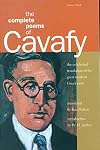
Michael Dirda's Classics for Pleasure put this modern Greek poet on my radar. Luckily, the next day, I got a small bonus on my paycheck and allowed myself to purchase this Harcourt paperback of Cavafy's complete poems, as translated by Rae Dalven. With poetry, I like to dive right in and read poems at random from the beginning, middle, and end of the book. This gives me a sense of the poet's themes, motifs, style, and a view of their development as an artist (typically a book of complete show more poetry is assembled chronologically). Though Cavafy's poems aren't of epic length, they are of many Hesiodic and Homeric topics and figures. (I always imagine that, in the same way Chaucer and Shakespeare loom over modern English poets, Homer and Pindar must loom over modern Greek ones.) His style is clear, forthright, and barbed with longing. I agree with W. H. Auden in his introduction that Cavafy's poetry lacks ornamentation, but I disagree with Auden that "simile and metaphor are devices he never uses"—the first poem in this volume, "Desires," begins with the word "Like" and proceeds to be, in fact, entirely a simile. A sampling of the verses should serve to give the flavor of Cavafy's disposition: "Every lost chance / now mocks his senseless prudence"; "Body, remember..."; "they have built big and high walls around me"; "Shut up in a greenhouse"; "other echos / return from the first poetry of our lives"; "And the morrow ends by not resembling a morrow"; "And now what shall become of us without any barbarians?" The main thread running through the poems is the modernist contradiction of proselytizing carpe diem from a state of ennui. show less
The complete poems of Cavafy; translated by Rae Dalven, with anintroduction by W. H. Auden. by C.P. Cavafy
To read a poet only in translation, is to suffer a great loss. In spite of the strong recommendation by W.H. Auden, at the beginning of this collection, I have always felt that. None the less, in the "Alexandria quartet" by Lawrence Durrell, the quotes seem so apposite that I acquired this collection. I do not know how accurate, Rae Dalven translated the poems, but I have turned to this volume time and again, to read a poem or two. I recommend this book, perhaps because the poems that Dalven show more translated have a poetic effect on me, whether or not, the originals could have affected me the same way, had I the Greek to deal with them. show less
Cavafy described himself as a ‘poet-historian’; he primarily wrote poems on history – a historical poet, which is unusual I think?
His settings range through the wide Greek world, ancient to medieval – from Troy to Byzantium – with a focus on his own city of Alexandria. The people he gives voices to can be famous names like Antony and Julian or obscure petty kinglets from Syria. Among his common themes are the uneasiness of satellites of Rome in the eastern Mediterranean, and the show more encroachments of Christianity, seen from either side. He is often ironic, a bit acid in his observations, whether he deals with politicians or with sophists. His style is simple and direct (everybody says that) and most of the poems are short snatches of history, a dashed-off situation, a voice, a perspective pulled out of the past – frequently an ordinary voice, an unexpected perspective.
I think anybody with an interest in the Hellenic world might get into these poems, as an alternate kind of historical fiction. I found them easy and quick to read, like snapshots one after the other.
Interspersed with the historical poems are present-day verses on being gay in Alexandria, late 19th—early 20th. These also are strikingly simple and direct, and I suspect in the past they have been better known. At least I met the love poems in anthology years ago, and admired them, and glanced into his historical poems and thought… interesting… but I’ve never heard of these people. They didn’t look easy of entry. Perhaps if you know who Demetrius Soter is?
I still don’t know who Demetrius Soter is, but I like his poem and understand his situation: ambivalence of a Syrian king in Rome. I have read the Rae Dalven translations, which I find eminently simple and direct, smooth, effective. Out of an interest in his historical poetry, I’ve ordered the new, heavily annotated translations by classics scholar Daniel Mendelsohn; but before I even lay eyes on it, I want to say that I found the skimpily-noted Rae Dalven perfectly adequate. I didn’t look at the notes; I didn’t want to, I believe the poems speak for themselves, whether or not you’ve heard of whoever’s talking.
My own iconic poem remains ‘Expecting the Barbarians’; and I like the Rae Dalven of this one, out of five or so versions I’ve seen on the web. show less
His settings range through the wide Greek world, ancient to medieval – from Troy to Byzantium – with a focus on his own city of Alexandria. The people he gives voices to can be famous names like Antony and Julian or obscure petty kinglets from Syria. Among his common themes are the uneasiness of satellites of Rome in the eastern Mediterranean, and the show more encroachments of Christianity, seen from either side. He is often ironic, a bit acid in his observations, whether he deals with politicians or with sophists. His style is simple and direct (everybody says that) and most of the poems are short snatches of history, a dashed-off situation, a voice, a perspective pulled out of the past – frequently an ordinary voice, an unexpected perspective.
I think anybody with an interest in the Hellenic world might get into these poems, as an alternate kind of historical fiction. I found them easy and quick to read, like snapshots one after the other.
Interspersed with the historical poems are present-day verses on being gay in Alexandria, late 19th—early 20th. These also are strikingly simple and direct, and I suspect in the past they have been better known. At least I met the love poems in anthology years ago, and admired them, and glanced into his historical poems and thought… interesting… but I’ve never heard of these people. They didn’t look easy of entry. Perhaps if you know who Demetrius Soter is?
I still don’t know who Demetrius Soter is, but I like his poem and understand his situation: ambivalence of a Syrian king in Rome. I have read the Rae Dalven translations, which I find eminently simple and direct, smooth, effective. Out of an interest in his historical poetry, I’ve ordered the new, heavily annotated translations by classics scholar Daniel Mendelsohn; but before I even lay eyes on it, I want to say that I found the skimpily-noted Rae Dalven perfectly adequate. I didn’t look at the notes; I didn’t want to, I believe the poems speak for themselves, whether or not you’ve heard of whoever’s talking.
My own iconic poem remains ‘Expecting the Barbarians’; and I like the Rae Dalven of this one, out of five or so versions I’ve seen on the web. show less
The Complete Poems of C. P. Cavafy. [Subtitle]: Translated by Rae Dalven.With an introduction by W.H. Auden. by C.P. Cavafy
Cavafy is one of the two or three greatest poets I know for writing poems that embody a past historic moment --historical fiction in verse, but very well done. He is especially good on Alexandria, where he lived, comparable to Durrell. He does include some homoerotic verse, on which Auden comments with intelligent scepticism in his introduction, but overall I think he is a very fine writer.
You May Also Like
Associated Authors
Statistics
- Works
- 5
- Also by
- 1
- Members
- 353
- Popularity
- #67,813
- Rating
- 4.3
- Reviews
- 6
- ISBNs
- 5