
J. Michael Dash
Author of A Haiti Anthology: Libete
About the Author
Works by J. Michael Dash
Associated Works
Tagged
Common Knowledge
Members
Reviews
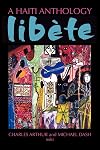
This is a very engaging read, which leads me to believe that the excerpts are well selected. Only 1/3 of the texts in the first chapter are from primary sources, however, which I find a bit problematic.
Not only are there too many secondary sources, but there are way too many texts written by foreigners. It really skews the perspective, especially since there is tons of stuff out there written by Haitians.
I love how the Accras, Bigios, Behrmanns, Apaids, and Madsens are "lesser-known show more members of the Haitian oligarchy" (p. 79). To me, this illustrates the problem with using primarily non-Haitian sources.
[b:The Magic Island|3411294|The Magic Island|William B. Seabrook|http://photo.goodreads.com/books/1267987993s/3411294.jpg|592096] Really? There is not a less offensive text out there that could be used to explain the lakou phenomenon? C'mon now.
I do like that the excerpts are pretty short, for the most part.
This book could help me make a "what not to read list". A lot of the excerpts are offensive, and a lot are just wrong, which makes me angry. If this is about introducing people to Haiti, how can you present false information? To be clear, I'm not talking about political slants here, or anything like that. I mean erroneous translations of Haitian Creole words and phrases. Linguistic misinterpretations and the like.
Aand I've heard good things about Amy Wilentz's book, but after reading what's excerpted here, I'm tempted to take it off of my to-read list.
This is the kind of stuff that drives me nuts: "To some extent, exile was beginning to make this writing les authentically Haitian, even as writing on the inside became more self-consciously Haitian in the use of a Haitian language and world view" (292-293). I mean, really... who gets to judge who's authentically Haitian? Dash? And, I'm supposed to believe that before the 1960's Haitian literature was not written in a Haitian language? did not translate Haitian worldviews? Lord, my eyes might just roll right out of my head.
Another gem: a decade after the end of Duvalierism, Dash notes "the absence of a literary and intellectual culture which has remained outside the country." (293). What the fuck? This is 1996 he's talking about. There are books being published, poetry nights being held, book festivals being inaugurated... Maybe he never visited?
Some of the translations are horrid.
I don't like the idea of ending with the chapter on the visitors' perspective.
Okay, I will be back sometime to pull this review together. Overall, probably 2.5 stars
Looks like this is as pulled together as it's going to get! :) show less
Not only are there too many secondary sources, but there are way too many texts written by foreigners. It really skews the perspective, especially since there is tons of stuff out there written by Haitians.
I love how the Accras, Bigios, Behrmanns, Apaids, and Madsens are "lesser-known show more members of the Haitian oligarchy" (p. 79). To me, this illustrates the problem with using primarily non-Haitian sources.
[b:The Magic Island|3411294|The Magic Island|William B. Seabrook|http://photo.goodreads.com/books/1267987993s/3411294.jpg|592096] Really? There is not a less offensive text out there that could be used to explain the lakou phenomenon? C'mon now.
I do like that the excerpts are pretty short, for the most part.
This book could help me make a "what not to read list". A lot of the excerpts are offensive, and a lot are just wrong, which makes me angry. If this is about introducing people to Haiti, how can you present false information? To be clear, I'm not talking about political slants here, or anything like that. I mean erroneous translations of Haitian Creole words and phrases. Linguistic misinterpretations and the like.
Aand I've heard good things about Amy Wilentz's book, but after reading what's excerpted here, I'm tempted to take it off of my to-read list.
This is the kind of stuff that drives me nuts: "To some extent, exile was beginning to make this writing les authentically Haitian, even as writing on the inside became more self-consciously Haitian in the use of a Haitian language and world view" (292-293). I mean, really... who gets to judge who's authentically Haitian? Dash? And, I'm supposed to believe that before the 1960's Haitian literature was not written in a Haitian language? did not translate Haitian worldviews? Lord, my eyes might just roll right out of my head.
Another gem: a decade after the end of Duvalierism, Dash notes "the absence of a literary and intellectual culture which has remained outside the country." (293). What the fuck? This is 1996 he's talking about. There are books being published, poetry nights being held, book festivals being inaugurated... Maybe he never visited?
Some of the translations are horrid.
I don't like the idea of ending with the chapter on the visitors' perspective.
Okay, I will be back sometime to pull this review together. Overall, probably 2.5 stars
Looks like this is as pulled together as it's going to get! :) show less
You May Also Like
Associated Authors
Statistics
- Works
- 6
- Also by
- 2
- Members
- 85
- Popularity
- #214,930
- Rating
- 3.1
- Reviews
- 1
- ISBNs
- 23